INI-CET 2017 — Forensic Medicine
4 Previous Year Questions with Answers & Explanations
A person is not criminally responsible for their actions if, at the time of committing the act, they are unable to know the nature of the act or understand that it is either wrong or contrary to the law due to unsoundness of mind.
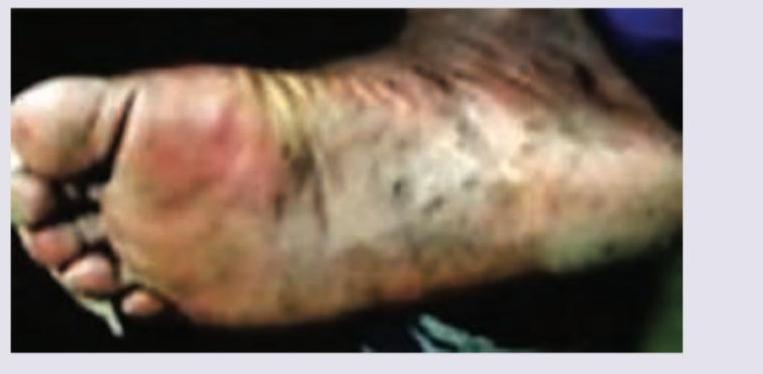
The following presentation is called:
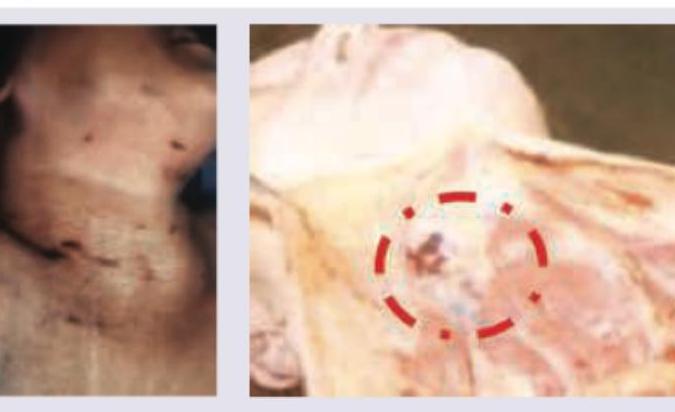
A person was brought dead to the casualty and autopsy was performed to find the cause of death. Based on the autopsy findings shown in the image, what is the diagnosis?
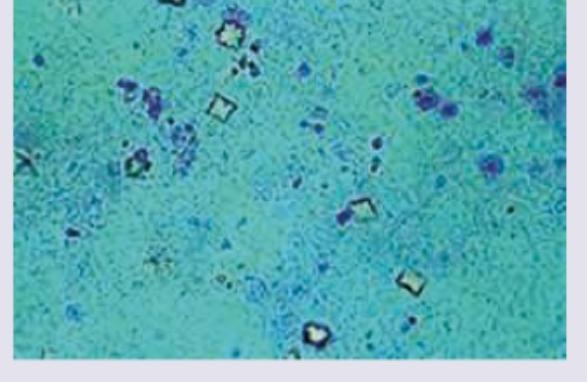
An unconscious patient was brought to the casualty. ABG reveals metabolic acidosis with hypocalcemia. The urine specimen from this patient is shown below. Identify the substance:
INI-CET 2017 - Forensic Medicine INI-CET Practice Questions and MCQs
Question 1: A person is not criminally responsible for their actions if, at the time of committing the act, they are unable to know the nature of the act or understand that it is either wrong or contrary to the law due to unsoundness of mind.
- A. McNaughten rule (Correct Answer)
- B. Irresistible impulse test
- C. Currens rule
- D. Durham's rule
Explanation: ***McNaughten rule*** - This rule states that a person is not criminally responsible if, at the time of committing the act, they were suffering from a **disease of the mind** that rendered them unable to know the **nature and quality of the act** or that it was wrong. - It focuses on the defendant's **cognitive capacity** to understand their actions and their moral or legal implications. *Durham's rule* - This rule, from the 1954 case *Durham v. United States*, states that an accused is not criminally responsible if their unlawful act was the **product of mental disease or defect**. - It is broader than McNaughten, focusing on the causal link between mental illness and the crime, but was criticized for its vagueness and has been largely replaced. *Currens rule* - From the 1961 case *United States v. Currens*, this test states that a defendant is not criminally responsible if they lacked **substantial capacity** to conform their conduct to the requirements of law due to mental disease or defect. - It is similar to the ALI (American Law Institute) test and focuses on both cognitive and volitional impairment, but is not widely used in Indian forensic practice. *Irresistible impulse test* - This test is a supplement to the McNaughten rule, asserting that a defendant is not criminally responsible if a mental disease prevented them from resisting an impulse to commit the crime, even if they knew the act was wrong. - It focuses on the defendant's **volitional capacity** – their ability to control their conduct.
Question 2: The following presentation is called:
- A. Mycetoma (Correct Answer)
- B. Black foot disease
- C. Myrmecia
- D. Tinea pedis
Explanation: ***Mycetoma*** - The image displays a foot with **swelling, nodule formation, and draining sinuses** with visible grains, which is characteristic of mycetoma. - Mycetoma is a **chronic, progressive granulomatous disease** of the skin, subcutaneous tissue, fascia, and bone, often affecting the foot. *Black foot disease* - This is a form of **peripheral vascular disease** caused by **chronic arsenic poisoning**, typically leading to **gangrene** and eventually amputation. - The image does not show the typical features of **ischemia or gangrene** associated with Black foot disease. *Myrmecia* - This is a type of **wart or verruca** that is specifically characterized by a **plantar wart with a central core of black dots** (thrombosed capillaries). - The image shows a more widespread inflammatory process with nodules and sinuses, not a localized wart. *Tinea pedis* - Also known as **athlete's foot**, this is a **superficial fungal infection** of the skin of the foot, typically presenting with **scaling, itching, redness, and sometimes blisters**. - The clinical presentation in the image, with deep-seated nodules and draining sinuses, is not consistent with a superficial fungal infection.
Question 3: A person was brought dead to the casualty and autopsy was performed to find the cause of death. Based on the autopsy findings shown in the image, what is the diagnosis?
- A. Throttling
- B. Strangulation
- C. Ligature strangulation
- D. Hanging (Correct Answer)
Explanation: ***Hanging*** - The image shows **ligature marks on the neck**, consistent with hanging. Specifically, there is evidence of **fracture of the hyoid bone** and possibly other laryngeal cartilages (circled area), which are common findings in hanging, especially **judicial hanging** or cases with a significant drop. - The presence of the ligature mark **above the thyroid cartilage** and extending upwards towards the mastoid process is characteristic of hanging, creating an **oblique, upward-sloping** V-shaped or inverted U-shaped groove. - In hanging, the body weight acts as the constricting force, and the mark is typically **incomplete** on the side opposite to the suspension point. *Throttling* - Throttling involves **manual compression of the neck** by human hands. It typically leaves **finger marks** and **bruises** on the neck, often irregular and distributed over a wider area. - While hyoid bone fractures can occur in throttling, the distinct, continuous **ligature mark** and the specific position of injuries seen in the image are less typical for manual strangulation. *Strangulation (general)* - Strangulation refers to compression of the neck by a constricting force, which can be manual (throttling), ligature (ligature strangulation), or by hanging. Without further context, this term is too broad and non-specific. *Ligature strangulation* - Ligature strangulation differs from hanging in that the constricting force is applied around the neck by a ligature (rope, wire, cloth), but the body is **not suspended**. - This typically produces **horizontal or transverse ligature marks** that are more uniform and circumferential, unlike the **oblique, upward-sloping marks** characteristic of hanging. - The ligature mark in strangulation is usually **complete** around the neck and positioned lower, often at the level of the thyroid cartilage.
Question 4: An unconscious patient was brought to the casualty. ABG reveals metabolic acidosis with hypocalcemia. The urine specimen from this patient is shown below. Identify the substance:
- A. Ethylene glycol (Correct Answer)
- B. Methyl alcohol
- C. Formaldehyde
- D. Paraldehyde
Explanation: ***Ethylene glycol*** - The image shows **calcium oxalate crystals** (both monohydrate, "dumbbell" shapes, and dihydrate, "envelope" shapes), classical findings in **ethylene glycol poisoning**. - Ethylene glycol is metabolized into **oxalic acid**, which precipitates with calcium, leading to **hypocalcemia** and metabolic acidosis due to accumulating organic acids. *Methyl alcohol* - Methyl alcohol poisoning is characterized by metabolites like **formic acid**, causing severe **metabolic acidosis** and visual disturbances, but does not typically lead to calcium oxalate crystalluria. - While it causes profound acidosis, the diagnostic urine crystals seen in the image are not associated with methyl alcohol intoxication. *Formaldehyde* - Formaldehyde poisoning is generally due to ingestion or inhalation, leading to immediate toxicity, often with severe gastrointestinal and respiratory symptoms. - It does not typically metabolize into substances that form **calcium oxalate crystals** in the urine or cause hypocalcemia in this manner. *Paraldehyde* - Paraldehyde is an older sedative/hypnotic that can cause **metabolic acidosis** due to its metabolism into acetic acid, especially in large doses. - However, it does not lead to the formation of **calcium oxalate crystals** in the urine or associated hypocalcemia as seen in the image.