Dermatology
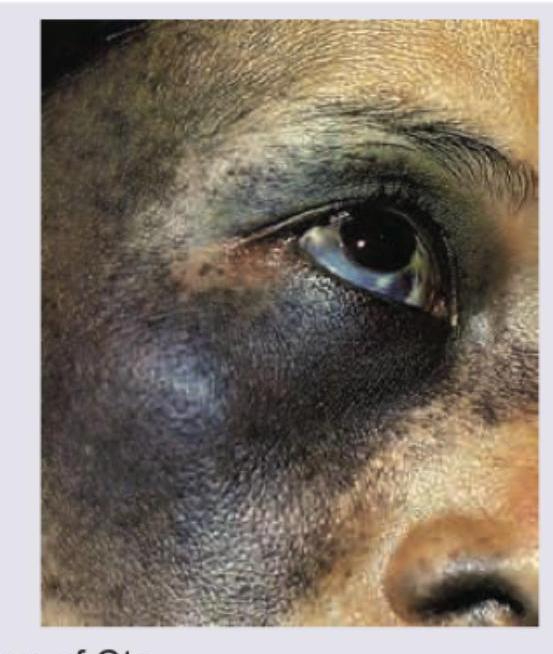
2 questionsThe image shows presence of:

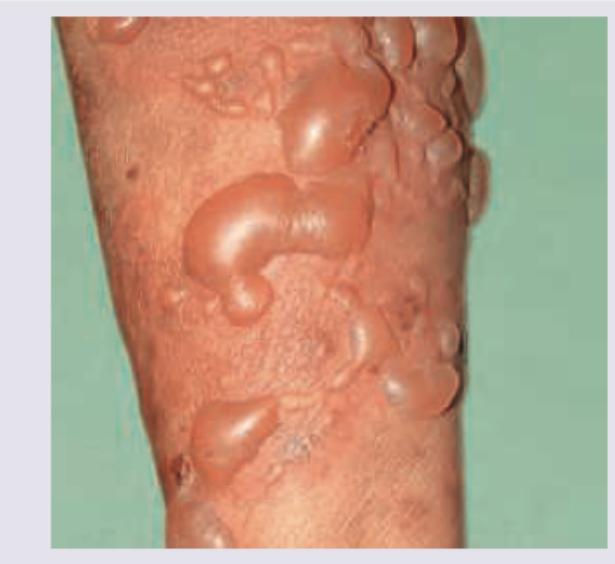
An elderly patient presents with itchy tense blisters on normal looking skin as well as on urticarial plaques as shown below. The most probable diagnosis is: (AIIMS Nov 2015)

INI-CET 2015 - Dermatology INI-CET Practice Questions and MCQs
Question 11: The image shows presence of:
- A. Nevus of Ota (Correct Answer)
- B. Nevus spilus
- C. Giant melanocytic nevus of face
- D. Port wine stain
Explanation: - ***Nevus of Ota*** - The image exhibits a characteristic **blue-grey or brownish discoloration** on the face, specifically around the eye (periorbital region) and extending to the temple and cheek. - The presence of **scleral pigmentation** (blue discoloration of the sclera) is a classic finding associated with Nevus of Ota, due to dermal melanocytosis affecting both skin and ocular structures. - *Nevus spilus* - This condition presents as a **light brown patch** with speckles of darker macules or papules within it, resembling "spots on a spot." - It does not typically involve the deep blue-grey coloration or ocular pigmentation seen in the image. - *Giant melanocytic nevus of face* - While also a melanocytic nevus, a giant congenital melanocytic nevus is typically much larger, often covering extensive body areas, and has a more **uniform dark brown to black coloration** with a rugose or hairy surface, differing from the blue-grey hue and distribution shown. - Though it can occur on the face, the overall appearance, particularly the distinct blue-grey color and scleral involvement, is not typical for a giant melanocytic nevus. - *Port wine stain* - A port wine stain is a type of **capillary malformation** characterized by a flat, pink to red vascular lesion that darkens with age to a deep purple. - It blanches under pressure and is due to dilated capillaries, not melanin deposition, and does not cause the blue-grey pigmentation or scleral involvement seen here.
Question 12: An elderly patient presents with itchy tense blisters on normal looking skin as well as on urticarial plaques as shown below. The most probable diagnosis is: (AIIMS Nov 2015)
- A. Pemphigus vulgaris
- B. Linear IgA disease
- C. Bullous pemphigoid (Correct Answer)
- D. Dermatitis herpetiformis
Explanation: ***Bullous pemphigoid*** - This condition typically presents in **elderly patients** with **itchy, tense blisters** on either normal or erythematous/urticarial skin, which aligns with the clinical description and image. - The blisters in bullous pemphigoid are characterized by **subepidermal blistering**, meaning the epidermis separates from the dermis, resulting in tense, fluid-filled lesions. *Pemphigus vulgaris* - Characterized by **flaccid blisters** that rupture easily, leading to erosions, unlike the tense blisters seen in the image. - Pemphigus vulgaris frequently involves **mucous membranes** and is caused by autoantibodies against desmoglein 1 and 3, leading to intraepidermal blistering (acantholysis). *Linear IgA disease* - This autoimmune blistering condition typically presents with **annular or rosette-shaped lesions** with small peripheral blisters, often referred to as a "string of pearls" appearance, which is not evident in the image. - On **direct immunofluorescence**, it shows a linear deposition of IgA at the dermoepidermal junction. *Dermatitis herpetiformis* - Often presents with **intensely pruritic papules and vesicles** typically found on extensor surfaces (elbows, knees, buttocks), and the lesions are often excoriated due to scratching. - Strongly associated with **celiac disease** and characterized by granular IgA deposits in the dermal papillae on direct immunofluorescence, distinguishing it from the tense blisters seen.
Internal Medicine
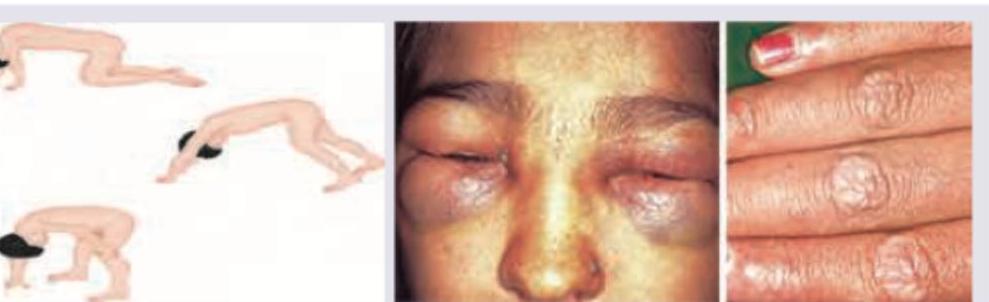
1 questionsA 9-year-old girl presents with pigmentation over forehead and redness over upper eyelids. On physical examination following clinical sign was elicited. What is the next best step for diagnosis?
INI-CET 2015 - Internal Medicine INI-CET Practice Questions and MCQs
Question 11: A 9-year-old girl presents with pigmentation over forehead and redness over upper eyelids. On physical examination following clinical sign was elicited. What is the next best step for diagnosis?
- A. CK level (Correct Answer)
- B. Rheumatoid factor
- C. Electromyography
- D. Nerve conduction studies
Explanation: ***CK level*** - The combination of **Gottron's papules** (pigmentation over joints), **Heliotrope rash** (redness over upper eyelids), and difficulty standing up as depicted (suggesting **proximal muscle weakness**) are classic signs of **dermatomyositis**, especially in a child. - **Creatine Kinase (CK)** is a key enzyme released by damaged muscle fibers, making its measurement the most appropriate initial diagnostic step to assess for muscle inflammation and damage in dermatomyositis. *Rheumatoid factor* - **Rheumatoid factor (RF)** is primarily associated with **rheumatoid arthritis**, which typically affects joints and not primarily the skin or proximal muscles in the manner described. - While some autoimmune conditions can overlap, RF is not a primary diagnostic marker for dermatomyositis. *Electromyography* - **Electromyography (EMG)** measures muscle electrical activity and can indeed show abnormalities in dermatomyositis (e.g., fibrillation potentials, positive sharp waves, and polyphasic motor unit potentials). - However, it is typically a **secondary diagnostic step** performed after initial biochemical tests like CK levels indicate muscle involvement. *Nerve conduction studies* - **Nerve conduction studies (NCS)** assess the function of peripheral nerves and are primarily used to diagnose **neuropathies**. - Dermatomyositis is a **myopathy** (muscle disease) not a neuropathy, so NCS would likely be normal or show non-specific findings, making it less relevant for initial diagnosis.
Microbiology
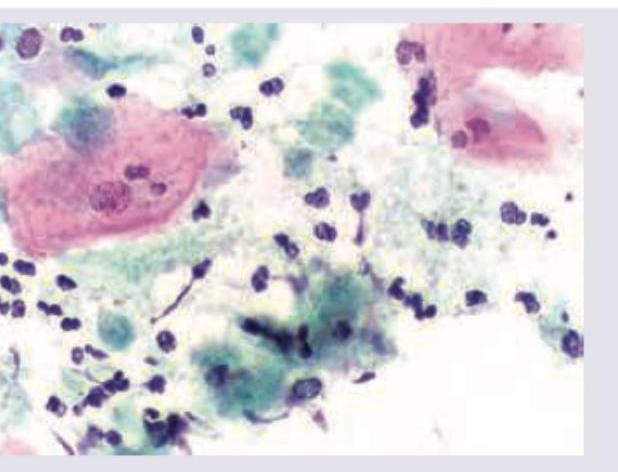
1 questionsA wet mount preparation of vaginal discharge shows the following. Identify the organism responsible.

INI-CET 2015 - Microbiology INI-CET Practice Questions and MCQs
Question 11: A wet mount preparation of vaginal discharge shows the following. Identify the organism responsible.
- A. Trichomonas vaginalis (Correct Answer)
- B. Neisseria gonorrhoeae
- C. Chlamydia
- D. Treponema pallidum
Explanation: ***Trichomonas vaginalis*** - The image shows numerous flagellated protozoa, characterized by their **pear-shaped appearance** with **jerky motility** on wet mount examination. - **Trichomonas vaginalis** is a flagellated protozoan parasite causing vaginitis, typically presenting with frothy, yellow-green vaginal discharge and strawberry cervix. - Wet mount microscopy showing motile trophozoites is the classic diagnostic method for trichomoniasis. *Neisseria gonorrhoeae* - This bacterium is a **gram-negative diplococcus**, typically seen intracellularly within neutrophils on Gram stain. - It does not present as flagellated protozoa on microscopy. *Chlamydia* - **Chlamydia trachomatis** is an obligate intracellular bacterium, not visible on routine wet mount microscopy. - Diagnosis requires specialized staining (Giemsa), immunofluorescence, or molecular tests (NAAT). *Treponema pallidum* - This is a **spirochete** responsible for syphilis, typically identified using dark-field microscopy from ulcer exudate or serological tests. - It does not present as the large, flagellated protozoa characteristic of Trichomonas.
Obstetrics and Gynecology
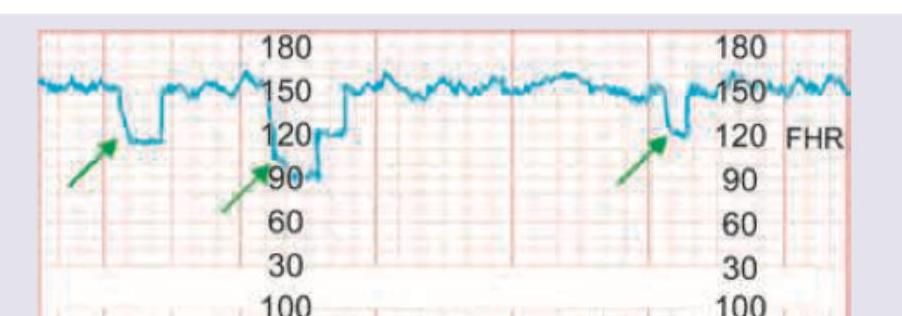
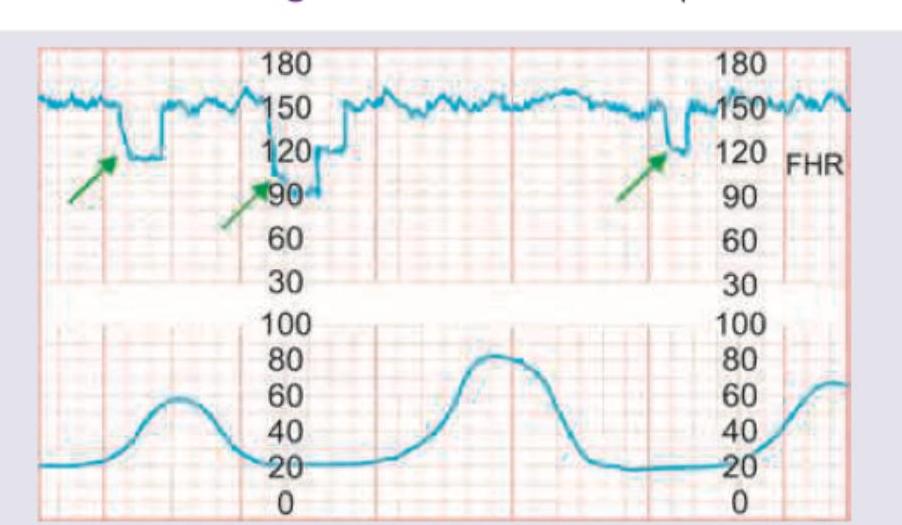
2 questionsThe following CTG indicates:

The following CTG indicates:

INI-CET 2015 - Obstetrics and Gynecology INI-CET Practice Questions and MCQs
Question 11: The following CTG indicates:
- A. Early deceleration
- B. Late deceleration
- C. Variable deceleration (Correct Answer)
- D. Sinusoidal pattern
Explanation: ***Variable deceleration*** - This CTG shows **abrupt, irregular drops in fetal heart rate (FHR)** that do not consistently correspond to uterine contractions. The onset, depth, and duration of the decelerations vary, which is characteristic of variable decelerations. - Variable decelerations are often associated with **umbilical cord compression**, leading to a transient decrease in blood flow to the fetus. *Early deceleration* - Early decelerations are **gradual, symmetrical drops in FHR** that mirror the shape of the uterine contraction, meaning they begin and end with the contraction. - They are typically benign and caused by **fetal head compression** during contractions. *Late deceleration* - Late decelerations are **gradual, symmetrical drops in FHR** where the nadir of the deceleration occurs after the peak of the uterine contraction, and the recovery to baseline also occurs after the contraction has ended. - They are indicative of **uteroplacental insufficiency** and can be a sign of fetal hypoxia. *Sinusoidal pattern* - A sinusoidal pattern is characterized by a **smooth, undulating, sine wave-like FHR rhythm** with an amplitude of 5-15 bpm and a frequency of 2-5 cycles per minute, lasting for 20 minutes or more. - This pattern is highly concerning and is associated with **severe fetal anemia** or hypoxia.
Question 12: The following CTG indicates:
- A. Fetal head compression (Correct Answer)
- B. Cord compression
- C. Normal tracing
- D. Fetal anemia
Explanation: ***Fetal head compression*** - The CTG shows **early decelerations**, characterized by a gradual decrease in fetal heart rate (FHR) that mirrors the contraction onset (as indicated by the green arrows and lower graph). - Early decelerations are typically benign and are caused by **fetal head compression**, which increases intracranial pressure and stimulates the vagus nerve. *Cord compression* - **Variable decelerations** are associated with cord compression and are characterized by an abrupt, jagged decrease in FHR that is variable in timing and shape relative to contractions. - The pattern displayed here is smooth and consistent with contractions, not the abrupt changes seen in variable decelerations. *Normal tracing* - A normal tracing would show a **baseline FHR within the normal range**, moderate variability, and either no decelerations or only occasional, reassuring accelerations. - The repeated decelerations observed here, while benign, indicate a physiological response to contractions and therefore do not represent a completely normal tracing. *Fetal anemia* - Fetal anemia can cause a variety of FHR patterns, including **tachycardia** (due to increased cardiac output) or **sinusoidal heart rate patterns**, which are smooth, undulating FHR tracings. - The decelerations seen in this CTG are not characteristic of fetal anemia.
Pathology
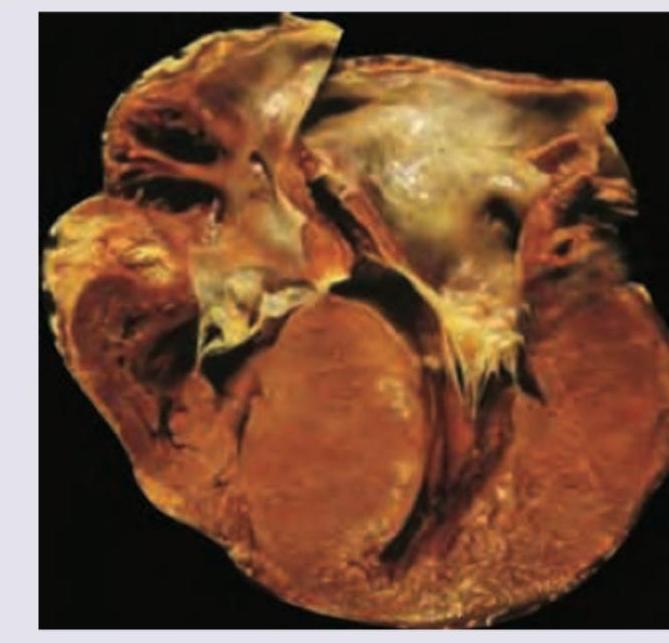
2 questionsAn athlete collapsed suddenly during exercise and died on the field. Postmortem heart is shown in the figure. There is family history of heart disease. What is the diagnosis?

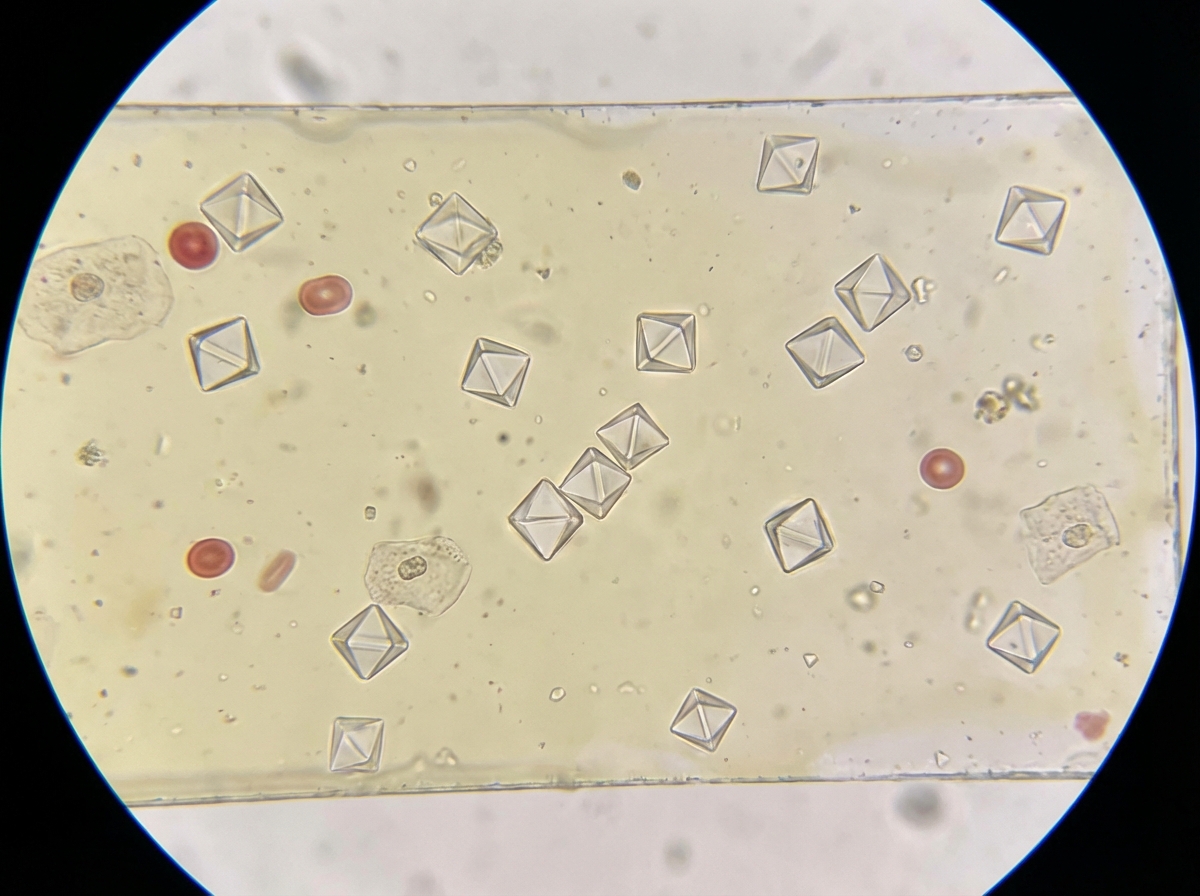
Which urine crystals are shown in the figure below?

INI-CET 2015 - Pathology INI-CET Practice Questions and MCQs
Question 11: An athlete collapsed suddenly during exercise and died on the field. Postmortem heart is shown in the figure. There is family history of heart disease. What is the diagnosis?
- A. Hypertrophic cardiomyopathy (Correct Answer)
- B. Mitral regurgitation
- C. Mitral stenosis
- D. Aortic stenosis with left ventricular hypertrophy
Explanation: ***Hypertrophic cardiomyopathy*** - **Sudden cardiac death** in young athletes, especially with a family history, is a classic presentation of **hypertrophic cardiomyopathy (HCM)** [2][3]. - Postmortem examination typically reveals **asymmetric septal hypertrophy** and **myocardial fiber disarray**, which are characteristic of HCM [1]. *Mitral regurgitation* - While mitral regurgitation can lead to heart failure, it is less commonly associated with **sudden death in athletes** without prior symptoms. - The primary finding would be **valvular abnormalities** and **left atrial/ventricular dilation**, not typically isolated hypertrophy. *Mitral stenosis* - Mitral stenosis primarily causes **left atrial enlargement** and **pulmonary hypertension**, leading to symptoms like dyspnea and fatigue. - It is not a common cause of **sudden cardiac death** in athletes and would not typically present with the gross hypertrophy seen in HCM. *Aortic stenosis with left ventricular hypertrophy* - Aortic stenosis can cause **left ventricular hypertrophy** due to increased pressure overload. - However, sudden death in athletes due to aortic stenosis is less common than HCM, and the hypertrophy in aortic stenosis is typically **concentric** and symmetrical, unlike the asymmetric hypertrophy often seen in HCM [1]. **References:** [1] Kumar V, Abbas AK, et al.. Robbins and Cotran Pathologic Basis of Disease. 9th ed. The Heart, pp. 577-578. [2] Kumar V, Abbas AK, et al.. Robbins and Cotran Pathologic Basis of Disease. 9th ed. The Heart, pp. 576-577. [3] Cross SS. Underwood's Pathology: A Clinical Approach. 6th ed. Common Clinical Problems From Cardiovascular Disease, pp. 303-304.
Question 12: Which urine crystals are shown in the figure below?
- A. Triple phosphate crystals
- B. Uric acid crystals
- C. Cystine crystals
- D. Calcium oxalate dihydrate crystals (Correct Answer)
- E. Calcium oxalate monohydrate crystals
Explanation: ***Calcium oxalate dihydrate crystals*** - The crystals shown are **octahedral** in shape, resembling small **envelopes**, which is characteristic of calcium oxalate dihydrate crystals. - These crystals typically appear in **acidic urine** and are the most common type of crystals that can lead to **kidney stones**. - Found in conditions like hyperoxaluria, ethylene glycol poisoning, and vitamin C excess. *Incorrect: Triple phosphate crystals* - Also known as **struvite crystals**, these have a characteristic **"coffin lid"** appearance. - Form in **alkaline urine** and are associated with urinary tract infections caused by urease-producing bacteria. *Incorrect: Uric acid crystals* - Appear as **rhomboid** or **rosette-shaped** crystals in **acidic urine**. - Associated with hyperuricemia, gout, and tumor lysis syndrome. *Incorrect: Cystine crystals* - Have a distinctive **hexagonal** shape and appear in acidic urine. - Pathognomonic for **cystinuria**, an inherited disorder of amino acid transport. *Incorrect: Calcium oxalate monohydrate crystals* - Have a **dumbbell** or **oval** shape, distinct from the envelope-shaped dihydrate form. - Also associated with hyperoxaluria and ethylene glycol poisoning.
Pediatrics
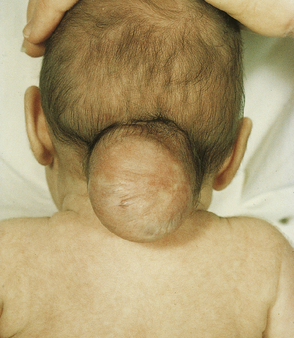
2 questionsIdentify the congenital defect seen in this baby.

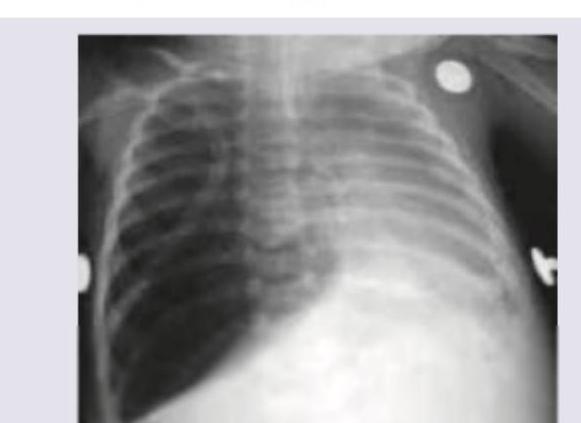
A 4-year-old admitted in ward with pneumonia. He develops sudden onset of breathlessness. What is the next step in management?

INI-CET 2015 - Pediatrics INI-CET Practice Questions and MCQs
Question 11: Identify the congenital defect seen in this baby.
- A. Craniorachischisis totalis (Correct Answer)
- B. Cystic hygroma
- C. Cervical meningocele
- D. Encephalocele
Explanation: ***Craniorachischisis totalis*** - This is a severe form of **neural tube defect** characterized by complete failure of closure of the neural tube, involving both the **cranial and spinal regions**. - The image shows an extensive defect affecting the entire length of the neural axis, with exposed brain tissue and spinal cord, which is consistent with **craniorachischisis totalis**. *Cystic hygroma* - A **cystic hygroma** is a congenital malformation of the lymphatic system, typically appearing as a multicystic mass, most commonly in the **neck or axilla**. - It does not involve exposed brain or spinal cord tissue and has a different appearance than the extensive defect shown in the image. *Cervical meningocele* - A **cervical meningocele** is a type of spina bifida where only the **meninges** (membranes surrounding the spinal cord) protrude through a defect in the cervical spine. - While it involves the spine, it is usually a localized sac-like protrusion, and the brain itself is not extensively exposed as seen in the image. *Encephalocele* - An **encephalocele** is a neural tube defect where there is a protrusion of brain tissue and/or meninges through an opening in the **skull**, typically at the back of the head. - While it involves the brain, it is generally a localized defect of the skull, not extending the entire length of the spine and cranium as depicted in the image.
Question 12: A 4-year-old admitted in ward with pneumonia. He develops sudden onset of breathlessness. What is the next step in management?
- A. Intercostal drainage tube insertion
- B. Emergency needle thoracostomy (Correct Answer)
- C. Decrease mechanical ventilation setting
- D. Increase mechanical ventilation setting
Explanation: ***Emergency needle thoracostomy*** - This patient, a 4-year-old with pneumonia and sudden breathlessness, likely has a **tension pneumothorax**, which is a life-threatening emergency requiring immediate decompression. The chest X-ray shows a collapsed right lung and a mediastinal shift, consistent with tension pneumothorax. - An **emergency needle thoracostomy** (needle decompression) is the immediate life-saving procedure to relieve the pressure in a tension pneumothorax before more definitive treatment can be initiated. - Performed by inserting a large-bore needle (14-16G) into the **2nd intercostal space, mid-clavicular line** on the affected side. *Intercostal drainage tube insertion* - While an intercostal drainage tube (chest tube) is the definitive treatment for pneumothorax, it takes more time to insert and is not the immediate first step for a **tension pneumothorax** in an unstable patient. - The delay in performing needle decompression could be fatal in a rapidly deteriorating patient with tension pneumothorax. *Decrease mechanical ventilation setting* - Decreasing mechanical ventilation settings would not address the underlying pathology of a tension pneumothorax, which is trapped air causing lung collapse and mediastinal shift. - This action could further compromise the patient's respiratory status if the pneumothorax is severe and the patient is already hypoxemic. *Increase mechanical ventilation setting* - Increasing mechanical ventilation settings would likely worsen a **tension pneumothorax** by forcing more air into the pleural space and increasing intrathoracic pressure. - This would further compromise venous return to the heart and reduce cardiac output, rapidly leading to **cardiovascular collapse**.