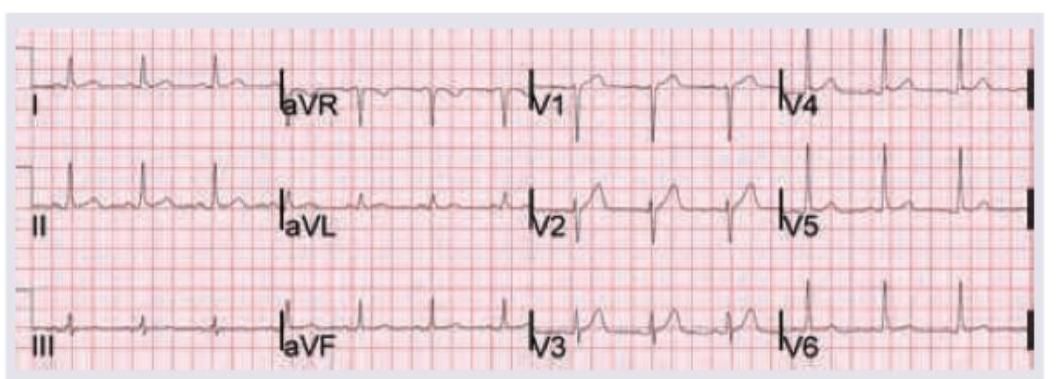
Question 1: A 65-year-old elderly male has history of sweating and chest pain for last 24 hr with the following ECG. Which of the following is not given in managing the patient?
- A. Aspirin
- B. Statin
- C. Thrombolytic therapy (Correct Answer)
- D. Morphine
Explanation: ***Thrombolytic therapy***
- **Thrombolytic therapy** is contraindicated in this patient due to the **24-hour delay** from symptom onset, as fibrinolytic therapy is generally not recommended beyond **12 hours** and absolutely contraindicated after **24 hours**.
- The **risk-benefit ratio** becomes unfavorable after this time window, with increased bleeding risk and minimal myocardial salvage potential, making **primary PCI** the preferred reperfusion strategy if available.
*Aspirin*
- **Aspirin** remains indicated in STEMI regardless of presentation timing as an **antiplatelet agent**.
- It provides ongoing **secondary prevention** benefits and helps prevent further thrombotic events even in delayed presentations.
*Statin*
- **High-dose statin therapy** is recommended immediately in all ACS patients, including those with delayed presentation.
- Statins provide **plaque stabilization** and **anti-inflammatory effects** that are beneficial regardless of symptom onset timing.
*Morphine*
- While **morphine** is generally avoided in STEMI due to potential **delayed absorption** of oral antiplatelet agents and possible increased mortality, it may still be considered for **severe refractory chest pain**.
- It can be used cautiously when **nitroglycerin** fails to provide adequate pain relief, especially in delayed presentations where reperfusion options are limited.