Anatomy
1 questionsWhich among the following is a pressure epiphysis?
FMGE 2025 - Anatomy FMGE Practice Questions and MCQs
Question 71: Which among the following is a pressure epiphysis?
- A. Elbow joint
- B. Head of Humerus (Correct Answer)
- C. Sternum
- D. Wrist joint
Explanation: ***Head of Humerus*** - **Pressure epiphyses** are located at the ends of long bones where they transmit weight-bearing forces and facilitate movement across joints - The **head of humerus** is a classic example of a pressure epiphysis, articulating with the glenoid cavity of the scapula at the glenohumeral joint - It transmits forces from the upper limb and bears the load during various shoulder movements - Other examples include femoral head, humeral head, and tibial condyles *Elbow joint* - The elbow is a **synovial hinge joint**, not an epiphysis - While the joint contains epiphyses (distal humerus, proximal radius and ulna), the joint itself is not an epiphysis - Joints are articulations between bones, whereas epiphyses are the rounded ends of long bones *Sternum* - The sternum is a **flat bone** in the anterior chest wall, not a long bone - It does not have typical epiphyses like long bones - Flat bones ossify differently through intramembranous ossification, not endochondral ossification with distinct epiphyseal plates *Wrist joint* - The wrist is a **complex synovial joint** (radiocarpal joint), not an epiphysis - It is formed by articulation of the distal radius with carpal bones - Like the elbow, it contains epiphyseal regions but is not itself an epiphysis
Community Medicine
1 questionsWhich of the following is the schedule of the OPV vaccine?
FMGE 2025 - Community Medicine FMGE Practice Questions and MCQs
Question 71: Which of the following is the schedule of the OPV vaccine?
- A. 6 to 12 weeks
- B. 6th week, 10th week & 9th month
- C. 6th week, 10th week and 14th week (Correct Answer)
- D. 6th week, 14th week & 9th month
Explanation: ***6th week, 10th week and 14th week***- This schedule represents the **primary series** of Oral Polio Vaccine (OPV-1, OPV-2, and OPV-3) doses given in the National Immunization Schedule (NIS).- These doses are administered 4 weeks apart, starting at 6 weeks of age, and are crucial for developing robust immunity against the **poliovirus**.*6th week, 10th week & 9th month*- Although the 6th and 10th weeks are correct for the first two primary doses, the third dose should be administered at the **14th week**, not the 9th month.- The 9th month is the typical schedule point for the first dose of **Measles/MR vaccine** and **Vitamin A supplementation**, not a primary OPV dose.*6th week, 14th week & 9th month*- This schedule incorrectly misses the required **10th-week** dose, which interrupts the recommended 4-week spacing for the primary series of OPV.- Furthermore, the inclusion of the **9th month** timing incorrectly substitutes the proper 14th-week slot for the third primary dose.*6 to 12 weeks*- This describes a broad time window and is not the specific, thrice-repeated dosing schedule required for the **OPV primary series** (OPV-1, OPV-2, and OPV-3).- The standard schedule involves three distinct doses timed precisely at **6, 10, and 14 weeks** of age to achieve high seroconversion rates.
Obstetrics and Gynecology
6 questionsEdematous villi with chromosome XY were found. What will be the diagnosis?
OCPs are not protective for?
This instrument is contraindicated for?
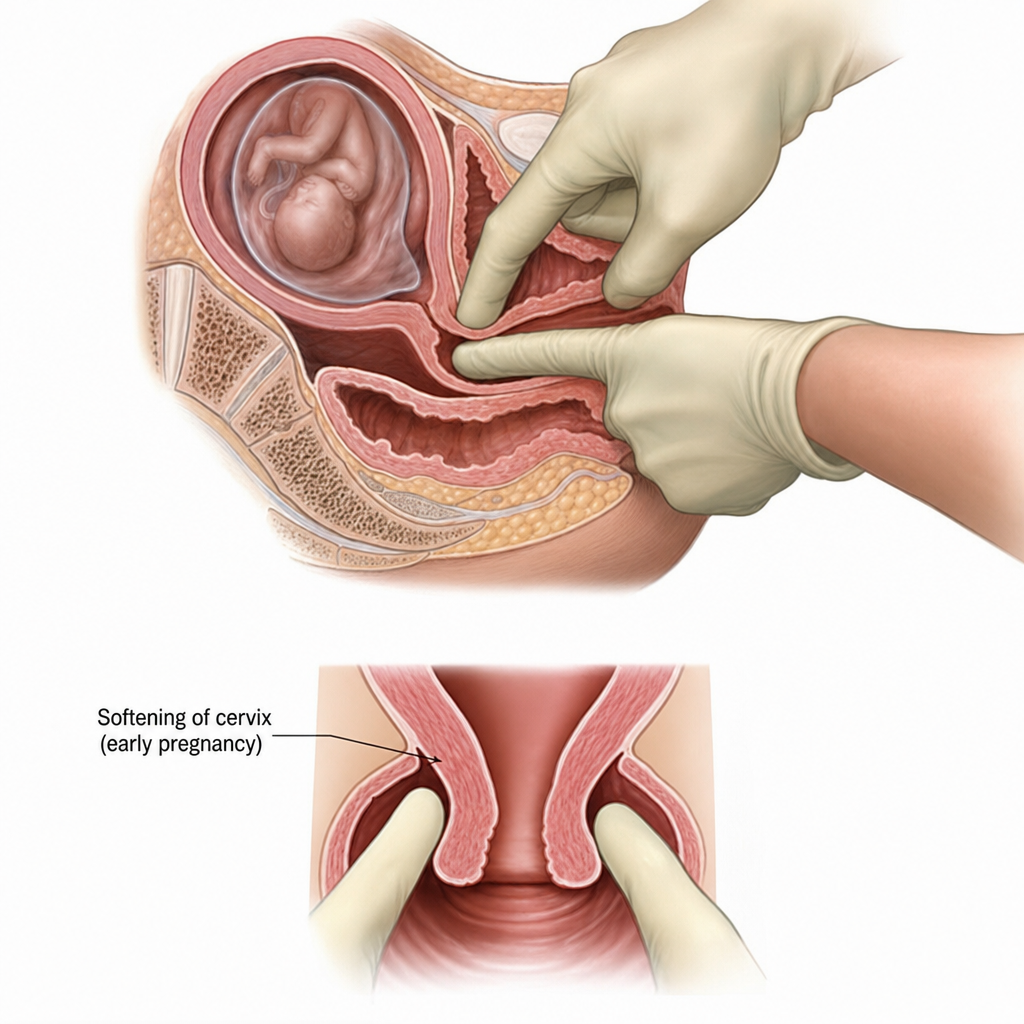
The image depicts which of the following early signs of pregnancy?
Which findings are most suggestive of tubal pregnancy?
A female presents with hirsutism, delayed periods, obesity. USG findings are given below. What is the likely diagnosis?
FMGE 2025 - Obstetrics and Gynecology FMGE Practice Questions and MCQs
Question 71: Edematous villi with chromosome XY were found. What will be the diagnosis?
- A. Complete mole (Correct Answer)
- B. Ectopic pregnancy
- C. Partial mole
- D. Cyst
Explanation: ***Correct: Complete mole*** The finding of **edematous/hydropic villi** with a diploid karyotype (**46,XY**) is characteristic of a **Complete hydatidiform mole**. - A complete mole results from the fertilization of an 'empty' ovum by a single sperm (which duplicates, 46,XX) or two sperm (**46,XY**), leading to no fetal parts and diffuse **trophoblastic proliferation**. *Incorrect: Partial mole* A **Partial mole** is almost always triploid (e.g., **69,XXY** or 69,XXX), resulting from fertilization of a normal ovum by two sperm. - Histologically, it presents with a mixture of **normal and abnormal** (hydropic) villi, focal trophoblastic changes, and often identifiable **fetal parts**. *Incorrect: Cyst* This is a nonspecific term referring to a fluid-filled sac and does not account for the specific histological findings of abnormal **placental tissue** (edematous villi). - The presence of an abnormal **diploid karyotype (XY)** points towards a specific gestational trophoblastic disease rather than a generalized cystic structure. *Incorrect: Ectopic pregnancy* Ectopic pregnancy involves implantation outside the uterine cavity and, if villi are present, they are usually **normal chorionic villi** and not diffusely edematous. - The histological finding of **diffuse edematous villi** accompanied by the specific complete mole karyotype (**46,XY**) excludes a typical ectopic pregnancy.
Question 72: OCPs are not protective for?
- A. Breast Ca (Correct Answer)
- B. Endometrial Ca
- C. Ovarian Ca
- D. Colorectal Ca
Explanation: ***Breast Ca (Correct Answer)*** - OCPs are **not protective** against breast cancer - Current or recent use is associated with a **small, reversible increase** in risk, particularly with prolonged use (>5 years) - The risk is attributed to **exogenous estrogen and progesterone** stimulating hormone-sensitive breast tissue proliferation *Endometrial Ca (Incorrect - OCPs ARE protective)* - OCPs offer significant protection against endometrial cancer, reducing risk by about **50%** - This benefit is primarily due to the reliable dose of **progestin**, which induces **endometrial atrophy** and counteracts unopposed estrogen effects *Ovarian Ca (Incorrect - OCPs ARE protective)* - OCPs provide powerful protection against ovarian cancer, with benefit increasing with duration of use and persisting for decades after cessation - Mechanism involves suppression of **gonadotropins** and prevention of **repeated ovulation**, reducing trauma and carcinogenic transformation potential of the ovarian epithelium *Colorectal Ca (Incorrect - OCPs ARE protective)* - OCP use provides a long-lasting protective effect against colorectal cancer - This protective effect is thought to be mediated by **synthetic progestins and estrogens** altering local hormone receptors or bile acid composition
Question 73: This instrument is contraindicated for?
- A. After coming head of breech
- B. Obstructed labor (Correct Answer)
- C. Caesarean section
- D. Occipital posterior position
Explanation: ***Obstructed labor*** - Using forceps in obstructed labor, such as in cases of **cephalopelvic disproportion (CPD)**, is absolutely contraindicated as it can cause severe maternal trauma like **uterine rupture** and significant fetal injury. - The definitive management for true obstructed labor is a **Caesarean section** to safely bypass the mechanical obstruction. *Caesarean section* - Wrigley's forceps are commonly used during a Caesarean section to assist in delivering the fetal head, especially when it is deeply engaged in the pelvis (a "lift-out" forceps application). - Therefore, a Caesarean section is an *indication* for the use of these specific forceps, not a contraindication. *After coming head of breech* - Forceps can be used to deliver the aftercoming head in a breech presentation to control delivery and prevent sudden decompression of the fetal head. **Piper's forceps** are specifically designed for this purpose. - This situation represents a specific indication for an assisted delivery, not a contraindication. *Occipital posterior position* - A persistent occiput posterior position can lead to a prolonged second stage of labor, which is a common indication for operative vaginal delivery. - Depending on the fetal head station, rotational forceps (like **Kielland's**) or outlet forceps (like **Wrigley's**) may be used to either rotate the head or deliver it directly in the posterior position.
Question 74: The image depicts which of the following early signs of pregnancy?
- A. Osiander sign
- B. Hegar sign (Correct Answer)
- C. Palmer sign
- D. Goodell sign
Explanation: ***Hegar Sign*** - The image demonstrates a bimanual examination where the lower uterine segment (isthmus) is compressed between the internal and external fingers, which is the classic maneuver to elicit **Hegar sign**. - This is a probable sign of pregnancy, characterized by the softening and compressibility of the uterine isthmus, typically detectable between **6 to 8 weeks** of gestation. *Goodell Sign* - **Goodell sign** refers to the significant softening of the **cervix** due to increased vascularity and edema, which feels like the consistency of lips rather than the tip of the nose. - The examination shown in the image is focused on palpating the **uterine isthmus**, which is located superior to the cervix. *Osiander sign* - **Osiander sign** is the detection of an increased **pulsation** in the **lateral vaginal fornices**, which is a result of increased blood flow through the uterine artery. - The image depicts the assessment of tissue consistency and compressibility, not the detection of arterial pulsations. *Palmer sign* - **Palmer sign** is characterized by regular, rhythmic **uterine contractions** that can be palpated during a bimanual examination in early pregnancy. - The maneuver shown is assessing the static compressibility of the uterine isthmus, not its dynamic contractile activity.
Question 75: Which findings are most suggestive of tubal pregnancy?
- A. Trilayer endometrium without adnexal mass
- B. Ovarian mass with single layer of endometrium
- C. Adnexal mass with empty uterus and fluid in pelvis (Correct Answer)
- D. Adnexal mass with empty uterus
Explanation: ***Adnexal mass with empty uterus and fluid in pelvis***- The visualization of an **adnexal mass** (corresponding to the tubal gestation) and an **empty uterus** confirms the diagnosis of an ectopic pregnancy.- The presence of **free fluid in the pelvis** (hemoperitoneum) is highly suggestive of a ruptured or leaking tubal pregnancy, representing the most urgent presentation.*Ovarian mass with single layer of endometrium*- An **ovarian mass** suggests pathology involving the ovary itself, such as an ovarian ectopic pregnancy or a cyst, rather than the most common site, the fallopian tube.- The **single layer of endometrium** (thin decidual reaction) may occur in ectopic pregnancy due to insufficient hormonal stimulus but is not sufficient evidence for a tubal location.*Adnexal mass with empty uterus*- While this constellation of findings definitely suggests an **ectopic pregnancy**, it is often indicative of an early and **unruptured** tubal pregnancy.- Lacking **free fluid (blood)** in the pelvis makes this option less suggestive of advanced or complicated tubal pregnancy compared to the correct option.*Trilayer endometrium without adnexal mass*- A **trilayer endometrium** is a typical ultrasound finding during the proliferative phase, or it may be seen in a developing intrauterine pregnancy (IUP).- The absence of an **adnexal mass** essentially excludes the possibility of a tubal ectopic pregnancy.
Question 76: A female presents with hirsutism, delayed periods, obesity. USG findings are given below. What is the likely diagnosis?
- A. Thecal luteal cyst
- B. POI
- C. PCOD (Correct Answer)
- D. OHSS
Explanation: ***PCOD*** - The clinical triad of **hirsutism** (excess hair growth), **oligomenorrhea** (delayed periods), and **obesity** are classic features of Polycystic Ovarian Disease (PCOD). - The ultrasound image shows multiple small, peripherally arranged follicles in an enlarged ovary, a classic finding known as the **"string of pearls"** sign, which fulfills one of the key **Rotterdam criteria** for diagnosis. *POI* - Primary Ovarian Insufficiency (POI) is characterized by amenorrhea and symptoms of estrogen deficiency (like hot flashes) before age 40, associated with elevated **FSH** levels. - Ultrasound in POI typically shows small, **atrophic ovaries** with very few or no visible follicles, which is the opposite of the enlarged, polycystic ovary shown. *OHSS* - Ovarian Hyperstimulation Syndrome (OHSS) is an acute, iatrogenic condition resulting from **fertility treatments** involving ovulation induction, not a chronic presentation. - Sonographically, OHSS presents with massively enlarged ovaries containing numerous large cysts, often accompanied by **ascites** and **pleural effusion**, which are not seen here. *Thecal luteal cyst* - Theca lutein cysts are caused by overstimulation from very high levels of **hCG**, commonly seen in conditions like **molar pregnancy** or multiple gestations. - These cysts are typically large, bilateral, and multiseptated, giving a **"soap-bubble"** appearance on ultrasound, which is distinct from the multiple small peripheral follicles of PCOD.
Pediatrics
1 questionsA 7-year-old child was brought with bow legs and on x-ray of wrist showed metaphyseal cupping, fraying, and widening of growth plates with osteopenia. What is the diagnosis?
FMGE 2025 - Pediatrics FMGE Practice Questions and MCQs
Question 71: A 7-year-old child was brought with bow legs and on x-ray of wrist showed metaphyseal cupping, fraying, and widening of growth plates with osteopenia. What is the diagnosis?
- A. Hypophosphatemia
- B. Scurvy
- C. Rickets (Correct Answer)
- D. Osteogenesis imperfecta
Explanation: ***Rickets*** - The clinical presentation of **bow legs** combined with characteristic wrist X-ray findings demonstrates **metaphyseal cupping**, **fraying**, and **widening of the growth plates**, along with **osteopenia** - all pathognomonic features of rickets. - This condition results from defective **bone mineralization** at growth plates, most commonly due to **vitamin D deficiency**, leading to soft and deformed bones that cannot support normal weight-bearing. - The combination of clinical deformity and specific radiological changes at the metaphysis makes this diagnosis definitive. *Hypophosphatemia* - While **hypophosphatemia** can be an underlying biochemical cause of rickets (hypophosphatemic rickets), it represents the **etiology** rather than the radiological diagnosis itself. - The X-ray changes described are the manifestation of rickets, regardless of whether it's caused by vitamin D deficiency, phosphate deficiency, or other metabolic disorders. *Scurvy* - Scurvy from **vitamin C deficiency** produces distinctly different radiological findings, including the **dense metaphyseal line (white line of Fraenkel)**, **pencil-thin cortices**, and **subperiosteal hemorrhage**. - Clinical features include **bleeding gums**, **petechial rash**, and **irritability**, which differ from the bone deformities seen in rickets. *Osteogenesis imperfecta* - OI presents with **increased bone fragility** and **multiple fractures** rather than the metabolic bone changes seen in rickets. - X-rays would show **thin cortices**, **gracile bones**, and **wormian bones in the skull**, not the metaphyseal changes characteristic of rickets. - While both conditions cause bone deformities, the **metaphyseal cupping and fraying** are specific to rickets, not OI.
Radiology
1 questionsIdentify the fracture:
FMGE 2025 - Radiology FMGE Practice Questions and MCQs
Question 71: Identify the fracture:
- A. Gutter fracture
- B. Linear fracture
- C. Depressed fracture (Correct Answer)
- D. Hinge fracture
Explanation: ***Depressed fracture*** - This radiograph clearly shows an inward displacement of a segment of the skull, which is the defining characteristic of a **depressed fracture**. This type of fracture is often described as a "ping-pong" fracture in infants due to the pliability of their skulls. - These fractures are clinically significant as they can be associated with underlying **dural tears**, **cortical contusions**, or **intracranial hemorrhage**, often necessitating surgical evaluation and intervention. *Linear fracture* - A linear fracture would appear as a sharp, lucent line on the radiograph without any displacement or depression of the bone fragments. - This is the most common type of skull fracture, but it does not match the visible **indentation** of the cranial vault seen in the image. *Hinge fracture* - A hinge fracture is a type of **basilar skull fracture** that runs across the floor of the middle cranial fossa, effectively separating the skull base into two halves. - This is a severe injury, not depicted in the image, which shows a fracture of the **parietal bone** in the cranial vault, not the base. *Gutter fracture* - A gutter fracture is a specific subtype of depressed fracture, typically caused by a tangential impact (e.g., a bullet grazing the skull), which carves out a trough or "gutter" in the bone. - While it involves depression, the term is more specific. The fracture shown is better classified by the general term **depressed fracture**, which accurately describes the inward buckling of the bone.