Anatomy
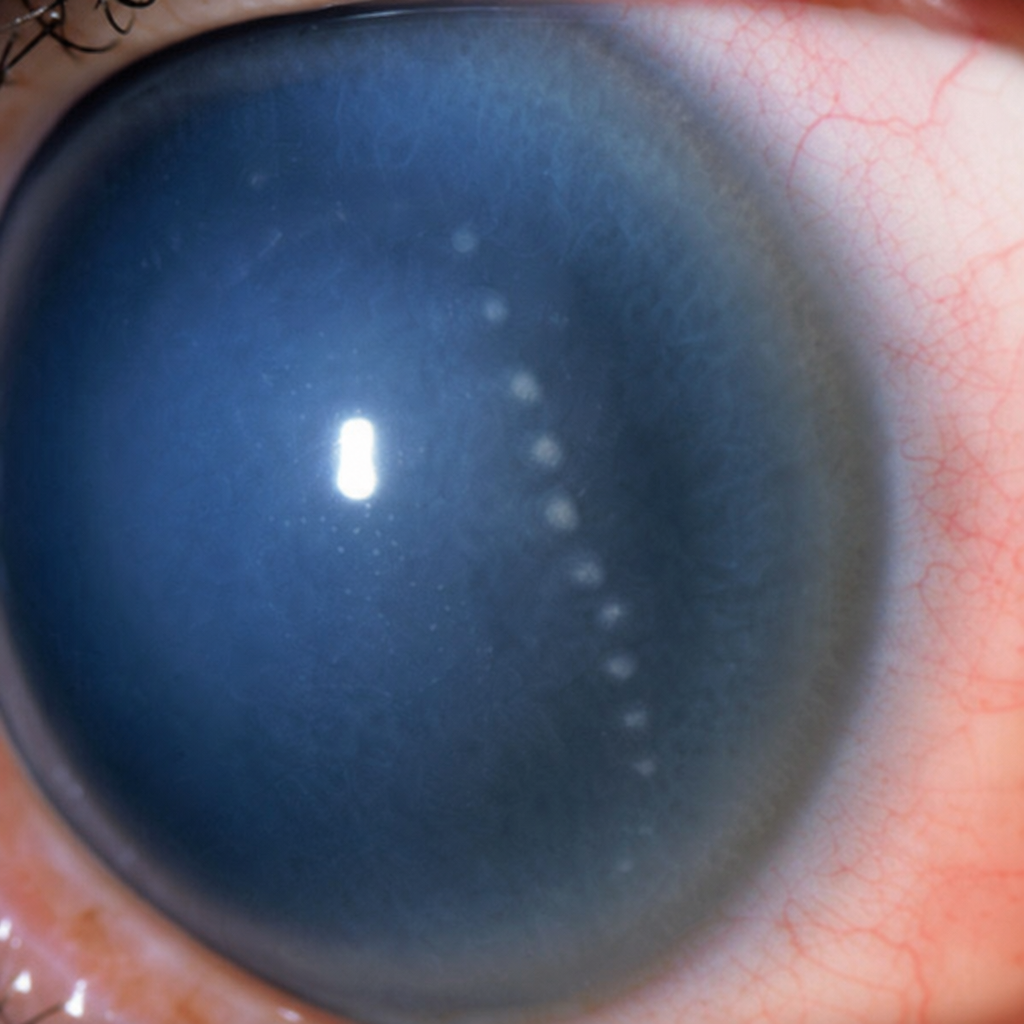
1 questionsA 45-year-old patient presents with difficulty reacting to bright light. On examination, the pupillary light reflex is absent but the near reflex is preserved. Where is the lesion likely located?
FMGE 2025 - Anatomy FMGE Practice Questions and MCQs
Question 351: A 45-year-old patient presents with difficulty reacting to bright light. On examination, the pupillary light reflex is absent but the near reflex is preserved. Where is the lesion likely located?
- A. Pretectal area of the midbrain (Correct Answer)
- B. Edinger–Westphal nucleus
- C. Optic nerve
- D. Oculomotor nerve
Explanation: ***Pretectal area of the midbrain*** This clinical presentation describes **light-near dissociation** (Argyll Robertson pupil), where the pupillary light reflex is absent but the near (accommodation) reflex is preserved [2]. **Pathway Analysis:** - **Light reflex pathway**: Retina → optic nerve → optic tract → pretectal nucleus → bilateral Edinger-Westphal nuclei → pupillary constriction [1]. - **Near reflex pathway**: Visual cortex → frontal eye fields → Edinger-Westphal nucleus (bypasses pretectal area) **Why this lesion causes the finding:** A lesion in the **pretectal area** interrupts the light reflex pathway while sparing the near reflex pathway (which doesn't pass through the pretectal area), resulting in the characteristic light-near dissociation [2]. **Clinical significance:** - Classic finding in neurosyphilis (tabes dorsalis) [1] - Also seen in diabetes mellitus, multiple sclerosis, and midbrain lesions [1] - Pupils are typically small, irregular, and show poor light response *Incorrect - Edinger-Westphal nucleus* - This is the parasympathetic nucleus that provides the **final common pathway** for BOTH light and near reflexes [2] - A lesion here would abolish **both reflexes**, not cause dissociation *Incorrect - Optic nerve* - Lesion would cause an **afferent pupillary defect** (Marcus Gunn pupil) - Light reflex would be impaired in the affected eye, but near reflex would remain intact in both eyes - This doesn't explain bilateral light-near dissociation *Incorrect - Oculomotor nerve* - Carries parasympathetic fibers from Edinger-Westphal nucleus to the eye [2] - Lesion would cause **efferent defect** affecting both light AND near reflexes - Would also cause ptosis, ophthalmoplegia, and pupil dilation
Community Medicine
1 questionsA girl with schizophrenia presents to a Primary Health Centre (PHC) in India. Which of the following online applications, provided by the Government of India (GOI), is used for mental health service support?
FMGE 2025 - Community Medicine FMGE Practice Questions and MCQs
Question 351: A girl with schizophrenia presents to a Primary Health Centre (PHC) in India. Which of the following online applications, provided by the Government of India (GOI), is used for mental health service support?
- A. Tele MANAS (Correct Answer)
- B. eSanjeevani
- C. NIKSHAY
- D. U-WIN
Explanation: ***Tele MANAS*** - **Tele MANAS** (Tele Mental Health Assistance and Networking Across States) is the Government of India's national initiative providing **24/7 tele-counseling and mental health support** across the country, making it the correct service for a schizophrenia patient. - It functions as a **tele-mental health facility** under the National Mental Health Programme, offering critical assistance and linkage to specialized services. *eSanjeevani* - **eSanjeevani** is the GOI's national telemedicine platform providing **general healthcare consultations** through doctor-to-doctor (eSanjeevani HWC) and patient-to-doctor (eSanjeevani OPD) services. - While it offers broad healthcare services, it is **not the dedicated mental health support system** - that specific function is served by **Tele MANAS**. *NIKSHAY* - **NIKSHAY** is the standardized web-enabled application used for monitoring and tracking all patients diagnosed with **Tuberculosis (TB)** in India. - It handles notification, diagnosis, treatment adherence, and outcomes for **TB control**, having no operational role in providing mental health counseling. *U-WIN* - **U-WIN** is the digital platform developed by the GOI for managing and digitizing data related to the **Universal Immunization Programme (UIP)**. - It focuses specifically on **immunization records**, tracking vaccination status, scheduling, and overall coverage, making it unrelated to mental health services.
Ophthalmology
5 questionsA myopic patient presents with complaints of flashes and floaters. On examination, a deep anterior chamber is seen. What is the likely diagnosis?
An elderly female presents with sudden onset of pain, redness, and decreased vision. On examination, hazy cornea, fixed mid-dilated pupil, and shallow anterior chamber are noted. What is the diagnosis?
A patient presents with a painless ulcer in the eye. On examination, a long, branching ulcer with desquamated epithelium is seen on the cornea. What is the most likely diagnosis?
A 45-year-old patient with eye examination findings of a deep anterior chamber and jet-black pupil is prescribed +12D glasses. Likely diagnosis?
A patient presents with painful lid swelling. On examination, a pus point is observed at the base of an eyelash. Which of the following glands is involved?
FMGE 2025 - Ophthalmology FMGE Practice Questions and MCQs
Question 351: A myopic patient presents with complaints of flashes and floaters. On examination, a deep anterior chamber is seen. What is the likely diagnosis?
- A. Central serous retinopathy
- B. Tractional retinal detachment
- C. Exudative retinal detachment
- D. Rhegmatogenous retinal detachment (Correct Answer)
Explanation: ***Rhegmatogenous retinal detachment***- The presence of **flashes (photopsia)** and **floaters** signifies acute **vitreoretinal traction** leading to a retinal break (*rhegma*), a classic presentation of RRD, especially in a **myopic** eye.- A **deep anterior chamber** can indicate **hypotony** (low intraocular pressure), which frequently occurs in RRD due to increased uveoscleral outflow from the fluid egress through the retinal break.*Exudative retinal detachment*- This type is caused by underlying processes like inflammation or tumors and is characterized by a lack of **retinal break** and, therefore, typically does **not** cause flashes or floaters associated with vitreous traction.- The subretinal fluid in this condition classically **shifts** upon changing head position, which is a key differentiating feature.*Tractional retinal detachment*- This form is caused by the contraction of **fibrovascular membranes** on the retinal surface, most commonly seen in advanced **proliferative diabetic retinopathy**.- It is usually slowly progressive and does **not** typically present acutely with the prominent **flashes** and **floaters** that suggest a fresh retinal tear.*Central serous retinopathy*- This condition involves fluid accumulation localized beneath the macula, leading to symptoms like **metamorphopsia** and central scotoma, without involving the peripheral retina.- It does **not** cause a generalized retinal detachment, significant **flashes** and **floaters**, or changes in the **anterior chamber depth**.
Question 352: An elderly female presents with sudden onset of pain, redness, and decreased vision. On examination, hazy cornea, fixed mid-dilated pupil, and shallow anterior chamber are noted. What is the diagnosis?
- A. Central retinal artery occlusion
- B. Acute conjunctivitis
- C. Acute congestive glaucoma (Correct Answer)
- D. Acute uveitis
Explanation: ***Acute congestive glaucoma (Acute angle-closure glaucoma)*** - This presentation is **classic** for acute angle-closure glaucoma with all hallmark features present - **Sudden onset** of severe pain, redness, and decreased vision due to rapidly elevated intraocular pressure (IOP) - **Hazy/edematous cornea** results from corneal epithelial edema secondary to extremely high IOP (often >40-60 mmHg) - **Fixed mid-dilated pupil** occurs due to iris ischemia and pupillary sphincter paralysis from pressure-induced vascular compromise - **Shallow anterior chamber** is the anatomical predisposition that precipitates angle closure, more common in elderly hypermetropic individuals - This is an **ophthalmic emergency** requiring immediate IOP reduction *Acute uveitis* - Presents with pain, redness, and photophobia, but key differentiating features are absent - Typically has a **miotic (constricted) pupil** due to ciliary spasm, not a fixed mid-dilated pupil - Cornea is usually **clear** unless there is associated keratitis; hazy cornea is not a characteristic feature - Anterior chamber is **deep or normal depth**, not shallow - Classic findings include **keratic precipitates**, cells and flare in anterior chamber on slit-lamp examination *Acute conjunctivitis* - Presents with redness, discharge, and foreign body sensation - Vision is typically **preserved** or only mildly affected - **No pain** (only mild irritation), cornea remains clear, pupil is normal and reactive - Anterior chamber depth is normal - The severe pain and anterior segment findings (hazy cornea, fixed pupil, shallow AC) rule this out *Central retinal artery occlusion (CRAO)* - Presents with **sudden, painless, profound vision loss** (classically "curtain coming down") - **Anterior segment is completely normal** — no corneal haze, normal pupil reactions (may have RAPD), normal AC depth - Fundoscopy shows **cherry-red spot** at macula, pale retina, and attenuated vessels - The presence of pain and anterior segment abnormalities excludes this diagnosis
Question 353: A patient presents with a painless ulcer in the eye. On examination, a long, branching ulcer with desquamated epithelium is seen on the cornea. What is the most likely diagnosis?
- A. Bacterial corneal ulcer
- B. Neurotrophic ulcer (Correct Answer)
- C. Fungal ulcer
- D. Dendritic ulcer
Explanation: ***Neurotrophic ulcer***- The defining feature of a **neurotrophic ulcer** is the **painless** nature of the epithelial defect, resulting from damage to the **trigeminal nerve** (CN V1) leading to loss of corneal sensation.- The ulcer morphology, described as a persistent epithelial defect (ulcer) with a desquamated, **geographic** or long-branching appearance, is characteristic of the poor healing seen in the setting of chronic denervation.*Fungal ulcer*- Fungal ulcers typically cause marked pain, photophobia, and conjunctival injection, which contrasts sharply with the painless presentation in this patient.- Morphologically, they are often characterized by elevated, gray-white ulcers with **feathery borders** and commonly exhibit satellite lesions or an underlying **immune ring**.*Dendritic ulcer*- A **dendritic ulcer** is pathognomonic for **Herpes Simplex Virus (HSV) keratitis** and is usually associated with significant pain and foreign body sensation.- While it is branching, it stains vividly, and its key features are **terminal bulbs** at the ends of the branches, differentiating it from the desquamated, geographic type of defect seen in neurotrophic disease.*Bacterial corneal ulcer*- Bacterial corneal ulcers are extremely painful, rapidly progressive, and associated with profound inflammation, ciliary injection, and often significant **anterior chamber reaction (hypopyon)**.- They usually present as dense, whitish-yellow **stromal infiltrates** with an overlying epithelial defect, not a painless, superficially desquamated pattern.
Question 354: A 45-year-old patient with eye examination findings of a deep anterior chamber and jet-black pupil is prescribed +12D glasses. Likely diagnosis?
- A. Pseudophakia
- B. Hypermetropia
- C. Aphakia (Correct Answer)
- D. Myopia
Explanation: **Aphakia** - The natural lens contributes approximately +15 to +20 diopters of refractive power; its absence (aphakia) results in severe **hypermetropia**, requiring a strong convex lens, typically around **+10D to +12D**, for correction. - The clinical findings—a **deep anterior chamber** (due to the backward displacement of the iris) and a distinctive **jet-black pupil** (due to the lack of the lens obscuring the view of the retina/fundus)—are classic signs of aphakia. *Pseudophakia* - **Pseudophakia** is the state of having an **intraocular lens (IOL)**, which restores the eye's refractive power, meaning the patient typically needs minimal spectacle correction, usually < +3D, not +12D. - While the pupil might appear black, the necessary post-operative correction power rules out residual uncorrected aphakia that requires +12D. *Myopia* - **Myopia** (nearsightedness) requires **concave (minus)** lenses for correction, standing in direct contrast to the strong **convex (+12D)** lens prescribed to this patient. - Myopia is caused by excessive axial length or corneal curvature, and it does not result in a pathologically deep anterior chamber or necessitate high-plus glasses. *Hypermetropia* - Although aphakia causes hypermetropia, primary, non-aphakic **hypermetropia** is usually corrected with lenses significantly weaker than **+12D** (typically < +6D). - Primary hypermetropia is usually related to a short axial length but is not typically associated with the defining features of a **jet-black pupil** or an abnormally **deep anterior chamber**.
Question 355: A patient presents with painful lid swelling. On examination, a pus point is observed at the base of an eyelash. Which of the following glands is involved?
- A. Lacrimal gland
- B. Meibomian gland
- C. Zeis gland (Correct Answer)
- D. Moll gland
Explanation: ***Correct: Zeis gland*** - An acute pyogenic infection of the **Gland of Zeis** (a sebaceous gland associated with the eyelash follicle) is defined as an **external hordeolum** (stye). - The presence of a localized, painful swelling with a **pus point directed externally at the base of an eyelash** is the hallmark presentation of a stye. - External hordeolum classically involves the Zeis gland, though Moll glands may also be implicated. *Incorrect: Meibomian gland* - Infection of the Meibomian glands (located deep within the tarsal plate) leads to an **internal hordeolum**. - An internal hordeolum usually presents with swelling pointing *inward* toward the conjunctival surface, not externally at the lash base. *Incorrect: Lacrimal gland* - The lacrimal gland is located in the **superolateral aspect** of the orbit and is responsible for tear production. - Infection (**dacryoadenitis**) causes swelling in the upper, outer part of the eye, presenting as an **S-shaped curve** of the lid margin, distinct from a localized eyelid margin infection. *Incorrect: Moll gland* - Moll glands are modified **apocrine sweat glands** that also open near the lash follicle. - While their infection can contribute to external hordeolum, the **Zeis gland** (sebaceous) is classically cited as the primary source of acute, localized pus point at the base of the eyelash in standard teaching.
Psychiatry
3 questionsA man presents to the hospital with a bizarre behavior. He is unable to recall his personal identity and has no memory of how he traveled 100 km to reach the hospital. A collateral history reveals he experienced a traumatic earthquake a few months ago. Which of the following is the most likely diagnosis?
A 28-year-old software engineer presents with sleep disturbances, low mood, and stress for the past 3 months. He attributes his symptoms to ongoing problems at work. He has no prior psychiatric history. Which of the following is the most likely diagnosis?
A female presents with symptoms of being excessively talkative, hyperactive, sleeping very little, and spending large amounts of money on shopping sprees. When confronted, she becomes irritable. What is the most likely diagnosis?
FMGE 2025 - Psychiatry FMGE Practice Questions and MCQs
Question 351: A man presents to the hospital with a bizarre behavior. He is unable to recall his personal identity and has no memory of how he traveled 100 km to reach the hospital. A collateral history reveals he experienced a traumatic earthquake a few months ago. Which of the following is the most likely diagnosis?
- A. Dissociative identity disorder
- B. Schizophrenia
- C. Dissociative amnesia (Correct Answer)
- D. Global amnesia
Explanation: ***Dissociative amnesia*** - The presentation of sudden, unplanned travel away from home (called **dissociative fugue**) combined with an inability to recall important **autobiographical information** (personal identity) is the classic manifestation of severe dissociative amnesia. - This disorder is overwhelmingly triggered by psychological stress or **trauma**, such as the patient's recent experience of a traumatic earthquake. *Dissociative identity disorder* - This disorder requires the presence of two or more distinct personality states (or **alters**) that recurrently take control of the person's behavior, which is not described here. - While amnesia is a feature, the primary pathology is the fragmentation of identity, not just the loss of personal autobiographical memory without distinct alters. *Schizophrenia* - Schizophrenia is characterized by **psychotic features** such as delusions, hallucinations, and grossly disorganized thinking and behavior, which are absent in this presentation. - The core deficit here is memory and identity retrieval linked to trauma, not a primary thought disorder or persistent **psychosis**. *Global amnesia* - **Transient Global Amnesia (TGA)** involves anterograde amnesia (inability to form new memories) and retrograde amnesia (loss of recent past memories). - Crucially, in contrast to dissociative amnesia, severe impairment of **personal identity** and highly selective memory loss linked to trauma are typically absent in TGA.
Question 352: A 28-year-old software engineer presents with sleep disturbances, low mood, and stress for the past 3 months. He attributes his symptoms to ongoing problems at work. He has no prior psychiatric history. Which of the following is the most likely diagnosis?
- A. Generalized anxiety disorder
- B. Adjustment disorder (Correct Answer)
- C. Post-traumatic stress disorder (PTSD)
- D. Acute stress disorder
Explanation: ***Adjustment disorder*** - This diagnosis is characterized by the development of emotional or behavioral symptoms in response to an identifiable **psychosocial stressor** (ongoing work problems) occurring within **3 months** of the onset of the stressor. - The patient's symptoms (low mood, stress, sleep disturbances) are clinically significant but do not meet the full diagnostic criteria for a more severe disorder like **Major Depressive Disorder** or **Generalized Anxiety Disorder**. *Generalized anxiety disorder* - This disorder primarily involves **excessive anxiety and worry** about numerous events or activities, occurring more days than not for at least **6 months**. - The patient's symptoms are directly tied to a specifiable stressor, making adjustment disorder a better fit than the broader, persistent worry characteristic of GAD. *Acute stress disorder* - This diagnosis requires exposure to a **traumatic stressor** (e.g., threat to life or serious injury), which is not the etiology described here (work problems). - Furthermore, symptoms must resolve within **one month** of the traumatic event; this patient's symptoms have persisted for 3 months. *Post-traumatic stress disorder (PTSD)* - Similar to acute stress disorder, PTSD requires exposure to an actual or threatened **death, serious injury, or sexual violence**, which is not indicated by the vignette. - Core features of PTSD include **intrusive memories** (flashbacks), avoidance of stimuli, and hyperarousal, none of which are reported by the patient.
Question 353: A female presents with symptoms of being excessively talkative, hyperactive, sleeping very little, and spending large amounts of money on shopping sprees. When confronted, she becomes irritable. What is the most likely diagnosis?
- A. Schizophrenia
- B. Obsessive-compulsive disorder
- C. Bipolar II + Hypomania
- D. Bipolar I + Mania (Correct Answer)
Explanation: ***Bipolar I + Mania***- The presentation of *pressured speech* (excessively talkative), *decreased need for sleep*, *hyperactivity*, and severe *impulsivity* (large spending) meets the criteria for a **full manic episode**.- A manic episode is defined by lasting at least one week, causing severe functional impairment, and is necessary for the diagnosis of **Bipolar I Disorder**.*Bipolar II + Hypomania*- Symptoms of a **hypomanic episode** are similar but are less severe, last a minimum of 4 consecutive days, and *do not cause marked functional impairment* or require hospitalization.- The patient’s severe symptoms (reckless spending, irritability upon confrontation) leading to major social/occupational problems indicate **mania**, not hypomania.*Obsessive-compulsive disorder*- This disorder is characterized by intrusive, recurrent **obsessions** (thoughts) and repetitive **compulsions** (behaviors) performed to relieve anxiety, which are not the primary symptoms here.- While spending could be impulsive, it is part of a cluster of mood and activity disturbances, not an ego-dystonic ritualistic compulsion.*Schizophrenia*- The primary features of **Schizophrenia** involve psychosis, such as **hallucinations**, **delusions**, and **disorganized thinking**, which are not described in this presentation.- Although irritability and hyperactivity may overlap, the core presentation is dominated by symptoms of a disruptive mood state, making a primary mood disorder more likely.