Biochemistry
1 questionsA 6-month-old boy presents with recurrent bacterial and fungal infections, chronic diarrhea, and failure to thrive. He is diagnosed with severe combined immunodeficiency due to an autosomal recessive inheritance pattern. Which enzyme deficiency is responsible?
FMGE 2024 - Biochemistry FMGE Practice Questions and MCQs
Question 71: A 6-month-old boy presents with recurrent bacterial and fungal infections, chronic diarrhea, and failure to thrive. He is diagnosed with severe combined immunodeficiency due to an autosomal recessive inheritance pattern. Which enzyme deficiency is responsible?
- A. B. Ornithine transcarbamylase
- B. C. Hypoxanthine-guanine phosphoribosyltransferase
- C. A. Phosphomannose isomerase
- D. D. Adenosine deaminase (Correct Answer)
Explanation: ***Adenosine deaminase*** - The **autosomal recessive** form of **Severe Combined Immunodeficiency (SCID)** is most commonly caused by a deficiency in **Adenosine Deaminase (ADA)**, accounting for about 15% of all SCID cases. - ADA deficiency leads to the accumulation of toxic metabolites (*dATP*), which are highly toxic to rapidly dividing cells, especially **T and B lymphocytes**, resulting in profound lymphopenia and immunodeficiency. *Phosphomannose isomerase* - Deficiency in **Phosphomannose Isomerase (PMI)** causes Congenital Disorder of Glycosylation Type Ib (**CDG-Ib**), which presents with protein-losing enteropathy, hypoglycemia, and failure to thrive, but usually *not* recurrent bacterial and fungal infections severe enough to be classified as SCID. - CDG-Ib is a generalized metabolic disorder affecting **glycosylation**, primarily presenting with liver and gastrointestinal issues. *Ornithine transcarbamylase* - **Ornithine Transcarbamylase (OTC)** deficiency is the most common urea cycle disorder, typically presenting with acute **hyperammonemia** (lethargy, seizures, coma) after an initial period, especially following protein intake, not specifically severe SCID with recurrent infections. - OTC deficiency results in the impaired conversion of **carbamoyl phosphate** and **ornithine** to citrulline, leading to elevated ammonia levels. *Hypoxanthine-guanine phosphoribosyltransferase* - Deficiency in **Hypoxanthine-Guanine Phosphoribosyltransferase (HGPRT)** is responsible for **Lesch-Nyhan Syndrome**, an X-linked recessive disorder characterized by overproduction of **uric acid** (**hyperuricemia**), neurological dysfunction, and self-mutilation. - Although a purine metabolism disorder, it does not cause primary immunodeficiency like SCID; it mainly affects the **nervous system** and purine salvage pathway.
Forensic Medicine
1 questionsA family died in a closed room that was full of smoke from a wood fire. Which of the following findings is likely to be seen on the body?
FMGE 2024 - Forensic Medicine FMGE Practice Questions and MCQs
Question 71: A family died in a closed room that was full of smoke from a wood fire. Which of the following findings is likely to be seen on the body?
- A. D. Brown colored pigmentation
- B. A. Cherry red hypostasis (Correct Answer)
- C. B. Cyanosis
- D. C. Blackish discoloration
Explanation: ***A. Cherry red hypostasis*** - Carbon monoxide (CO) from incomplete combustion of wood binds to hemoglobin with ~240 times greater affinity than oxygen, forming **carboxyhemoglobin (COHb)** - COHb has a characteristic **bright cherry-red or pink color**, which manifests as cherry-red hypostasis (post-mortem lividity) and pink coloration of internal organs - This is the **pathognomonic post-mortem finding** in CO poisoning deaths - Levels >50% COHb are typically fatal *B. Cyanosis* - Cyanosis (bluish discoloration) occurs when deoxygenated hemoglobin exceeds 5 g/dL - **Not seen in CO poisoning** because carboxyhemoglobin remains bright red, giving a pink appearance rather than blue - The victim may appear "healthy" or flushed despite being dead *C. Blackish discoloration* - Not a characteristic finding in CO poisoning - May be seen in putrefaction or certain chemical poisonings, but not acute CO exposure *D. Brown colored pigmentation* - Not associated with CO poisoning - Brown discoloration might suggest methemoglobinemia or post-mortem changes, but not CO toxicity
Obstetrics and Gynecology
5 questionsA 27-year-old pregnant female in her first trimester presents to the OPD for a regular antenatal checkup. During blood type screening, potential ABO incompatibility is discussed. The healthcare provider explains that certain antibody types are less concerning than others during pregnancy. ABO incompatibility does not occur due to which antibody in her case?
Identify the option with the least risk of TOLAC (trial of labor after cesarean)?
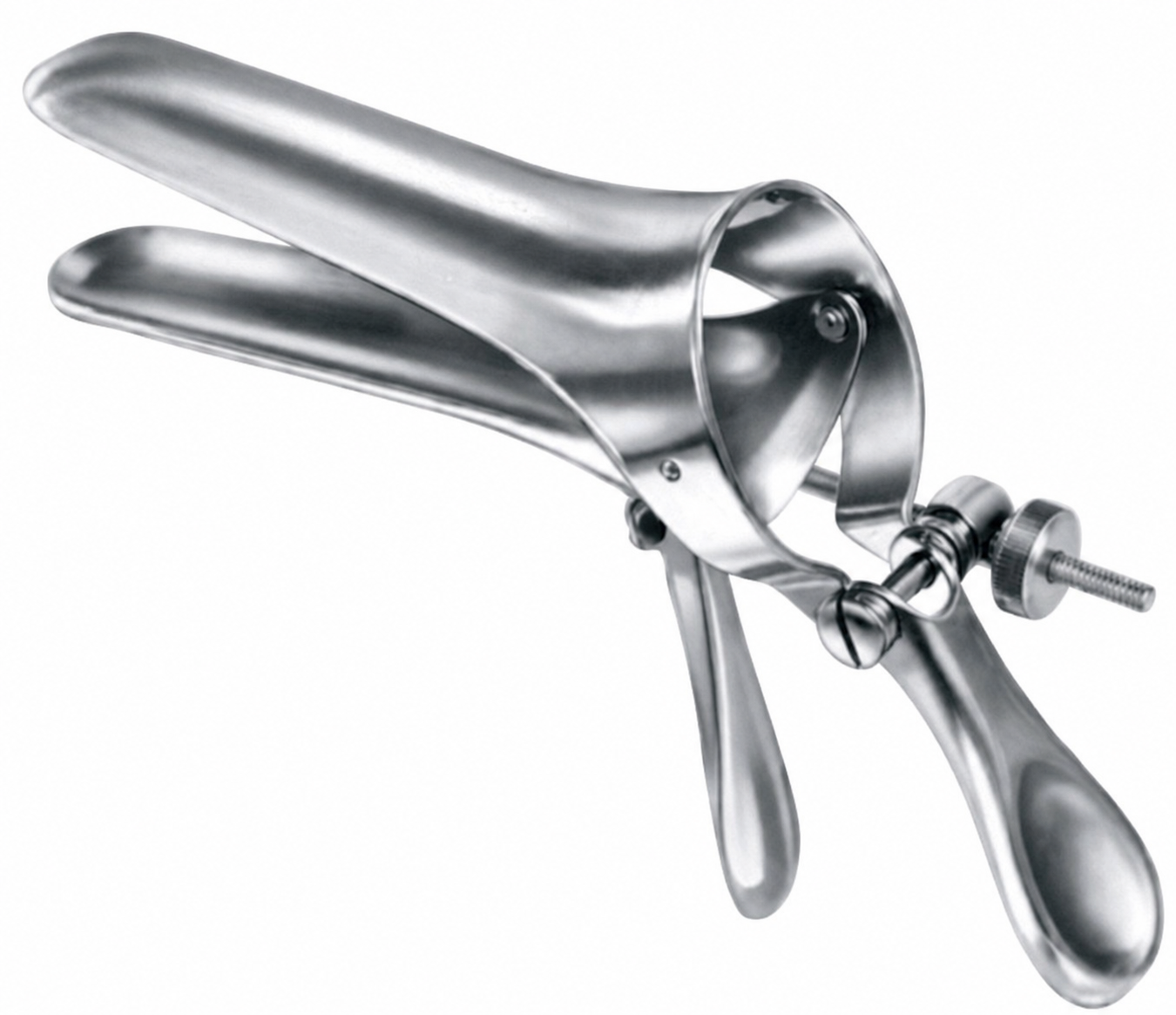
Identify the gynecological instrument shown in the image below:
Which among the following hormones acts on post ovulatory endometrium?
Identify the condition that is least likely to cause postmenopausal bleeding?
FMGE 2024 - Obstetrics and Gynecology FMGE Practice Questions and MCQs
Question 71: A 27-year-old pregnant female in her first trimester presents to the OPD for a regular antenatal checkup. During blood type screening, potential ABO incompatibility is discussed. The healthcare provider explains that certain antibody types are less concerning than others during pregnancy. ABO incompatibility does not occur due to which antibody in her case?
- A. IgG
- B. IgD
- C. IgA
- D. IgM (Correct Answer)
Explanation: ***IgM***- The predominant natural antibodies against **ABO antigens** (anti-A and anti-B) are of the **IgM class**, which are large pentameric molecules. These **IgM antibodies** generally cannot cross the placenta due to their size, meaning they do not reach the fetal circulation and cause significant hemolytic disease of the newborn (HDN). *IgA*- IgA is predominantly found in secretions (mucous membranes, breast milk) and is not generally involved in causing **hemolytic disease of the newborn (HDN)**, as it does not cross the placenta in significant amounts. This antibody class is not the primary mechanism of incompatibility, as the most common non-transmissible antibodies are IgM. *IgG*- **IgG is the only class** of immunoglobulin that efficiently crosses the placenta into the fetal circulation, meaning that any present **IgG anti-A or anti-B antibodies** are the ones responsible for causing **fetal red cell hemolysis** in ABO incompatibility. Though ABO HDN is usually less severe than Rh HDN, the pathology depends entirely on the presence of IgG. *IgD*- IgD antibodies are primarily expressed on the surface of naïve **B lymphocytes** and are involved in B cell activation and signaling. They are not involved in **red blood cell agglutination** or placental transfer relevant to ABO incompatibility.
Question 72: Identify the option with the least risk of TOLAC (trial of labor after cesarean)?
- A. Low-segment transverse incision (Correct Answer)
- B. Breech presentation
- C. Pre-eclampsia
- D. Classical C section
Explanation: ***Low-segment transverse incision*** - This type of uterine incision is preferred during a Cesarean section as it is made in the least active segment, carrying the **lowest risk** of **uterine rupture** (approximately 0.5% to 0.9%) during a subsequent trial of labor. - It is generally considered the standard requirement for safely proceeding with a **VBAC** (Vaginal Birth After Cesarean) attempt. *Classical C section* - A **classical C-section** involves a vertical incision in the contractile upper segment (**uterine fundus**), which has the highest risk of **uterine rupture** (4% to 9%) during labor. - A history of a classical incision is generally considered an absolute **contraindication** to TOLAC. *Pre-eclampsia* - The presence of **pre-eclampsia** increases the risk of adverse outcomes to both mother and fetus, such as **placental abruption** and **intrauterine growth restriction**. - While not an absolute contraindication, it complicates management and often necessitates induction or delivery, placing it at a higher risk level compared to an uncomplicated TOLAC attempt. *Breech presentation* - **Breech presentation** is itself a risk factor for difficult vaginal delivery in nulliparous women, and combining it with a prior Cesarean scar (TOLAC) elevates the overall obstetric risk. - Many practitioners consider **breech presentation** in the current pregnancy a relative contraindication to TOLAC, favoring a planned repeat Cesarean delivery due to increased risk of complications.
Question 73: Identify the gynecological instrument shown in the image below:
- A. Graves vaginal speculum
- B. Auvard speculum
- C. Sims speculum
- D. Cusco vaginal speculum (Correct Answer)
Explanation: ***Cusco vaginal speculum*** - In the given image, the instrument shows the characteristic **bivalve design** with two curved blades that can be opened and closed using a **screw mechanism** visible at the handle, which is the defining feature of a Cusco speculum. - The **self-retaining mechanism** and **smooth, curved blades** designed for routine gynecological examinations like **Pap smears** are clearly visible, distinguishing it from other speculums. *Graves vaginal speculum* - The Graves speculum has **wider, more angled blades** that contour to the vaginal fornices, which is not seen in the image. - It typically has a **different handle configuration** and blade curvature compared to what's shown in the instrument. *Auvard speculum* - This is a **weighted speculum** with a distinctly different design featuring a **heavy posterior blade** for retraction during procedures like **D&C**. - The instrument in the image lacks the characteristic **weighted design** and **single posterior blade** typical of an Auvard speculum. *Sims speculum* - The Sims speculum is **non-self-retaining** and has a **double-ended, curved design** that requires manual holding or assistance. - Unlike the instrument shown, it lacks a **screw mechanism** and has a completely different **curved, hook-like shape**.
Question 74: Which among the following hormones acts on post ovulatory endometrium?
- A. Follicle stimulating hormone
- B. Luteinizing hormone
- C. Oestrogen
- D. Progesterone (Correct Answer)
Explanation: ***Progesterone*** - It is predominantly secreted by the **corpus luteum** during the post-ovulatory phase, inducing the crucial changes of the **secretory endometrium** to facilitate implantation.- Progesterone causes the endometrial glands to become highly **coiled** and secretory, leading to the development of **spiral arteries** and preparing the uterine lining for a fertilized ovum.*Luteinizing hormone* - LH's main role is triggering **ovulation** via the mid-cycle surge and maintaining the function of the **corpus luteum** post-ovulation.- Its primary targets are ovarian cells (theca and corpus luteum), not the direct transformation of the post-ovulatory endometrial structure.*Follicular stimulating hormone* - FSH functions primarily during the preceding **follicular phase**, stimulating the growth of ovarian follicles and inducing **estrogen** synthesis.- Its levels decrease significantly after ovulation, and it has no direct, major trophic effect on the secretory endometrium.*Oestrogen* - **Oestrogen** is the primary hormone responsible for the **proliferative phase** (pre-ovulatory), causing endometrial thickening and repair.- While necessary for endometrial primedness, Oestrogen is superseded by **Progesterone** in dictating the specific glandular and vascular characteristics of the post-ovulatory secretory phase.
Question 75: Identify the condition that is least likely to cause postmenopausal bleeding?
- A. Genital tract trauma
- B. Endometrial CA
- C. Granulosa cell tumor
- D. Ovarian follicular cyst (Correct Answer)
Explanation: ***Ovarian follicular cyst*** * **Follicular cysts** result from failed ovulation and require active high **FSH** stimulation, making them generally rare or transient findings in **postmenopausal** women due to ovarian senescence. * Unlike other estrogen-producing tumors, simple follicular cysts usually do not produce sufficient sustained **estrogen** levels to pathologically stimulate the endometrium and cause bleeding in the postmenopausal period. *Endometrial CA* * **Endometrial carcinoma** is the most common cause of postmenopausal bleeding, accounting for 10-15% of cases, and must be ruled out in every patient presenting with this symptom. * Bleeding results from the erosion, ulceration, and breakdown of the friable, neoplastic tissue lining the **endometrium**. *Granulosa cell tumor* * This is a classic example of an **estrogen-producing ovarian tumor** (a sex cord-stromal tumor). * The chronic, unopposed **estrogen** stimulation causes proliferation of the endometrium, leading to subsequent **endometrial hyperplasia** or cancer, resulting in bleeding. *Genital tract trauma* * Trauma, including minor injuries, is a significant cause of postmenopausal bleeding due to underlying **vaginal and cervical atrophy**. * Postmenopausal tissue is thin, lacks pliancy, and is fragile, making it susceptible to bleeding even from minor trauma during examination, intercourse, or other physical contact.
Pathology
1 questionsA 10-year-old boy is brought to the ED after being stung by a bee while playing outside. Within minutes of the sting, he developed shock, respiratory failure, and vascular collapse. What type of hypersensitivity reaction is most likely responsible?
FMGE 2024 - Pathology FMGE Practice Questions and MCQs
Question 71: A 10-year-old boy is brought to the ED after being stung by a bee while playing outside. Within minutes of the sting, he developed shock, respiratory failure, and vascular collapse. What type of hypersensitivity reaction is most likely responsible?
- A. A. IgE-mediated reaction (Correct Answer)
- B. D. T cell-mediated response
- C. B. IgG-mediated reaction
- D. C. IgA-mediated hypersensitivity
Explanation: A. IgE-mediated reaction - This is a **Type I hypersensitivity reaction** (anaphylaxis) [2], characterized by the rapid release of potent mediators (like **histamine** and leukotrienes) from mast cells and basophils upon re-exposure to an allergen (bee venom) [1][3][4]. - The clinical presentation of rapid onset **shock**, **respiratory failure**, and **vascular collapse** minutes after exposure is the classic, life-threatening manifestation of systemic anaphylaxis [5]. *B. IgG-mediated reaction* - IgG is the primary mediator in **Type II (cytotoxic)** and **Type III (immune complex)** hypersensitivity reactions, which are typically delayed (hours to days) and not immediate [2]. - Type II reactions involve antibody binding directly to cell surface antigens (e.g., hemolytic anemia), while Type III involves tissue damage from soluble immune complexes (e.g., serum sickness) [2]. *C. IgA-mediated hypersensitivity* - IgA is predominantly found in mucosal secretions and protects mucosal barriers; it is not the main antibody responsible for classic Type I systemic anaphylaxis. - While IgA can be implicated in various disorders (such as **celiac disease**), it does not mediate the massive, immediate systemic degranulation seen in bee sting-induced shock. *D. T cell-mediated response* - This refers to **Type IV hypersensitivity**, which is a **delayed reaction** mediated by sensitized T lymphocytes and macrophages (e.g., contact dermatitis, tuberculin test). - Type IV reactions typically take 24–72 hours to manifest and lack the rapid, humoral-driven vasodilation and bronchospasm characteristic of Type I anaphylaxis. **References:** [1] Kumar V, Abbas AK, et al.. Robbins and Cotran Pathologic Basis of Disease. 9th ed. The Lung, pp. 688-689. [2] Kumar V, Abbas AK, et al.. Robbins and Cotran Pathologic Basis of Disease. 9th ed. Diseases of the Immune System, pp. 208-210. [3] Kumar V, Abbas AK, et al.. Robbins and Cotran Pathologic Basis of Disease. 9th ed. Diseases of the Immune System, pp. 210-211. [4] Kumar V, Abbas AK, et al.. Robbins and Cotran Pathologic Basis of Disease. 9th ed. Diseases of the Immune System, pp. 211-212. [5] Kumar V, Abbas AK, et al.. Robbins and Cotran Pathologic Basis of Disease. 9th ed. Diseases of the Immune System, pp. 212-213.
Pediatrics
1 questionsAn 8-year-old child with a history of GTCS came with an episode of convulsions for more than 45 minutes. What will be the appropriate management for this patient?
FMGE 2024 - Pediatrics FMGE Practice Questions and MCQs
Question 71: An 8-year-old child with a history of GTCS came with an episode of convulsions for more than 45 minutes. What will be the appropriate management for this patient?
- A. Lorazepam followed by levetiracetam (Correct Answer)
- B. Levetiracetam followed by valproate
- C. Valproate followed by gabapentin
- D. Carbamazepine followed by lorazepam
Explanation: ***Lorazepam followed by levetiracetam***- **Status epilepticus (SE)** is defined as a seizure lasting more than five minutes or recurrent seizures without regaining consciousness between them. The initial management involves the administration of a **benzodiazepine** (like lorazepam, midazolam, or diazepam) to rapidly terminate the seizure.- If the seizure persists after the benzodiazepine, the next step is to initiate a non-benzodiazepine antiseizure medication (ASM) like **levetiracetam**, **fosphenytoin**, or **valproate** to prevent seizure recurrence.*Valproate followed by gabapentin*- **Valproate** is a suitable second-line agent for SE, but it should not be the first drug; rapid control requires a **benzodiazepine**.- **Gabapentin** is typically not used in the management of acute SE because its onset of action is slow and it lacks efficacy for immediate seizure termination.*Carbamazepine followed by lorazepam*- **Carbamazepine** is a first-line agent for focal seizures but is generally avoided in generalized-onset seizures (like the **GTCS** history suggests) and is not used as a first-line drug for acute SE.- **Lorazepam** is the preferred first-line agent, and delaying it until after a non-benzodiazepine drug is inappropriate for acute SE management.*Levetiracetam followed by valproate*- **Levetiracetam** is an excellent second-line agent for SE but must be preceded by a **benzodiazepine** to rapidly terminate the ongoing seizure.- **Valproate** is also a suitable second-line agent, but the protocol requires immediate cessation of the seizure with a **benzodiazepine** before initiating an ASM like levetiracetam or valproate.
Pharmacology
1 questionsA patient having hypertension is on thiazides and is complaining of fatigue and hypokalemia. Which of the following drugs can prevent potassium loss?
FMGE 2024 - Pharmacology FMGE Practice Questions and MCQs
Question 71: A patient having hypertension is on thiazides and is complaining of fatigue and hypokalemia. Which of the following drugs can prevent potassium loss?
- A. Acetazolamide
- B. Indapamide
- C. Furosemide
- D. Amiloride (Correct Answer)
Explanation: ***Amiloride***- Amiloride is a **potassium-sparing diuretic** that acts by blocking the **Epithelial Sodium Channel (ENaC)** in the collecting duct. [5]- By inhibiting Na+ reabsorption here, it decreases the electrical gradient that drives **potassium secretion**, effectively counteracting the hypokalemic effect of thiazides. [2]*Furosemide*- Furosemide is a **loop diuretic** that inhibits the Na-K-2Cl cotransporter in the thick ascending limb.- It is notorious for causing significant urinary **potassium loss** and would worsen the patient's **hypokalemia** and fatigue. [5]*Acetazolamide*- Acetazolamide is a **carbonic anhydrase inhibitor** that increases the delivery of Na+ and bicarbonate (HCO3-) to the collecting duct. [4]- The increased delivery of these ions promotes the secretion and loss of **potassium** in the urine, thus failing to prevent hypokalemia. [4]*Indapamide*- Indapamide is a **thiazide-like diuretic** that, similar to thiazides, inhibits the NaCl cotransporter in the distal convoluted tubule. [1]- Like other thiazides, Indapamide is a **potassium-wasting diuretic** and would exacerbate the existing **hypokalemia**. [3]