

History of Microbiology - Germ Theory Genesis
- Early Observations:
- Girolamo Fracastoro (1546): Proposed "seminaria contagiorum" (seeds of contagion) for disease spread.
- Agostino Bassi (1835): Showed a microorganism (fungus) caused silkworm disease (muscardine).
- Key Evidence & Proponents:
- Ignaz Semmelweis (1847): Linked puerperal fever to physician contamination; advocated handwashing.
- John Snow (1854): Traced cholera outbreak to contaminated water (Broad Street pump); father of epidemiology.
- Louis Pasteur (1857-1876):
- Germ theory of fermentation & disease.
- Disproved spontaneous generation (swan-neck flask experiment).
- Developed pasteurization, vaccines (anthrax, rabies).
⭐ Pasteur is often called the "Father of Microbiology".
- Joseph Lister (1867): Applied germ theory to surgery; introduced antiseptic techniques (carbolic acid). "Father of Antiseptic Surgery".
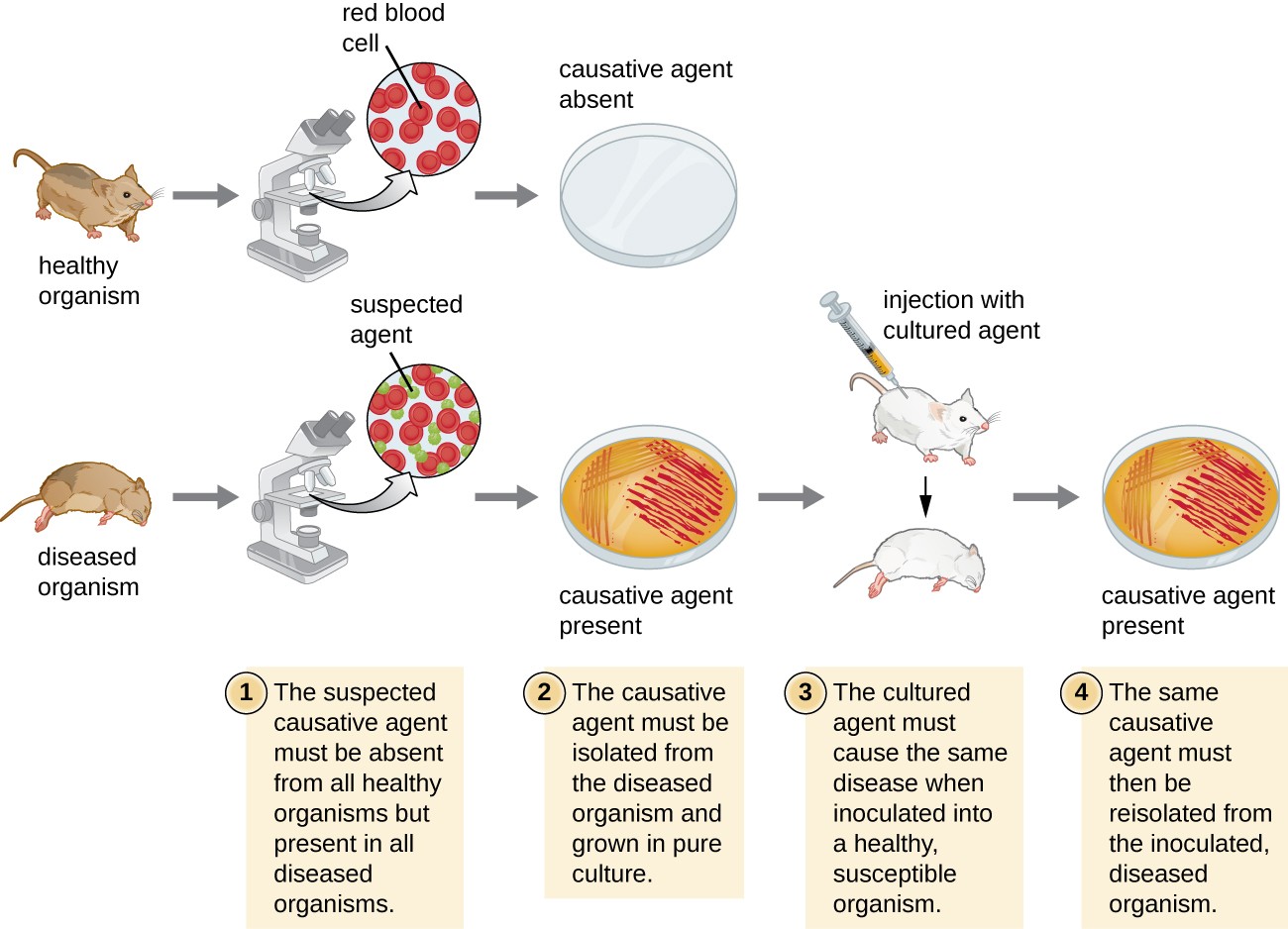
- Definitive Proof - Koch's Postulates:
Loading diagram…
History of Microbiology - Immunological Milestones
- Variolation: Early inoculation method against smallpox, preceding vaccination.
- Edward Jenner (1796): Developed smallpox vaccine using cowpox virus; often called the "Father of Immunology".
- Louis Pasteur:
- Developed live attenuated vaccines: fowl cholera (1880), anthrax (1881), rabies (1885).
- Emil von Behring & Shibasaburo Kitasato (1890): Discovered diphtheria antitoxin (serum therapy); Behring awarded first Nobel Prize in Physiology or Medicine, 1901.
- Elie Metchnikoff (1882): Described phagocytosis, a cornerstone of cellular immunity; Nobel Prize 1908.
- Paul Ehrlich (c. 1900): Proposed side-chain theory for antibody formation (humoral immunity).
- Charles Richet & Paul Portier (1902): Described anaphylaxis; Nobel Prize 1913.
- Jules Bordet (1898): Discovered complement system. Nobel Prize 1919.
- Karl Landsteiner (1901): Discovered ABO blood groups; Nobel Prize 1930.

⭐ Louis Pasteur's development of attenuated vaccines for rabies and anthrax was a monumental step in actively inducing immunity and preventing infectious diseases.
History of Microbiology - The Magic Bullets
- Paul Ehrlich (Father of Chemotherapy): Introduced the concept of "magic bullets" - compounds that selectively target pathogens without harming the host.
- Developed Salvarsan (Arsphenamine/Compound 606) in 1910, the first effective chemotherapeutic agent, specifically for syphilis.
- Gerhard Domagk (1932): Discovered Prontosil (a sulfonamide), the first commercially available antibacterial drug, effective against streptococcal infections. Awarded Nobel Prize in 1939.
- Alexander Fleming (1928): Accidentally discovered Penicillin from Penicillium notatum.
- Howard Florey & Ernst Chain (1940s): Purified and developed Penicillin into a usable drug. Shared Nobel Prize with Fleming in 1945.
- Selman Waksman (1943): Discovered Streptomycin from Streptomyces griseus, the first antibiotic effective against Mycobacterium tuberculosis. Nobel Prize 1952.
⭐ Ehrlich tested over 600 arsenic compounds before finding Salvarsan (Arsphenamine, compound 606) as the "magic bullet" for syphilis.
Scope of Microbiology - Modern Marvels
- Medical: Disease diagnosis (PCR, culture), therapeutics (antibiotics), vaccine development, epidemiology.
- Industrial: Production of antibiotics, enzymes, vaccines, organic acids; fermented foods & beverages; bioremediation.
- Agricultural: Biofertilizers (Rhizobium), biopesticides (B. thuringiensis), nitrogen fixation, soil fertility, plant pathology.
- Food & Dairy: Food safety, quality control, preservation, probiotics, starter cultures.
- Environmental: Biogeochemical cycles (C, N, S), waste treatment, bioremediation, microbial ecology.
- Biotechnology: Genetic engineering (rDNA tech), genomics, proteomics, synthetic biology, monoclonal antibodies.
⭐ Recombinant DNA technology enables mass production of therapeutics like insulin using engineered microbes (e.g., E. coli), a landmark in medicine.
High‑Yield Points - ⚡ Biggest Takeaways
- Antonie van Leeuwenhoek, Father of Microbiology, first observed "animalcules" with his microscopes.
- Louis Pasteur confirmed the Germ Theory of Disease, developed pasteurization, and created vaccines (rabies, anthrax).
- Robert Koch established Koch's Postulates and identified pathogens for tuberculosis, cholera, and anthrax.
- Joseph Lister pioneered antiseptic surgery using carbolic acid, drastically reducing infections.
- Alexander Fleming discovered penicillin, marking a new era in treating bacterial infections.
- Paul Ehrlich, Father of Chemotherapy, introduced "magic bullets" like Salvarsan for syphilis.
Unlock the full lesson and continue reading
Signup to continue reading this lesson and unlimited access questions, flashcards, AI notes, and more
