

Principles of Rehabilitation - Rising Anew
- Goal: Restore normalcy, dignity, self-reliance in affected communities.
- Focus: Long-term, sustainable recovery; not just immediate relief.
- Core Principles:
- Community Participation: Empowering local involvement and decision-making.
- Equity & Impartiality: Prioritizing vulnerable groups (children, elderly, disabled).
- Sustainability: Ensuring long-term economic, social, environmental viability.
- Build Back Better: Enhancing community resilience, reducing future disaster risks.
- Coordination: Seamless collaboration (Govt, NGOs, international bodies).
- Psychosocial Support: Addressing trauma and mental health.
- Livelihood Restoration: Re-establishing income-generating activities.

⭐ Rehabilitation emphasizes "Build Back Better" - improving pre-disaster conditions and incorporating disaster risk reduction (DRR) measures.
Health & Psychosocial Care - Mending All
- Health Service Restoration:
- Rapidly restore Primary Health Care (PHC); utilize mobile clinics & temporary setups.
- Re-establish routine immunization, MCH services, and chronic disease care.
- Ensure functional referral pathways for specialized treatment.
- Disease Surveillance & Control:
- Strengthen surveillance for communicable diseases (e.g., cholera, measles, vector-borne).
- Implement prompt outbreak investigation, contact tracing, & control measures.
- Prioritize Water, Sanitation, and Hygiene (WASH) interventions.
- Nutritional Support:
- Assess nutritional status, focusing on vulnerable groups (children <5, pregnant/lactating women, elderly).
- Implement supplementary (SFP) and therapeutic feeding programs (e.g., for SAM).
- Provide essential micronutrient supplementation (Vitamin A, Iron).
- Psychosocial Well-being:
- Provide widespread Psychological First Aid (PFA).
- Screen for common mental health issues (PTSD, depression, anxiety) using simple tools.
- Establish community-based support systems, peer support groups & child-friendly spaces.
- Ensure access to specialized mental health care and follow-up.
⭐ Psychological First Aid (PFA) is a key initial intervention, focusing on safety, calming, connectedness, self-efficacy, and hope. It can be provided by trained laypersons.
Loading diagram…
Socio-Economic Recovery - Life's Basics
- Shelter & Housing:
- Phased approach: Emergency (tents, plastic sheeting) → Temporary/Transitional (prefabricated, core shelters) → Durable/Permanent (reconstruction, relocation).
- Prioritize vulnerable groups. Ensure safety, privacy.
- Water, Sanitation, Hygiene (WASH):
- Water: Safe, potable (2.5-6 L/person/day for drinking/cooking; 7.5-15 L/person/day total). Regular testing, chlorination.
- Sanitation: Latrines (1 per 20 people, segregated), vector control, solid/liquid waste management.
- Hygiene promotion critical.
- Livelihood & Economic Revival:
- Cash-for-work programs (debris clearing, infrastructure repair).
- Micro-grants, livestock/seed distribution.
- Vocational training, market access restoration.
- Essential Community Services:
- Re-establishment: Schools, primary health posts, child-friendly spaces.
- Repair: Roads, bridges, communication networks.
- Guiding Principles: Community participation, "Build Back Better" (resilience).
⭐ Sphere standards recommend 1 latrine per 20 people (max) in emergency settings, segregated by sex.
Long-Term Resilience - Build Back Better
- Goal: Shift from mere reconstruction to sustainable, long-term solutions reducing future disaster risks.
- "Build Back Better" (BBB) Principle:
- Integrate Disaster Risk Reduction (DRR) into all recovery phases.
- Rebuild to higher standards than pre-disaster.
- Key Strategies:
- Infrastructure: Resilient housing, critical facilities (hospitals), improved land-use planning, stricter building codes.
- Livelihoods: Diversified & sustainable income generation, skill enhancement.
- Psychosocial: Community-based mental health support.
- Empowerment: Active community participation in planning & implementation.
- Coordination: Multi-sectoral (Govt, NGOs, community) efforts.
Loading diagram…
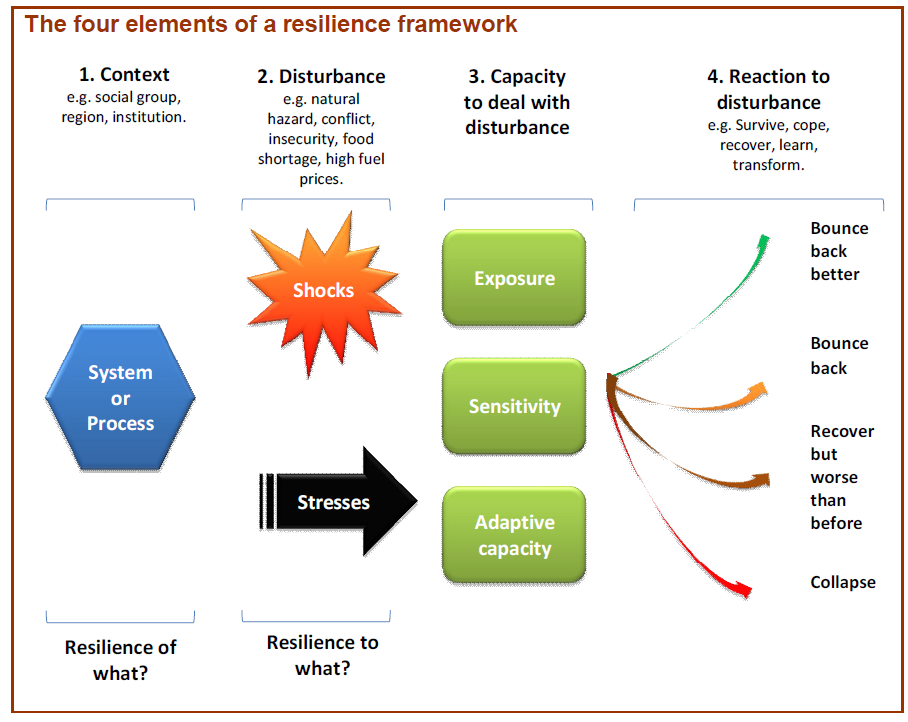
⭐ BBB transforms disaster recovery into an opportunity for development, aiming to reduce vulnerability and strengthen coping capacities significantly.
High‑Yield Points - ⚡ Biggest Takeaways
- Post-disaster rehabilitation aims for long-term recovery and resilience building.
- Emphasizes a multi-sectoral approach, integrating health, economic, and social services.
- Restoration of livelihoods and economic self-sufficiency are primary goals.
- Psychosocial support and mental health care are critical components.
- Focus on rebuilding resilient infrastructure - "Build Back Better".
- Community participation ensures sustainable and culturally appropriate recovery.
- Prioritize vulnerable populations like children, elderly, and disabled individuals during rehabilitation efforts.
Unlock the full lesson and continue reading
Signup to continue reading this lesson and unlimited access questions, flashcards, AI notes, and more
