Short Stature Indian Medical PG Practice Questions and MCQs
Practice Indian Medical PG questions for Short Stature. These multiple choice questions (MCQs) cover important concepts and help you prepare for your exams.
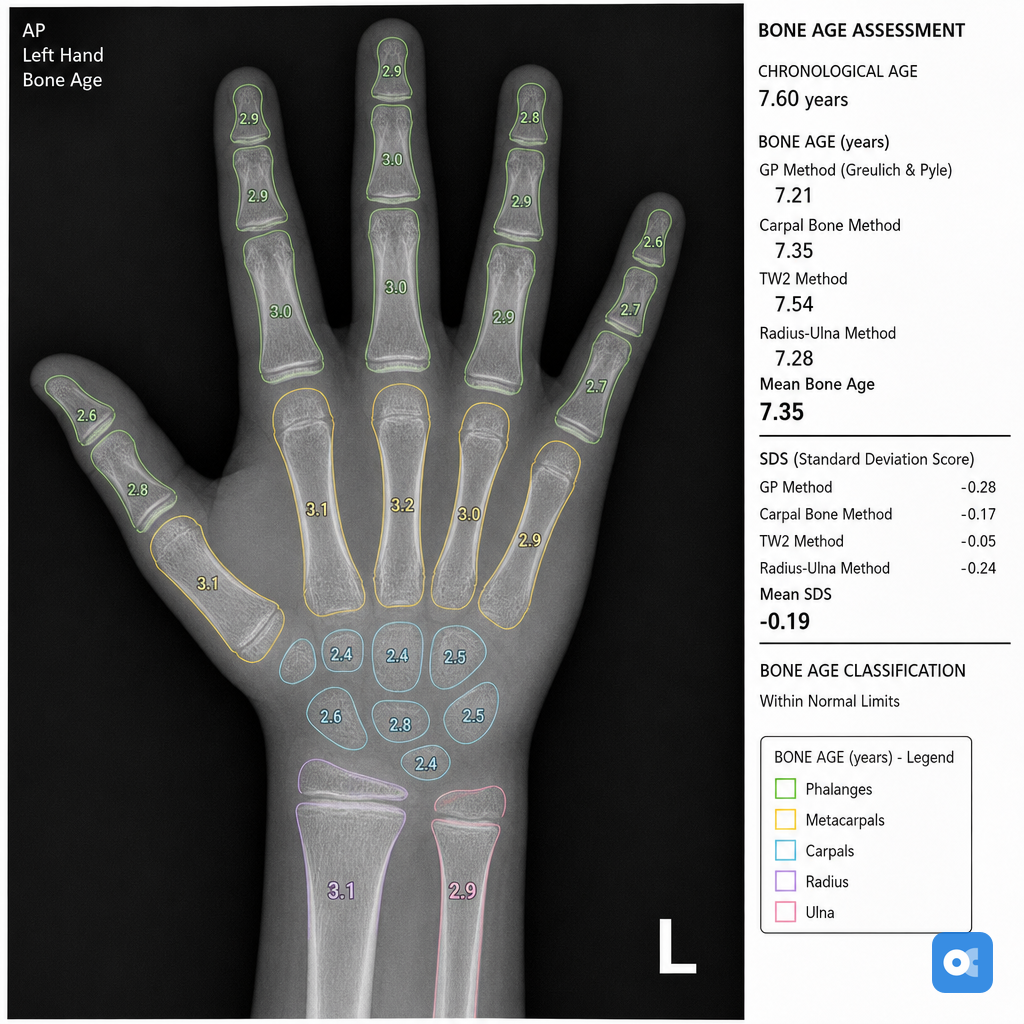
Short Stature Indian Medical PG Question 1: Bone age is advanced in which of the following conditions?
- A. Congenital adrenal hyperplasia (Correct Answer)
- B. Hypothyroidism
- C. Hypopituitarism
- D. Constitutional delay in growth
Short Stature Explanation: ***Congenital adrenal hyperplasia***
- In **congenital adrenal hyperplasia (CAH)**, the adrenal glands produce excessive androgens, leading to precocious puberty and **accelerated skeletal maturation**, thus advancing bone age.
- The excess androgens cause early fusion of the **epiphyseal growth plates**, leading to a disproportionately taller stature in childhood but potentially shorter adult height.
*Hypothyroidism*
- **Hypothyroidism** causes delayed growth and development, including **delayed bone age**, due to insufficient thyroid hormone which is crucial for normal skeletal maturation.
- Children with hypothyroidism typically have shorter stature for their chronological age and delayed ossification of epiphyses.
*Hypopituitarism*
- **Hypopituitarism**, especially growth hormone deficiency, leads to **delayed bone age** and significantly stunted growth because growth hormone is essential for normal skeletal development.
- Insufficient growth hormone results in slower epiphyseal growth and delayed growth plate closure.
*Constitutional delay in growth*
- **Constitutional delay in growth and puberty** is characterized by a "late bloomer" pattern, where both linear growth and pubertal development are delayed, resulting in a **delayed bone age**.
- These children typically have normal growth velocity for their bone age and will eventually reach a normal adult height, just later than their peers.
Short Stature Indian Medical PG Question 2: An anganwadi teacher measures the weight and height of a 4-year-old child and finds that the child's height-for-age is below the normal percentile. What does this finding indicate?
- A. No malnutrition
- B. Acute malnutrition
- C. Chronic malnutrition (Correct Answer)
- D. Recent malnutrition
- E. Acute and chronic malnutrition
Short Stature Explanation: ***Chronic malnutrition***
- **Height-for-age** is an indicator used to assess **long-term nutritional status**, meaning a deficit suggests chronic nutritional problems.
- A child with low height-for-age is considered **stunted**, which is a hallmark of chronic malnutrition resulting from prolonged inadequate nutrient intake.
- Since the question only mentions **height-for-age being low** without mentioning weight-for-height, this indicates **chronic malnutrition alone** (stunting).
*No malnutrition*
- A finding of **height below the normal percentile** is a direct indicator of poor growth, which contradicts the concept of no malnutrition.
- This measurement tool is specifically designed to identify nutritional deficiencies.
*Acute malnutrition*
- **Acute malnutrition** is typically assessed using **weight-for-height** or **mid-upper arm circumference (MUAC)**, indicating recent and rapid weight loss.
- A child with acute malnutrition is often referred to as **wasted**, which is different from being stunted.
*Recent malnutrition*
- While all malnutrition has a "recent" onset at some point, **height-for-age** reflects a cumulative effect over time, not just recent deprivation.
- For assessing recent nutritional issues, **weight-for-height** or **weight-for-age** would be more appropriate indicators.
*Acute and chronic malnutrition*
- This condition (also called **wasted and stunted**) occurs when a child has both **low weight-for-height** (acute/wasting) AND **low height-for-age** (chronic/stunting).
- The question states only that **height-for-age is below normal**, with no mention of weight-for-height status, so we cannot diagnose acute malnutrition component.
- This would require assessment of both anthropometric indicators.
Short Stature Indian Medical PG Question 3: In a medicolegal examination, an 18-year-old male claims he is 16 years old. Which joint X-ray should be done to estimate his age?
- A. Head & shoulder
- B. Elbow and ankle
- C. Knee and wrist (Correct Answer)
- D. Elbow & hip
Short Stature Explanation: ***Knee and wrist***
- **Bone age determination** using hand/wrist and knee radiographs is a standard method for estimating skeletal maturity across a wide age range, including late adolescence.
- The **epiphyseal fusion** in these joints provides reliable indicators for age estimation up to and slightly beyond 18 years, particularly the **distal radius, ulna, and knee epiphyses**.
*Head & shoulder*
- While glenohumeral fusion occurs later, **skull sutures** are not reliable for precise age estimation in this age group, and shoulder fusion may not be as precise as wrist/knee for this specific age.
- The **skull and shoulder** are generally not the primary sites chosen for age estimation in late adolescence due to less distinct and less consistent markers compared to other joints.
*Elbow and ankle*
- Although the elbow and ankle joints undergo fusion, the **wrist and knee provide a more comprehensive and widely validated set of ossification centers** for age estimation in the 16-18 year old range.
- While useful, these sites may not offer the same level of detailed assessment for skeletal maturity as the combination of **wrist and knee**.
*Elbow & hip*
- **Hip fusion** (e.g., ilium, ischium, pubis) happens relatively early, making it less useful for distinguishing between 16 and 18 years old.
- The **elbow alone** may not provide sufficient distinct markers for accurate age estimation in this specific late adolescent age group, unlike the wrist, which has multiple carpal and epiphyseal centers.
Short Stature Indian Medical PG Question 4: Which of the following statements is true regarding Turner syndrome?
- A. Individuals typically have normal height and growth patterns.
- B. Intelligence is typically normal. (Correct Answer)
- C. Breast development is typically normal and occurs at the expected age.
- D. Individuals have normal functioning ovaries throughout their reproductive years.
- E. Cardiovascular anomalies are rarely associated with the condition.
Short Stature Explanation: ***Intelligence is typically normal***
- Individuals with **Turner syndrome** generally have **normal intelligence** but may experience specific **neurocognitive deficits**, such as difficulties with visual-spatial tasks or nonverbal learning.
- While they may require **specialized educational support** for these challenges, their overall cognitive abilities usually fall within the average range.
*Individuals typically have normal height and growth patterns*
- A hallmark feature of Turner syndrome is **short stature**, which is due to the haploinsufficiency of the **SHOX gene**.
- **Growth hormone therapy** is often initiated in childhood to improve adult height outcomes.
*Breast development is typically normal and occurs at the expected age*
- Due to **gonadal dysgenesis** (non-functional ovaries), individuals with Turner syndrome experience **primary amenorrhea** and **lack of breast development** unless estrogen replacement therapy is initiated.
- **Estrogen deficiency** prevents the typical pubertal changes associated with feminization.
*Individuals have normal functioning ovaries throughout their reproductive years*
- A defining characteristic of Turner syndrome is **gonadal dysgenesis**, meaning the ovaries are non-functional **streak gonads**.
- This leads to **infertility** and **primary ovarian insufficiency** from birth, requiring hormone replacement for secondary sexual characteristic development.
*Cardiovascular anomalies are rarely associated with the condition*
- **Cardiovascular defects** occur in approximately **30-50%** of individuals with Turner syndrome, making them a common and clinically significant feature.
- The most frequent cardiac anomalies include **bicuspid aortic valve** (30%), **coarctation of the aorta** (10-15%), and **aortic dilation**.
- Regular **cardiovascular screening** with echocardiography is recommended throughout life due to increased risk of aortic dissection.
Short Stature Indian Medical PG Question 5: What is the most common cause of delayed puberty in males?
- A. Constitutional delay (Correct Answer)
- B. Kallmann syndrome
- C. Klinefelter syndrome
- D. Prader-Willi syndrome
Short Stature Explanation: ***Constitutional delay of growth and puberty***
- This is the most common cause of delayed puberty, representing a **normal variant** of development where puberty onset is simply later than average.
- Individuals typically have a family history of delayed puberty and eventually achieve normal pubertal development and adult height.
*Kallmann syndrome*
- This is a form of **hypogonadotropic hypogonadism** characterized by a deficiency in **GnRH production** and an associated **anosmia (loss of smell)**.
- While a significant cause of delayed puberty, it is far less common than constitutional delay.
*Klinefelter syndrome*
- This is a **sex chromosome aneuploidy (47, XXY)**, leading to **hypergonadotropic hypogonadism** (high FSH/LH, low testosterone).
- It usually presents with small, firm testes, gynecomastia, and often intellectual and learning difficulties, and is not the most common cause overall.
*Prader-Willi syndrome*
- This is a genetic disorder on **chromosome 15**, characterized by features like **hypotonia** in infancy, obesity, intellectual disability, and **hypogonadism**.
- While it includes delayed puberty, it is a rare syndrome with many other prominent features, making it much less common than constitutional delay.
Short Stature Indian Medical PG Question 6: A child presents with short stature. His bone age is less than chronological age. The height of his parents is normal. What is the most likely diagnosis?
- A. Malnutrition
- B. Familial short stature
- C. Constitutional short stature (Correct Answer)
- D. Cretinism
Short Stature Explanation: ***Constitutional short stature***
- This condition is characterized by a **delayed bone age** compared to chronological age, indicating a delay in skeletal maturation.
- Children with constitutional short stature typically have **normal parental height** and will eventually reach a normal adult height, although puberty and growth spurts are often delayed.
*Malnutrition*
- While malnutrition causes **short stature** and **delayed bone age**, it would also likely present with other signs of nutritional deficiency such as **weight loss** or failure to thrive.
- The case does not mention any dietary issues or poor socioeconomic conditions typically associated with malnutrition.
*Familial short stature*
- In familial short stature, the child's height is typically proportional to the parents' height, indicating a strong genetic component to their shorter stature.
- It is characterized by a **normal bone age** for chronological age, unlike the delayed bone age seen in this child.
*Cretinism*
- Cretinism, or congenital hypothyroidism, results in **severe growth retardation** and **delayed bone age**.
- However, it is also associated with distinct features like **coarse facial features**, macroglossia, umbilical hernia, and severe developmental delays, which are not mentioned in this case.
Short Stature Indian Medical PG Question 7: A 10-year-old child presents with short stature. Physical examination reveals an upper segment to lower segment ratio of 0.8:1 and evidence of epiphyseal displacement in the spine on imaging. Which of the following conditions is the most likely diagnosis?
- A. Achondroplasia
- B. Morquio syndrome (Correct Answer)
- C. Turner syndrome
- D. Hypothyroidism
Short Stature Explanation: ***Morquio syndrome***
- **Morquio syndrome**, a mucopolysaccharidosis (MPS IV), is characterized by severe disproportionate short stature with a short trunk and a **decreased upper segment (US) to lower segment (LS) ratio** (normal for age 10 is typically >1.0).
- Patients often exhibit **platyspondyly**, **odontoid hypoplasia**, and atlantoaxial instability leading to **epiphyseal displacement in the spine**, which can cause neurological compression.
*Achondroplasia*
- Achondroplasia is a form of **disproportionate short stature** characterized by rhizomelic (proximal) shortening of the limbs, but it typically presents with a **normal trunk length**, not necessarily an altered US:LS ratio.
- While it affects bone growth, spinal epiphyseal displacement is **not a characteristic feature**; instead, it causes a narrow foramen magnum and a lumbar lordosis.
*Turner syndrome*
- Turner syndrome causes **proportionate short stature** due to haploinsufficiency of genes on the X chromosome, and is associated with chromosomal abnormalities (45,X0).
- It does not specifically present with a decreased US:LS ratio or epiphyseal displacement in the spine, but rather with features like a **webbed neck**, shield chest, and coarctation of the aorta.
*Hypothyroidism*
- Untreated congenital or childhood hypothyroidism leads to **proportionate dwarfism** and delayed bone age.
- While it causes short stature, it typically does not result in a significantly altered US:LS ratio or epiphyseal displacement in the spine; rather, it manifests with symptoms like **lethargy**, constipation, and coarse hair.
Short Stature Indian Medical PG Question 8: An intrauterine scan at the 13th week of pregnancy showed a fetus with multiple long bone fractures. What is commonly associated with this finding?
- A. Osteogenesis imperfecta (Correct Answer)
- B. Marfan syndrome
- C. Achondroplasia
- D. Cretinism
Short Stature Explanation: ***Osteogenesis imperfecta***
- **Multiple long bone fractures** detected early in pregnancy are a classic presentation of **osteogenesis imperfecta (OI)**, a genetic disorder characterized by **bone fragility**.
- OI is primarily caused by mutations in genes encoding **type I collagen**, leading to defective bone formation.
*Achondroplasia*
- This condition is a form of **dwarfism** characterized by disproportionately short limbs and a normal-sized trunk, resulting from a mutation in the **FGFR3 gene**.
- While it affects bone growth, it typically does not cause **multiple fractures** prenatally.
*Marfan syndrome*
- This is a connective tissue disorder affecting the skeletal, ocular, and cardiovascular systems, characterized by **tall stature**, **long limbs and fingers**, and **aortic root dilation**.
- It results from a mutation in the **fibrillin-1 gene** and is not primarily associated with prenatal long bone fractures.
*Cretinism*
- This is a historical term for **congenital hypothyroidism**, which results from severely deficient thyroid hormone production in a newborn.
- It leads to developmental delays, growth retardation, and intellectual disability, but not to **multiple bone fractures**.
Short Stature Indian Medical PG Question 9: A 10-year-old male child presenting with complaints of poor growth, poor appetite, short stature, clubbing, and recurrent chest infections, along with steatorrhea, is most likely diagnosed with what?
- A. Celiac Disease
- B. Cystic fibrosis (Correct Answer)
- C. Biliary cirrhosis
- D. Bronchiectasis
Short Stature Explanation: ***Cystic fibrosis***
- The constellation of **poor growth**, **short stature**, **recurrent chest infections**, **clubbing**, and **steatorrhea** is highly indicative of cystic fibrosis.
- **Cystic fibrosis** is a genetic disorder affecting exocrine glands, leading to thick, sticky mucus that clogs the lungs and pancreas, causing malabsorption.
*Celiac Disease*
- **Celiac disease** primarily affects the small intestine, leading to malabsorption and poor growth.
- While it can cause steatorrhea and poor growth, it does not typically present with recurrent chest infections or significant clubbing.
*Biliary cirrhosis*
- **Biliary cirrhosis** involves liver damage and can cause steatorrhea due to impaired bile flow.
- However, it is not typically associated with recurrent chest infections or prominent clubbing unless advanced.
*Bronchiectasis*
- **Bronchiectasis** is characterized by permanent dilation of the bronchi, leading to chronic cough and recurrent respiratory infections.
- While it can cause clubbing and recurrent chest infections, it does not directly cause steatorrhea or poor growth as a primary feature, although malnutrition can occur secondary to chronic illness.
Short Stature Indian Medical PG Question 10: An XX baby presenting with male genitalia (penis and scrotum) is likely due to which of the following conditions?
- A. Turner syndrome
- B. None of the options
- C. Klinefelter syndrome
- D. High level of testosterone in maternal blood (Correct Answer)
Short Stature Explanation: ***High level of testosterone in maternal blood***
- An **XX baby** (genetically female) presenting with **fully masculinized external genitalia** (penis and scrotum) indicates significant **androgen exposure** during the critical period of sexual differentiation (8-12 weeks of gestation).
- While the most common cause is **congenital adrenal hyperplasia (CAH)** due to fetal androgen excess, **maternal sources of androgens** can also cause complete masculinization.
- Maternal causes include **virilizing tumors** (e.g., luteoma of pregnancy, Krukenberg tumor, arrhenoblastoma), **exogenous androgen administration**, or **maternal CAH**.
- High sustained maternal testosterone crosses the placenta and causes **virilization of female fetus**, which can range from clitoromegaly to complete male phenotype.
- This is the **only medically correct option** among the choices given, though CAH (not listed) would be the most common cause overall.
*Klinefelter syndrome*
- **47, XXY karyotype** - genetically male due to presence of Y chromosome with SRY gene.
- Presents as phenotypic male, not relevant to an **XX individual**.
- Features include hypogonadism, infertility, tall stature, and gynecomastia.
*Turner syndrome*
- **45, X karyotype** - monosomy X, genetically and phenotypically female.
- Presents with **female external genitalia**, streak gonads, short stature, webbed neck.
- Cannot explain masculinized genitalia in any scenario.
*None of the options*
- This is incorrect because **high level of testosterone in maternal blood** is a documented cause of XX virilization with male phenotype, though less common than fetal CAH.
More Short Stature Indian Medical PG questions available in the OnCourse app. Practice MCQs, flashcards, and get detailed explanations.