

NORA Safety: Environment - Unfamiliar Terrains
- Core Issues: Suboptimal conditions vs. OR.
- Space constraints, poor lighting/ergonomics.
- Remote from central support (difficult airway cart, MH kit).
- Variable availability: piped gases, suction, scavenging.
- Equipment Concerns:
- Monitoring: May be limited or incompatible.
- Anesthesia machine: Potentially basic, unfamiliar.
- Personnel: Non-anesthesia staff may lack emergency familiarity.
- Location-Specific Hazards:
- MRI: Magnetic fields, quench, projectiles.
- Radiology: Radiation.
- Endoscopy: Shared airway, fire risk.

⭐ Pre-procedure NORA-specific checklist is crucial for verifying equipment, drugs, and emergency readiness.
NORA Safety: Patient Prep - NORA Voyage Readiness
- Comprehensive Assessment: Standard ASA + NORA-specific (airway crucial, remote location risks).
- Informed Consent: Cover NORA-unique risks (e.g., environment, team familiarity).
- Fasting: Strict adherence (e.g., 2h clear fluids, 6h light meal).
- Premedication: Cautious use; consider aspiration prophylaxis, anxiolysis. Avoid over-sedation.
- "Ready Room" Protocol: All equipment/monitors checked before patient entry.
- Team Huddle: Pre-procedure briefing: roles, emergency plan, communication.
- Safe Passage: Secure patient transport to the NORA location.
Loading diagram…
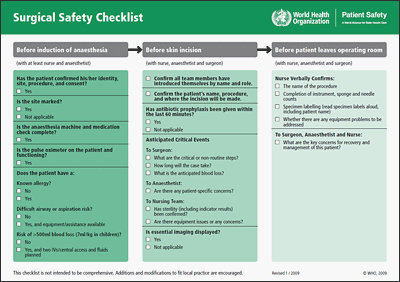
⭐ Pre-procedural checklist completion in NORA settings is associated with reduced adverse events.
NORA Safety: Gear & Vigilance - NORA Safety Net
- Essential Gear:
- ASA standard monitors (ECG, NIBP, SpO2, EtCO2, Temp).
- Difficult airway cart (laryngoscopes, ETTs, LMAs, cricothyrotomy).
- Checked anesthesia machine, ventilator, reliable suction.
- Emergency drugs (ACLS, reversals), defibrillator.
- Vigilance & Preparedness:
- Continuous monitoring by dedicated anesthesia provider.
- Clear team communication, pre-procedure safety checklist.
- Backup plans for power failure & equipment malfunction.
- Site-specific precautions (e.g., MRI: non-ferromagnetic gear).
⭐ Capnography (EtCO2) is MANDATORY for all general anesthesia and moderate/deep sedation in NORA settings to monitor ventilation.
NORA Safety: Complications - Navigating Storms
- Common Complications & Immediate Actions:
- Respiratory: Hypoventilation, apnea, laryngospasm, aspiration.
- High risk due to shared/remote airway.
- Action: Supplemental O2, airway maneuvers, advanced airway if needed. Continuous capnography essential.
- Cardiovascular: Hypotension (most common), brady/tachyarrhythmias, ischemia.
- Action: Fluid bolus, vasopressors (e.g., phenylephrine, ephedrine), antiarrhythmics, ACLS protocols.
- Neurological: Oversedation, delayed emergence, agitation.
- Action: Titrate drugs carefully, reversal agents (naloxone, flumazenil).
- Respiratory: Hypoventilation, apnea, laryngospasm, aspiration.
- Crisis Management Flow:
Loading diagram…
> ⭐ Failure to rescue is a major concern in NORA; prompt recognition and skilled intervention are critical for patient safety.
High‑Yield Points - ⚡ Biggest Takeaways
- NORA challenges: remote locations, limited equipment, personnel, and monitoring.
- Patient selection is crucial: consider ASA status and procedure complexity.
- Clear communication with the proceduralist and team is paramount.
- ASA standard monitoring must be upheld in all NORA environments.
- Emergency readiness is vital: difficult airway cart, resuscitation drugs, and protocols.
- Beware the sedation continuum; prevent unintended deep sedation.
- Dedicated NORA teams and standardized protocols enhance safety_._
Unlock the full lesson and continue reading
Signup to continue reading this lesson and unlimited access questions, flashcards, AI notes, and more
