History and Scope of Microbiology Indian Medical PG Practice Questions and MCQs
Practice Indian Medical PG questions for History and Scope of Microbiology. These multiple choice questions (MCQs) cover important concepts and help you prepare for your exams.
History and Scope of Microbiology Indian Medical PG Question 1: Microorganism used as a weapon in biological terrorism is:
- A. Smallpox virus (Correct Answer)
- B. Human norovirus
- C. Rabies virus
- D. Influenza virus
History and Scope of Microbiology Explanation: ***Smallpox virus***
- The **smallpox virus (Variola major)** is considered the **prime bioterrorism agent** and is classified as a **Category A agent** by the CDC due to its **high infectivity**, **high mortality rate (30%)**, and lack of widespread population immunity since routine vaccination ceased in the 1970s.
- It can be easily disseminated through aerosols, causes a severe disfiguring disease with no specific treatment, and would create **widespread panic and public health devastation**.
- Smallpox is **eradicated in nature**, so any outbreak would be immediately recognized as intentional, and the virus is now held only in two authorized laboratories, making it a primary bioterrorism concern.
*Human norovirus*
- While highly contagious and capable of causing widespread outbreaks of **gastroenteritis**, norovirus has a **very low mortality rate** and causes primarily **self-limiting vomiting and diarrhea**.
- It typically requires close contact or contaminated food/water for transmission, making **aerosol dissemination less feasible** for a bioweapon.
- The disease is generally mild and brief, making it ineffective for causing mass casualties in biological terrorism.
*Rabies virus*
- Rabies virus is almost uniformly **fatal** once symptoms develop (>99% mortality), but its transmission primarily occurs through the saliva of infected animals via bites, making it **extremely difficult to disseminate on a large scale**.
- It has a relatively **long and variable incubation period** (weeks to months) and does not spread directly from person to person, limiting its potential as a rapidly acting or epidemic-causing terrorist agent.
- **Post-exposure prophylaxis (PEP)** is highly effective if given promptly, further reducing its utility as a bioweapon.
*Influenza virus*
- While influenza viruses, particularly **pandemic strains or engineered variants**, can have significant bioterrorism potential (the 1918 Spanish flu killed 50-100 million people), they are considered **less ideal** than smallpox for several reasons.
- **Effective countermeasures exist**: vaccines can be developed, antiviral drugs (oseltamivir, zanamivir) are available, and widespread natural immunity to seasonal strains exists in the population.
- However, the **mortality rate of seasonal influenza** is much lower than smallpox, and most infections are self-limiting in healthy individuals.
- Highly pathogenic strains (e.g., H5N1) are classified as **Category C agents** due to emerging threat potential, but smallpox remains the more feared bioweapon due to complete lack of population immunity and higher case-fatality rate.
History and Scope of Microbiology Indian Medical PG Question 2: Germ theory of disease was proposed by
- A. Joseph Lister
- B. Louis Pasteur (Correct Answer)
- C. Robert Koch
- D. Paul Ehrlich
History and Scope of Microbiology Explanation: ***Louis Pasteur***
- **Louis Pasteur** is credited with definitively establishing the **germ theory of disease** through his experiments, proving that microorganisms cause fermentation and disease.
- His work on pasteurization and developing vaccines for anthrax and rabies further solidified the link between **germs** and illness.
*Joseph Lister*
- **Joseph Lister** applied the germ theory to surgery by pioneering **antiseptic surgery**, using carbolic acid to sterilize surgical instruments and wounds.
- While he utilized the theory, he did not propose it; rather, he demonstrated its **practical application** in preventing infections.
*Robert Koch*
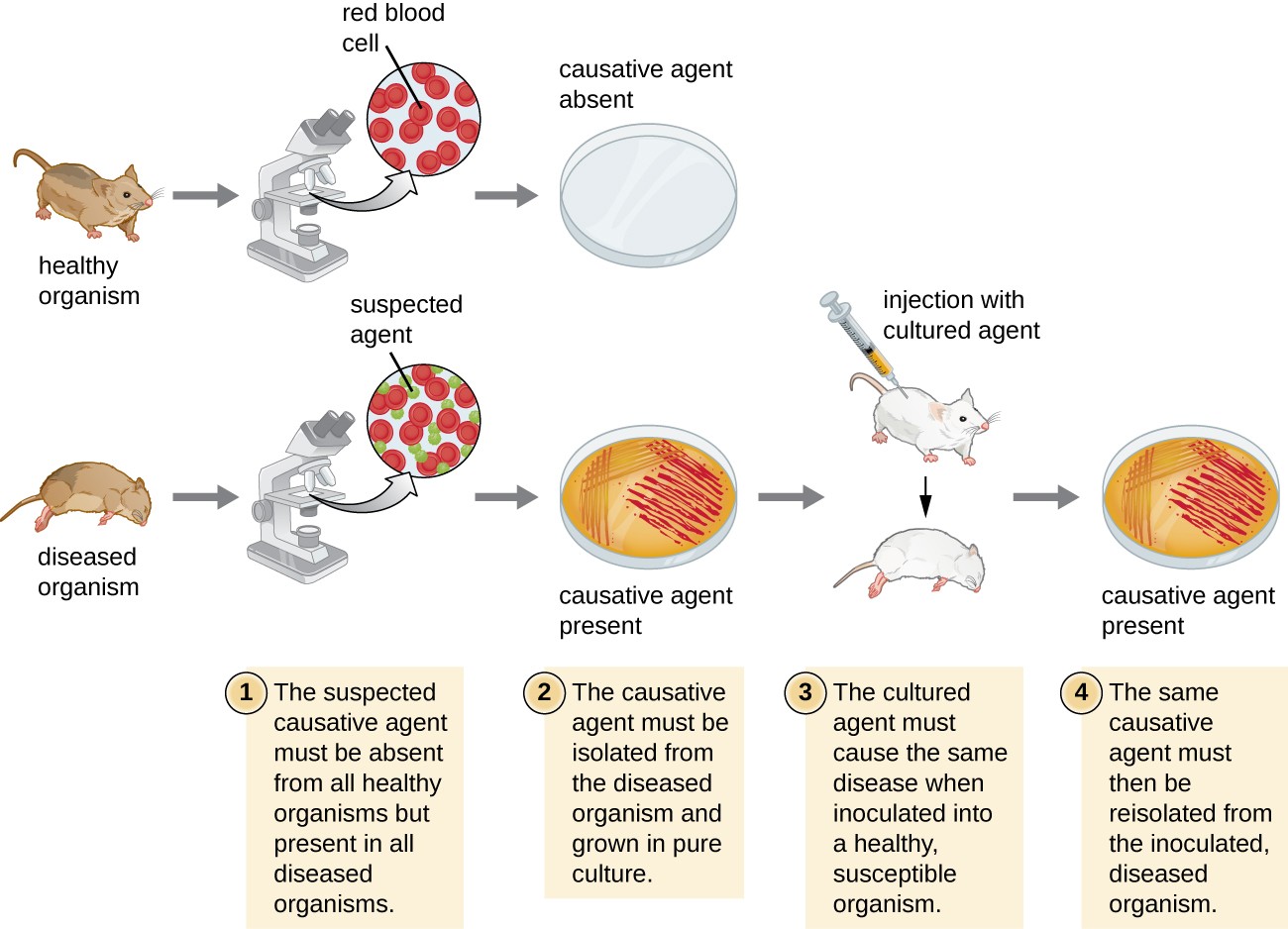
- **Robert Koch** formulated **Koch's postulates**, a set of criteria designed to establish a causal relationship between a specific microbe and a specific disease.
- He was a key figure in identifying specific pathogens for diseases like anthrax and tuberculosis, but his work built upon the foundation of the **germ theory** established by others.
*Paul Ehrlich*
- **Paul Ehrlich** is recognized for his contributions to immunology and **chemotherapy**, particularly for developing the first effective treatment for syphilis.
- His work focused on targeted drug action against pathogens but did not involve the original proposal of the **germ theory** itself.
History and Scope of Microbiology Indian Medical PG Question 3: Assertion: VZV vaccine is live attenuated. Reason: It cannot be given to immunocompromised patients.
- A. Both true, reason doesn't explain assertion
- B. Assertion true, reason false
- C. Assertion false, reason true
- D. Both true, reason explains assertion (Correct Answer)
History and Scope of Microbiology Explanation: ***Both true, reason explains assertion***
- The **VZV (varicella-zoster virus) vaccine** is indeed a **live attenuated vaccine** containing weakened virus - the assertion is **TRUE**
- It **cannot be given to immunocompromised patients** due to risk of vaccine-strain disease - the reason is **TRUE**
- The reason **directly explains the assertion**: BECAUSE the vaccine is live attenuated, it poses infection risk and therefore cannot be used in immunocompromised individuals
- The **causal relationship** is clear: live attenuated nature → contraindication in immunocompromised patients
*Both true, reason doesn't explain assertion*
- While both statements are factually true, this option would only be correct if the reason was unrelated to the assertion
- However, the reason **directly explains WHY** the live attenuated nature is clinically significant
- The contraindication is a **direct consequence** of the vaccine being live attenuated, so the reason does explain the assertion
*Assertion true, reason false*
- The assertion is true (VZV vaccine is live attenuated)
- However, the reason is also **TRUE** - live attenuated vaccines are indeed contraindicated in immunocompromised patients due to risk of disseminated vaccine-strain infection
- Since both statements are true, this option is incorrect
*Assertion false, reason true*
- The assertion is **TRUE**, not false - VZV vaccine (Varivax, Zostavax) is a **live attenuated vaccine** containing the Oka strain
- This option incorrectly claims the assertion is false
- Since the assertion is factually correct, this option cannot be right
History and Scope of Microbiology Indian Medical PG Question 4: Who is credited with introducing the practice of hand hygiene in medical settings?
- A. Joseph Lister
- B. Ignac Semmelweis (Correct Answer)
- C. Louis Pasteur
- D. Oliver Wendell Holmes
History and Scope of Microbiology Explanation: ***Ignác Semmelweis***
- **Ignác Semmelweis** observed a correlation between physician handwashing and reduced rates of **puerperal fever** in maternity wards in the mid-19th century.
- He implemented a policy of using **chlorinated lime solutions** for hand disinfection, significantly decreasing mortality rates.
- His empirical evidence and observational studies form the foundation of modern hand hygiene practices in healthcare.
*Joseph Lister*
- **Joseph Lister** is known for introducing **antiseptic surgery**, using carbolic acid to sterilize surgical instruments and wounds.
- While a pioneer in infection control, his focus was on antisepsis during surgical procedures rather than routine hand hygiene.
*Oliver Wendell Holmes*
- Dr. **Oliver Wendell Holmes Sr.** also advocated for the importance of handwashing to prevent the spread of infectious diseases, particularly puerperal fever, around the same time as Semmelweis.
- However, Semmelweis's observational studies and empirical evidence are more widely credited as the foundational work in establishing hand hygiene protocols.
*Louis Pasteur*
- **Louis Pasteur** was a French chemist and microbiologist renowned for his groundbreaking discoveries in **vaccination**, **microbial fermentation**, and **pasteurization**.
- His work established the **germ theory of disease**, but he did not directly introduce the practice of hand hygiene in medical settings.
History and Scope of Microbiology Indian Medical PG Question 5: An organism produces cutaneous disease (malignant pustule or eschar) at the site of inoculation in handlers of animal skins. Most likely organism is:
- A. Neisseria meningitidis
- B. Bacillus anthracis (Correct Answer)
- C. Pseudomonas aeruginosa
- D. Cryptococcus neoformans
History and Scope of Microbiology Explanation: ***Bacillus anthracis***
- This description is classic for **cutaneous anthrax**, characterized by a **malignant pustule** or **eschar** that develops at the site of inoculation.
- The context of handling **animal skins** (e.g., wool-sorter's disease) is a key epidemiological clue for _Bacillus anthracis_ infection.
*Neisseria meningitidis*
- Primarily causes **meningitis** and **meningococcemia**, involving a petechial or purpuric rash, not a single eschar or malignant pustule.
- There is no direct association with handling animal skins.
*Pseudomonas aeruginosa*
- This bacterium is often associated with **opportunistic infections** in immunocompromised individuals, burn patients, or those with indwelling medical devices.
- While it can cause skin lesions (e.g., **ecthyma gangrenosum**), these are distinct from the anthrax eschar and are not linked to animal skin exposure.
*Cryptococcus neoformans*
- A **fungus** that primarily causes **cryptococcal meningitis** or pulmonary infections, especially in immunocompromised individuals.
- Skin manifestations, when they occur, are typically papules, nodules, or ulcers, not the classic **cutaneous anthrax eschar**.
History and Scope of Microbiology Indian Medical PG Question 6: What is the drug that can be used for rheumatic fever prophylaxis in a patient with a history of allergy to Penicillin?
- A. Erythromycin (Correct Answer)
- B. Amoxicillin
- C. Streptomycin
- D. Sulfasalazine
History and Scope of Microbiology Explanation: ***Erythromycin***
- **Erythromycin** is a macrolide antibiotic that is a suitable alternative for **rheumatic fever prophylaxis** in patients with a documented allergy to penicillin.
- It effectively covers *Streptococcus pyogenes*, the causative agent of group A streptococcal (GAS) pharyngitis that precedes rheumatic fever.
*Amoxicillin*
- **Amoxicillin** is a penicillin-class antibiotic and would be contraindicated in a patient with a **penicillin allergy**, as it carries a high risk of cross-reactivity and allergic reaction.
- Using amoxicillin in this scenario could lead to severe hypersensitivity reactions, compromising patient safety.
*Streptomycin*
- **Streptomycin** is an aminoglycoside antibiotic primarily used for infections like **tuberculosis** and severe bacterial endocarditis.
- It is not indicated for the treatment of *Streptococcus pyogenes* infections or for **rheumatic fever prophylaxis**.
*Sulfasalazine*
- **Sulfasalazine** is an anti-inflammatory and immunomodulatory drug primarily used in the management of **inflammatory bowel disease** and **rheumatoid arthritis**.
- It has no antimicrobial activity against *Streptococcus pyogenes* and is therefore not used for **rheumatic fever prophylaxis**.
History and Scope of Microbiology Indian Medical PG Question 7: Typhoid Mary is known in history to cause more than 1300 cases in her lifetime. This is an example of which of the following epidemic?
- A. Propagated epidemic
- B. Common source continuous or repeated exposure epidemic (Correct Answer)
- C. Common source single exposure epidemic
- D. Long term or secular trend epidemic
History and Scope of Microbiology Explanation: ***Common source continuous or repeated exposure epidemic***
- **Typhoid Mary** was a **chronic asymptomatic carrier** of *Salmonella Typhi*, meaning she continuously or repeatedly shed the bacteria.
- As a cook, she **repeatedly exposed others to the pathogen** through contaminated food over many years, leading to numerous outbreaks.
*Propagated epidemic*
- A propagated epidemic occurs through **person-to-person transmission**, where the infection spreads sequentially over time, each infected person becoming a source for subsequent cases.
- While Typhoid Mary eventually led to multiple cases, her primary role was as a continuous source rather than initiating a person-to-person chain where every new case infected another.
*Common source single exposure epidemic*
- This type of epidemic involves a **single, brief exposure** to the common source, such as a contaminated meal served once.
- Typhoid Mary's numerous cases spanned years, indicating **multiple exposures** rather than a single event.
*Long term or secular trend epidemic*
- A **secular trend** refers to changes in disease frequency over **long periods**, often decades or centuries, reflecting gradual shifts in risk factors or environmental conditions.
- Typhoid Mary's impact was a series of acute outbreaks over a shorter, defined period, not a gradual long-term trend.
History and Scope of Microbiology Indian Medical PG Question 8: Germ theory of disease causation is given by:
- A. Pettenkofer
- B. Robert Koch
- C. Aristotle
- D. Louis Pasteur (Correct Answer)
History and Scope of Microbiology Explanation: ***Louis Pasteur***
- **Louis Pasteur** was a French chemist and microbiologist renowned for his groundbreaking work in preventing diseases.
- He is often regarded as the "father of microbiology" and **germ theory**, as he demonstrated that microorganisms cause fermentation and putrefaction.
*Pettenkofer*
- **Max von Pettenkofer** was a prominent German hygienist who, despite his contributions to public health, was a vocal opponent of the germ theory.
- He famously challenged Robert Koch's findings and even ingested cholera bacteria to prove his belief that environmental factors, not germs, were the primary cause of disease.
*Robert Koch*
- **Robert Koch** was a German physician and microbiologist who built upon Pasteur's germ theory by providing irrefutable evidence linking specific microorganisms to specific diseases.
- He developed **Koch's postulates**, a set of criteria used to establish a causal relationship between a microbe and a disease, and identified the causative agents of anthrax, tuberculosis, and cholera.
*Aristotle*
- **Aristotle** was an ancient Greek philosopher and polymath who made significant contributions to various fields.
- While his ideas profoundly influenced Western thought and natural sciences, he lived centuries before the concept of microorganisms was discovered and therefore did not formulate the germ theory of disease.
History and Scope of Microbiology Indian Medical PG Question 9: In microbiology, exaltation refers to -
- A. Decreased virulence
- B. Increased virulence (Correct Answer)
- C. Not applicable
- D. No change in virulence
History and Scope of Microbiology Explanation: ***Increased virulence***
- **Exaltation** is a phenomenon in microbiology where a microorganism's ability to cause disease (virulence) is **enhanced** or strengthened.
- This can occur through various mechanisms, such as **serial passage through a susceptible host**, leading to selection of more virulent strains.
- This technique has been used historically to study virulence factors and pathogenicity.
*Decreased virulence*
- This phenomenon is known as **attenuation**, where the microorganism's ability to cause disease is reduced.
- Attenuation is often used in vaccine development to create live, weakened pathogens that can still elicit an immune response without causing severe illness.
- Examples include BCG vaccine and oral polio vaccine.
*Not applicable*
- This is incorrect as exaltation is a well-defined and applicable term in microbiology.
- The concept is particularly relevant in experimental microbiology and understanding pathogen evolution.
*No change in virulence*
- Exaltation specifically refers to a **change** in virulence—specifically an increase—making this option incorrect.
- Maintaining stable virulence without intervention would not be termed exaltation.
History and Scope of Microbiology Indian Medical PG Question 10: Who is known as the father of microbiology?
- A. Robert Brown
- B. J.C. Bose
- C. Louis Pasteur
- D. Antonie van Leeuwenhoek (Correct Answer)
History and Scope of Microbiology Explanation: ***Antonie van Leeuwenhoek***
- **Antonie van Leeuwenhoek** is widely recognized for his groundbreaking work in microscopy, which led to the discovery of microorganisms.
- He was the first to observe and accurately describe bacteria, protozoa, and other microscopic life forms, which he called "animalcules," using single-lens microscopes of his own design.
*Robert Brown*
- **Robert Brown** was a Scottish botanist known for his important contributions to botany, including the discovery of the cell nucleus and the description of Brownian motion.
- While significant in biology, his work primarily focused on plant structures and physics, not the direct study of microorganisms.
*J.C. Bose*
- **Jagadish Chandra Bose** was a polymath from British India, a physicist, biologist, botanist, and archaeologist.
- He made pioneering contributions to the investigation of radio and microwave optics, made significant contributions to plant science, and was an early writer of science fiction, but his work was not in microbiology.
*Louis Pasteur*
- **Louis Pasteur** is famous for his discoveries concerning the principles of vaccination, microbial fermentation, and pasteurization.
- While he is a pivotal figure in microbiology, often called the "father of modern microbiology" due to his foundational work on germ theory and disease, Van Leeuwenhoek predates him as the first to observe microorganisms.
More History and Scope of Microbiology Indian Medical PG questions available in the OnCourse app. Practice MCQs, flashcards, and get detailed explanations.