Occupational Exposures Indian Medical PG Practice Questions and MCQs
Practice Indian Medical PG questions for Occupational Exposures. These multiple choice questions (MCQs) cover important concepts and help you prepare for your exams.
Occupational Exposures Indian Medical PG Question 1: Maximum predisposition to tuberculosis is seen in which pneumoconiosis?
- A. Anthracosis
- B. Byssinosis
- C. Silicosis (Correct Answer)
- D. Bagassosis
Occupational Exposures Explanation: ***Silicosis***
- **Silicosis** is particularly associated with an increased risk of developing **tuberculosis** due to the impairment of alveolar macrophage function [1].
- Silica particles interfere with the ability of macrophages to destroy *Mycobacterium tuberculosis*, leading to a higher susceptibility to infection and reactivation of latent tuberculosis [1].
- This classic association is known as **silicotuberculosis**.
*Anthracosis*
- **Anthracosis** (coal worker's pneumoconiosis) is caused by inhaling coal dust and, while it can impair lung function, it has a weaker association with tuberculosis compared to silicosis [2].
- The carbon particles in anthracosis are relatively inert and typically do not induce the same level of macrophage dysfunction as silica.
*Byssinosis*
- **Byssinosis** is an occupational lung disease caused by exposure to cotton, flax, or hemp dust, often presenting with chest tightness towards the beginning of the work week.
- It is not specifically predisposed to tuberculosis, as it involves an inflammatory response to organic dusts rather than crystalline silica.
*Bagassosis*
- **Bagassosis** is a hypersensitivity pneumonitis resulting from exposure to *Thermophilic actinomycetes* found in moldy sugarcane (bagasse) [2].
- This condition is an allergic reaction in the lungs and does not have a significant association with an increased risk of tuberculosis.
**References:**
[1] Kumar V, Abbas AK, et al.. Robbins and Cotran Pathologic Basis of Disease. 9th ed. The Lung, pp. 697-698.
[2] Kumar V, Abbas AK, et al.. Robbins and Cotran Pathologic Basis of Disease. 9th ed. The Lung, p. 695.
Occupational Exposures Indian Medical PG Question 2: A 3 yrs old child is brought to the emergency room by his parents after they found him having a generalized seizure at home. The child's breath smells of garlic, and he has bloody diarrhea, vomiting, and muscle twitching. Which poison is it likely that this child has encountered?
- A. Thallium
- B. Carbon monoxide
- C. Arsenic (Correct Answer)
- D. Lead
Occupational Exposures Explanation: **Arsenic**
- **Arsenic poisoning** in children can present with a combination of **gastrointestinal distress** (bloody diarrhea, vomiting) [1], **neurological symptoms** (seizures, muscle twitching) [1], [3], and a characteristic **garlic-like odor** on the breath [1].
- The rapid onset of severe symptoms, including seizures, is consistent with acute arsenic toxicity [3].
*Thallium*
- **Thallium poisoning** typically presents with **hair loss**, painful **neuropathy**, and gastrointestinal upset.
- A garlic odor on the breath and acute seizures as prominent initial symptoms are not characteristic of thallium exposure.
*Carbon monoxide*
- **Carbon monoxide poisoning** would present with symptoms like **headache**, **dizziness**, nausea, and **cherry-red skin** in severe cases, but not a garlic odor or bloody diarrhea.
- **Seizures** can occur, but the overall clinical picture, especially the garlic breath and bloody diarrhea, is inconsistent.
*Lead*
- **Lead poisoning** in children is often chronic, presenting with neurodevelopmental issues, **abdominal pain** (lead colic), **anemia**, and a **"lead line" on the gums** [2].
- While seizures can be a late manifestation of severe lead encephalopathy [2], the acute presentation with garlic breath, bloody diarrhea, and rapid-onset seizures is not typical for lead exposure.
Occupational Exposures Indian Medical PG Question 3: A person working in a dye factory presented with nausea, vomiting, dark bloody stools, conjunctivitis, and a burning sensation in the throat and stomach. Which poisoning do you suspect in this case?
- A. Potassium permanganate (Correct Answer)
- B. Lead
- C. Arsenic
- D. Thallium
Occupational Exposures Explanation: ***Potassium permanganate***
- The presence of **nausea, vomiting, dark bloody stools, conjunctivitis, and a burning sensation in the throat and stomach** is highly indicative of **potassium permanganate poisoning**, which is a caustic agent.
- Exposure in a **dye factory** setting further supports this, as potassium permanganate is used as an **oxidizing agent** and **dyeing agent** in various industries.
*Lead*
- Lead poisoning typically presents with **neurological symptoms** (e.g., foot drop, wrist drop, encephalopathy), **gastrointestinal complaints** (e.g., colic, constipation), and **hematological abnormalities** (e.g., anemia with basophilic stippling).
- The acute caustic effects like **burning sensation in the throat and bloody stools** are not characteristic of lead poisoning.
*Arsenic*
- Acute arsenic poisoning often involves **severe gastroenteritis** ("rice-water stools"), **garlic odor on breath**, **peripheral neuropathy**, and **cardiac arrhythmias**.
- While it can cause gastrointestinal distress, the specific caustic burn and conjunctivitis alongside the industrial exposure profile point away from arsenic.
*Thallium*
- Thallium poisoning is characterized by **rapid hair loss (alopecia)**, **severe peripheral neuropathy**, and **gastrointestinal symptoms** (e.g., abdominal pain, vomiting, diarrhea).
- The constellation of symptoms described, particularly the caustic burn and dark bloody stools, does not align with the typical presentation of thallium toxicity.
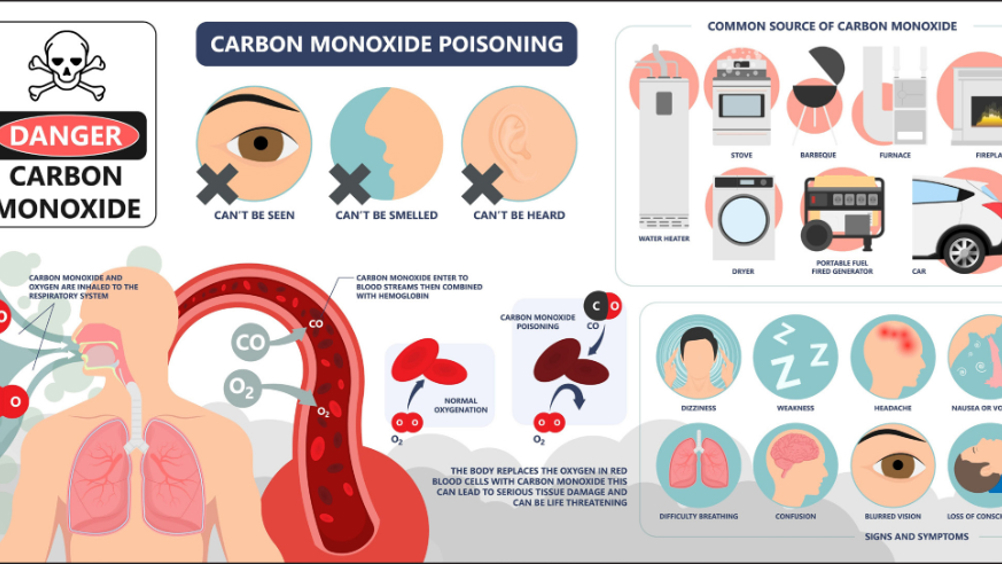
Occupational Exposures Indian Medical PG Question 4: Which of the following is NOT a post-mortem finding in carbon monoxide poisoning?
- A. Froth at mouth and nose
- B. Blue skin discoloration (Correct Answer)
- C. Cerebral edema
- D. Cherry red discoloration of skin
Occupational Exposures Explanation: ***Blue skin discoloration***
- **Cyanosis**, or blue skin discoloration, indicates **hypoxia** due to deoxygenated hemoglobin.
- In carbon monoxide poisoning, **carboxyhemoglobin** prevents oxygen release but does not cause deoxygenation of the remaining hemoglobin, thus typically avoiding cyanosis.
*Froth at mouth and nose*
- **Frothing** at the mouth and nose can be seen in various forms of asphyxia and pulmonary edema, which can be secondary to carbon monoxide poisoning if there is significant cardiac or respiratory compromise.
- While not universally present, it is a possible finding associated with acute physiological distress preceding death.
*Cerebral edema*
- **Cerebral edema** is a common post-mortem finding in severe carbon monoxide poisoning due to **hypoxic brain injury**.
- Carbon monoxide directly impairs cellular respiration, leading to widespread tissue hypoxia, including the brain, which can manifest as swelling.
*Cherry red discoloration of skin*
- **Cherry red discoloration** of the skin and lividity is a classic and highly characteristic post-mortem sign of carbon monoxide poisoning.
- This color is due to the formation of **carboxyhemoglobin**, which has a bright red hue and is visible through the skin.
Occupational Exposures Indian Medical PG Question 5: Which of the following laboratory findings is most consistent with a diagnosis of carbon monoxide poisoning?
- A. Increased PaCO2 and decreased pH
- B. Decreased PaO2 with normal oxygen saturation
- C. Normal PaO2 with decreased oxygen saturation (Correct Answer)
- D. Decreased PaCO2 with normal PaO2
Occupational Exposures Explanation: ***Normal PaO2 with decreased oxygen saturation***
- Carbon monoxide (CO) binds to hemoglobin with an affinity 200-250 times greater than oxygen, forming **carboxyhemoglobin (COHb)** [2]. This reduces the **oxygen-carrying capacity** of the blood and shifts the oxygen dissociation curve to the left, but it does **not affect the partial pressure of oxygen (PaO2)** dissolved in the plasma [1].
- The pulse oximeter, which typically measures oxygen saturation, will show a falsely high reading because it cannot differentiate between oxyhemoglobin and carboxyhemoglobin, but actual **oxygen saturation is decreased**.
*Increased PaCO2 and decreased pH*
- This pattern suggests **respiratory acidosis**, which is not a direct or primary finding of carbon monoxide poisoning.
- While severe CO poisoning can lead to lactic acidosis, an increase in PaCO2 points to impaired ventilation, not specifically CO toxicity [3].
*Decreased PaO2 with normal oxygen saturation*
- A decreased PaO2 with normal oxygen saturation is a contradictory finding and not physiologically consistent, as oxygen saturation is directly dependent on PaO2.
- This pattern would indicate a measurement error or a highly unusual physiological state, neither of which is characteristic of CO poisoning.
*Decreased PaCO2 with normal PaO2*
- This suggests **respiratory alkalosis**, often due to hyperventilation.
- While patients with CO poisoning may hyperventilate due to hypoxia, this ABG pattern is not the defining laboratory finding for CO poisoning, and **PaO2 would remain normal** until very late stages.
Occupational Exposures Indian Medical PG Question 6: Which drug is the specific antidote for organophosphorus poisoning?
- A. EDTA
- B. BAL
- C. Atropine
- D. Pralidoxime (PAM) (Correct Answer)
Occupational Exposures Explanation: ***Pralidoxime (PAM)***
- **Pralidoxime (PAM)** reactivates the enzyme **acetylcholinesterase** by detaching the organophosphate from the enzyme's active site.
- It is most effective when administered early, ideally within a few hours of exposure, to prevent **aging** of the enzyme-inhibitor complex.
*EDTA*
- **EDTA** (ethylenediaminetetraacetic acid) is a chelating agent primarily used in the treatment of **heavy metal poisoning**, such as lead poisoning.
- It is not effective against organophosphorus compounds, which act by inhibiting acetylcholinesterase.
*BAL*
- **BAL** (British Anti-Lewisite, or dimercaprol) is another chelating agent used to treat poisoning by **heavy metals** such as arsenic, mercury, and gold.
- It does not have a mechanism of action that addresses the enzyme inhibition caused by organophosphates.
*Atropine*
- **Atropine** is used in organophosphorus poisoning, but it is not a specific antidote as it does not address the cause of poisoning.
- It acts to counteract the **muscarinic effects** of excessive acetylcholine, such as bradycardia, bronchospasm, and excessive secretions, but does not reactivate acetylcholinesterase.
Occupational Exposures Indian Medical PG Question 7: A 50-year-old man who has worked in a coal mining factory for 16 years develops symptoms of progressively worsening breathlessness and cough with expectoration. Spirometry reveals values of FEV1 - 1.4 L and FVC 2.8 L. What could be the cause?
- A. Silicosis
- B. Hypersensitivity pneumonitis
- C. COPD (Correct Answer)
- D. Idiopathic pulmonary fibrosis
Occupational Exposures Explanation: ***COPD***
- Working in a **coal mining factory** for 16 years is a significant occupational exposure for developing **Chronic Obstructive Pulmonary Disease (COPD)**, particularly **coal workers' pneumoconiosis** which can manifest as COPD [1], [3].
- The spirometry values show a **reduced FEV1/FVC ratio** (1.4/2.8 = 0.5), which is characteristic of an **obstructive lung disease** like COPD [3].
*Silicosis*
- While silicosis is an occupational lung disease associated with exposure to **silica dust**, it typically presents as a **restrictive lung disease**, meaning both FEV1 and FVC would be reduced proportionally, or FVC would be reduced more significantly than FEV1 [1].
- The spirometry pattern in this case is clearly **obstructive**, with a disproportionate reduction in FEV1 relative to FVC.
*Hypersensitivity pneumonitis*
- This is an **immunological reaction** to inhaled organic or chemical antigens, often presenting with symptoms like cough, dyspnea, and fever, but it usually causes a **restrictive or mixed ventilatory defect**.
- There is no information provided about specific organic or chemical exposures typically associated with hypersensitivity pneumonitis in a coal mining setting, and the spirometry pattern is obstructive.
*Idiopathic pulmonary fibrosis*
- This is a **restrictive lung disease** characterized by progressive scarring of the lung tissue, leading to reduced lung volumes (both FEV1 and FVC are reduced, often with a normal or increased FEV1/FVC ratio) [2].
- The spirometry results showing an **obstructive pattern** (reduced FEV1/FVC ratio) rule out idiopathic pulmonary fibrosis as the primary cause [2].
Occupational Exposures Indian Medical PG Question 8: Mechanism of action of atropine in treatment of organophosphate poisoning is?
- A. It inhibits secretion of acetylcholine
- B. It has antimuscarinic activity (Correct Answer)
- C. It is reactivator of acetylcholine esterase enzyme
- D. It is agonist of acetylcholine receptors
Occupational Exposures Explanation: ***It has antimuscarinic activity***
- **Organophosphate poisoning** leads to **excessive acetylcholine** at muscarinic receptors, causing symptoms like miosis, bradycardia, and increased secretions.
- **Atropine** is a **competitive antagonist** at these muscarinic receptors, thereby blocking the effects of excess acetylcholine.
*It inhibits secretion of acetylcholine*
- Atropine does not directly inhibit the secretion of **acetylcholine** from nerve terminals.
- Its action is postsynaptic, specifically at the **receptor level**.
*It is reactivator of acetylcholine esterase enzyme*
- **Pralidoxime (2-PAM)** and other **oximes** are the drugs that reactivate **acetylcholinesterase**.
- Atropine does not reactivate the enzyme; it only blocks the effects of acetylcholine.
*It is agonist of acetylcholine receptors*
- An **agonist** would mimic the effects of acetylcholine, which would worsen the symptoms of organophosphate poisoning.
- Atropine is an **antagonist**, meaning it blocks the receptors.
Occupational Exposures Indian Medical PG Question 9: Mees' lines and raindrop pigmentation on the hands are seen in which type of poisoning?
- A. Arsenic (Correct Answer)
- B. Thallium
- C. Cadmium
- D. Lead
Occupational Exposures Explanation: **Arsenic**
- **Mees' lines** (transverse white bands on fingernails) and **raindrop pigmentation** (hyperpigmentation with scattered hypopigmented spots) are classic dermatological manifestations of chronic arsenic poisoning.
- Arsenic interferes with cellular respiration and DNA repair, leading to systemic effects including characteristic skin changes.
*Thallium*
- Thallium poisoning is often associated with diffuse **hair loss (alopecia)**, sensory neuropathy, and gastrointestinal symptoms.
- It does not typically cause Mees' lines or raindrop pigmentation.
*Cadmium*
- Chronic cadmium exposure is primarily associated with **renal dysfunction** (Fanconi syndrome), **osteomalacia**, and lung disease.
- It does not cause the specific nail or skin pigmentation described.
*Lead*
- Lead poisoning typically manifests with **gastrointestinal symptoms** (colic), neurological deficits (foot drop), and **anemia**.
- While it can cause some dermatological changes, **Mees' lines** and **raindrop pigmentation** are not characteristic features.
Occupational Exposures Indian Medical PG Question 10: Improper handling of mercury in the clinic results in occupational hazard through:
- A. Ingestion of contaminated food items
- B. Contact with mercury-contaminated water
- C. Inhalation of mercury vapors during amalgam preparation
- D. Absorption of mercury through skin
Occupational Exposures Explanation: ***Inhalation of mercury vapors during amalgam preparation***
- **Inhalation is the PRIMARY route** of occupational mercury exposure in clinical settings, particularly dental clinics
- Elemental mercury **vaporizes readily** at room temperature, and mercury vapor is rapidly absorbed through the lungs (>80% absorption rate)
- Improper handling during **amalgam preparation, placement, or removal** releases significant mercury vapors
- This is well-documented as the **major occupational hazard** for healthcare workers handling mercury (per NIOSH, OSHA, and WHO guidelines)
- Can lead to chronic mercury poisoning with neurological, renal, and respiratory effects
*Absorption of mercury through skin*
- Intact skin provides an **effective barrier** to elemental mercury absorption
- Only **negligible amounts** of elemental mercury are absorbed through intact skin
- Skin absorption is primarily relevant for **organic mercury compounds** (like methylmercury), not the elemental mercury used in clinical settings
- Even with spills on skin, inhalation of vapors remains the greater hazard
*Ingestion of contaminated food items*
- This route is associated with **methylmercury exposure** from contaminated fish, not occupational exposure to elemental mercury
- **Not a typical occupational hazard** in clinical settings where mercury is handled
- Represents environmental/dietary exposure rather than workplace exposure
*Contact with mercury-contaminated water*
- This is an **environmental concern** related to industrial pollution, not an occupational hazard in clinics
- Not a significant route of exposure for healthcare workers handling mercury
- Primarily involves methylmercury in aquatic ecosystems rather than elemental mercury in clinical settings
More Occupational Exposures Indian Medical PG questions available in the OnCourse app. Practice MCQs, flashcards, and get detailed explanations.