Interstitial Lung Diseases Indian Medical PG Practice Questions and MCQs
Practice Indian Medical PG questions for Interstitial Lung Diseases. These multiple choice questions (MCQs) cover important concepts and help you prepare for your exams.
Interstitial Lung Diseases Indian Medical PG Question 1: Which of the following is NOT a characteristic feature of sarcoidosis?
- A. Panda sign
- B. Erythema marginatum (Correct Answer)
- C. Egg shell calcification
- D. Hilar lymphadenopathy
Interstitial Lung Diseases Explanation: ***Erythema marginatum***
- This is a hallmark feature of **acute rheumatic fever**, characterized by a pink-red rash with raised borders and central clearing.
- It is **not associated with sarcoidosis**, a multi-system granulomatous disease [1].
*Panda sign*
- The **"Panda sign"** refers to increased uptake in the lacrimal and parotid glands on a gallium scan, a finding consistent with sarcoidosis.
- This sign indicates **lymphocytic infiltration** of these glands, a common manifestation of the disease.
*Egg shell calcification*
- **Eggshell calcification** can be seen in the hilar or mediastinal lymph nodes in sarcoidosis, though it is more classically associated with **silicosis** [2].
- It represents calcification occurring in the periphery of a lymph node.
*Hilar lymphadenopathy*
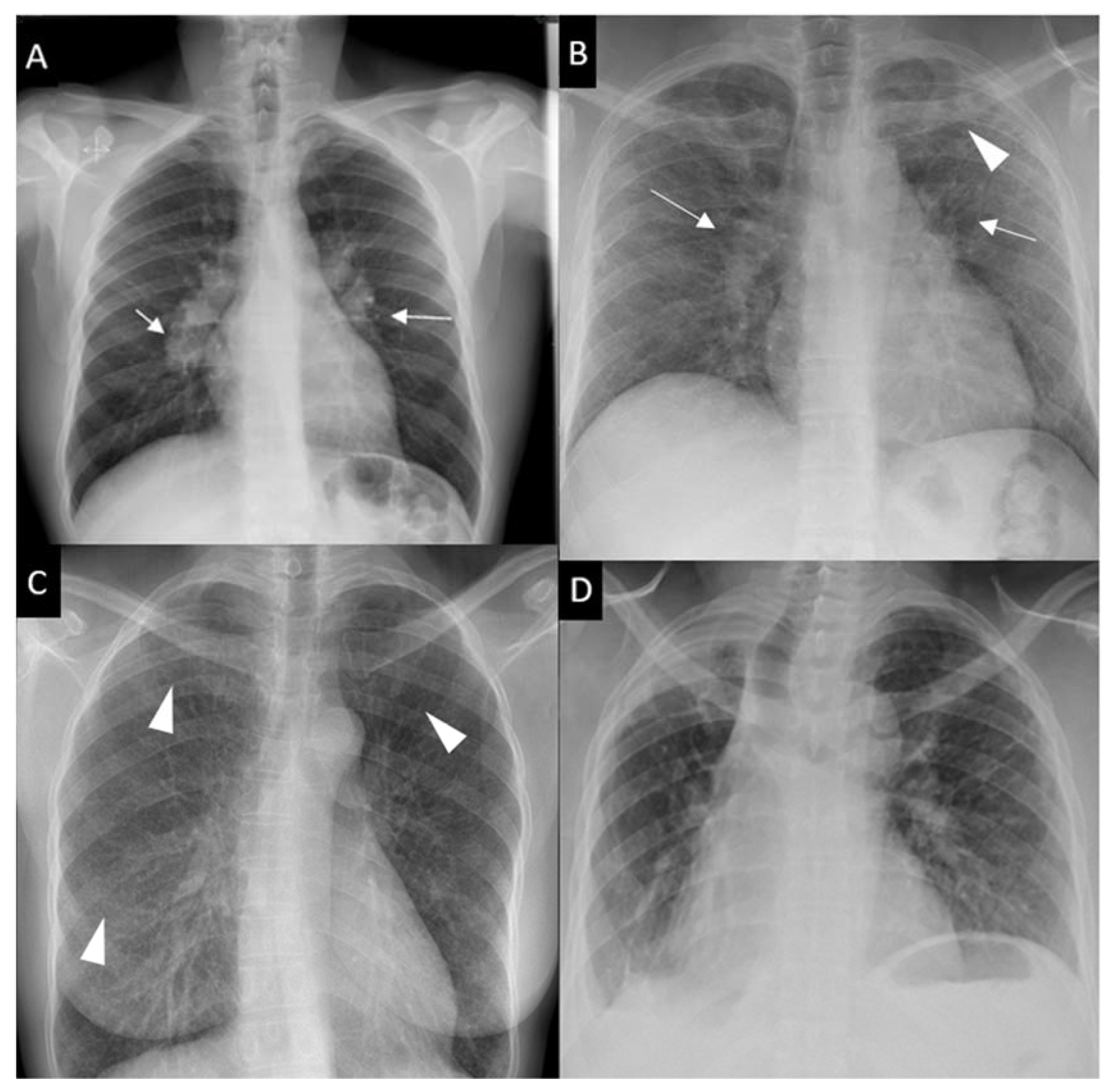
- **Bilateral hilar lymphadenopathy** is the most common radiological finding in sarcoidosis, present in up to 90% of cases [1].
- It is often asymptomatic and detected on a routine chest X-ray [1].
Interstitial Lung Diseases Indian Medical PG Question 2: Which of the following is not an obstructive lung disease?
- A. Emphysema
- B. Interstitial fibrosis (Correct Answer)
- C. Asthma
- D. Bronchitis
Interstitial Lung Diseases Explanation: ***Interstitial fibrosis***
- **Interstitial fibrosis** is a **restrictive lung disease**, characterized by **reduced lung elasticity** and lung volumes, rather than airway obstruction [1].
- In this condition, the **lung tissue becomes scarred and stiff**, making it difficult to expand fully during inspiration [1].
*Emphysema*
- **Emphysema** is a classic **obstructive lung disease** caused by the destruction of the **alveolar walls**, leading to enlarged air spaces and loss of elastic recoil [3].
- This destruction results in **airflow limitation**, particularly during exhalation, as airways collapse prematurely.
*Asthma*
- **Asthma** is an **obstructive lung disease** characterized by **reversible airway inflammation**, bronchoconstriction, and increased mucus production [2].
- These factors lead to **episodic airflow obstruction**, making it difficult to breathe, especially during exacerbations [2].
*Bronchitis*
- **Bronchitis**, particularly **chronic bronchitis**, is an **obstructive lung disease** defined by chronic inflammation of the bronchi.
- This inflammation causes **mucus hypersecretion** and narrowing of the airways, leading to persistent cough and airflow limitation.
Interstitial Lung Diseases Indian Medical PG Question 3: A lung biopsy shows 'temporal heterogeneity' with fibroblastic foci. Which radiological pattern would best support usual interstitial pneumonia?
- A. Peripheral and basal honeycombing (Correct Answer)
- B. Peribronchovascular nodules
- C. Central ground glass opacities
- D. Upper lobe nodules
Interstitial Lung Diseases Explanation: ***Peripheral and basal honeycombing***
- The combination of **temporal heterogeneity** and **fibroblastic foci** on biopsy is pathognomonic for usual interstitial pneumonia (UIP).
- Radiologically, UIP is characterized by **peripheral, basal, reticular opacities** with **honeycombing**, often accompanied by **traction bronchiectasis**.
*Peribronchovascular nodules*
- This pattern is more commonly seen in **sarcoidosis**, a granulomatous disease, rather than UIP.
- Sarcoidosis involves lymphocytic inflammation and non-caseating granulomas, which is distinct from the fibrotic process of UIP.
*Central ground glass opacities*
- While ground-glass opacities can be seen in various interstitial lung diseases, a **central distribution** is less typical for UIP.
- More commonly associated with **acute interstitial pneumonia** or **non-specific interstitial pneumonia (NSIP)**.
*Upper lobe nodules*
- **Upper lobe predominance** with nodules is characteristic of conditions like **silicosis**, **coal workers' pneumoconiosis**, or **hypersensitivity pneumonitis**.
- UIP typically involves the **lower lobes** and presents as reticular opacities and honeycombing rather than discrete nodules.
Interstitial Lung Diseases Indian Medical PG Question 4: Which of the following antiarrhythmic drugs is contraindicated in a patient with interstitial lung disease?
- A. Amiodarone (Correct Answer)
- B. Lignocaine
- C. Sotalol
- D. Quinidine
Interstitial Lung Diseases Explanation: ***Amiodarone***
- **Amiodarone** is contraindicated in patients with interstitial lung disease due to its well-known and potentially severe pulmonary toxicity, which can exacerbate or induce **pulmonary fibrosis**.
- Its long half-life means that drug accumulation and persistent adverse effects, including **ILD exacerbation**, are significant concerns.
*Sotalol*
- **Sotalol** primarily carries risks of **prolonged QT interval** and **torsades de pointes** because it has both beta-blocking and Class III antiarrhythmic properties.
- While it has cardiac and minor non-cardiac side effects, it is not specifically known to cause or worsen **interstitial lung disease**.
*Lignocaine*
- **Lignocaine** (lidocaine) is a Class Ib antiarrhythmic primarily used for **ventricular arrhythmias**, especially in acute settings.
- Its adverse effects are mainly **neurological** (e.g., dizziness, seizures at high doses) and **cardiovascular** (e.g., hypotension, bradycardia), with no significant association with lung disease.
*Quinidine*
- **Quinidine** is a Class Ia antiarrhythmic that can cause a variety of side effects, including **gastrointestinal upset**, **cinchonism** (tinnitus, blurred vision), and **cardiac rhythm disturbances**.
- While it can rarely cause a hypersensitivity pneumonitis, it is not a primary concern or contraindication in existing **interstitial lung disease** compared to amiodarone.
Interstitial Lung Diseases Indian Medical PG Question 5: A 60-year male with dyspnea shows honeycombing on HRCT. Labs show positive ANA. Diagnosis?
- A. COP
- B. Sarcoidosis
- C. UIP (Correct Answer)
- D. NSIP
Interstitial Lung Diseases Explanation: UIP
- **Honeycombing** on HRCT is a hallmark finding of **Usual Interstitial Pneumonia (UIP)**, which is the most common pattern of **Idiopathic Pulmonary Fibrosis (IPF)** [1].
- While a **positive ANA** can be associated with various connective tissue diseases, it is not specific and in the context of isolated honeycombing, UIP remains the most likely pattern; mildly positive ANA is not uncommon in IPF cases [1].
*COP*
- **Cryptogenic Organizing Pneumonia (COP)** typically presents with **peribronchial consolidation** and **ground-glass opacities** on HRCT, rather than widespread honeycombing.
- While patient symptoms can overlap, the characteristic HRCT findings for COP are different from those described.
*Sarcoidosis*
- **Sarcoidosis** is characterized by **non-caseating granulomas** and typically presents with **lymphadenopathy**, **nodules**, or **reticulonodular opacities** on HRCT, not primarily honeycombing.
- A positive ANA is not a typical serological marker for sarcoidosis.
*NSIP*
- **Nonspecific Interstitial Pneumonia (NSIP)** primarily shows **ground-glass opacities** and **reticular abnormalities** with less prominent or absent honeycombing compared to UIP.
- NSIP is also more likely to show uniform inflammation and fibrosis without the patchy, peripheral predilection of UIP.
Interstitial Lung Diseases Indian Medical PG Question 6: What is the most common cause of death in idiopathic pulmonary fibrosis (IPF)?
- A. Respiratory failure (Correct Answer)
- B. Pulmonary edema
- C. Cancer
- D. Pulmonary arterial hypertension (PAH)
- E. Acute exacerbation of IPF
Interstitial Lung Diseases Explanation: ***Respiratory failure***
- **Progressive fibrosis** of the lung tissue in idiopathic pulmonary fibrosis (IPF) directly impairs gas exchange, leading to **hypoxemia** and hypercapnia.
- This deterioration ultimately culminates in **respiratory failure**, which is the primary cause of mortality in most IPF patients.
*Pulmonary edema*
- While pulmonary edema can occur in systemic conditions, it is not the **primary or most common cause of death** specifically in IPF.
- IPF is characterized by **fibrotic remodeling**, not primarily fluid overload in the alveoli.
*Cancer*
- Patients with IPF have an **increased risk of lung cancer**, but it is not the most common cause of death compared to respiratory failure.
- The development of cancer is a **complication**, not the direct mechanism by which most IPF patients succumb to the disease.
*Pulmonary arterial hypertension (PAH)*
- PAH can be a significant complication of IPF, contributing to increased morbidity and mortality, but it is typically a **secondary contributor to death**, often by worsening respiratory mechanics.
- Its presence usually **compounds respiratory failure**, rather than being the standalone, most common cause of death.
*Acute exacerbation of IPF*
- Acute exacerbations represent episodes of **rapid clinical deterioration** with worsening dyspnea and hypoxemia, often idiopathic or triggered by infections.
- While they are a **significant cause of mortality** (accounting for a substantial proportion of IPF deaths), the underlying mechanism still relates to respiratory failure, making chronic progressive respiratory failure the most common overall cause of death.
Interstitial Lung Diseases Indian Medical PG Question 7: A lady presents with complaints of hemoptysis, and her chest X-ray appears to be normal. What is the next best investigation?
- A. Bronchoscopy for airway evaluation
- B. High-resolution CT scan of the chest (Correct Answer)
- C. Sputum cytology for malignancy detection
- D. Pulmonary function tests for lung assessment
Interstitial Lung Diseases Explanation: ***High-resolution CT scan of the chest***
- A **normal chest X-ray** does not rule out significant pulmonary pathology as it can miss small lesions, especially in cases of hemoptysis [1].
- An **HRCT scan** is more sensitive for detecting subtle parenchymal, airway, or vascular abnormalities that could be causing bleeding [1][2].
*Bronchoscopy for airway evaluation*
- While bronchoscopy is a critical tool for investigating hemoptysis, performing an **HRCT first** helps localize the bleeding source or narrow down potential etiologies, guiding the bronchoscopist [1].
- Starting directly with bronchoscopy without prior imaging might miss **parenchymal lesions** not visible in the airways and increases procedural risk if the source is unknown.
*Sputum cytology for malignancy detection*
- **Sputum cytology** has a low sensitivity for detecting malignancy, especially if the lesion is not centrally located or actively shedding cells.
- It is often reserved for patients with clear suspicion of cancer and usually follows imaging studies that indicate a suspicious mass [1].
*Pulmonary function tests for lung assessment*
- **Pulmonary function tests** assess lung volumes, airflow, and gas exchange but do not diagnose the cause of hemoptysis.
- These tests are primarily used for evaluating **respiratory mechanics** and the presence of obstructive or restrictive lung diseases, not acute bleeding.
Interstitial Lung Diseases Indian Medical PG Question 8: All of the following are features of interstitial lung disease except which one?
- A. Digital clubbing
- B. Coarse crepitations heard on auscultation.
- C. Early productive cough (Correct Answer)
- D. Exertional dyspnea
Interstitial Lung Diseases Explanation: ***Early productive cough***
- Interstitial lung diseases (ILDs) typically cause a **dry, non-productive cough** [1] due to inflammation and fibrosis in the lung parenchyma, rather than significant mucus production.
- A productive cough is more characteristic of **bronchial diseases** like bronchitis or bronchiectasis, where there is an increase in mucus secretion.
*Exertional dyspnea*
- **Exertional dyspnea** is a hallmark symptom of ILDs [1], as the stiffened, fibrotic lungs struggle to expand and efficiently transfer oxygen during physical activity [2].
- This symptom progressively worsens as the disease advances, limiting the patient's exercise capacity.
*Digital clubbing*
- **Digital clubbing** (thickening of the distal phalanges with increased convexity of the nail) is a common sign in many chronic lung diseases, including various forms of ILD [1].
- It reflects prolonged hypoxemia and is frequently seen in conditions like **idiopathic pulmonary fibrosis**.
*Coarse crepitations heard on auscultation*
- **Coarse crepitations** (also described as Velcro-like crackles) are a characteristic auscultatory finding in ILDs [1], particularly at the lung bases.
- These sounds are thought to result from the sudden opening of collapsed airways and alveoli during inspiration in fibrotic lungs.
Interstitial Lung Diseases Indian Medical PG Question 9: Fibrosis of upper lobe is due to
- A. ABPA (Correct Answer)
- B. Rheumatoid arthritis
- C. Certain types of pneumonia
- D. Bronchiectasis
Interstitial Lung Diseases Explanation: ***ABPA***
- **Allergic bronchopulmonary aspergillosis (ABPA)** is a hypersensitivity reaction to *Aspergillus* species, particularly *A. fumigatus*, which colonize the airways, and commonly leads to **upper lobe fibrosis** and **bronchiectasis**.
- The chronic inflammation and recurrent immune responses result in progressive airway damage, characterized on imaging by centrilobular nodules, mucoid impaction, and ultimately **fibrosis in the upper lobes**. Other conditions causing similar upper lobe conglomerate masses include Progressive Massive Fibrosis (PMF) seen in coal worker's pneumoconiosis [1].
*Certain types of pneumonia*
- While pneumonia can cause inflammation, it typically leads to **lobar consolidation** or diffuse infiltrates rather than specific upper lobe fibrosis.
- **Resolution of pneumonia** usually occurs without significant fibrotic changes, unlike chronic conditions that predispose to fibrosis.
*Bronchiectasis*
- **Bronchiectasis** is a general term for permanent dilation of the bronchi, which can occur in any lobe, but alone **does not directly cause upper lobe fibrosis** as a primary etiology.
- While it often coexists with conditions that cause fibrosis (like ABPA or CF), it's a consequence of airway damage, not the direct cause of the fibrotic process itself; it can however predispose to recurrent infections leading to scarring.
*Rheumatoid arthritis*
- **Rheumatoid arthritis** can cause interstitial lung disease, including **pulmonary fibrosis**, but it typically manifests as a **basilar or diffuse pattern** rather than predominantly upper lobe fibrosis [2].
- The fibrosis associated with RA-ILD is commonly of a **usual interstitial pneumonia (UIP)** or **non-specific interstitial pneumonia (NSIP)** pattern [2].
Interstitial Lung Diseases Indian Medical PG Question 10: All are seen in emphysema except
- A. Decreased vital capacity
- B. Rhonchi (Correct Answer)
- C. Reduced Dlco
- D. Hyperinflation
Interstitial Lung Diseases Explanation: ***Rhonchi***
- **Rhonchi** are coarse, rattling sounds caused by secretions or obstruction in the large airways and are more characteristic of **bronchitis** or severe asthma, rather than the primary findings in emphysema.
- Emphysema's hallmark is **alveolar destruction** and **air trapping**, which typically leads to diminished breath sounds or wheezing, not prominent rhonchi [1].
*Decreased vital capacity*
- Emphysema leads to **air trapping** due to the loss of elastic recoil, which can increase **residual volume** and **functional residual capacity** [1].
- While total lung capacity may increase, the inability to fully exhale trapped air effectively reduces the **maximum amount of air that can be exhaled after a maximal inhalation**, thus decreasing vital capacity [2].
*Hyperinflation*
- **Hyperinflation** is a classic feature of emphysema, resulting from air trapping due to the destruction of alveolar walls and loss of elastic recoil [1].
- This leads to an **increased functional residual capacity** and often contributes to the barrel-chest appearance.
*Reduced Dlco*
- **Reduced DLCO** (diffusing capacity of the lungs for carbon monoxide) is a characteristic finding in emphysema.
- This reduction reflects the **destruction of alveolar-capillary membranes**, which significantly impairs gas exchange.
More Interstitial Lung Diseases Indian Medical PG questions available in the OnCourse app. Practice MCQs, flashcards, and get detailed explanations.