

Zoonoses Overview & Bacterial Zoonoses - Beastly Bugs
- Zoonoses Overview:
- Definition: Diseases from vertebrate animals to humans.
- Classification: By agent, reservoir, transmission cycle.
- Transmission: Direct contact, bites, aerosols, ingestion, vectors.
- Key Bacterial Zoonoses: 📌 Mnemonic: B.L.P.A. (Brucellosis, Leptospirosis, Plague, Anthrax)
- Brucellosis ("Undulant Fever"):
- Agent: Brucella spp.
- Reservoir: Cattle, goats, pigs.
- Transmission: Unpasteurized dairy, contact.
- Clinical: Undulant fever, arthralgia, sweats.
- Dx: SAT, Blood culture.
- Prev: Pasteurization.
- Leptospirosis ("Weil's Disease"):
- Agent: Leptospira interrogans.
- Reservoir: Rodents (urine), domestic animals.
- Transmission: Contaminated water/soil.
- Clinical: Biphasic; Weil's: jaundice, renal failure, hemorrhage.
- Dx: MAT, PCR.
- Prev: Rodent control, PPE.
- Plague:
- Agent: Yersinia pestis.
- Reservoir: Rodents; Vector: Fleas.
- Transmission: Flea bite, aerosol (pneumonic).
- Clinical: Bubonic (bubo), Septicemic, Pneumonic.
- Dx: Bipolar stain (microscopy), culture.
- Prev: Rodent/flea control.
- Anthrax:
- Agent: Bacillus anthracis (spores).
- Reservoir: Herbivores, soil.
- Transmission: Spore contact (cutaneous, inhalation, ingestion).
- Clinical: Cutaneous (painless eschar), Inhalational (widened mediastinum), GI.
- Dx: Gram stain (box-car bacilli), culture.
- Prev: Animal vaccination, PEP.
- Brucellosis ("Undulant Fever"):
⭐ Plague: Yersinia pestis shows bipolar "safety-pin" appearance on Wayson or Giemsa stain.

Viral & Rickettsial Zoonoses - Tiny Terrors
Viral Zoonoses
- Rabies (Hydrophobia)
- Agent: Lyssavirus. Transmission: Animal bite.
- Key: Hydrophobia, Negri bodies.
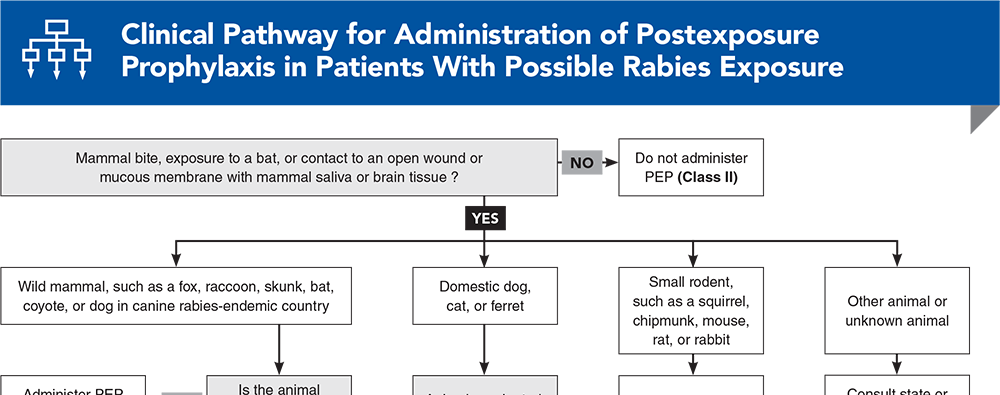
- PEP: Wound wash, Vaccine, RIG.
- Cat I (touch/lick intact skin): No PEP.
- Cat II (nibble/minor scratch, no bleed): Vaccine.
- Cat III (transdermal bite/scratch, lick broken skin, mucous membrane, bat): Vaccine + RIG.
-
Loading diagram…
%%{init: {'flowchart': {'htmlLabels': true}}}%% flowchart TD
Start["🐾 Animal Bite
• Exposure event• Risk assessment"]
Assess["📋 Category?
• WHO risk levels• Evaluation needed"]
Cat1["🩹 Category I
• Skin remains intact• Touching or licks"]
Cat2["🩹 Category II
• Minor nibbles• Scratch no bleed"]
Cat3["🩹 Category III
• Transdermal bites• Mucous membranes"]
NoPep["✅ No PEP
• No active treatment• Local hygiene only"]
WashVac["💊 PEP Level 1
• Wound washing• Rabies vaccine"]
WashVacRig["⚠️ PEP Level 2
• Wash and Vaccine• Give Rabies RIG"]
Start --> Assess Assess --> Cat1 Assess --> Cat2 Assess --> Cat3
Cat1 --> NoPep Cat2 --> WashVac Cat3 --> WashVacRig
style Start fill:#F7F5FD, stroke:#F0EDFA, stroke-width:1.5px, rx:12, ry:12, color:#6B21A8 style Assess fill:#FEF8EC, stroke:#FBECCA, stroke-width:1.5px, rx:12, ry:12, color:#854D0E style Cat1 fill:#F6F5F5, stroke:#E7E6E6, stroke-width:1.5px, rx:12, ry:12, color:#525252 style Cat2 fill:#F6F5F5, stroke:#E7E6E6, stroke-width:1.5px, rx:12, ry:12, color:#525252 style Cat3 fill:#F6F5F5, stroke:#E7E6E6, stroke-width:1.5px, rx:12, ry:12, color:#525252 style NoPep fill:#F6F5F5, stroke:#E7E6E6, stroke-width:1.5px, rx:12, ry:12, color:#525252 style WashVac fill:#F1FCF5, stroke:#BEF4D8, stroke-width:1.5px, rx:12, ry:12, color:#166534 style WashVacRig fill:#FDF4F3, stroke:#FCE6E4, stroke-width:1.5px, rx:12, ry:12, color:#B91C1C
* 
* **Kyasanur Forest Disease (KFD)**
* Agent: Flavivirus. Vector: *Haemaphysalis spinigera* ticks. Reservoir: Rodents; Monkeys amplify.
* Key: Biphasic fever, hemorrhagic, neuro. Karnataka.
* **Japanese Encephalitis (JE)** (Zoonotic aspect)
* Agent: Flavivirus. Vector: *Culex* spp. Hosts: Pigs, birds. Man dead-end.
**Rickettsial Zoonoses**
* Diagnostic aid: Weil-Felix test (agglutination with *Proteus* antigens).
* **Scrub Typhus**
* Agent: *Orientia tsutsugamushi*. Vector: Chiggers (larval trombiculid mites).
* Key: Eschar, rash, fever. Weil-Felix: OX-K (+).
* **Indian Tick Typhus**
* Agent: *Rickettsia conorii*. Vector: Ticks.
* Key: Eschar, rash (palms/soles). Weil-Felix: OX-19, OX-2 (+).
> ⭐ Rabies is nearly **100%** fatal once clinical symptoms appear, but **100%** preventable with prompt and appropriate Post-Exposure Prophylaxis (PEP).
## Parasitic Zoonoses & General Control - Bug Busters
* **Hydatid Disease (*Echinococcus granulosus*)**
* Agent: *E. granulosus* (dog tapeworm)
* Host: Dog (Definitive), Sheep/Human (Intermediate)
* Transmission: Ingestion of eggs (food/water)
* Clinical: Liver/lung cysts; rupture → anaphylaxis
* Dx: Imaging (USG/CT), serology
* Prevent: Deworm dogs, hygiene
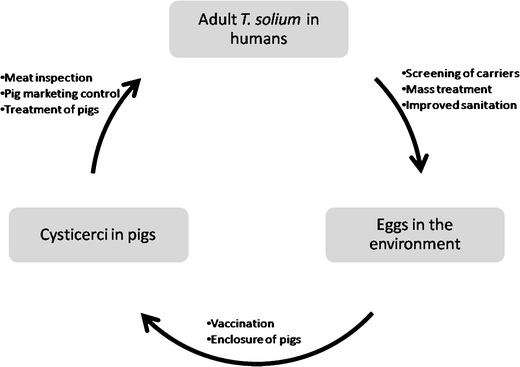
* **Cysticercosis/Taeniasis (*Taenia solium*)**
* Agent: *T. solium* (pork tapeworm)
* Host: Human (Definitive for taeniasis; Intermediate for cysticercosis), Pig (Intermediate)
* Transmission: Taeniasis (undercooked pork); Cysticercosis (eggs via fecal-oral)
* Clinical: Neurocysticercosis (seizures, headache)
* Dx: Brain imaging (CT/MRI), serology
* Prevent: Cook pork thoroughly, sanitation
* **Toxoplasmosis (*Toxoplasma gondii*)**
* Agent: *T. gondii*
* Host: Cat (Definitive), Human/mammals/birds (Intermediate)
* Transmission: Oocysts (cat feces), undercooked meat, transplacental
* Clinical: Mostly asymptomatic; Congenital (chorioretinitis, hydrocephalus)
* Dx: Serology (IgM/IgG)
* Prevent: Cook meat, careful cat litter handling (pregnant women)
* **General Control Principles**
* One Health Approach: Integrated human-animal-environment health
* Surveillance & Reporting: Early detection, rapid response
* Inter-sectoral Coordination: Health, veterinary, wildlife sectors collaboration
* Health Education: Community awareness on transmission & prevention
* India Example: National Rabies Control Programme (also benefits other zoonoses control)
> ⭐ Neurocysticercosis is the most common parasitic infection of the brain globally and a leading cause of acquired epilepsy in endemic areas.
## High‑Yield Points - ⚡ Biggest Takeaways
> * **Rabies**: **Animal bites**; **Negri bodies** pathognomonic; crucial **Post-Exposure Prophylaxis (PEP)**.
> * **Brucellosis**: **Undulant fever**; linked to **unpasteurized dairy** or direct **animal contact**.
> * **Leptospirosis**: **Weil's disease** (jaundice, renal failure); exposure to **rodent urine/contaminated water**.
> * **Plague (Yersinia pestis)**: **Bubonic plague** commonest; transmitted by **rat fleas**.
> * **Kyasanur Forest Disease (KFD)**: **Tick-borne viral hemorrhagic fever**; endemic to **Karnataka**.
> * **Japanese Encephalitis (JE)**: **Culex mosquito-borne**; **pigs** are amplifying hosts; causes **encephalitis**.
> * **Anthrax**: **Malignant pustule** (cutaneous); **wool-sorter's disease** (inhalational).
Unlock the full lesson and continue reading
Signup to continue reading this lesson and unlimited access questions, flashcards, AI notes, and more
