Enzyme-Linked Receptors Indian Medical PG Practice Questions and MCQs
Practice Indian Medical PG questions for Enzyme-Linked Receptors. These multiple choice questions (MCQs) cover important concepts and help you prepare for your exams.
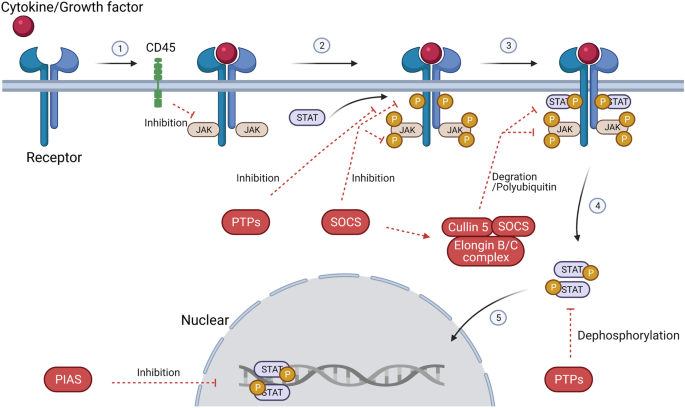
Enzyme-Linked Receptors Indian Medical PG Question 1: Match the following drugs with the targets of their actions:
Drugs:
A. Trastuzumab
B. Infliximab
C. Sirolimus
D. Imatinib
Targets:
1. BCR-ABL tyrosine kinase
2. mTOR
3. TNF alpha
4. HER2/neu
- A. A-2, B-3, C-1, D-4
- B. A-3, B-4, C-2, D-1
- C. A-4, B-3, C-1, D-2
- D. A-4, B-3, C-2, D-1 (Correct Answer)
Enzyme-Linked Receptors Explanation: ***Correct Answer: A-4, B-3, C-2, D-1***
- **Trastuzumab** (Herceptin) is a **monoclonal antibody** that targets the **HER2/neu receptor (4)** [1], [2], commonly overexpressed in certain breast cancers and gastric cancers.
- **Infliximab** is another **monoclonal antibody** that specifically targets and neutralizes **TNF-alpha (3)**, an inflammatory cytokine, making it useful in treating autoimmune diseases like rheumatoid arthritis and Crohn's disease.
- **Sirolimus** is an **immunosuppressant** drug that inhibits the mammalian target of rapamycin (**mTOR (2)**), a protein kinase involved in cell growth and proliferation, used in transplant medicine and as an anticancer agent.
- **Imatinib** is a **tyrosine kinase inhibitor** that primarily targets the **BCR-ABL fusion protein (1)** [1], [2], which is characteristic of chronic myeloid leukemia.
*Incorrect: A-2, B-3, C-1, D-4*
- This option incorrectly matches Trastuzumab with mTOR and Sirolimus with BCR-ABL, which are not their primary targets.
- Trastuzumab targets HER2/neu [1], [2], and Sirolimus targets mTOR.
*Incorrect: A-3, B-4, C-2, D-1*
- This option incorrectly matches Trastuzumab with TNF-alpha and Infliximab with HER2/neu.
- Infliximab targets TNF-alpha, and Trastuzumab targets HER2/neu [1], [2].
*Incorrect: A-4, B-3, C-1, D-2*
- This option incorrectly matches Sirolimus with BCR-ABL and Imatinib with mTOR.
- Sirolimus inhibits mTOR, and Imatinib inhibits BCR-ABL [1], [2].
Enzyme-Linked Receptors Indian Medical PG Question 2: Which hormone acts on JAK-STAT kinase receptor?
- A. TSH
- B. Thyroxine
- C. GH (Correct Answer)
- D. FSH
Enzyme-Linked Receptors Explanation: ***GH***
- **Growth Hormone (GH)** binds to a **cytokine receptor** that lacks intrinsic tyrosine kinase activity and instead signals through associated **JAK-STAT kinases**.
- This binding leads to **JAK phosphorylation**, which then phosphorylates and activates **STAT proteins**, regulating gene expression.
*TSH*
- **Thyroid-stimulating hormone (TSH)** acts on a **G protein-coupled receptor** to stimulate thyroid hormone production and release.
- Its signaling pathway primarily involves the activation of **adenylyl cyclase** and increases in **cAMP**, not the JAK-STAT pathway.
*Thyroxine*
- **Thyroxine (T4)** is a **thyroid hormone** that primarily acts by binding to **intracellular nuclear receptors**, which then regulate gene transcription.
- It directly influences gene expression, rather than signaling through cell surface receptors and kinase pathways like JAK-STAT.
*FSH*
- **Follicle-stimulating hormone (FSH)**, like TSH, signals through a **G protein-coupled receptor** on target cells in the gonads.
- This activation primarily leads to an increase in **intracellular cAMP levels** to mediate its effects on gamete production and hormone synthesis.
Enzyme-Linked Receptors Indian Medical PG Question 3: Which of the following is true?
1. BRCA1 is an oncogene
2. HER2neu is amplified only in a fraction of breast cancer
3. EGFR (+) is seen in non-small cell lung cancer
4. N-MYC is a tumor suppressor gene
- A. 1,3
- B. 1,2
- C. 2,3 (Correct Answer)
- D. All of the options
Enzyme-Linked Receptors Explanation: ***Correct Option: 2,3***
- **Statement 2 is TRUE**: HER2neu amplification occurs in only a fraction (~15-20%) of breast cancers, making it a specific subset requiring targeted therapy with trastuzumab (Herceptin) [1].
- **Statement 3 is TRUE**: EGFR (epidermal growth factor receptor) mutations or overexpression are commonly seen in non-small cell lung cancer (NSCLC) and serve as important therapeutic targets for tyrosine kinase inhibitors.
*Incorrect Option: 1,3*
- Statement 1 is **FALSE**: BRCA1 is a **tumor suppressor gene**, not an oncogene. It functions in DNA double-strand break repair, and loss-of-function mutations increase the risk of breast and ovarian cancers.
- Statement 3 is TRUE, but the inclusion of the false statement about BRCA1 makes this option incorrect.
*Incorrect Option: 1,2*
- Statement 1 is **FALSE**: BRCA1 is a **tumor suppressor gene**, not an oncogene.
- Statement 2 is TRUE [1], but the false classification of BRCA1 invalidates this option.
*Incorrect Option: All of the options*
- Statement 1 is **FALSE**: BRCA1 is a tumor suppressor gene, not an oncogene.
- Statement 4 is **FALSE**: N-MYC is an **oncogene** that is amplified in neuroblastoma and other cancers, not a tumor suppressor gene.
- Since two of the four statements are incorrect, "All of the options" cannot be true.
**References:**
[1] Kumar V, Abbas AK, et al.. Robbins and Cotran Pathologic Basis of Disease. 9th ed. The Breast, pp. 1059-1060.
Enzyme-Linked Receptors Indian Medical PG Question 4: What type of receptor is the insulin receptor?
- A. Guanylyl cyclase
- B. Adenylyl cyclase
- C. IP3-DAG
- D. Tyrosine kinase (Correct Answer)
Enzyme-Linked Receptors Explanation: ***Tyrosine kinase***
- The insulin receptor is a **receptor tyrosine kinase (RTK)**, meaning it has intrinsic tyrosine kinase activity that phosphorylates specific tyrosine residues on itself and other intracellular proteins upon insulin binding.
- This phosphorylation initiates a **signaling cascade** involving molecules like IRS proteins, PI3K/Akt, and MAPK pathways, leading to glucose uptake and metabolic regulation.
*Guanylyl cyclase*
- Guanylyl cyclase receptors, such as the **atrial natriuretic peptide receptor**, catalyze the conversion of GTP to **cGMP**, which acts as a second messenger.
- This mechanism is distinct from the insulin receptor's direct protein phosphorylation.
*Adenylyl cyclase*
- Adenylyl cyclase is typically activated by **G-protein coupled receptors (GPCRs)**, leading to the conversion of ATP to **cAMP**, another second messenger.
- The insulin receptor does not couple to G proteins or directly activate adenylyl cyclase.
*IP3-DAG*
- The **inositol triphosphate (IP3)** and **diacylglycerol (DAG)** pathway is primarily activated by certain **GPCRs** and involves the hydrolysis of PIP2 by phospholipase C, leading to calcium release and protein kinase C activation.
- This pathway is not the primary signaling mechanism initiated by the insulin receptor.
Enzyme-Linked Receptors Indian Medical PG Question 5: Which of the following statements best describes the mechanism of action of insulin on target cells?
- A. Insulin binds to a receptor on the outer surface of the plasma membrane, activating adenylate cyclase through the Gs protein.
- B. Insulin binds to a cytoplasmic receptor and is transferred as a hormone receptor complex to the nucleus to modulate gene expression.
- C. Insulin enters the cell and causes the release of calcium ions from intracellular stores.
- D. Insulin binds to a transmembrane receptor on the outer surface of the plasma membrane, activating the tyrosine kinase in the cytosolic domain of the receptor. (Correct Answer)
Enzyme-Linked Receptors Explanation: ***Insulin binds to a transmembrane receptor on the outer surface of the plasma membrane, activating the tyrosine kinase in the cytosolic domain of the receptor.***
- **Insulin** is a **peptide hormone** and cannot freely pass through the lipid bilayer, thus it binds to a **transmembrane receptor** on the cell surface.
- This binding leads to the activation of the receptor's intrinsic **tyrosine kinase activity** in the intracellular domain, initiating a signaling cascade.
*Insulin binds to a cytoplasmic receptor and is transferred as a hormone receptor complex to the nucleus to modulate gene expression.*
- This mechanism describes the action of **steroid hormones**, which are lipid-soluble and can cross the cell membrane, binding to **intracellular receptors**.
- **Insulin** acts via a **cell surface receptor** and its downstream effects are mediated through signal transduction pathways, not direct nuclear translocation.
*Insulin binds to a receptor on the outer surface of the plasma membrane, activating adenylate cyclase through the Gs protein.*
- This mechanism is characteristic of **G-protein coupled receptors (GPCRs)**, which activate or inhibit enzymes like adenylate cyclase via G-proteins to produce second messengers like cyclic AMP.
- The **insulin receptor** is a **receptor tyrosine kinase**, not a GPCR, and does not directly activate adenylate cyclase via Gs protein.
*Insulin enters the cell and causes the release of calcium ions from intracellular stores.*
- While some hormones and neurotransmitters can trigger the release of intracellular **calcium ions**, this is typically mediated by specific pathways (e.g., GPCRs linked to phospholipase C).
- **Insulin** does not directly enter target cells to cause calcium release; its actions are primarily mediated through receptor tyrosine kinase signaling pathways.
Enzyme-Linked Receptors Indian Medical PG Question 6: Agent that acts through tyrosine kinase receptor is
- A. Insulin (Correct Answer)
- B. MSH
- C. TSH
- D. TRH
Enzyme-Linked Receptors Explanation: ***Insulin***
- **Insulin** binds to its receptor, which is a **tyrosine kinase receptor**, leading to autophosphorylation and the activation of intracellular signaling pathways.
- This activation is crucial for glucose uptake and metabolism by various cells in the body.
*MSH*
- **Melanocyte-stimulating hormone (MSH)** acts primarily through **G protein-coupled receptors**, specifically melanocortin receptors.
- These receptors activate adenylyl cyclase, leading to an increase in intracellular cAMP.
*TSH*
- **Thyroid-stimulating hormone (TSH)** also acts via a **G protein-coupled receptor** on thyroid follicular cells.
- Its binding stimulates adenylyl cyclase, increasing cAMP and thus thyroid hormone synthesis and release.
*TRH*
- **Thyrotropin-releasing hormone (TRH)** binds to **G protein-coupled receptors** on pituitary thyrotrophs.
- This interaction activates the phospholipase C pathway, leading to the release of TSH.
Enzyme-Linked Receptors Indian Medical PG Question 7: In the mitogen activated protein kinase pathway, the activation of RAS is counteracted by-
- A. Phosphatidylinositol
- B. Protein kinase C
- C. GTPase activating protein (Correct Answer)
- D. Inositol triphosphate
Enzyme-Linked Receptors Explanation: ***GTPase activating protein***
- **GTPase-activating proteins (GAPs)** facilitate the hydrolysis of **GTP bound to RAS** to GDP, thus inactivating RAS.
- This inactivation step is crucial for regulating the duration and intensity of **RAS signaling** in the **MAPK pathway**.
*Phosphatidylinositol*
- **Phosphatidylinositol** and its phosphorylated derivatives are important signaling molecules but primarily involved in other pathways, such as the **PI3K/AKT pathway**.
- They do not directly counteract the **activation of RAS** in the **MAPK pathway**.
*Protein kinase C*
- **Protein kinase C (PKC)** is a family of enzymes activated by **diacylglycerol** and calcium, playing roles in diverse cellular functions including cell growth and differentiation.
- While it can cross-talk with the **MAPK pathway**, it does not directly inactivate **RAS**.
*Inositol triphosphate*
- **Inositol triphosphate (IP3)** is a secondary messenger that functions to release **calcium from intracellular stores**, primarily in the **phospholipase C pathway**.
- It does not have a direct antagonistic role in the **activation of RAS**.
Enzyme-Linked Receptors Indian Medical PG Question 8: In response to changes in Ca2+ concentration, which of the following Ca2+ binding proteins can modify the activity of many enzymes & proteins?
- A. Collagen
- B. Calmodulin (Correct Answer)
- C. Kinesin
- D. Elastin
Enzyme-Linked Receptors Explanation: ***Calmodulin***
- **Calmodulin** is a highly conserved, 148-amino acid protein with four **calcium-binding EF-hand motifs**.
- Upon binding to **calcium ions (Ca2+)**, it undergoes a conformational change that enables it to interact with and regulate the activity of a wide variety of enzymes and proteins, including **kinases, phosphatases, and ion channels**, mediating many Ca2+-dependent cellular processes.
*Collagen*
- **Collagen** is a major structural protein in the extracellular matrix, providing **tensile strength** to tissues.
- Its primary function is structural support, rather than acting as a calcium-sensing regulatory protein for enzyme activity.
*Kinesin*
- **Kinesin** is a **motor protein** involved in intracellular transport, moving cargo along microtubules.
- While its activity can be modulated, it is not primarily known as a calcium-binding protein that directly regulates a broad range of enzymes in response to calcium concentration changes.
*Elastin*
- **Elastin** is a highly elastic protein found in connective tissue, allowing tissues to **recoil after stretching**.
- Like collagen, its main role is structural, contributing to the elasticity of tissues, rather than signaling or enzyme regulation via calcium binding.
Enzyme-Linked Receptors Indian Medical PG Question 9: Which enzyme is responsible for the activation of Interleukin-1 (IL-1)?
- A. Caspase 1 (Correct Answer)
- B. Caspase 3
- C. Caspase 8
- D. Caspase 5
Enzyme-Linked Receptors Explanation: ***Caspase 1***
- **Caspase 1**, also known as **IL-1 beta converting enzyme (ICE)**, is primarily responsible for cleaving the inactive precursor forms of **pro-IL-1β** and **pro-IL-18** into their active, mature forms.
- Its activation is a crucial step in the **inflammasome pathway**, mediating the inflammatory response.
*Caspase 3*
- **Caspase 3** is a key executioner caspase in **apoptosis**, responsible for cleaving numerous cellular proteins, leading to cell death.
- It does not directly activate IL-1; its primary role is in programmed cell death, not cytokine maturation.
*Caspase 8*
- **Caspase 8** is an initiator caspase involved in the **extrinsic pathway of apoptosis**, activated by death receptor signaling.
- While it plays a role in some inflammatory processes, it is not directly involved in the proteolytic activation of IL-1.
*Caspase 5*
- **Caspase 5** is an inflammatory caspase that can be activated by the inflammasome, but its role in IL-1 processing is considered minor compared to **Caspase 1**.
- Its primary function is less directly involved in the central activation of IL-1β.
Enzyme-Linked Receptors Indian Medical PG Question 10: Which amino acid can be utilized in both gluconeogenesis and ketogenesis?
- A. Leucine
- B. Valine
- C. Arginine
- D. Tyrosine (Correct Answer)
Enzyme-Linked Receptors Explanation: ***Tyrosine (Correct Answer)***
- Tyrosine is **both glucogenic and ketogenic**, making it the correct answer.
- It is **glucogenic** because its metabolism yields **fumarate**, which can enter the TCA cycle and contribute to **gluconeogenesis**.
- It is also **ketogenic** because its degradation produces **acetoacetate**, a **ketone body**.
*Leucine*
- Leucine is a purely **ketogenic** amino acid, meaning its catabolism only produces **acetyl-CoA** and **acetoacetate**.
- It cannot be converted into glucose precursors and therefore does not contribute to gluconeogenesis.
*Valine*
- Valine is a purely **glucogenic** amino acid, meaning its metabolism produces **succinyl-CoA**.
- Succinyl-CoA can be converted into **oxaloacetate** and then to glucose via gluconeogenesis, but it does not produce ketone bodies.
*Arginine*
- Arginine is a purely **glucogenic** amino acid, serving as a precursor for **α-ketoglutarate** in the TCA cycle.
- This pathway allows its carbon skeleton to be diverted into glucose production, but it does not yield ketone bodies.
More Enzyme-Linked Receptors Indian Medical PG questions available in the OnCourse app. Practice MCQs, flashcards, and get detailed explanations.