

DNA Sequencing - Chain Terminator Classic
- Principle: Employs dideoxynucleotides ($ddNTPs$) which lack the $3'-OH$ group essential for phosphodiester bond formation, leading to premature termination of DNA synthesis. $ddNTPs \rightarrow 3'-OH \text{ missing} \rightarrow \text{Chain Termination}$. 📌 Sanger Stops Synthesis.
- Key Components:
- Single-stranded DNA template
- Specific primer
- DNA polymerase (e.g., Taq polymerase)
- All four deoxynucleotide triphosphates ($dNTPs$)
- Small amounts of four fluorescently labelled dideoxynucleotide triphosphates ($ddNTPs$), each with a distinct dye.
- Process Overview:
Loading diagram…
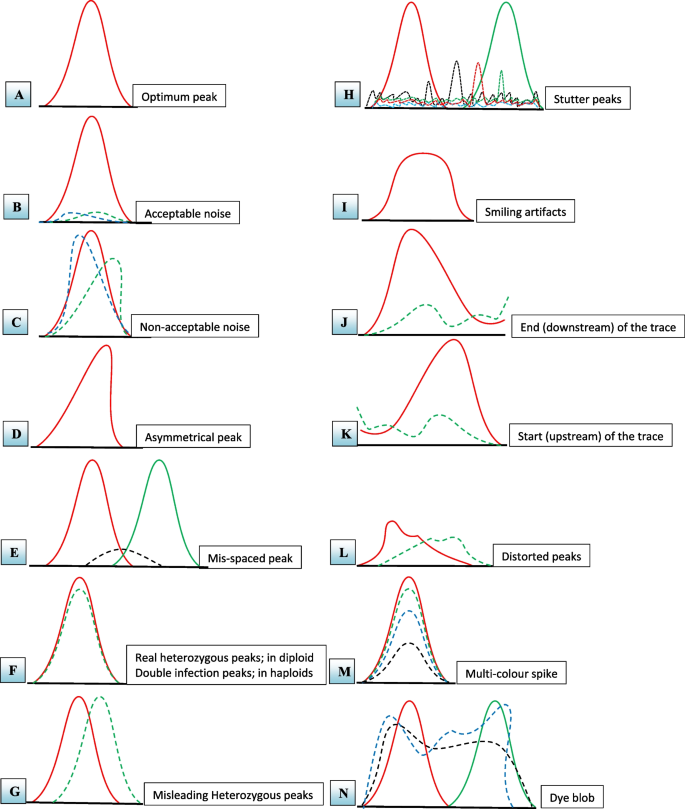
- Reading Chromatogram: The sequence of bases is read from the order of fluorescent peaks, each color corresponding to a specific $ddNTP$.
⭐ Sanger sequencing is highly accurate and often used to confirm results from Next-Generation Sequencing (NGS) methods.
DNA Sequencing - Massive Parallel Power
Next-Generation Sequencing (NGS), also known as massively parallel sequencing, allows for simultaneous sequencing of millions to billions of DNA fragments. This high-throughput technology offers a significant leap from traditional methods.
Core Workflow:
Loading diagram…

Key Advantages over Sanger Sequencing:
- Massive Throughput: Generates vast amounts of sequence data in a single run.
- Increased Speed: Rapidly sequences entire genomes or targeted regions.
- Reduced Cost: Significantly ↓ cost per sequenced base, enabling large-scale projects.
- Broader Applications: Facilitates diverse studies like transcriptomics (RNA-Seq), epigenomics (ChIP-Seq), and metagenomics.
⭐ NGS can detect somatic mutations with allele frequencies as low as 1-5%, vital for early cancer detection and monitoring.
DNA Sequencing - Tech Titans Tangle
-
Key Platforms & Principles:
- Illumina (SBS): Fluorescent reversible terminators. Dominant for short reads.
- Pyrosequencing: Detects pyrophosphate (PPi) release.
- Ion Torrent: Detects H+ ion release (pH change).
- PacBio SMRT: Single-molecule real-time sequencing in Zero-Mode Waveguides (ZMWs); long reads.
- Oxford Nanopore: DNA through protein nanopore; measures ionic current changes; long reads, portable.
-
Sanger vs. NGS Comparison:
| Feature | Sanger Sequencing | NGS (e.g., Illumina) |
|---|---|---|
| Throughput | Low | Massively Parallel (↑↑) |
| Read Length | Long (500-1000 bp) | Shorter (50-300 bp)* |
| Error Rate | Low (~0.001%) | Higher (~0.1-1%) |
| Cost/Base | High | Low (↓↓) |
| Application | Single gene, validation | Genomes, transcriptomes |
⭐ Illumina sequencing, utilizing sequencing-by-synthesis (SBS), is the most prevalent NGS technology due to its high throughput and accuracy for short reads.
DNA Sequencing - Gene Scene Unveiled
Unveils genetic blueprints. Vital in diagnostics, research, personalized medicine.
- Clinical Diagnostics:
- Genetic Disorders: Identifies inherited conditions (e.g., cystic fibrosis).
- Cancer Genomics: Detects mutations (EGFR, BRCA), CNVs, fusions for targeted therapy.
- Infectious Diseases: Rapid pathogen ID (MTB, HIV), outbreak tracking, AMR detection.
- Pharmacogenomics: Guides drug choice & dose (CYP2C19 & clopidogrel).
- Forensics: Individual ID.
- Research: WGS, WES, RNA-Seq (transcriptome), ChIP-Seq (DNA-protein interaction).
- Advanced: Third-Gen Sequencing (TGS) - long reads (PacBio, Nanopore), real-time.
⭐ Sanger sequencing, the first-generation method, remains crucial for validating Next-Generation Sequencing (NGS) findings and for targeted sequencing of specific DNA regions.
oka
High‑Yield Points - ⚡ Biggest Takeaways
- Sanger sequencing (dideoxy method) uses ddNTPs as chain terminators; a gold standard.
- Next-Generation Sequencing (NGS) enables massively parallel sequencing, high throughput, and cost-effectiveness.
- Pyrosequencing detects pyrophosphate (PPi) release upon nucleotide incorporation, generating light.
- Shotgun sequencing is key for whole genome sequencing by assembling random DNA fragments.
- Applications: mutation detection, genetic disorder diagnosis, forensics, and pharmacogenomics.
- Automated Sanger employs fluorescently labeled ddNTPs and capillary electrophoresis.
Unlock the full lesson and continue reading
Signup to continue reading this lesson and unlimited access questions, flashcards, AI notes, and more
