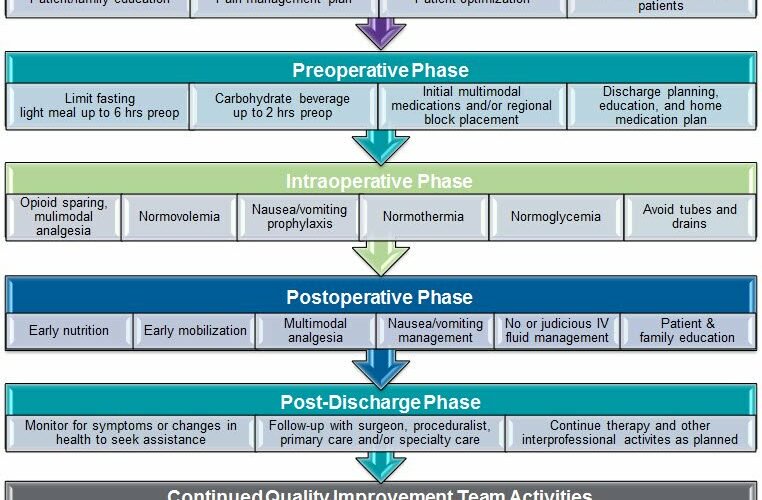
Principles of Enhanced Recovery Protocols Indian Medical PG Practice Questions and MCQs
Practice Indian Medical PG questions for Principles of Enhanced Recovery Protocols. These multiple choice questions (MCQs) cover important concepts and help you prepare for your exams.
Principles of Enhanced Recovery Protocols Indian Medical PG Question 1: In the immediate postoperative period, how is body potassium typically managed?
- A. Increased due to fluid retention
- B. Remains stable
- C. Excreted excessively (Correct Answer)
- D. Conserved by aldosterone action
Principles of Enhanced Recovery Protocols Explanation: ***Excreted excessively***
- **Stress responses** to surgery, including increased aldosterone and cortisol, can lead to enhanced **potassium excretion** via the kidneys.
- Additionally, cell breakdown and fluid shifts can contribute to a net loss of potassium from the **intracellular** to **extracellular** space.
*Increased due to fluid retention*
- While **fluid retention** can occur post-operatively, it's typically associated with **dilutional hyponatremia**, not hyperkalemia from increased body potassium.
- The stress response and associated hormonal changes usually promote potassium excretion, not retention.
*Remains stable*
- The **stress of surgery** significantly impacts electrolyte balance due to hormonal changes, fluid shifts, and tissue injury, making it unlikely for potassium levels to remain stable.
- **Aldosterone effects** and increased cortisol levels actively alter potassium handling.
*Conserved by aldosterone action*
- **Aldosterone**, a key hormone in the postoperative stress response, primarily promotes **sodium reabsorption** and **potassium excretion** in the kidneys.
- Therefore, its action leads to potassium loss rather than conservation.
Principles of Enhanced Recovery Protocols Indian Medical PG Question 2: A patient with a non-obstructing carcinoma of the sigmoid colon is being prepared for elective resection. To minimize the risk of postoperative infectious complications, what should be included in your planning?
- A. Postoperative administration for 5 to 7 days of parenteral antibiotics effective against aerobes and anaerobes
- B. A single preoperative parenteral dose of antibiotic effective against aerobes and anaerobes may provide initial coverage. (Correct Answer)
- C. Postoperative administration for 2 to 4 days of parenteral antibiotics effective against aerobes and anaerobes
- D. Avoidance of oral antibiotics to prevent emergence of Clostridioides difficile
Principles of Enhanced Recovery Protocols Explanation: ***Single preoperative parenteral dose of antibiotic effective against aerobes and anaerobes***
- For **elective colorectal surgery**, a single dose of a **broad-spectrum parenteral antibiotic** administered within 60 minutes prior to incision is the standard of care to reduce surgical site infections.
- This approach ensures adequate drug levels in the tissues during the period of potential bacterial contamination and is a cornerstone of modern surgical prophylaxis.
- Current guidelines (WHO, SCIP) recommend a single preoperative dose, which may be redosed intraoperatively if the procedure is prolonged beyond 3-4 hours.
*Avoidance of oral antibiotics to prevent emergence of Clostridioides difficile*
- This is **incorrect**. **Oral antibiotics** (such as neomycin and metronidazole) are routinely used preoperatively in conjunction with mechanical bowel preparation for colorectal surgery to reduce intraluminal bacterial load.
- The concern for *Clostridioides difficile* infection is generally low with short-term, targeted prophylactic antibiotic regimens compared to broad-spectrum, prolonged use.
- The combination of oral and parenteral antibiotics has been shown to further reduce surgical site infections.
*Postoperative administration for 5 to 7 days of parenteral antibiotics*
- **Prolonged postoperative antibiotic administration** beyond 24 hours in uncomplicated cases is not recommended as it increases the risk of **antibiotic resistance**, *C. difficile* infection, and adverse drug reactions without additional benefit.
- The goal of prophylactic antibiotics is to cover the period of contamination during surgery, not to treat presumed ongoing infection postoperatively.
*Postoperative administration for 2 to 4 days of parenteral antibiotics*
- While administration for up to 24 hours post-operatively may be considered in some high-risk cases, routine **prolonged postoperative antibiotics** (2-4 days) are unnecessary for most elective colorectal resections.
- Evidence suggests that continuing antibiotics beyond the immediate perioperative period does not further reduce the incidence of **surgical site infections** in clean-contaminated surgeries.
Principles of Enhanced Recovery Protocols Indian Medical PG Question 3: Intraoperative radiation therapy (IORT) is most commonly used in which of the following cancers?
- A. Ca Thyroid
- B. Ca Pancreas (Correct Answer)
- C. Ca Cervix
- D. Ca Breast
Principles of Enhanced Recovery Protocols Explanation: ***Ca Pancreas***
- **Intraoperative radiation therapy (IORT)** is frequently employed for **pancreatic cancer** due to its deep-seated location and locally advanced nature at presentation.
- IORT allows for a **high dose of radiation** (10-20 Gy) to be delivered directly to the tumor bed and involved lymph nodes at the time of surgery, while critical structures like the stomach, duodenum, and kidneys can be retracted or shielded.
- Particularly useful in **borderline resectable or locally advanced cases** where complete resection margins are difficult to achieve.
- Used in specialized centers as part of multimodal therapy to improve local control.
*Ca Thyroid*
- **Thyroid cancer** is generally treated with surgery (thyroidectomy) followed by **radioactive iodine (RAI) therapy** for papillary and follicular types, not typically IORT.
- The thyroid gland's superficial location and high avidity for iodine make RAI an effective targeted therapy.
- IORT has no established role in standard thyroid cancer management.
*Ca Cervix*
- **Cervical cancer** treatment involves surgery, **external beam radiation therapy (EBRT)**, and **brachytherapy**, which places radioactive sources directly into or near the tumor.
- Brachytherapy is superior for cervical cancer due to excellent dose distribution to the cervix and parametrium.
- IORT is not a standard approach for primary cervical cancer, though it might be considered in select recurrent cases.
*Ca Breast*
- For **breast cancer**, IORT has gained significant traction, particularly for **early-stage disease** (T1-T2, node-negative) as an alternative to 5-6 weeks of external beam radiation.
- **TARGIT-A and ELIOT trials** have established IORT as a viable option for partial breast irradiation during breast-conserving surgery.
- While increasingly used globally with dedicated devices (INTRABEAM, ELIOT), it remains a **selective option** rather than universally applied.
- The indication is more specific (favorable early-stage tumors) compared to the broader applications in pancreatic cancer where dose escalation and organ sparing are critical challenges.
Principles of Enhanced Recovery Protocols Indian Medical PG Question 4: Postoperative third-space accumulation should be managed by intravenous fluid with
- A. Albumin
- B. Normal saline (Correct Answer)
- C. Fluid restriction
- D. Dextrose in water
Principles of Enhanced Recovery Protocols Explanation: ***Normal saline***
- **Third-space accumulation** leads to fluid shifts from the intravascular space to the interstitial space, commonly seen after trauma or surgery, resulting in **hypovolemia**.
- **Isotonic solutions** like normal saline help replenish the lost intravascular volume and maintain blood pressure without shifting more fluid into the third space.
*Albumin*
- While albumin can increase oncotic pressure and draw fluid back into the intravascular space, it is typically reserved for cases of **severe hypoalbuminemia** or when crystalloids alone are insufficient.
- Using albumin in the setting of acute third-space loss without clear indications of hypoalbuminemia may not be the initial or most appropriate intervention.
*Fluid restriction*
- **Fluid restriction** would worsen the patient's hypovolemia as third-space losses deplete the effective circulating volume of the patient.
- This approach is appropriate for conditions like **heart failure** or **SIADH**, where there is true fluid excess or impaired excretion, not for hypovolemic states due to fluid shifts.
*Dextrose in water*
- Dextrose in water is a **hypotonic solution** that would rapidly distribute into the intracellular and interstitial compartments and may contribute to worsening edema in the third space.
- It does not effectively expand intravascular volume and can lead to **hyponatremia** if administered in large quantities.
Principles of Enhanced Recovery Protocols Indian Medical PG Question 5: Which among the following is not used in post laryngectomy rehabilitation?
- A. Tracheostomy tube (Correct Answer)
- B. Esophageal speech
- C. Tracheoesophageal puncture
- D. Electrolarynx
Principles of Enhanced Recovery Protocols Explanation: ***Tracheostomy tube***
- Following total laryngectomy, the **trachea is permanently diverted** to form a permanent stoma in the neck for breathing.
- In the context of **post-laryngectomy rehabilitation**, the focus is on **voice restoration** methods rather than airway management devices.
- While laryngectomy tubes or stoma buttons may be used temporarily for **stoma care** (preventing stenosis, maintaining patency), traditional **tracheostomy tubes are not part of voice rehabilitation** protocols.
- The patient breathes directly through the permanent stoma, and rehabilitation centers on restoring communication ability.
*Esophageal speech*
- **Esophageal speech** is a voice rehabilitation method where air is injected into the esophagus and then expelled, vibrating the pharyngoesophageal segment to produce sound.
- It requires no external devices, only extensive training, and can provide functional voice for communication.
- This is one of the **three main voice restoration options** after laryngectomy.
*Tracheoesophageal puncture*
- **Tracheoesophageal puncture (TEP)** with voice prosthesis is the **gold standard** for voice rehabilitation post-laryngectomy.
- A small fistula is created between trachea and esophagus, and a one-way valve (voice prosthesis) is inserted.
- Air from the lungs is diverted through the prosthesis into the esophagus, vibrating the pharyngoesophageal segment to produce speech.
- Provides the **most natural-sounding voice** among rehabilitation options.
*Electrolarynx*
- An **electrolarynx** is an external, battery-operated device held against the neck or placed intraorally that generates vibrations.
- The vibrations are articulated by the mouth and tongue to produce speech.
- Provides **immediate communication** post-laryngectomy, though the voice quality is mechanical or robotic.
Principles of Enhanced Recovery Protocols Indian Medical PG Question 6: "Active core rewarming" refers to
- A. Heated crystalloids (Correct Answer)
- B. Heated humidified O2
- C. Peritoneal dialysis
- D. All of the options
Principles of Enhanced Recovery Protocols Explanation: ***Heated crystalloids***
- **Heated crystalloids** administered intravenously contribute to active core rewarming by directly introducing warm fluids into the circulatory system, raising the internal body temperature.
- This method is particularly effective for **moderate to severe hypothermia** as it rapidly delivers heat to the body's core.
*Heated humidified O2*
- Administering **heated and humidified oxygen** helps prevent further heat loss from the respiratory tract and contributes to rewarming.
- While beneficial, it is generally considered a less aggressive or primary method of **active core rewarming** compared to direct intravenous fluid administration because it does not directly warm the bloodstream.
*Peritoneal dialysis*
- **Peritoneal dialysis** involves introducing warm dialysate into the peritoneal cavity, allowing for heat exchange.
- This is an invasive procedure primarily used when other rewarming methods are insufficient, and it is a specific type of active core rewarming, but not the only one or most common representation of the term itself.
*All of the options*
- While **heated humidified O2** and **peritoneal dialysis** are methods of active rewarming, the question asks for what "active core rewarming" refers to.
- Each of these options represents a specific technique, and while all contribute to rewarming the core, **heated crystalloids** are a more general and common representation encompassed by the term "active core rewarming."
Principles of Enhanced Recovery Protocols Indian Medical PG Question 7: In immediate denture, why is clear acrylic stent or surgical template given soon after extraction?
- A. For trimming jagged bone margins (Correct Answer)
- B. Condition tissues
- C. For impression taking
- D. Contain socket healing substances
Principles of Enhanced Recovery Protocols Explanation: ***For trimming jagged bone margins***
- A clear acrylic stent aids in visualizing the underlying bone during surgery, allowing the clinician to **trim any sharp or jagged bone margins** post-extraction.
- This process is crucial for creating a smooth, even ridge that will properly support the immediate denture and prevent **pressure sores** or discomfort.
*Condition tissues*
- Tissue conditioning is typically performed with a soft reline material placed inside an existing denture or a temporary base to improve the health of abused oral tissues.
- A clear acrylic stent is a rigid device used during surgery and does not possess properties to condition tissues.
*For impression taking*
- Impressions for immediate dentures are taken *before* extractions to capture the existing dentition and soft tissue contours, which are then used to fabricate the denture.
- A clear acrylic stent is used *during* the surgical phase, after extractions, to guide bone reshaping, not for taking an impression.
*Contain socket healing substances*
- While some materials can be placed in extraction sockets to aid healing, the primary purpose of a clear acrylic surgical template is mechanical guidance for bone reduction.
- It itself does not typically contain or deliver healing substances to the socket.
Principles of Enhanced Recovery Protocols Indian Medical PG Question 8: When do we have to start antibiotics to prevent post-operative infection?
- A. 1 week before surgery
- B. 2 days before surgery
- C. After surgery
- D. 30-60 minutes before incision (up to 24 hours post-op) (Correct Answer)
Principles of Enhanced Recovery Protocols Explanation: ***30-60 minutes before incision (up to 24 hours post-op)***
- Surgical antibiotic prophylaxis (SAP) should be administered **30-60 minutes before surgical incision** to ensure adequate tissue and serum concentrations at the time of incision.
- This timing allows optimal drug distribution to surgical tissues, which is crucial for preventing surgical site infections (SSIs).
- For most clean and clean-contaminated surgeries, prophylaxis should be limited to a **single dose** or continued for **maximum 24 hours post-operatively** as per WHO and CDC guidelines.
- Prolonged post-operative antibiotics beyond 24 hours do **not** reduce infection rates and increase the risk of **antibiotic resistance** and **adverse effects**.
*1 week before surgery*
- Administering antibiotics this far in advance is **unnecessary** and **ineffective** for surgical prophylaxis.
- It increases the risk of **antibiotic resistance** and does not guarantee adequate drug levels at the time of incision.
- Pre-operative antibiotic use should be avoided unless treating an active infection.
*2 days before surgery*
- This timeframe is too early to achieve prophylactic benefit during the surgical procedure.
- Prolonged pre-operative use promotes **bacterial resistance** without providing additional protection.
- Drug levels will not be optimal at the time of incision due to metabolism and excretion.
*After surgery*
- Starting antibiotics **after surgical incision** is **too late** for prophylaxis as contamination has already occurred.
- Post-operative initiation is considered **therapeutic treatment** for established infection, not prevention.
- The critical window for prophylaxis is the period from skin incision to wound closure.
Principles of Enhanced Recovery Protocols Indian Medical PG Question 9: In surgical stress all hormones are increased except:
- A. Insulin (Correct Answer)
- B. Epinephrine
- C. ACTH
- D. Cortisol
Principles of Enhanced Recovery Protocols Explanation: ***Insulin***
- While other **stress hormones** increase, **insulin** levels typically **decrease** or remain stable due to increased **insulin resistance** during surgical stress.
- This physiological response aims to maintain **blood glucose** levels for energy during heightened metabolic demands.
*Epinephrine*
- **Epinephrine** (adrenaline) is a key **catecholamine** released during surgical stress, leading to a "fight or flight" response.
- It increases **heart rate**, **blood pressure**, and promotes **gluconeogenesis** to supply quick energy.
*ACTH*
- **Adrenocorticotropic hormone (ACTH)** is released from the **pituitary gland** in response to surgical stress.
- **ACTH** stimulates the adrenal cortex to produce **cortisol**, a critical stress hormone.
*Cortisol*
- **Cortisol** levels significantly rise during surgical stress, mediated by **ACTH** release.
- It plays a crucial role in **modulating inflammation**, **glucose metabolism**, and maintaining **hemodynamic stability**.
Principles of Enhanced Recovery Protocols Indian Medical PG Question 10: Which Benzodiazepine decreases post-operative nausea & vomiting:-
- A. Midazolam (Correct Answer)
- B. Diazepam
- C. Lorazepam
- D. All of the options
Principles of Enhanced Recovery Protocols Explanation: ***Midazolam***
- **Midazolam** is a commonly used benzodiazepine in anesthesia that has been shown to have **antiemetic properties** and can decrease the incidence of **postoperative nausea and vomiting (PONV)**.
- Its mechanism may involve its sedative and anxiolytic effects, indirectly reducing the triggers for nausea.
*Diazepam*
- While **diazepam** is a benzodiazepine with sedative and anxiolytic effects, it is not primarily known for reducing PONV.
- Its longer duration of action compared to midazolam can also contribute to unwanted **postoperative sedation**.
*Lorazepam*
- **Lorazepam** is another benzodiazepine used for anxiolysis and sedation but is not a primary agent for the prevention of PONV.
- Like diazepam, its prolonged effects can lead to **delayed recovery** and drowsiness, which may not be desirable in the postoperative period.
*All of the options*
- While all listed drugs are benzodiazepines, only **midazolam** is consistently recognized and utilized for its ability to reduce PONV in the perioperative setting.
- The other benzodiazepines do not demonstrate the same consistent benefit in PONV reduction and may have other side effects that limit their utility for this specific purpose.
More Principles of Enhanced Recovery Protocols Indian Medical PG questions available in the OnCourse app. Practice MCQs, flashcards, and get detailed explanations.