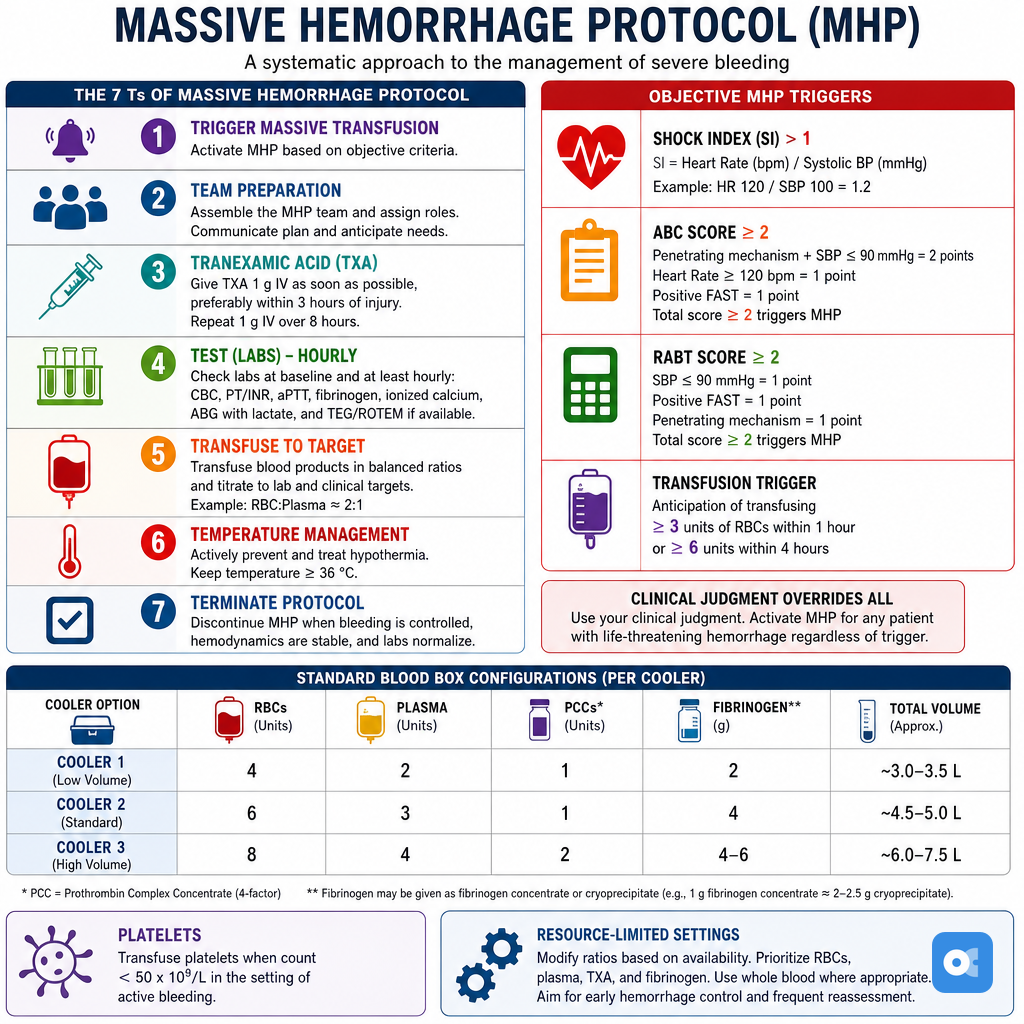
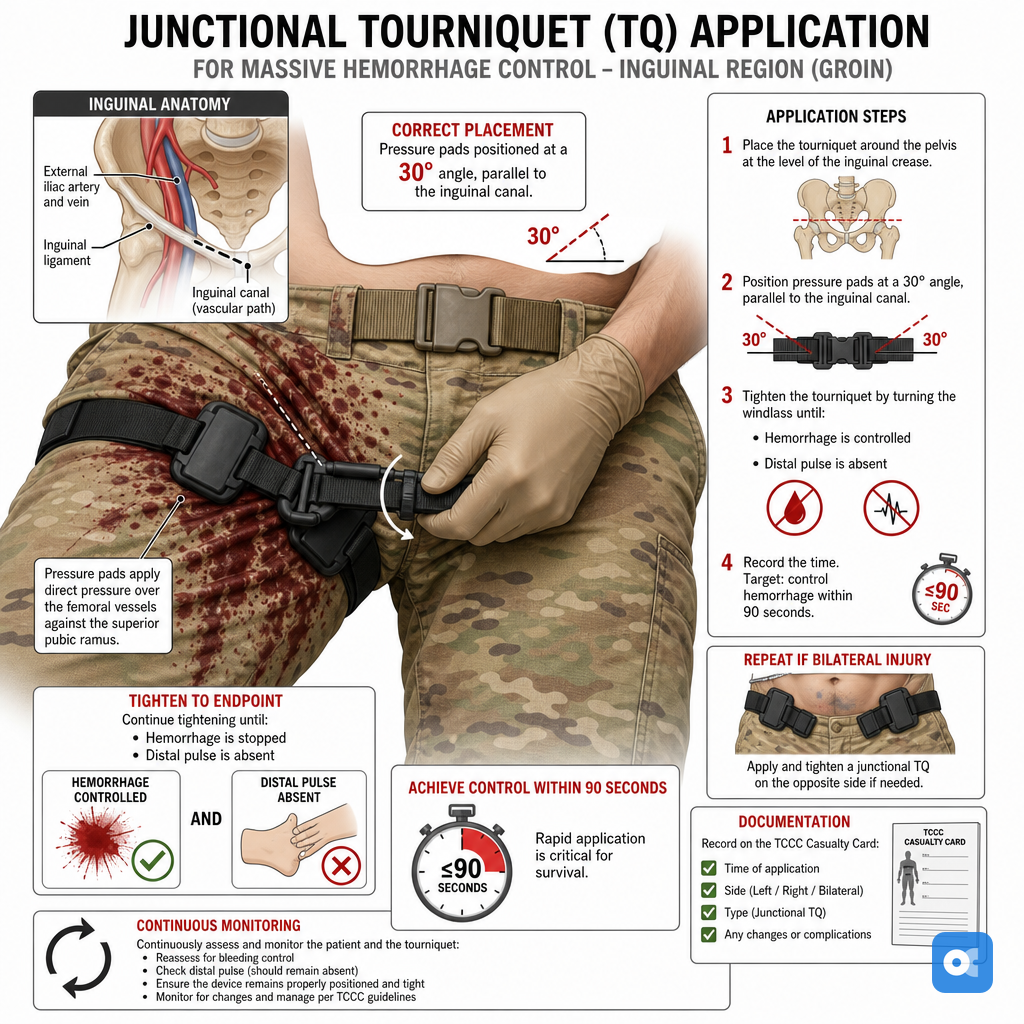
Massive Hemorrhage Protocol Indian Medical PG Practice Questions and MCQs
Practice Indian Medical PG questions for Massive Hemorrhage Protocol. These multiple choice questions (MCQs) cover important concepts and help you prepare for your exams.
Massive Hemorrhage Protocol Indian Medical PG Question 1: In the initial management of a hemodynamically unstable polytrauma patient, what is the recommended initial crystalloid bolus dose of Ringer's lactate for assessment and stabilization?
- A. 2000 ml Ringer's lactate bolus
- B. 1000 ml Ringer's lactate bolus, then regulated by clinical indicators (Correct Answer)
- C. 250 ml Ringer's lactate bolus
- D. 500 ml Ringer's lactate bolus, then regulated by clinical indicators
Massive Hemorrhage Protocol Explanation: ***1000 ml Ringer's lactate bolus, then regulated by clinical indicators***
- For **hemodynamically unstable** polytrauma patients, the initial recommended crystalloid bolus is typically **1 liter (1000 mL)** of Ringer's lactate.
- This initial bolus allows for rapid assessment of the patient's response and guides subsequent fluid management based on **clinical indicators** such as blood pressure, heart rate, and urine output, avoiding over-resuscitation.
*2000 ml Ringer's lactate bolus*
- A **2000 ml bolus** is generally considered too large for an initial dose in trauma, as it can lead to **dilutional coagulopathy**, worsening hemorrhage, and **abnormal fluid shifts**, especially in cases where definitive hemorrhage control is not yet achieved.
- Excessive fluid administration can lead to complications such as **abdominal compartment syndrome** and **acute respiratory distress syndrome (ARDS)**.
*250 ml Ringer's lactate bolus*
- A **250 ml bolus** is generally too small to effectively address **hemodynamic instability** in a polytrauma patient, offering insufficient volume to significantly improve circulation or organ perfusion.
- While small boluses might be used in specific situations (e.g., small children or patients with cardiac comorbidities), this dose is not adequate for initial resuscitation in a severely unstable adult trauma patient.
*500 ml Ringer's lactate bolus, then regulated by clinical indicators*
- While **500 mL** is a common bolus size in other medical settings, it may be insufficient for the initial resuscitation of a **hemodynamically unstable adult polytrauma patient**.
- Current trauma guidelines often recommend a larger initial bolus (e.g., 1000 mL) to gain a more immediate and measurable hemodynamic response for assessment.
Massive Hemorrhage Protocol Indian Medical PG Question 2: A patient is in shock with gross comminuted fracture. The first step in management is to give
- A. Blood transfusion
- B. Ringer's Lactate solution intravenously (Correct Answer)
- C. Plasma expanders
- D. Normal saline intravenously
Massive Hemorrhage Protocol Explanation: ***Ringer's Lactate solution intravenously***
- In cases of **hypovolemic shock**, the immediate priority is to restore circulating volume with an **isotonic crystalloid solution** like **Ringer's Lactate**.
- This helps to stabilize hemodynamics and perfuse vital organs, while other measures are prepared.
*Blood transfusion*
- While blood loss is a concern in gross comminuted fractures, **blood transfusions** are generally reserved for more severe, confirmed blood loss and are often given after initial crystalloid resuscitation.
- Type-specific or cross-matched blood may take time to prepare and administer.
*Plasma expanders*
- **Plasma expanders** (e.g., colloids) are alternatives but are generally not the first-line choice over crystalloids for initial resuscitation in trauma, due to their higher cost and potential side effects, with no clear survival benefit.
- They also do not address the acute need for volume replacement as effectively as initial rapid infusion of crystalloids.
*Normal saline intravenously*
- **Normal saline** is an isotonic crystalloid and could be used; however, **Ringer's Lactate** is often preferred in large volumes for trauma and shock patients because its balanced electrolyte composition closer to plasma may help to prevent **hyperchloremic acidosis**.
- While not as detrimental as in very large volumes, normal saline can contribute to metabolic acidosis when given in excessive amounts.
Massive Hemorrhage Protocol Indian Medical PG Question 3: Which is the most important initial step in managing a trauma patient with massive hemothorax?
- A. Thoracotomy
- B. IV fluids
- C. Chest tube (Correct Answer)
- D. Blood transfusion
Massive Hemorrhage Protocol Explanation: ***Chest tube***
- A **chest tube** (thoracostomy) is crucial for both diagnosing and treating a massive hemothorax, allowing immediate drainage of blood and assessing the rate of ongoing bleeding.
- Rapid evacuation of blood from the pleural space improves **lung re-expansion**, ventilation, and helps to reduce pressure on the mediastinum.
*Thoracotomy*
- **Thoracotomy** is indicated if there is persistent significant bleeding (e.g., >1500 mL initially or >200 mL/hr for 2-4 hours), but the initial step is always chest tube insertion.
- Performing a thoracotomy as the *first* step is generally reserved for situations with profound hemodynamic instability or suspicion of major vascular injury not amenable to less invasive measures.
*IV fluids*
- While **IV fluids** are essential for maintaining hemodynamic stability in a trauma patient with massive blood loss, they do not address the source of bleeding or relieve the compression caused by the hemothorax.
- Administering fluids without evacuating the blood from the chest can transiently improve vital signs but does not resolve the underlying problem or prevent further complications.
*Blood transfusion*
- **Blood transfusion** is vital for correcting hypovolemic shock and improving oxygen-carrying capacity in patients with massive hemorrhage.
- However, it is a supportive measure and does not evacuate the blood from the pleural space or stop the bleeding, which is the primary goal of the initial management of a massive hemothorax.
Massive Hemorrhage Protocol Indian Medical PG Question 4: Indications for FFP include
- A. Supplying deficient plasma proteins
- B. Rapid reversal of (effects of) warfarin
- C. Treatment of TTP
- D. All of the options (Correct Answer)
Massive Hemorrhage Protocol Explanation: ***All of the options***
- **Fresh frozen plasma (FFP)** is a versatile blood product with several key indications, including supplying deficient plasma proteins, rapidly reversing warfarin effects, and treating thrombotic thrombocytopenic purpura (TTP). [1]
- Its broad utility stems from its content of **all coagulation factors**, naturally occurring anticoagulants, and plasma proteins.
*Supplying deficient plasma proteins*
- FFP is a good source of various **plasma proteins**, which can be deficient in certain conditions, though specific protein concentrates are often preferred if available. [1]
- This use is considered when there are specific protein deficiencies leading to clinical symptoms, where replacement is necessary.
*Rapid reversal of (effects of) warfarin*
- FFP contains **all vitamin K-dependent coagulation factors** (II, VII, IX, X) that are inhibited by warfarin, making it effective for rapid reversal, especially in cases of active bleeding or urgent surgery.
- However, **4-factor prothrombin complex concentrates (PCCs)** are often preferred for more rapid and concentrated factor replacement in this scenario due to their lower volume and faster administration.
*Treatment of TTP*
- **Thrombotic thrombocytopenic purpura (TTP)** is characterized by a deficiency of **ADAMTS13**, an enzyme that cleaves von Willebrand factor (vWF). FFP replacement provides this deficient enzyme.
- **Plasma exchange**, which involves removing the patient's plasma and replacing it with FFP, is the cornerstone of TTP treatment.
Massive Hemorrhage Protocol Indian Medical PG Question 5: What is the best way to control external hemorrhage?
- A. Artery forceps
- B. Direct pressure (Correct Answer)
- C. Proximal tourniquet
- D. Elevation
Massive Hemorrhage Protocol Explanation: ***Direct pressure***
- Applying **direct pressure** to the wound with a clean cloth or hand is the most effective initial step to control external hemorrhaging, promoting clot formation.
- This method is safe, readily available, and typically sufficient for stopping many types of external bleeding.
*Artery forceps*
- **Artery forceps** (hemostats) are used in surgical settings to clamp bleeding vessels, but they are generally not an appropriate first-line method for emergency external hemorrhage control outside a sterile environment.
- Their improper use can cause further tissue damage or injury, and they are not always accessible.
*Proximal tourniquet*
- A **tourniquet** is a last resort for severe, life-threatening limb hemorrhage when direct pressure has failed, as it can cause significant tissue damage leading to limb ischemia.
- It should be applied **proximal** to the wound, but its use is restricted due to the risk of limb loss.
*Elevation*
- **Elevation** of the injured limb above the level of the heart can help reduce blood flow to the area, but it is usually used as an adjunct to direct pressure, not as the primary or sole method for controlling significant bleeding.
- It is often insufficient on its own for moderate to severe external hemorrhage.
Massive Hemorrhage Protocol Indian Medical PG Question 6: Which of the following is the triad of complications of massive blood transfusion?
- A. Hypocalcemia, hypothermia, coagulopathy
- B. Hyperkalemia, metabolic acidosis, and cardiac arrhythmias
- C. Alkalosis, hyperthermia, coagulopathy
- D. Acidosis, hypothermia, coagulopathy (Correct Answer)
Massive Hemorrhage Protocol Explanation: ***Acidosis, hypothermia, coagulopathy***
- **Massive blood transfusion** can lead to **metabolic acidosis** due to the citrate in stored blood, which is metabolized to bicarbonate and consumed.
- Stored blood is cold, which can cause patient **hypothermia**, while **coagulopathy** arises from dilution of clotting factors and platelets [1].
*Hypocalcemia, hypothermia, coagulopathy*
- While **hypocalcemia** can occur due to **citrate toxicity** binding calcium, it is not considered one of the primary components of the classic triad.
- The classic triad focuses on the most immediate and profound threats: acidosis, hypothermia, and coagulopathy.
*Hyperkalemia, metabolic acidosis, and cardiac arrhythmias*
- **Hyperkalemia** can occur due to the release of potassium from lysed red blood cells in stored blood, especially with older units.
- However, **cardiac arrhythmias** are a *consequence* of these electrolyte imbalances and not a primary component of the classic triad itself.
*Alkalosis, hyperthermia, coagulopathy*
- **Alkalosis** is not typically a direct complication; **acidosis** is more common due to the metabolic burden of citrate and hypoperfusion.
- **Hypothermia** is a more prominent issue than hyperthermia, as transfused blood is stored cold.
Massive Hemorrhage Protocol Indian Medical PG Question 7: What is the volume of blood loss associated with Class III hemorrhagic shock?
- A. 750 - 1500 ml
- B. 1500 - 2000 ml (Correct Answer)
- C. > 2000 ml
- D. < 750 ml
Massive Hemorrhage Protocol Explanation: ***1500 - 2000 ml***
- **Class III hemorrhagic shock** is characterized by a significant loss of blood volume, typically ranging from **30-40%** of total blood volume.
- For an average adult, this translates to an estimated **1500-2000 ml** of blood loss, leading to marked physiological compromise.
*750 - 1500 ml*
- This range of blood loss corresponds to **Class II hemorrhagic shock**, where physiological changes are moderate, but compensatory mechanisms are still largely effective.
- Patients in Class II shock typically present with **tachycardia** and a slight decrease in pulse pressure but generally normal blood pressure.
*> 2000 ml*
- A blood loss exceeding **2000 ml** (or >40% of total blood volume) is indicative of **Class IV hemorrhagic shock**, the most severe category.
- This level of blood loss results in pronounced **hypotension**, severe tachycardia, and often requires immediate massive transfusion to prevent irreversible organ damage.
*< 750 ml*
- This range represents **Class I hemorrhagic shock**, which involves a minimal blood loss of up to 15% of total blood volume.
- Patients in Class I shock typically show **minimal to no clinical signs of shock**, as compensatory mechanisms are highly effective in maintaining vital signs.
Massive Hemorrhage Protocol Indian Medical PG Question 8: What is the first-line fluid to be administered in a patient presenting with acute hemorrhagic shock?
- A. PRBC
- B. Crystalloid (Correct Answer)
- C. Colloid
- D. Whole blood
Massive Hemorrhage Protocol Explanation: ***Crystalloid***
- Initial fluid resuscitation in **hemorrhagic shock** prioritizes **crystalloids** (e.g., normal saline or lactated Ringer's) to restore intravascular volume rapidly and maintain perfusion.
- This approach is based on their immediate availability, cost-effectiveness, and ability to expand the extracellular fluid compartment.
*PRBC*
- While **packed red blood cells (PRBCs)** are crucial for replacing oxygen-carrying capacity in significant hemorrhage, they are typically administered *after* or *concurrently* with initial crystalloid resuscitation once the need for blood products is established.
- Administering PRBCs as the *first-line* fluid might delay volume expansion and could be less effective for initial circulatory support.
*Colloid*
- **Colloid solutions** (e.g., albumin, dextran) remain controversial in initial hemorrhagic shock resuscitation due to concerns about their cost, potential side effects, and lack of clear superiority over crystalloids in improving patient outcomes.
- They are also not as readily available as crystalloids in all emergency settings.
*Whole blood*
- **Whole blood** is the ideal resuscitation fluid as it contains all components of blood but is generally not readily available for initial emergency resuscitation in most civilian settings.
- Its use is often limited to specific trauma centers or military combat scenarios due to logistical challenges.
Massive Hemorrhage Protocol Indian Medical PG Question 9: A patient is admitted to the hospital with complaints of nausea, vomiting, diarrhoea, and severe abdominal pain. Which of the following diagnostic tests would help confirm that the patient has bleeding from the gastrointestinal tract?
- A. Observation of melena (black, tarry stools)
- B. Guaiac test for occult blood. (Correct Answer)
- C. Presence of hematemesis (vomiting blood)
- D. Hematochezia (bright red blood in stool)
Massive Hemorrhage Protocol Explanation: ***Guaiac test for occult blood***
- The **Guaiac test** detects invisible amounts of blood in the stool, which is characteristic of **occult gastrointestinal bleeding** [2].
- This test is crucial when overt signs like **hematemesis** or **melena** are not yet present, but GI bleeding is suspected based on other symptoms like abdominal pain, nausea, and vomiting [3].
*Presence of hematemesis (vomiting blood)*
- While **hematemesis** is a clear sign of upper GI bleeding, it is a clinical observation, not a diagnostic test [1].
- Its presence directly confirms macroscopic bleeding, but the question asks for a **diagnostic test** to confirm bleeding, particularly when it might be occult.
*Observation of melena (black, tarry stools)*
- **Melena** indicates black, tarry stools resulting from digested blood, strongly suggesting upper GI bleeding [2]. This is a clinical symptom, not a diagnostic test
- While informative, like hematemesis, it is an overt symptom and not a diagnostic test performed in a lab or clinical setting to confirm the presence of blood.
*Hematochezia (bright red blood in stool)*
- **Hematochezia** signifies the passage of bright red blood from the rectum, typically indicating lower GI bleeding. This is a clinical symptom and not a diagnostic test
- As with hematemesis and melena, hematochezia is a clinical manifestation of bleeding rather than a diagnostic test.
Massive Hemorrhage Protocol Indian Medical PG Question 10: A patient who presented with blunt abdominal injury underwent complete repair of liver and was given transfusion of 12 units of whole blood. Thereafter, it is found that the wound is bleeding. It is treated by
- A. Vitamin-K
- B. Platelet concentrates (Correct Answer)
- C. Calcium gluconate/calcium chloride
- D. Fresh Frozen Plasma
Massive Hemorrhage Protocol Explanation: ***Platelet concentrates***
- Transfusion of **large volumes of whole blood** can lead to **dilutional coagulopathy**, primarily affecting platelet count and function.
- The most effective immediate treatment for bleeding due to dilutional coagulopathy after massive transfusion is the administration of **platelet concentrates** to replenish platelet levels.
*Vitamin-K*
- **Vitamin-K** is essential for the synthesis of **coagulation factors II, VII, IX, and X** in the liver.
- Its administration is typically indicated for patients with **warfarin overdose** or **liver dysfunction**, neither of which is the primary cause of bleeding in this scenario.
*Calcium gluconate/calcium chloride*
- **Calcium** is an important cofactor in several steps of the coagulation cascade.
- While citrate in transfused blood can chelate calcium, significant **symptomatic hypocalcemia** affecting coagulation is less common and usually does not manifest as persistent surgical site bleeding.
*Fresh Frozen Plasma*
- **Fresh Frozen Plasma (FFP)** provides a broad spectrum of **coagulation factors**, addressing deficiencies in clotting factors.
- While FFP can be helpful in massive transfusion protocols, the primary issue after 12 units of whole blood is often **dilutional thrombocytopenia**, making platelet concentrates a more direct and effective initial treatment for sustained bleeding.
More Massive Hemorrhage Protocol Indian Medical PG questions available in the OnCourse app. Practice MCQs, flashcards, and get detailed explanations.