Nerve and Muscle Physiology Indian Medical PG Flashcards - Medical Study Cards
Master Nerve and Muscle Physiology with OnCourse flashcards. These spaced repetition flashcards are designed for medical students preparing for NEET PG, USMLE Step 1, USMLE Step 2, MBBS exams, and other medical licensing examinations.
Nerve and Muscle Physiology Flashcard Deck - 92 Cards
Flashcard 1: Chemical Events during Muscle Contraction: No answer _____
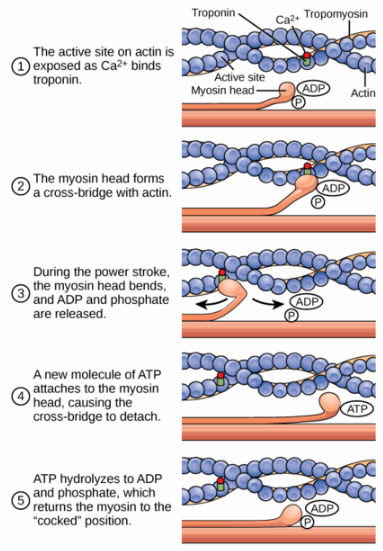
Answer: :)
Flashcard 2: After the power stroke in muscle contraction, binding of a new _____ molecule causes detachment of the myosin head from the actin filament
Answer: ATP
Flashcard 3: _____ is absent in smooth muscle but present in skeletal muscle
Answer: Troponin
Flashcard 4: Slow twitch muscle fibers are _____ due to increased myoglobin concentration
Answer: red
Flashcard 5: Fast twitch muscle fibers are _____ due to decreased myoglobin concentration
Answer: white
Flashcard 6: Once a _____ change is induced in the dihydropyridine receptor, it opens the ryanodine receptor which releases Ca2+.
Answer: conformational
Flashcard 7: _____ enters smooth muscle cells via L-type Ca2+ channels and binds to calmodulin, leading to smooth muscle contraction.
Answer: Ca2+
Flashcard 8: During muscle contraction:- the _____ and I bands, and distance between Z bands, are shortened- the A band remains the same length
Answer: H
Flashcard 9: _____ motoneuron lesions may cause decreased tone
Answer: Lower
Flashcard 10: The key mediators of pain in inflammation are _____ and PGE2, which sensitize nerve endings
Answer: bradykinin
Flashcard 11: _____ motoneuron lesions may cause hypo-reflexia
Answer: Lower
Flashcard 12: A sustained contraction with little expenditure of energy is made possible by a _____ mechanism in smooth muscle
Answer: latching
Flashcard 13: Stretch reflex:Input from the muscle spindle afferents _____ and II, activate the alpha motor neurons, which innervate the extra-fusal fibres
Answer: Ia
Flashcard 14: _____ of the knee is brought by the action of vastus medialis muscle.
Answer: Locking
Flashcard 15: Autonomics _____ Ach receptors are ligand-gated Na+/K+ (ion) channels
Answer: Nicotinic
Flashcard 16: In the muscle stretch reflex, stretch increases afferent impulses via _____ and II nerve fibers
Answer: Ia
Flashcard 17: Stretch reflex:Activation of _____ motor neurons leads to direct contraction of the muscle
Answer: alpha
Flashcard 18: Post-ganglionic sympathetic neurons utilize _____ as a neurotransmitter in sweat glands
Answer: acetylcholine
Flashcard 19: The _____ in neurons, known as Nissl bodies, synthesize peptide neurotransmitters for secretion
Answer: RER
Flashcard 20: The _____ efferent system is excited by signals from the bulboreticular facilitatory region of the brain stem.
Answer: gamma
Flashcard 21: _____ muscle can exert variable tension at any given length due to the property of plasticity
Answer: Smooth
Flashcard 22: The first step of muscle contraction occurs when the _____ neuron depolarizes, opens Ca2+ channels and ACh is released into the motor end plate.
Answer: somatic motor
Flashcard 23: Stretch reflex:Activation of _____ motor neurons leads to indirect contraction of the muscle
Answer: gamma
Flashcard 24: Progressively weakening diaphragmatic contractions during maximal voluntary ventilation with intact phrenic nerve stimulation indicates either/or:#1 - Pathology of the _____ junction#2 - abnormally rapid diaphragmatic muscle fatigue
Answer: neuromuscular
Flashcard 25: In the myocardial cell, high intracellular Ca2+ binds to _____, causing tropomyosin to move out of the way, which allows actin and myosin interaction
Answer: troponin C
Flashcard 26: When the membrane potential is _____ mv the inactivation gate of Na+ channel is closed
Answer: between +35 to -90
Flashcard 27: Fast twitch muscle fibers perform less _____ due to decreased mitochondria
Answer: oxidative phosphorylation
Flashcard 28: When the membrane potential is _____ mv the activation gate of Na+ channel is closed
Answer: -90
Flashcard 29: The inverse muscle stretch reflex uses _____ organs to monitor muscle tension
Answer: Golgi tendon
Flashcard 30: Mitochondrial diseases mostly affect _____ and muscles, which are both highly aerobic
Answer: neurons
Flashcard 31: Resting membrane potential of a _____ muscle is -20 to -65 mV
Answer: smooth
Flashcard 32: The _____ refractory period refers to the period in which a conductive action potential cannot be generated
Answer: effective
Flashcard 33: In muscle contraction, after the muscle cell is depolarized, the action potential travels down the _____ and to the dihydropyridine receptor
Answer: T-tubule
Flashcard 34: In muscle hypertrophy, the _____ isoform of myosin heavy chain is replaced by the beta isoform (alpha/beta)
Answer: alpha
Flashcard 35: When the membrane potential is _____ mv the activation and inactivation gate of Na+ channel is open
Answer: between -90 to +35
Flashcard 36: Slow twitch muscle fibers perform more _____ due to increased mitochondria
Answer: oxidative phosphorylation
Flashcard 37: Resting membrane potential of a _____ muscle is -90 mV
Answer: skeletal and myocardial
Flashcard 38: During ocular motility, an increased flow of innervation to the contracting muscle is accompanied by the decreased flow of innervation to the relaxing antagonist muscle, is known as _____ law of reciprocal innervation
Answer: Sherrington's
Flashcard 39: Rabies virus binds to nicotinic ACh receptors in the _____-synaptic membrane of the neuromuscular junction
Answer: post
Flashcard 40: The Ca2+-calmodulin complex upregulates _____, which phosphorylates myosin and contracts smooth muscle.
Answer: myosin-light-chain kinase
Flashcard 41: Peroneus tertius acts during the _____ phase of gait along with extensor digitorum longus and tibialis anterior (muscles) to produce dorsiflexion of the foot
Answer: swing
Flashcard 42: Activation of the _____ adrenergic receptor causes contraction of the intestinal and bladder sphincter muscles
Answer: 1
Flashcard 43: Stretch reflex:The basis of Jendrassik manouvre is that muscle stretch due to _____-motor neuron stimulation, increases the rate of firing of Ia afferent fibres from the muscle spindle
Answer: gamma
Flashcard 44: Sympathetic stimulation increases the activity of _____ via phosphorylation/inhibition of phospholamban
Answer: Ca2+ ATPase aka SERCA
Flashcard 45: Withdrawl reflex:When a painful stimulus is applied to the body, the flexor withdrawal (on _____lateral side) and the crossed extensor reflexes (on contralateral side) are stimulated.
Answer: ipsi
Flashcard 46: Withdrawl reflex:In the _____ reflex, the contraction occurs immediately after applying the stimulus and the after-discharge is smaller.
Answer: flexor
Flashcard 47: In a normal person, lateral buttok traction test will lead to _____ of sphincter
Answer: reflex contraction
Flashcard 48: Muscles in hollow viscera primarily behave as _____ unit smooth muscles
Answer: single
Flashcard 49: Which type of muscle fibres undergo hypertrophy ONLY?_____
Answer: Skeletal, Cardiac
Flashcard 50: Mechanism of cadaveric _____ is reduction of ATP
Answer: rigidity (spasm/rigidity)
Flashcard 51: _____ is a result of stretch reflex-inverse stretch reflex sequence
Answer: Clonus
Flashcard 52: _____-unit smooth muscle systems respond to hormones and other circulating systems
Answer: Single
Flashcard 53: Changes in muscle strength at the onset of muscle contraction due to repeated stimulus known as _____ effect
Answer: staircase
Flashcard 54: _____ is an exception to Sherrington's law of reciprocal innervation
Answer: DRS
Flashcard 55: EMG reveals a classical _____ pattern in infantile epileptic spasm
Answer: rhomboid
Flashcard 56: What type of muscle fibres do not have striations, troponin or T tubules?_____
Answer: Smooth muscle
Flashcard 57: Contraction and relaxation period in a preloaded muscle contraction is _____ than afterloaded muscle contraction
Answer: more
Flashcard 58: Sympathetic stimulation (norepinephrine) of a smooth muscle produces _____ potentials and relaxation.
Answer: inhibitory (excitatory/inhibitory)
Flashcard 59: _____ cells are the only cells to develop propagated action potential
Answer: Ganglion
Flashcard 60: Stretch reflex:When _____ occurs, intrafusal and extrafusal fibers shorten together, and spindle afferent activity can occur throughout the period of muscle contraction
Answer: coactivation
Flashcard 61: Which nerve fiber efferents innervates chain and static bag fibers?_____
Answer: static -motor neurons
Flashcard 62: Which nerve fibres are the most susceptible to pressure?_____
Answer: A
Flashcard 63: Stretch reflex:What are the afferent fibres for muscle spindle receptor?_____
Answer: Group Ia and Group II
Flashcard 64: Work done in a preloaded muscle contraction is _____ than afterloaded muscle contraction
Answer: more
Flashcard 65: _____ smooth muscle systems are innervated by a single nerve ending (en passant endings of nerve fibers)
Answer: Multiunit
Flashcard 66: _____ fibre is responsible for detecting the rate of change in muscle length
Answer: Dynamic nuclear bag
Flashcard 67: _____creased -motor neuron discharge is present in clonus
Answer: In
Flashcard 68: Endplate potential is generated via _____ cholinergic receptor.
Answer: nicotinic
Flashcard 69: Which nerve fiber afferents innervates static nuclear bag and nuclear chain fibers?_____
Answer: Type II
Flashcard 70: In _____ synapses, the cytoplasm of adjacent cells is directly connected by gap junctions (connexons)
Answer: electrical
Flashcard 71: Latent period in a preloaded muscle contraction is _____ than afterloaded muscle contraction
Answer: less
Flashcard 72: Which nerve fibres are the most susceptible to hypoxia?_____
Answer: B
Flashcard 73: The inhibitory interneuron is called a Renshaw cell and its neurotransmitter is _____.
Answer: glycine
Flashcard 74: For K+ ion the equilibrium potential calculated by Nernst equation is _____.
Answer: -90mV
Flashcard 75: Which nerve fiber efferents innervates dynamic nuclear bag fibers?_____
Answer: dynamic -motor neurons
Flashcard 76: _____ fibre is responsible for detecting the static muscle length
Answer: Static nuclear bag and nuclear chain
Flashcard 77: Slow EPSPs and IPSPs are not generated by _____ muscles.
Answer: skeletal
Flashcard 78: What change is seen in the RMP when the extracellular concentration of K+ decreases ?_____
Answer: Increased negativity of RMP
Flashcard 79: The maximum contractile force of any muscle per square cm cross-sectional area is _____ kg/cm2
Answer: 3-4
Flashcard 80: What kind of muscle fibres have more diameter? (fast or slow twitch)_____
Answer: Fast twitch
Flashcard 81: Which nerve fiber afferents innervates all three muscle spindle fibres (dynamic nuclear bag, static nuclear bag, and nuclear chain fibers)?_____
Answer: Type Ia
Flashcard 82: A mass of many smooth muscle fibers contract together in _____-unit smooth muscle system
Answer: single
Flashcard 83: For Na+ ion the equilibrium potential calculated by Nernst equation is _____.
Answer: +60mV
Flashcard 84: What change is seen in the RMP when the extracellular concentration of Na+ increases ?_____
Answer: No change
Flashcard 85: The rheobase is an indicator of the _____ of the current.
Answer: magnitude
Flashcard 86: Inverse stretch reflex is also called as _____
Answer: lengthening reaction
Flashcard 87: Clonus is due to sustained hyperactivity of _____ motor neurons.
Answer: alpha and gamma
Flashcard 88: Ligand gated ion channels are also known as _____ receptors
Answer: Ionotropic
Flashcard 89: Intracellular and extracellular _____ concentrations are the major determinants of the RMP.
Answer: potassium (K+)
Flashcard 90: Absolute refractory period is due to closure of _____ gates of sodium channel.
Answer: inactive
Flashcard 91: Soleus has _____ twitch fibres while Gastrocnemius has _____ twitch type fibres
Answer: slow; fast
Flashcard 92: Resting membrane potential of a nerve fiber is equal to the equilibrium potential of _____ and is _____mV.
Answer: Cl-::Ion; -70
Keywords: Nerve and Muscle Physiology flashcards, medical flashcards, NEET PG preparation, USMLE Step 1 flashcards, Anki alternative, spaced repetition medical, OnCourse flashcards