Loss of _____ matter of the brain on post-mortem is seen in cyanide poisoning
#2
The _____ is most likely to show evidence of damage in the case of a hypoxic brain injury.
#3
Downward transtentorial (central) herniation may result in rupture of the _____ branches of the basilar artery, which cause Duret hemorrhages
#4
_____ ischemic strokes result in a hemorrhagic (red) infarct at the periphery of the cortex
#5
Cerebral ischemia of the neocortex typically affects layers _____, 5, and 6, causing cortical laminar necrosis
#6
_____ herniation may result in compression of the anterior cerebral artery, which causes infarction
#7
Tuberculous caseous foci in brain, meninges and spinal cord is known as _____ focus.
#8
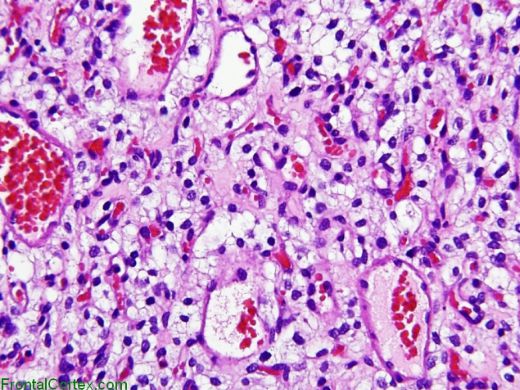
What CNS tumor is seen in the histology slide below?
_____
#9
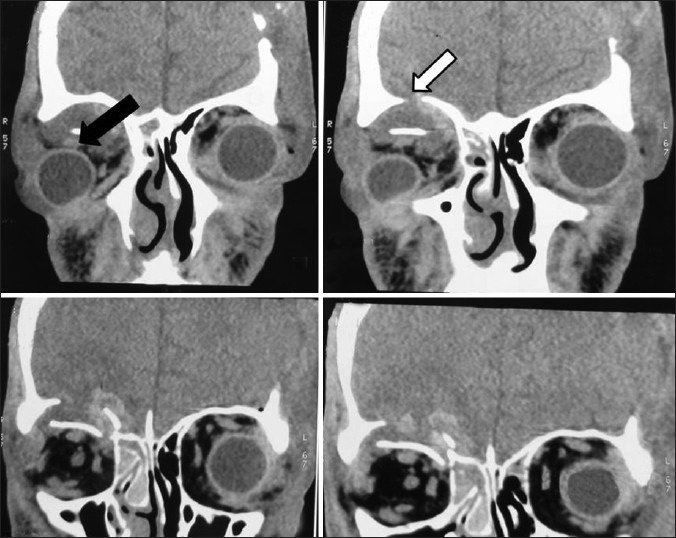
Spheno-orbital encephalocoele, due to dysplasia of the greater wing of the sphenoid is commonly seen in _____
Hint: inherited condition
#10
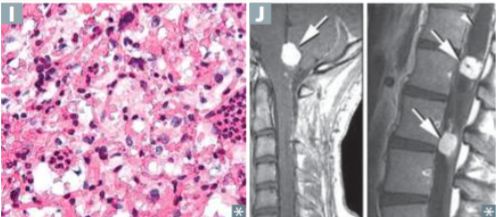
Which feature of von Hippel-Lindau disease is seen in the image below?
_____
Trauma to the Central Nervous System Indian Medical PG Flashcards - Medical Study Cards
Master Trauma to the Central Nervous System with OnCourse flashcards. These spaced repetition flashcards are designed for medical students preparing for NEET PG, USMLE Step 1, USMLE Step 2, MBBS exams, and other medical licensing examinations.
Trauma to the Central Nervous System Flashcard Deck - 10 Cards
Flashcard 1: Loss of _____ matter of the brain on post-mortem is seen in cyanide poisoning
Answer: grey
Flashcard 2: The _____ is most likely to show evidence of damage in the case of a hypoxic brain injury.
Answer: hippocampus (part of brain)
Flashcard 3: Downward transtentorial (central) herniation may result in rupture of the _____ branches of the basilar artery, which cause Duret hemorrhages
Answer: paramedian
Flashcard 4: _____ ischemic strokes result in a hemorrhagic (red) infarct at the periphery of the cortex
Answer: Embolic
Flashcard 5: Cerebral ischemia of the neocortex typically affects layers _____, 5, and 6, causing cortical laminar necrosis
Answer: 3
Flashcard 6: _____ herniation may result in compression of the anterior cerebral artery, which causes infarction
Answer: Subfalcine
Flashcard 7: Tuberculous caseous foci in brain, meninges and spinal cord is known as _____ focus.
Answer: Rich
Flashcard 8: What CNS tumor is seen in the histology slide below?
_____
Answer: Hemangioblastoma (closely arranged, thin-walled capillaries with minimal intervening parenchyma)
Flashcard 9: Spheno-orbital encephalocoele, due to dysplasia of the greater wing of the sphenoid is commonly seen in _____
Answer: neurofibromatosis type 1
Flashcard 10: Which feature of von Hippel-Lindau disease is seen in the image below?
_____
Answer: Hemangioblastoma (high vascularity with hyperchromatic nuclei)
Keywords: Trauma to the Central Nervous System flashcards, medical flashcards, NEET PG preparation, USMLE Step 1 flashcards, Anki alternative, spaced repetition medical, OnCourse flashcards
Trauma to the Central Nervous System Flashcards for NEET-PG
Study 10 flashcards on Trauma to the Central Nervous System for NEET-PG Pathology. These active recall cards cover the key concepts, clinical associations, and high-yield facts from this chapter of Neuropathology. Each card is designed to test your understanding rather than just recognition, building stronger and more durable memories for exam day.
For personalised spaced repetition scheduling and unlimited flashcards, download the Oncourse app.
Frequently Asked Questions
Are Trauma to the Central Nervous System flashcards free?
Yes, all flashcards on this page are completely free. You can study all 10 cards at no cost. For spaced repetition scheduling, download the Oncourse app.
How many flashcards does this chapter have?
There are 10 flashcards for Trauma to the Central Nervous System, covering the key concepts, clinical correlations, and high-yield facts from this chapter of Neuropathology.
How should I use these flashcards for NEET-PG?
Read through each prompt and try to answer before revealing the back of the card. This active recall approach builds stronger memories than passive reading. Combine flashcards with the study notes and MCQ practice for the best results.
Are there more flashcards for Neuropathology?
Yes. This page covers one chapter of Neuropathology. Visit the topic page to see all chapters and their flashcards under Pathology.
Want unlimited flashcards?
Get full access to all flashcards, spaced repetition, and progress tracking.