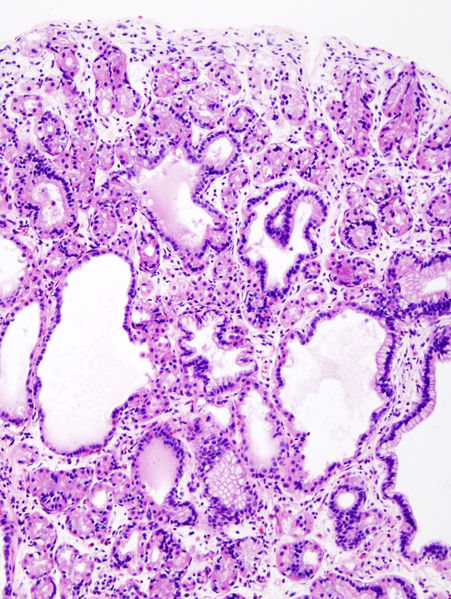
Gastrointestinal Pathology Indian Medical PG Flashcards - Medical Study Cards
Master Gastrointestinal Pathology with OnCourse flashcards. These spaced repetition flashcards are designed for medical students preparing for NEET PG, USMLE Step 1, USMLE Step 2, MBBS exams, and other medical licensing examinations.
Gastrointestinal Pathology Flashcard Deck - 86 Cards
Flashcard 1: What is the classification of the following type of jejunoileal atresia?
_____
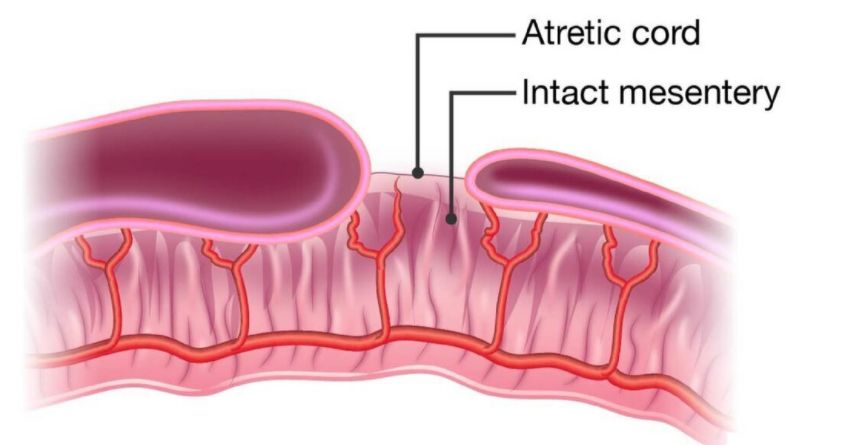
Answer: Type II
Flashcard 2: The given slide showing lymphoepithelial lesions with a positive history of H pylori infection suggest a diagnosis of gastric _____.
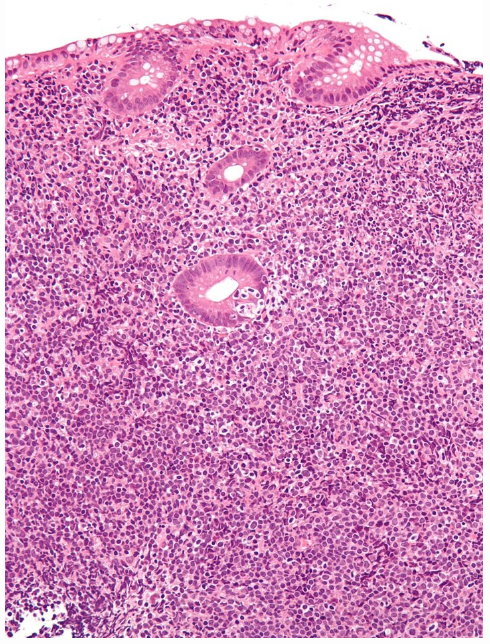
Answer: MALToma
Flashcard 3: PAS-positive macrophages containing bacilli is diagnostic of _____ disease,
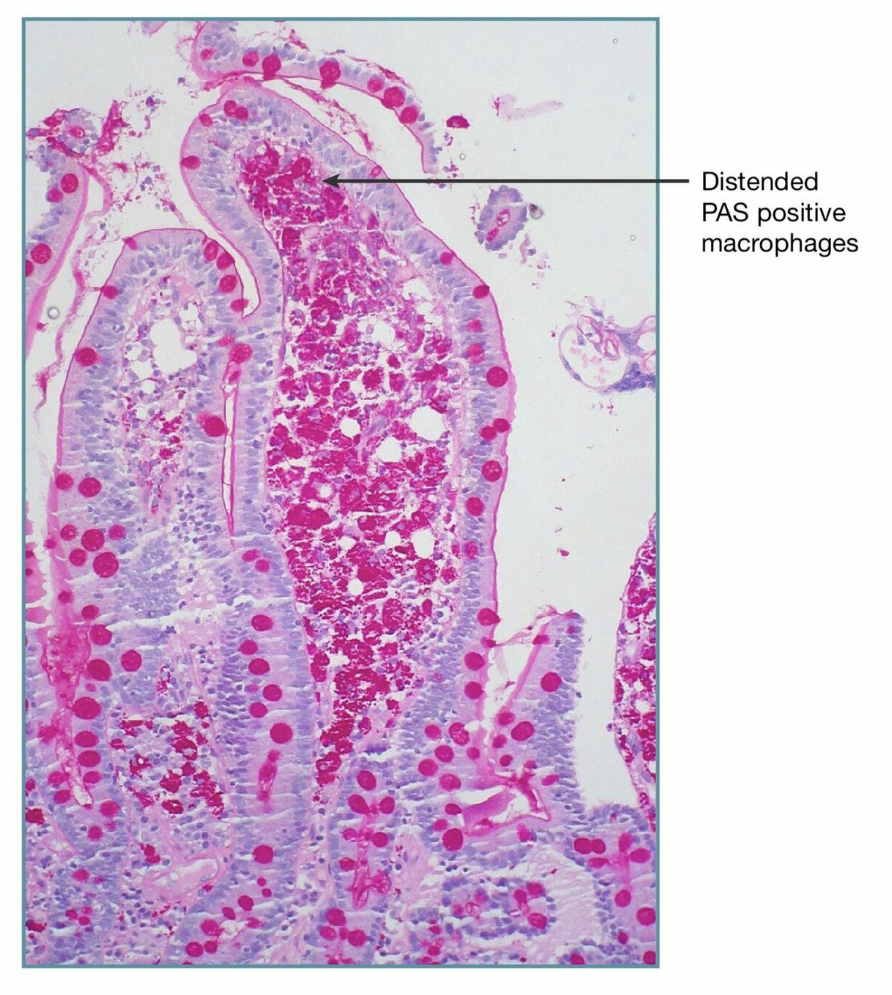
Answer: Whipple's
Flashcard 4: Histological pattern of neutrophils emanating from a crypt, reminiscent of a volcanic eruption is pathognomonic for _____
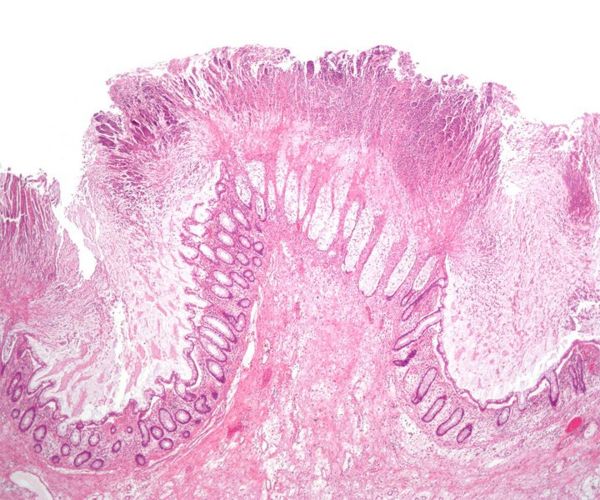
Answer: C. difficile colitis
Flashcard 5: Fundic gland polyps of the stomach are associated with _____
Answer: familial adenomatous polyposis (FAP)
Flashcard 6: The given slide shows a non-caseating granuloma suggestive of _____:
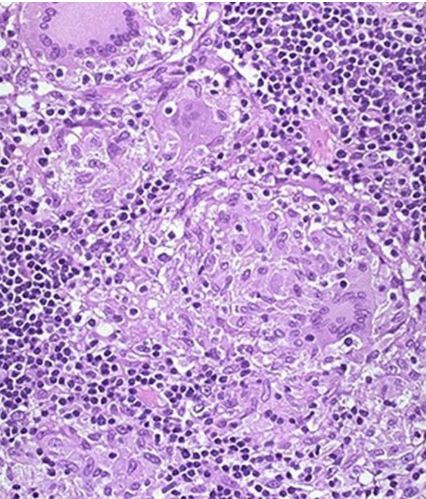
Answer: Crohn's disease
Flashcard 7: _____ esophagitis is likely to show yellowish-white adherent pseudomembranes covering mucosa
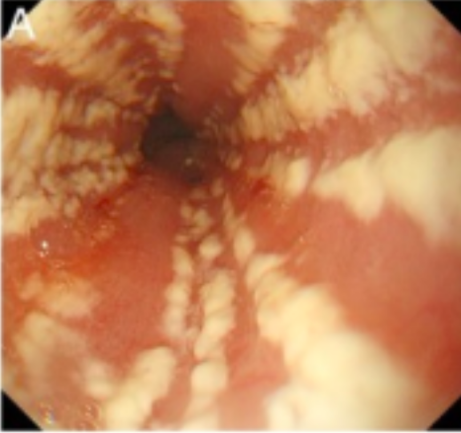
Answer: Candida
Flashcard 8: _____ syndrome is characterized by numerous harmartomatous polyps WITH hyperpigmentation of the lips, mouth, hands, and genital skin
Answer: Peutz-Jeghers
Flashcard 9: _____ poisoning leads to red velvety coloured stomach mucosa
Answer: Arsenic
Flashcard 10: _____ syndrome is characterized by numerous hamartomatous polyps WITHOUT hyperpigmentation
Answer: Juvenile polyposis
Flashcard 11: _____ is an autosomal dominant (inheritance) disorder characterized by 100s to 1000s of adenomatous colonic polyps
Answer: Familial adenomatous polyposis (FAP)
Flashcard 12: _____ (IBD) is Th1 mediated
Answer: Crohn disease
Flashcard 13: _____ disease is immune-mediated damage of small bowel villi due to gluten exposure
Answer: Celiac
Flashcard 14: _____ is an opportunistic cause of diarrhea in HIV patients due to distortion of villous architecture without inflammation
Answer: Microsporidium
Flashcard 15: _____ with ulcers that appear well-circumscribed and have a volcano-like appearance is common in HSV-1
Answer: Esophagitis
Flashcard 16: Serrated colonic polyps may develop into CRC via _____ hypermethylation with microsatellite instability and mutations in BRAF
Answer: CpG
Flashcard 17: Celiac disease is associated with HLA-_____ and HLA-DQ8
Answer: DQ2
Flashcard 18: Diagnosis of Davidson disease is made by immunostaining '_____', the brush border protein, and by CD10 immunohistochemistry, to detect microvillous inclusions
Answer: villin
Flashcard 19: _____ of the esophagus is the most common type of esophageal carcinoma worldwide (location)
Answer: Squamous cell carcinoma
Flashcard 20: The _____ type of gastric carcinoma is associated with nitrosamines, which are found in smoked foods (common in Japan)
Answer: intestinal
Flashcard 21: _____ disease is diagnosed by absence of ganglionic cells on rectal suction biopsy
Answer: Hirschsprung
Flashcard 22: Chronic autoimmune gastritis is associated with antibodies against _____ and/or intrinsic factor
Answer: parietal cells
Flashcard 23: The _____ type of gastric carcinoma is associated with blood type A
Answer: intestinal
Flashcard 24: Microscopic colitis encompasses two entities: _____ colitis and lymphocytic colitis
Answer: collagenous
Flashcard 25: _____ is characterized by eosinophilic infiltration of the esophagus, often in atopic patients
Answer: Eosinophilic esophagitis
Flashcard 26: Mntrier disease has been associated with _____infection in children and H. pylori infection in adults
Answer: cytomegalovirus
Flashcard 27: Helicobacter pylori increases the risk of developing _____ and MALT lymphoma (malignancies)
Answer: gastric adenocarcinoma
Flashcard 28: _____ ulcers are diagnosed via endoscopic biopsy, which shows an ulcer with hypertrophy of Brunner glands
Answer: Duodenal
Flashcard 29: Colorectal adenocarcinoma is CK 7 _____ and CK 20 positive
Answer: negative
Flashcard 30: _____ (IBD) is characterized histologically by lymphoid aggregates with noncaseating granulomas
Answer: Crohn disease
Flashcard 31: _____ sinus is a herniation of gallbladder mucosa into the muscular wall associated with chronic cholecystitis
Answer: Rokitansky-Aschoff
Flashcard 32: Celiac disease is characterized histologically by _____ of crypts
Answer: hyperplasia
Flashcard 33: _____ gastritis is divided into two types based on etiology: autoimmune and H. pylori gastritis
Answer: Chronic
Flashcard 34: Gastric carcinoma is subclassified into _____ and diffuse types
Answer: intestinal
Flashcard 35: In Barrett esophagus, _____ is replaced with non-ciliated columnar epithelium with goblet cells (metaplasia)
Answer: non-keratinized stratified squamous epithelium
Flashcard 36: Celiac disease primarily affects the distal _____ or proximal jejunum
Answer: duodenum
Flashcard 37: Menetrier disease is characterized by _____ of the gastric mucosa and atrophy of the parietal / chief cells
Answer: hyperplasia
Flashcard 38: Hyperplastic colonic polyps are usually _____ (size) and located in the rectosigmoid region
Answer: small
Flashcard 39: There are two types of gallstones: _____ and pigmented
Answer: cholesterol
Flashcard 40: _____-sided colorectal carcinoma usually grows as a "napkin-ring (infiltrating)" lesion
Answer: Left
Flashcard 41: Celiac disease is characterized histologically by _____ of villi
Answer: flattening
Flashcard 42: Gastric _____ (erosion or ulcer) involves loss of the mucosal layer only
Answer: erosion
Flashcard 43: _____ disease occurs due to a congenital failure of ganglion cells to descend into the myenteric and submucosal plexus
Answer: Hirschsprung
Flashcard 44: The _____ type of gastric carcinoma is characterized by signet ring cells that infiltrate the gastric wall
Answer: diffuse
Flashcard 45: Whipple disease may present with fat malabsorption and _____ due to compression of lacteals by macrophages
Answer: steatorrhea
Flashcard 46: _____ disease is classically associated with IgA antibodies against endomysium, tissue transglutaminase (tTG), and/or deamidated gliadin
Answer: Celiac
Flashcard 47: _____ (IBD) is characterized histologically by crypt abscesses with neutrophils, ulcers, and bleeding
Answer: Ulcerative colitis
Flashcard 48: The granules in macrophages in Whipple disease stain positive for _____ and are diastase resistant
Answer: PAS
Flashcard 49: _____ (IBD) appears grossly with friable mucosal pseudopolyps
Answer: Ulcerative colitis
Flashcard 50: Risk factors for colorectal carcinoma include _____ and serrated polyps
Answer: adenomatous
Flashcard 51: Colonic polyps are grossly characterized as flat, _____, or pedunculated (on a stalk)
Answer: sessile
Flashcard 52: Chronic _____ gastritis causes increased risk for MALT lymphoma
Answer: H. pylori
Flashcard 53: The _____ type of gastric carcinoma may cause linitis plastica, which is a grossly thickened and leathery stomach wall
Answer: diffuse
Flashcard 54: Risk of adenocarcinoma in gastric adenomas is particularly increased in lesions greater than _____ cm in diameter
Answer: 2
Flashcard 55: A _____ is a mucus extravasation cyst involving a sublingual gland.
Answer: ranula
Flashcard 56: Most common type of anal canal carcinoma is _____
Answer: squamous cell carcinoma (SCC).
Flashcard 57: _____ is a disorder of vesicular transport that leads to deficient brush border assembly, and presents as diarrhea before 3 months age
Answer: Davidson disease
Flashcard 58: _____ is the most common mesenchymal tumor of the abdomen
Answer: Gastrointestinal Stromal Tumor (GIST)
Flashcard 59: _____ is the most common cause of diffuse atrophic gastritis
Answer: Autoimmune gastritis
Flashcard 60: The most important prognostic factor for esophageal carcinoma and stomach carcinoma is _____
Answer: depth of invasion
Flashcard 61: The most aggressive carcinoid tumors of the GIT are seen in the _____
Answer: jejunum
Flashcard 62: Which stain can be used to differentiate between Whipple's disease and intestinal tuberculosis?_____
Answer: Acid fast
Flashcard 63: Sporadic intestinal-type gastric cancers are associated with increased signaling via the _____ pathway
Answer: Wnt
Flashcard 64: Gastric carcinoid tumors may be associated with the loss of gastric _____ cells from the mucosa
Answer: parietal
Flashcard 65: _____ immunostaining is considered superior to acetylcholinesterase to diagnose Hirschsprung disease
Answer: Calretinin
Flashcard 66: Microvillus inclusion disease, also called Davidson disease occurs due to _____ gene mutation
Answer: MYO5B
Flashcard 67: Histological pattern of neutrophils emanating from a crypt, reminiscent of a volcanic eruption is pathognomonic for _____
Answer: C. difficile colitis
Flashcard 68: Mucus-secreting _____ cells are characteristic of Barrett's esophagus
Answer: goblet
Flashcard 69: Tip of pseudopolyps in Ulcerative colitis may fuse to form _____
Answer: mucosal bridges
Flashcard 70: Biopsy specimen should reveal a minimum of _____ eosinophils per high-power field for eosinophilic esophagitis
Answer: 15
Flashcard 71: The diagnosis of acute appendicitis needs neutrophilic infiltration of the _____ layer
Answer: muscularis propria
Flashcard 72: Ileal resection is associated with the development of _____ gallstones
Answer: pigmented
Flashcard 73: Tumors not exceeding bowel wall, with lymph node invasion are classified as _____ according to Modified Duke's classification
Answer: C1
Flashcard 74: What is the most common benign tumor of the esophagus?_____
Answer: Leiomyoma
Flashcard 75: Typhoid ulcers are _____ shaped ulcers oriented along the axis of the ileum and carry the risk of perforation
Answer: oval
Flashcard 76: _____ esophagitis is likely to show yellowish-white adherent pseudomembranes covering mucosa
Answer: Candida
Flashcard 77: _____ score is used to assess celiac disease histologically
Answer: MARSH's
Flashcard 78: What is the most common type of gastric lymphoma?_____
Answer: diffuse large B-cell lymphoma
Flashcard 79: Arborizing network of connective tissue, smooth muscle, lamina propria, and glands lined by normal appearing intestinal epithelium, is seen in _____ syndrome
Answer: Peutz-Jeghers
Flashcard 80: Which fixative is used for GI biopsies?_____
Answer: Bouin's fixative
Flashcard 81: An adenomatous polyp of size >_____mm is a risk factor for malignancy
Answer: 10
Flashcard 82: Peutz-Jeghers syndrome is characterised by _____ polyps with _____ epithelium
Answer: hamartomous; normal
Flashcard 83: Patients with a solitary juvenile polyp are _____ at an increased risk to develop colorectal cancer.
Answer: not
Flashcard 84: Goblet cells in Barrett's esophagus can be seen by staining with _____.
Answer: Alcian blue
Flashcard 85: The most common celiac disease-associated cancer is enteropathy-associated _____cell lymphoma
Answer: T-
Flashcard 86: The given slide showing lymphoepithelial lesions with a positive history of H pylori infection suggest a diagnosis of gastric _____.
Answer: MALToma
Keywords: Gastrointestinal Pathology flashcards, medical flashcards, NEET PG preparation, USMLE Step 1 flashcards, Anki alternative, spaced repetition medical, OnCourse flashcards