
Cardiac Transplantation Pathology — Flashcards

Reperfusion of irreversibly-damaged cells post-MI may result in _____ influx, leading to hypercontraction of myofibrils (contraction band necrosis)
Reperfused myocardium shows _____ contraction bands on light microscopy.
_____, secondary to rheumatic fever, is associated with Anitschkow cells, which are reactive histiocytes with slender, wavy nuclei
In myocardial infarction, early neutrophil infiltration starts by _____ hours.
The ninja-star like nuclei is suggestive of _____ cardiomyopathy.
Aschoff's bodies in rheumatic heart disease shows _____ necrosis.
The hyaline, eosinophilic deposits seen on the biopsy point to a diagnosis of cardiac amyloidosis, which most commonly leads to _____ cardiomyopathy.
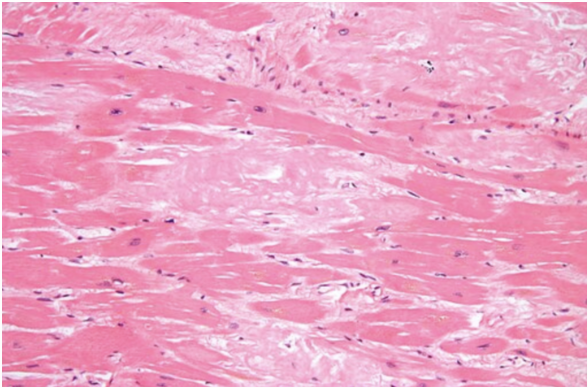
Hypertrophic cardiomyopathy is characterized by myofibrillar hypertrophy with _____ and fibrosis on biopsy
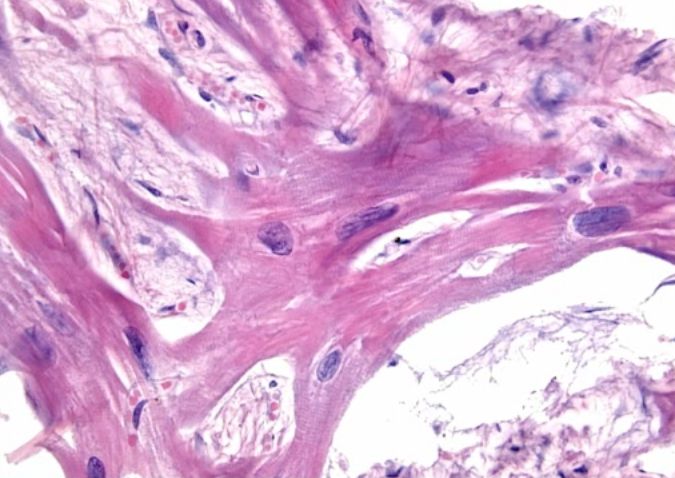
Aschoff's bodies in rheumatic heart disease shows _____ necrosis.
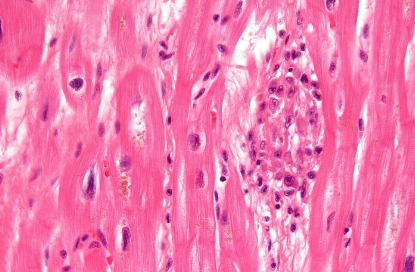
_____ disease is a glycogen storage disease associated with hypertrophic cardiomyopathy
Cardiac Transplantation Pathology Flashcards for NEET-PG
Study 10 flashcards on Cardiac Transplantation Pathology for NEET-PG Pathology. These active recall cards cover the key concepts, clinical associations, and high-yield facts from this chapter of Cardiac Pathology. Each card is designed to test your understanding rather than just recognition, building stronger and more durable memories for exam day.
For personalised spaced repetition scheduling and unlimited flashcards, download the Oncourse app.
Frequently Asked Questions
Are Cardiac Transplantation Pathology flashcards free?
How many flashcards does this chapter have?
How should I use these flashcards for NEET-PG?
Are there more flashcards for Cardiac Pathology?
Want unlimited flashcards?
Get full access to all flashcards, spaced repetition, and progress tracking.
Start For Free