Cardiac Pathology Indian Medical PG Flashcards - Medical Study Cards
Master Cardiac Pathology with OnCourse flashcards. These spaced repetition flashcards are designed for medical students preparing for NEET PG, USMLE Step 1, USMLE Step 2, MBBS exams, and other medical licensing examinations.
Cardiac Pathology Flashcard Deck - 61 Cards
Flashcard 1: The hyaline, eosinophilic deposits seen on the biopsy point to a diagnosis of cardiac amyloidosis, which most commonly leads to _____ cardiomyopathy.
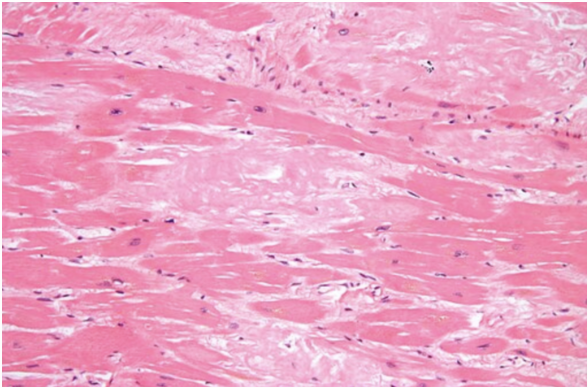
Answer: restrictive
Flashcard 2: Hypertrophic cardiomyopathy is characterized by myofibrillar hypertrophy with _____ and fibrosis on biopsy
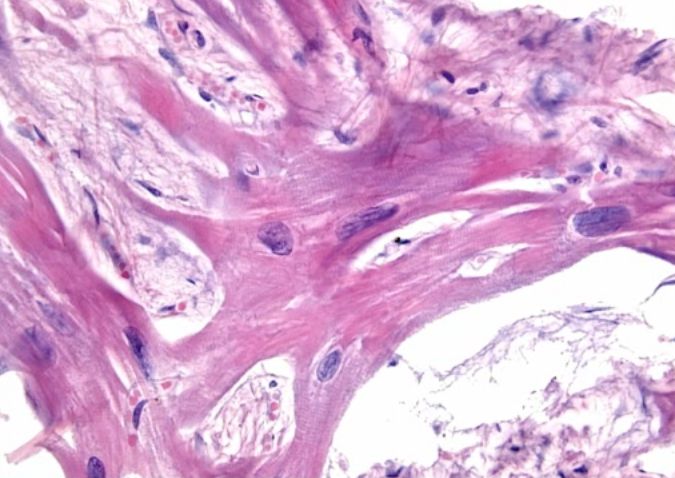
Answer: disarray
Flashcard 3: Aschoff's bodies in rheumatic heart disease shows _____ necrosis.
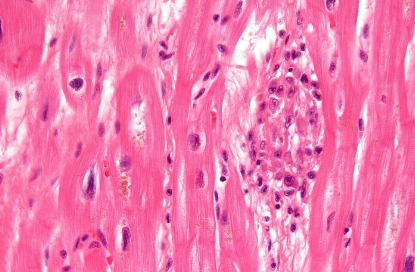
Answer: fibrinoid
Flashcard 4: _____ disease is a glycogen storage disease associated with hypertrophic cardiomyopathy
Answer: Pompe
Flashcard 5: _____ bacterial endocarditis is most commonly caused by Staphylococcus aureus
Answer: Acute
Flashcard 6: Reperfusion of irreversibly-damaged cells post-MI may result in _____ influx, leading to hypercontraction of myofibrils (contraction band necrosis)
Answer: Ca2+
Flashcard 7: _____ cardiomyopathy may be caused by endocardial fibroelastosis, which is a thick fibroelastic tissue in the endocardium; most commonly affects young children
Answer: Restrictive
Flashcard 8: Myocardial infarction is often due to rupture of atherosclerotic plaque with _____ and complete occlusion of a coronary artery
Answer: thrombosis
Flashcard 9: When the surface of the endocardium is damaged, thrombotic vegetations of _____ and fibrin may develop
Answer: platelets
Flashcard 10: _____ cardiomyopathy may be caused by Loeffler syndrome, which is an endomyocardial fibrosis with a prominent eosinophilic infiltrate
Answer: Restrictive
Flashcard 11: viridans streptococci cause _____ endocarditis, which is characterized by small vegetations (size) that do not destroy the valve
Answer: subacute
Flashcard 12: Reperfusion of irreversibly-damaged cells post-MI may result in _____ formation (due to O2), further damaging myocytes (known as reperfusion injury)
Answer: free radical
Flashcard 13: Staphylococcus aureus causes _____ endocarditis, which is characterized by large vegetations that destroy the valve (size)
Answer: acute
Flashcard 14: _____ endocarditis is due to sterile vegetations that arise in association with SLE
Answer: Libman-Sacks (verrucous)
Flashcard 15: At 10 - 14 days post-MI, the following gross changes occur: emergence of the _____; due to granulation tissue entering from the edge of the infarct
Answer: red border
Flashcard 16: _____, secondary to rheumatic fever, is associated with Aschoff bodies, which are granulomas with giant cells and fibrinoid material
Answer: Myocarditis
Flashcard 17: _____, secondary to rheumatic fever, is associated with Anitschkow cells, which are reactive histiocytes with slender, wavy nuclei
Answer: Myocarditis
Flashcard 18: Bicuspid aortic valves lead to premature _____ and calcification of the aortic valve
Answer: atherosclerosis
Flashcard 19: Aortic _____ may lead to concentric left ventricular hypertrophy, which can further progress to heart failure
Answer: stenosis
Flashcard 20: _____, secondary to rheumatic fever, is characterized by small inflammatory vegetations along valvular lines of closure, which cause regurgitation
Answer: Endocarditis
Flashcard 21: Carcinoid syndrome may cause carcinoid heart disease, which is characterized by _____-sided valvular fibrosis leading to tricuspid regurgitation and pulmonary valve stenosis
Answer: right
Flashcard 22: _____ heart failure may present with hemosiderin-laden macrophages, known as heart failure cells, in the lungs
Answer: Left
Flashcard 23: _____ cardiomyopathy is commonly due to -myosin heavy chain or myosin-binding protein C mutations
Answer: Hypertrophic
Flashcard 24: One complication of atherosclerosis is _____, which may result from plaque rupture with thrombosis of the coronary artery
Answer: myocardial infarction
Flashcard 25: _____ endocarditis is due to sterile vegetations that arise in association with a hypercoagulable state or underlying adenocarcinoma
Answer: Non-bacterial thrombotic
Flashcard 26: _____ cardiomyopathy usually arises due to genetic mutations (60-70%), especially in sarcomere proteins
Answer: Hypertrophic
Flashcard 27: Candidal _____ is commonly seen in IV drug users
Answer: endocarditis
Flashcard 28: Familial _____ cardiomyopathy is due to mutations in the gene encoding titin.
Answer: dilated
Flashcard 29: Tricuspid atresia requires both _____ and VSD for viability
Answer: ASD
Flashcard 30: _____ is a cardiac tumor associated with tuberous sclerosis
Answer: Rhabdomyoma
Flashcard 31: D-transposition of great vessels results in _____ of the right ventricle and atrophy of the left ventricle
Answer: hypertrophy
Flashcard 32: On biopsy of a heart with myocarditis, a _____ infiltrate with focal necrosis is highly indicative of viral myocarditis
Answer: lymphocytic
Flashcard 33: _____ cardiomyopathy is characterized by myofibrillar hypertrophy with disarray and fibrosis on biopsy
Answer: Hypertrophic
Flashcard 34: _____ amyloidosis is characterized by deposition of non-mutated transthyretin (TTR) protein
Answer: Senile cardiac
Flashcard 35: Aortic stenosis due to rheumatic disease may be distinguished from stenosis due to "wear and tear" by the presence of: 1. _____ 2. Fusion of the commissures
Answer: Coexisting mitral stenosis
Flashcard 36: The heart is maximally softened _____ to 10 days post-MI
Answer: 7
Flashcard 37: _____ disseminates upon reaching the blood vessels, resulting in endocarditis
Answer: Angioinvasive aspergillosis
Flashcard 38: In rheumatic heart disease, subendocardial lesions may induce irregular thickenings called _____
Answer: McCallum plaques
Flashcard 39: What is the earliest detectable ultrastructural feature of myocyte necrosis?_____
Answer: Relaxation of myofibrils
Flashcard 40: The ninja-star like nuclei is suggestive of _____ cardiomyopathy.
Answer: dilated
Flashcard 41: Triphenyl tetrazolium chloride stain imparts a brick red colour to the intact non-infarcted myocardium, where _____ enzyme activity is preserved.
Answer: LDH
Flashcard 42: Chronic Takotsubo cardiomyopathy may histologically show microscopic foci of _____ tissue
Answer: granulation
Flashcard 43: The most common mode of inheritance of congenital heart disease is _____.
Answer: multifactorial
Flashcard 44: The approximate time of onset of microvascular injury in ischemic cardiac myocytes is _____
Answer: >1 hour
Flashcard 45: What is the most frequent type of pericarditis?_____
Answer: Fibrinous
Flashcard 46: Tigered effect in myocardium is due to _____ change
Answer: fatty
Flashcard 47: The approximate time of onset of irreversible cell injury in ischemic cardiac myocytes is _____
Answer: 20-40 mins
Flashcard 48: In acute cor pulmonale, there is marked _____ of the right ventricle without hypertrophy
Answer: dilation
Flashcard 49: Reperfused myocardium shows _____ contraction bands on light microscopy.
Answer: eosinophilic
Flashcard 50: What is the most common site for familial type atrial myxoma?_____
Answer: ventricle
Flashcard 51: Flipped pattern of LDH is indicative of _____
Answer: Myocardial infarction
Flashcard 52: Acute Takotsubo cardiomyopathy may histologically show _____.
Answer: contraction band necrosis
Flashcard 53: In myocardial infarction, early neutrophil infiltration starts by _____ hours.
Answer: 12 24
Flashcard 54: Lepidic cells are characteristically seen in _____
Answer: cardiac myxoma
Flashcard 55: Heart _____, rather than wall thickness, is the best measure of hypertrophy in dilated hearts
Answer: weight
Flashcard 56: _____ occurs when pericardial space is obliterated and calcified, following suppurative or caseous pericarditis, cardiac surgery, or heavy irradiation
Answer: Concertio cordis
Flashcard 57: What is the reason behind cardiomegaly in ToF?_____
Answer: Sike!
Flashcard 58: Bizarre, markedly enlarged myocytes, also called a spider cells are seen in which cardiac tumor?_____
Answer: Rhabdomyoma
Flashcard 59: Anitschkow cells are plump activated _____ seen in Aschoff bodies
Answer: macrophages
Flashcard 60: Aschoff's bodies in rheumatic heart disease shows _____ necrosis.
Answer: fibrinoid
Flashcard 61: The hyaline, eosinophilic deposits seen on the biopsy point to a diagnosis of cardiac amyloidosis, which most commonly leads to _____ cardiomyopathy.
Answer: restrictive
Keywords: Cardiac Pathology flashcards, medical flashcards, NEET PG preparation, USMLE Step 1 flashcards, Anki alternative, spaced repetition medical, OnCourse flashcards