
Pathology of Orthopedic Implants — Flashcards

In adults, woven bone is seen _____ and in Paget disease.
What is the earliest pathological change seen in osteoarthritis?_____
_____ is a calcium staining technique used to distinguish osteoid from mineralized bone.
_____ is the most common cause of non-healing in chronic osteomyelitis.
The most common site of infection in acute hematogenous osteomyelitis is the _____.
Large, malignant chondrocytes on histology with clear cytoplasm, numerous osteoclast-type giant cells and intralesional reactive bone formation is seen in _____
One complication of _____ is osteitis fibrosa cystica, which is characterized by bone pain and cystic bone spaces filled with brown fibrous tissue
Osteoclasts may tunnel and dissect centrally along bony trabeculae resulting in railroad track appearance, also called as _____, seen in hyperparathyroidism
_____ in chronic osteomyelitis is formed from deep layers of stripped periosteum
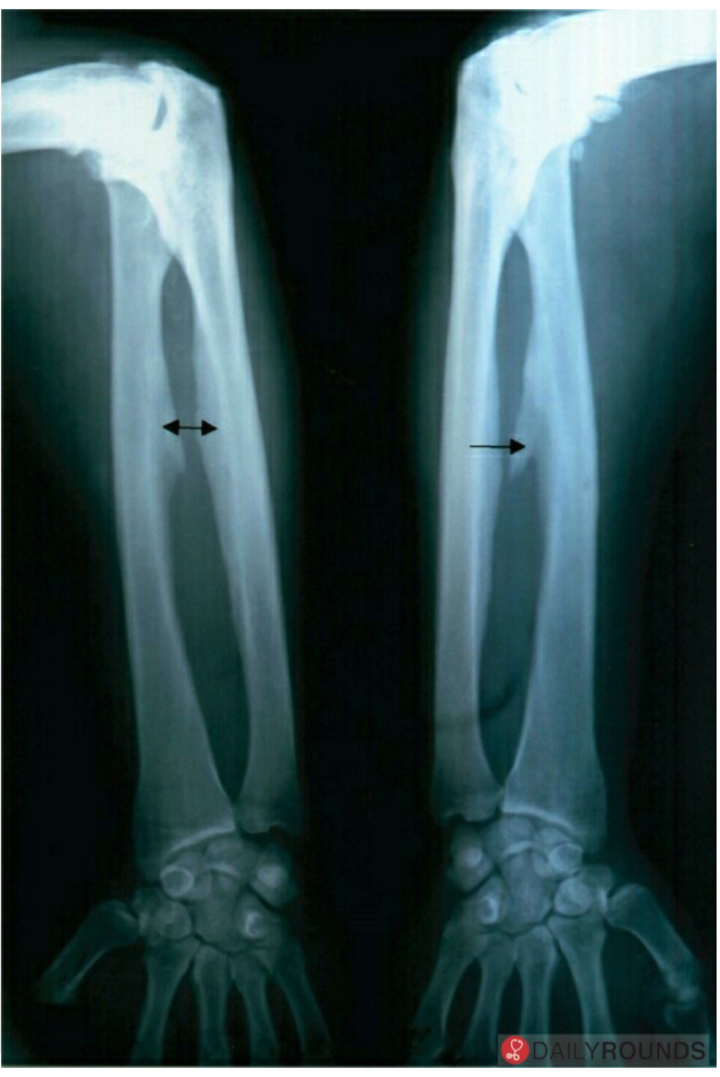
Interosseous membrane ossification is characteristic of _____.
Pathology of Orthopedic Implants Flashcards for NEET-PG
Study 10 flashcards on Pathology of Orthopedic Implants for NEET-PG Pathology. These active recall cards cover the key concepts, clinical associations, and high-yield facts from this chapter of Bone and Soft Tissue Pathology. Each card is designed to test your understanding rather than just recognition, building stronger and more durable memories for exam day.
For personalised spaced repetition scheduling and unlimited flashcards, download the Oncourse app.
Frequently Asked Questions
Are Pathology of Orthopedic Implants flashcards free?
How many flashcards does this chapter have?
How should I use these flashcards for NEET-PG?
Are there more flashcards for Bone and Soft Tissue Pathology?
Want unlimited flashcards?
Get full access to all flashcards, spaced repetition, and progress tracking.
Start For Free