Sports Medicine Indian Medical PG Flashcards - Medical Study Cards
Master Sports Medicine with OnCourse flashcards. These spaced repetition flashcards are designed for medical students preparing for NEET PG, USMLE Step 1, USMLE Step 2, MBBS exams, and other medical licensing examinations.
Sports Medicine Flashcard Deck - 79 Cards
Flashcard 1: What is the name of the following test used to diagnose thoracic outlet syndrome?
_____
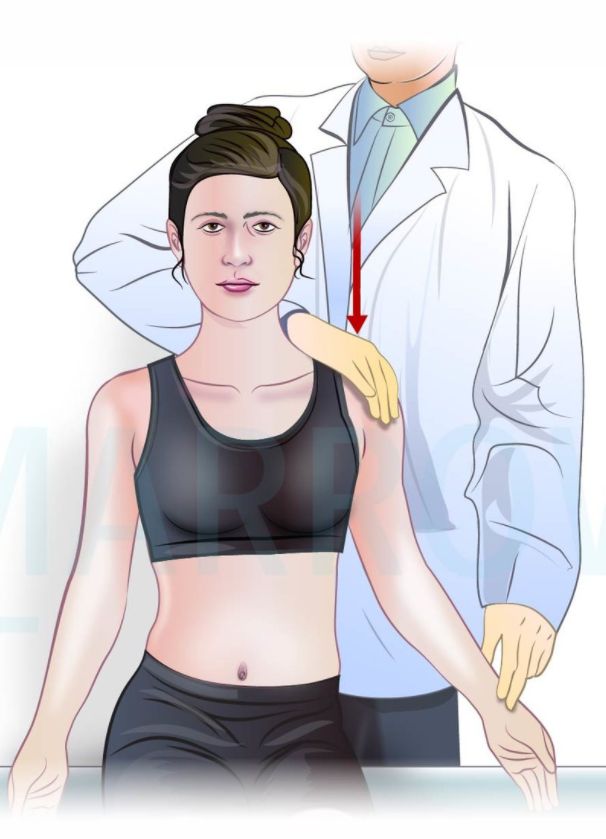
Answer: Halstead maneuver/Reverse Adsons
Flashcard 2: What is the name of the following test used to diagnose thoracic outlet syndrome?
_____
Answer: Roos test
Flashcard 3: What is the name of the following test used to diagnose thoracic outlet syndrome?
_____
Answer: Adson's test
Flashcard 4: The test shown is _____ test.
Answer: Wright's hyperabduction
Flashcard 5: What is the name of the following test used to diagnose thoracic outlet syndrome?
_____
Answer: Wright's hyperabduction test
Flashcard 6: The video shows an examination being performed with the knee flexed to about _____ degrees which indicates that it is the Lachmann test.
Answer: 20
Flashcard 7: _____ sign occurs due to the rupture of the tendon of the long head of biceps brachii
Answer: Popeye
Flashcard 8: _____ bursitis is an inflammation of the prepatellar bursa in front of the kneecap
Answer: Prepatellar
Flashcard 9: The video shows an examination being performed with the knee flexed to about _____ degrees which indicates that it is the Lachmann test.
Answer: 20
Flashcard 10: The _____ test is similar to the anterior drawer test, but the knee is at a 30 degree angle.
Answer: Lachman
Flashcard 11: Medial tibial stress syndrome is caused by bone _____ that outpaces bone formation in the tibial cortex
Answer: resorption
Flashcard 12: _____ tears present with hip pain and mechanical snapping or locking in patients that are active, have acetabular dyplasia, or femoacetabular impingement.
Answer: Hip labral
Flashcard 13: The _____ is a common knee injury in contact sports due to lateral force applied to a planted leg.
Answer: "unhappy triad"
Flashcard 14: _____ flexion of the foot causes pain in the deep posterior compartment syndrome of the leg.
Answer: Dorsi
Flashcard 15: _____ triad/ terrible triad/ horrible triangle is also known as unhappy traid of the knee joint
Answer: O'Donoghue's
Flashcard 16: The _____ test is used to identify LCL injury.
Answer: Varus
Flashcard 17: In a positive McMurray test, pain and "popping" on _____ rotation indicates a lateral meniscal tear
Answer: internal
Flashcard 18: Medial epicondylitis (aka golfer's elbow) is an elbow injury that may be due to repetitive _____ (forehand shots) that causes tendinosis of the pronator teres and flexor carpi radialis
Answer: flexion
Flashcard 19: Although the classic presentation for the "unhappy triad" involves _____ injury, the lateral meniscus is more commonly injured.
Answer: medial meniscus
Flashcard 20: The _____ test is performed with the knee at a 90 degree angle to test for ACL injury
Answer: anterior drawer
Flashcard 21: The _____ test is used to identify injury to the meniscus (of the knee).
Answer: McMurray
Flashcard 22: _____ tears of the menisci heal better than central tears (central/peripheral)
Answer: Peripheral
Flashcard 23: Injury to the _____ (rotator cuff muscle) is classically seen in baseball pitchers
Answer: infraspinatus
Flashcard 24: The _____ test is performed with the knee at a 30 degree angle while a lateral (valgus) force is applied
Answer: Valgus
Flashcard 25: Lateral epicondylitis (aka tennis/swimmer's elbow) is an elbow injury that may be due to repetitive _____ (backhand shots) that causes microtrauma of the extensor carpi radialis brevis tendon at its origin
Answer: extension
Flashcard 26: The _____ test is most commonly used to identify MCL injury
Answer: Valgus
Flashcard 27: The most common site of osteochondritis dissecans of the knee is the _____ part of the medial femoral condyle.
Answer: lateral
Flashcard 28: Function of the _____ muscle may be assessed using the "empty/full can" test.
Answer: supraspinatus
Flashcard 29: An abnormal _____ test shows increased lateral space widening of the tibia
Answer: Varus
Flashcard 30: _____ fractures are classically associated with a history of sudden increase in intensity/frequency of activity
Answer: Stress
Flashcard 31: The _____ and lachman test are used to test for ACL injury
Answer: anterior drawer test
Flashcard 32: _____ syndrome is a painful knee function due to thickened and inflamed synovial folds and most commonly involves the medial plica.
Answer: Plica
Flashcard 33: The _____ is the most commonly injured rotator cuff muscle, due to trauma or degeneration and impingement which leads to tendinopathy or tear
Answer: supraspinatus
Flashcard 34: The _____ test is performed with the knee at a 30 degree angle while a medial (varus) force is applied
Answer: Varus
Flashcard 35: A positive posterior drawer sign shows increased _____ of the tibia.
Answer: posterior gliding
Flashcard 36: The "unhappy triad" presents with acute _____ and signs of joint injury/instability.
Answer: knee pain
Flashcard 37: A(n) _____ tear is often caused by microtrauma from repetitive stresses pitching a baseball.
Answer: ulnar collateral ligament
Flashcard 38: A positive _____ is when there is lack of plantar flexion when the calf is squeezed.
Answer: Thompson test
Flashcard 39: _____ knee is the patellar tendonitis at the tendoosseus junction of patella
Answer: Jumper's
Flashcard 40: The _____ test is performed by1) full flexion of the knee2) followed by extension of the knee with rotation of the tibia and pressure on the opposite side of the knee you want to test
Answer: McMurray
Flashcard 41: In a positive McMurray test, pain and "popping" on _____ rotation indicates a medial meniscus tear
Answer: external
Flashcard 42: The _____ classically consists of damage to the ACL, MCL, and medial meniscus* (attached to MCL).
Answer: "unhappy triad"
Flashcard 43: Patients with trochanteric bursitis present with _____ hip pain that may radiate down the thigh
Answer: lateral
Flashcard 44: A positive anterior drawer sign demonstrates increased _____ of the tibia
Answer: anterior gliding
Flashcard 45: The _____ test is performed with the knee at a 90 degree angle to test for PCL injury.
Answer: posterior drawer
Flashcard 46: An abnormal _____ test shows increased medial space widening of the tibia
Answer: Valgus
Flashcard 47: _____ bursitis is commonly seen in runners and typically presents with anteromedial knee pain
Answer: Pes anserine
Flashcard 48: A(n) _____ rupture often occurs in weightlifters that presents with weakness with aDduction and internal rotation
Answer: pectoralis major
Flashcard 49: In the most common sprain of the Anterior Inferior Tibiofibular Ligament, _____ rotation forces the Talus to rotate laterally and push the Fibula away from the Tibia
Answer: external
Flashcard 50: Patellofemoral syndrome is also known as _____ patellae
Answer: chondromalacia
Flashcard 51: Chondromalacia patellae has a _____ Q angle
Answer: high (low/high)
Flashcard 52: What is the name of the following test used to diagnose thoracic outlet syndrome?_____
Answer: Roos test
Flashcard 53: NSAIDs and _____ are mainstay treatments available for impingement syndrome
Answer: physiotherapy
Flashcard 54: Conservative management of patellar # can be done using _____ cast
Answer: cylinder
Flashcard 55: Which ACL test is affected more in AM bundle tear compared to PL?_____
Answer: Anterior drawer test
Flashcard 56: Delayed effusion of synovial fluid in medial meniscal tear leads to _____ sign on knee examination
Answer: bulge
Flashcard 57: Resisted extension of the middle finger producing pain at the lateral epicondyle, known as _____ test, is seen in tennis elbow.
Answer: Maudsley's
Flashcard 58: Stress fractures are seen in normal bone due to repeated _____ of the bone
Answer: abnormal loading
Flashcard 59: A _____ brace acts by compression of the extensor muscles, thus releasing the forces in the ECRB region, used for treating tennis elbow
Answer: counterforce
Flashcard 60: Reverse Hill-Sachs lesion is also known as _____ lesion
Answer: McLaughlin
Flashcard 61: Treatment of myositis ossificans in active phase involves _____
Answer: NSAIDs
Flashcard 62: _____ test for ACL injury is preferred in the painful knee
Answer: Lachmann
Flashcard 63: Most common type of meniscal tear is _____ tear
Answer: bucket-handle
Flashcard 64: Patella _____ and a small patella can lead to recurrent patellar dislocations
Answer: alta (baja/alta)
Flashcard 65: What type of bone fractures are seen commonly in dancers, athletes and military recruits?_____
Answer: Stress fractures
Flashcard 66: Which ACL test is affected more in PL bundle tear compared to AM?_____
Answer: Lachmann test
Flashcard 67: Partial avulsion of the medial epicondyle is known as _____ elbow
Answer: Little leaguer's
Flashcard 68: What is the name of the following test used to diagnose thoracic outlet syndrome?_____
Answer: Halstead maneuver/Reverse Adsons
Flashcard 69: ACL is _____ commonly injured than PCL
Answer: more (less/more)
Flashcard 70: What is the name of the following test used to diagnose thoracic outlet syndrome?_____
Answer: Adson's test
Flashcard 71: The injury to menisci is mainly caused by the _____ force on a partially flexed knee
Answer: rotational
Flashcard 72: Treatment of myositis ossificans in latent phase involves _____
Answer: active physiotherapy
Flashcard 73: Lelli's test is done to test _____ tear
Answer: ACL (PCL/ACL)
Flashcard 74: Bosworth technique is a surgical technique used for _____ elbow
Answer: tennis
Flashcard 75: Gold standard investigation for cruciate ligament injury is _____
Answer: arthroscopy
Flashcard 76: Extension of elbow in pronation with a flexed wrist producing pain at the lateral epicondyle, known as _____ test, is seen in tennis elbow.
Answer: Mills
Flashcard 77: Avulsion of the tip of olecranon due to overarm action is known as _____ elbow
Answer: Javelin thrower's
Flashcard 78: Wringing a towel producing pain at the lateral epicondyle, known as _____ test, is seen in tennis elbow.
Answer: Wringing
Flashcard 79: The test shown is _____ test.
Answer: Wright's hyperabduction
Keywords: Sports Medicine flashcards, medical flashcards, NEET PG preparation, USMLE Step 1 flashcards, Anki alternative, spaced repetition medical, OnCourse flashcards