Surgical management for thyroid ophthalmopathy: Orbital _____, Extraocular muscle surgery and Eyelid surgery
#2
Signs in Grave's ophthalmopathy:_____ sign: Retraction of the upper lids
#3
An absolute protrusion of >_____ mm or a difference of >2 mm between the two eyes is labeled as proptosis.
#4
_____: measures protrusion of the apex of cornea from the outer orbital margin (with the eyes looking straight ahead).
#5
Only the _____ of the inferior rectus muscle is involved in thyroid myopathy; the tendon is characteristically spared.
#6
Proptosis following trauma can be seen in conditions such as: Caroticocavernous fistula, Retro-orbital hematoma, Superior _____ syndrome and Orbital apex syndrome
#7
Pulsating vascular lesions, causing pulsatile proptosis include: _____ (most common), and saccular aneurysm of the ophthalmic artery
#8
_____ is the most common lacrimal gland tumor.
#9
Signs in Grave's ophthalmopathy:_____ Sign: Lower lid lag on upward gaze
#10
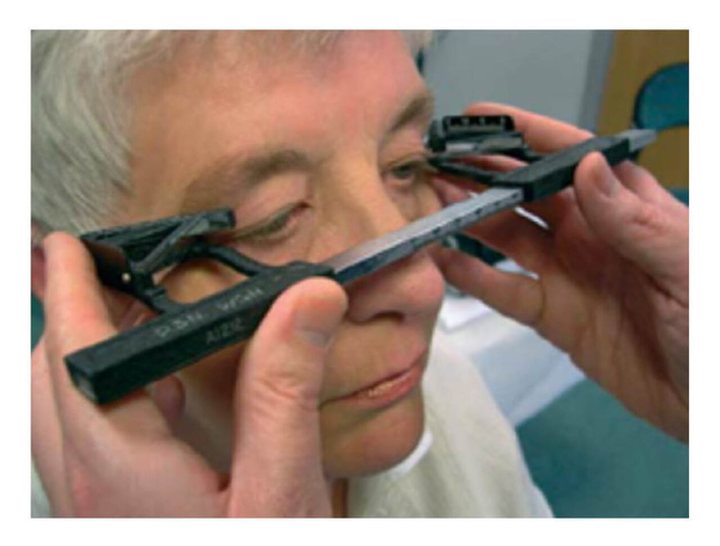
The following image demonstrates _____
Orbital Anatomy Indian Medical PG Flashcards - Medical Study Cards
Master Orbital Anatomy with OnCourse flashcards. These spaced repetition flashcards are designed for medical students preparing for NEET PG, USMLE Step 1, USMLE Step 2, MBBS exams, and other medical licensing examinations.
Orbital Anatomy Flashcard Deck - 10 Cards
Flashcard 1: Surgical management for thyroid ophthalmopathy: Orbital _____, Extraocular muscle surgery and Eyelid surgery
Answer: decompression
Flashcard 2: Signs in Grave's ophthalmopathy:_____ sign: Retraction of the upper lids
Answer: Dalrymple's
Flashcard 3: An absolute protrusion of >_____ mm or a difference of >2 mm between the two eyes is labeled as proptosis.
Answer: 20
Flashcard 4: _____: measures protrusion of the apex of cornea from the outer orbital margin (with the eyes looking straight ahead).
Answer: Exophthalmometry
Flashcard 5: Only the _____ of the inferior rectus muscle is involved in thyroid myopathy; the tendon is characteristically spared.
Answer: belly
Flashcard 6: Proptosis following trauma can be seen in conditions such as: Caroticocavernous fistula, Retro-orbital hematoma, Superior _____ syndrome and Orbital apex syndrome
Answer: orbital fissure
Flashcard 7: Pulsating vascular lesions, causing pulsatile proptosis include: _____ (most common), and saccular aneurysm of the ophthalmic artery
Answer: Caroticocavernous fistula
Flashcard 8: _____ is the most common lacrimal gland tumor.
Answer: Pleomorphic adenoma
Flashcard 9: Signs in Grave's ophthalmopathy:_____ Sign: Lower lid lag on upward gaze
Answer: Griffith
Flashcard 10: The following image demonstrates _____
Answer: Hertel's exophthalmometer
Keywords: Orbital Anatomy flashcards, medical flashcards, NEET PG preparation, USMLE Step 1 flashcards, Anki alternative, spaced repetition medical, OnCourse flashcards
Want unlimited flashcards?
Get full access to all flashcards, spaced repetition, and progress tracking.