Optics and Refraction Indian Medical PG Flashcards - Medical Study Cards
Master Optics and Refraction with OnCourse flashcards. These spaced repetition flashcards are designed for medical students preparing for NEET PG, USMLE Step 1, USMLE Step 2, MBBS exams, and other medical licensing examinations.
Optics and Refraction Flashcard Deck - 132 Cards
Flashcard 1: The following retinoscope is also called _____
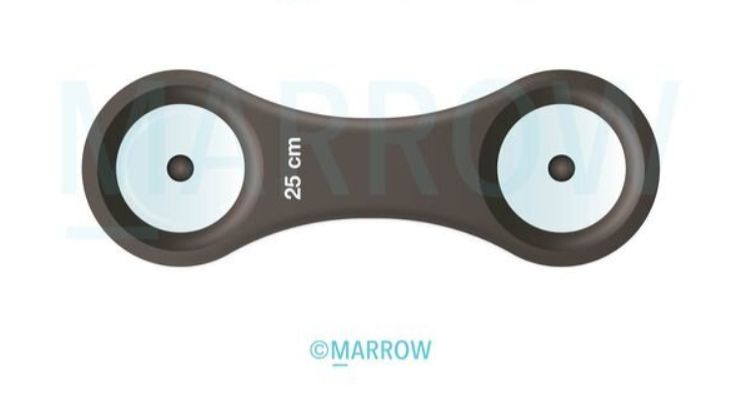
Answer: Piestley-Smith retinoscope
Flashcard 2: What is the name of the following test used for testing colour vision?
_____
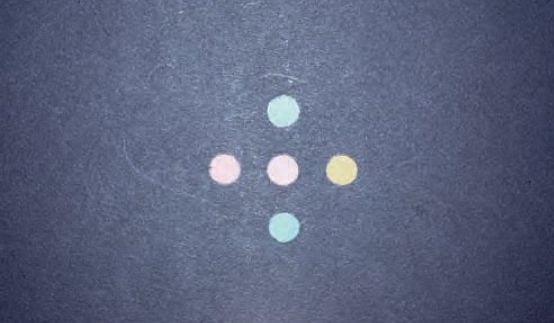
Answer: City university test
Flashcard 3: _____ is used to test color vision
Answer: Nagel’s anomaloscope
Flashcard 4: Stenopaeic slit can be used to determine the axis of the cylinder in _____.
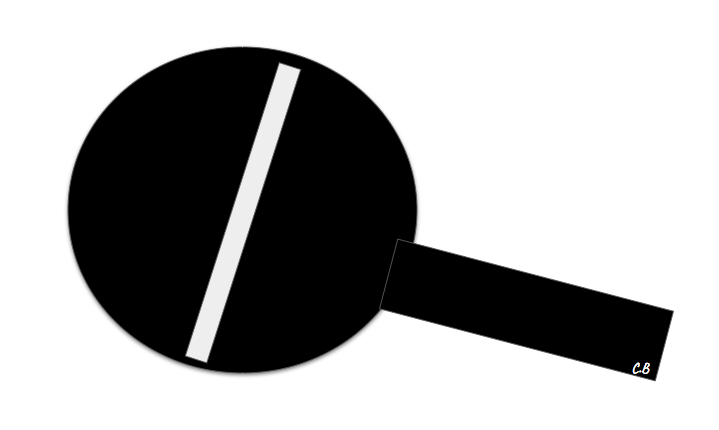
Answer: astigmatism
Flashcard 5: _____ test is based on chromatic aberration and is used to refine the final sphere in subjective refraction
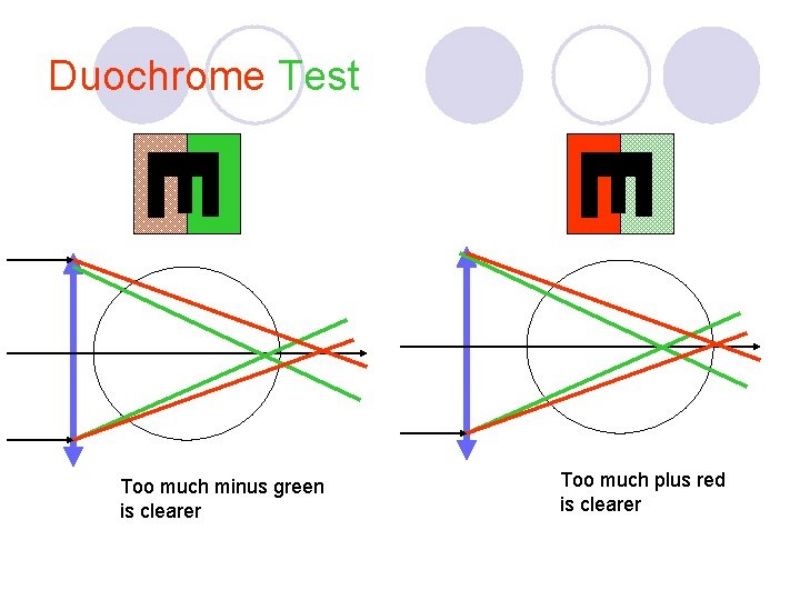
Answer: Duochrome
Flashcard 6: _____ is a planoconcave lens used for examining the posterior vitreous and the fundus
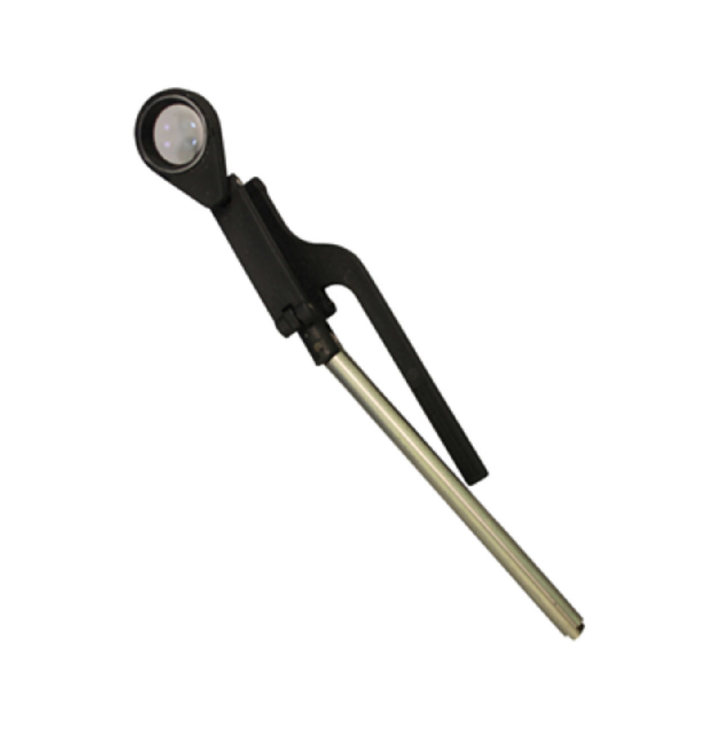
Answer: Hruby lens
Flashcard 7: The following retinoscope is also called _____
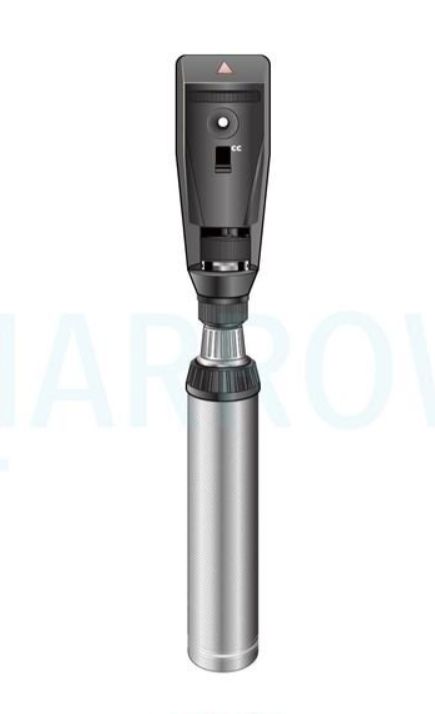
Answer: Streak retinoscope
Flashcard 8: What is the name of the following test used for testing colour vision?
_____
Answer: Farnsworth Munsell 100 hue test
Flashcard 9: _____ is used for measurement of near point of convergence which is normally 70mm
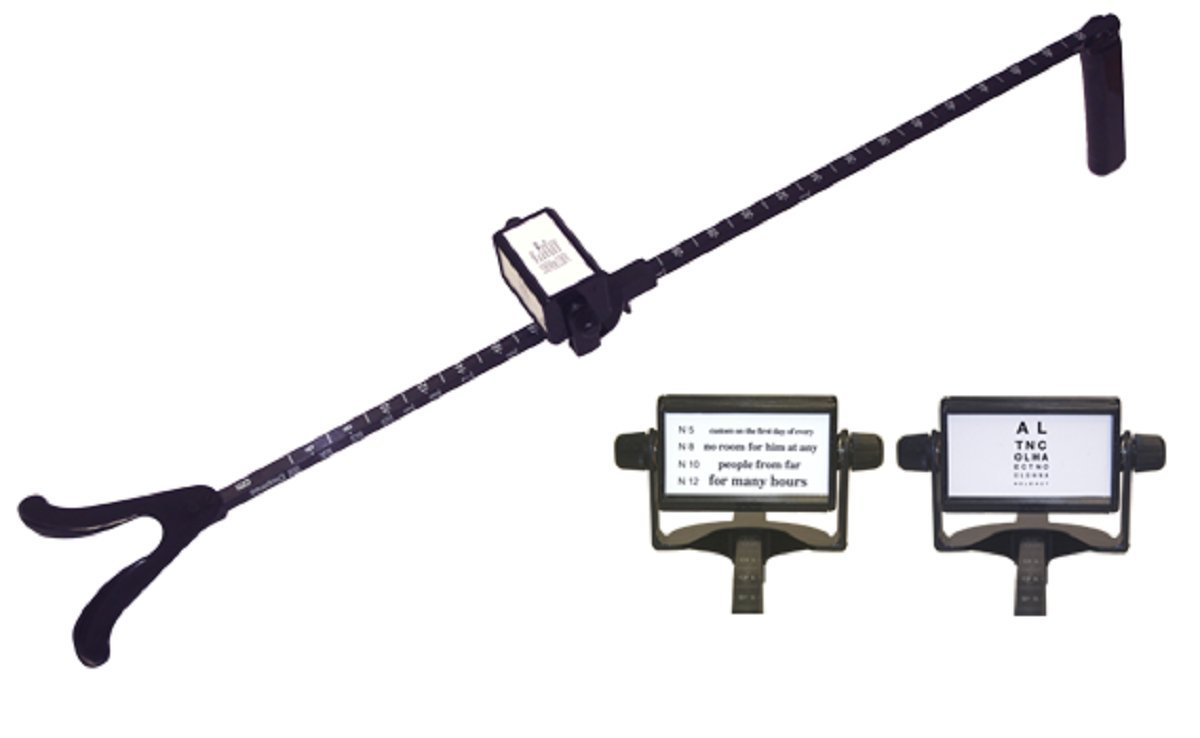
Answer: RAF rule
Flashcard 10: What is the name of the following test used for testing colour vision?
_____
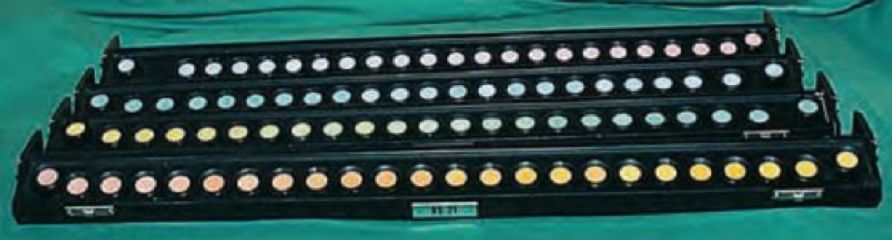
Answer: Hardy Rand-Rittler test
Flashcard 11: What type of lens is the following? _____
Answer: Trifocal
Flashcard 12: _____ (flip-cross technique) is used to refine the power and axis of the cylindrical lens.
Answer: Jackson’s cross cylinder
Flashcard 13: What type of lens is the following? _____
Answer: Kryptok bifocal
Flashcard 14: major cause of visual impairment in 0-49 years age is _____
Answer: refractory errors
Extra:
Flashcard 15: 28d5190692654e40ad9eaeb07f342e61-ao-1
Answer: light reflection factor
Extra:
Flashcard 16: 28d5190692654e40ad9eaeb07f342e61-ao-2
Answer: light reflection factor
Extra:
Flashcard 17: f197c79a80244bd7a7c4b112aff4634f-oa-4
Answer: Lorentz formula
Extra: indicators of obesity
Flashcard 18: The smallest letter on Jaeger's chart is designated as _____ or J1 and the largest is N48.
Answer: N5
Flashcard 19: Pathological myopia presents with _____ eyeballs, large cornea and deep AC
Answer: prominent
Flashcard 20: _____ test is based on chromatic aberration and is used to refine the final sphere in subjective refraction
Answer: Duochrome
Flashcard 21: In Ishihara pseudo-isochromatic chart, there are _____ plates read at a distance of 75 cm
Answer: 38
Flashcard 22: Angle _____ is the angle between the optical axis and fixation axis at the centre of eyeball rotation
Answer: gamma
Flashcard 23: _____ is used for measurement of near point of convergence which is normally 70mm
Answer: RAF rule
Flashcard 24: _____ is an objective method used to determine the error of refraction by applying the method of neutralization.
Answer: Retinoscopy
Flashcard 25: Purkinje image 2 is formed from the _____ surface of the cornea and is Erect
Answer: posterior
Flashcard 26: Angle _____ is the angle between the visual axis and pupillary axis at the cornea
Answer: kappa
Flashcard 27: The _____ axis is the line passing through the object (fixation point) and centre of the lens to meet the fovea.
Answer: visual
Flashcard 28: The _____ axis is the line passing through the center of the cornea and centre of the lens to meet the retina on the nasal side of the fovea.
Answer: optic
Flashcard 29: _____ is a planoconcave lens used for examining the posterior vitreous and the fundus
Answer: Hruby lens
Flashcard 30: In _____-the-rule astigmatism, the curvature of the vertical meridian is more than the horizontal meridian
Answer: with
Flashcard 31: The _____ axis is the line passing through the object (fixation point) and centre of the rotation
Answer: fixation
Flashcard 32: Angle _____ is the angle between the line of sight and pupillary axis at the cornea
Answer: lambda
Flashcard 33: _____ blindness is vision 1/60 to just perception of light
Answer: Manifest
Flashcard 34: The _____ surface of the cornea is the most important factor influencing the focus of light rays on the retina.
Answer: anterior
Flashcard 35: A condensing lens is needed in _____ ophthalmoscopy, usually of 20 D
Answer: indirect
Flashcard 36: Purkinje image 4 is formed from the _____ surface of the lens and is inverted
Answer: posterior
Flashcard 37: The _____ effect refers to the greater sensitivity of the retina to perpendicular rays than the oblique rays
Answer: Stiles Crawford
Flashcard 38: Hruby lens provides a _____ field of vision with low magnification
Answer: small
Flashcard 39: In fundoscopy, more the power of condensing lens, _____ the magnification and more the field of view
Answer: less
Flashcard 40: High refractive index of the _____ of the lens than that of the peripheral cortex is one of the natural mechanisms to decrease aberration of the eye
Answer: core of the nucleus
Flashcard 41: Purkinje image 3 is formed from the _____ surface of the lens and is Erect
Answer: anterior
Flashcard 42: 1-mm increase in radius of curvature of the eye results in _____ dioptres of hypermetropia.
Answer: 6
Flashcard 43: Purkinje image 1 is formed from the _____ surface of the cornea and is Erect
Answer: anterior
Flashcard 44: 1-mm shortening of the anteroposterior diameter of the eye results in _____ dioptres of hypermetropia.
Answer: 3
Flashcard 45: Angle _____ is the angle between the optical axis and visual axis at the nodal point.
Answer: alpha
Flashcard 46: Critical angle of the air cornea interface is _____ degrees.
Answer: 46
Flashcard 47: _____ sensitivity of the peripheral retina is one of the natural mechanisms to decrease aberration of the eye
Answer: Low
Flashcard 48: Which Purkinje images are absent in aphakia?_____
Answer: 3 and 4
Flashcard 49: _____ (flip-cross technique) is used to refine the power and axis of the cylindrical lens.
Answer: Jackson s cross cylinder
Flashcard 50: In Protanomaly, _____ color perception is defective.
Answer: Red
Flashcard 51: The following retinoscope is also called _____
Answer: Streak retinoscope
Flashcard 52: Near point becomes _____ in hypermetropia.
Answer: distant (closer/distant)
Flashcard 53: Refractive index of the lens: _____
Answer: 1.40
Flashcard 54: Jaeger s chart is held at a distance of _____ cm away from patient.
Answer: 35
Flashcard 55: _____direct ophthalmoscopy may be done in poorly dilated pupils
Answer: In
Flashcard 56: _____ theory states that there are three separate color systems (retinexes).
Answer: Edwin Land's
Flashcard 57: FOV produced by direct ophthalmoscopy is limited to _____
Answer: 2 DDs
Flashcard 58: The principle in _____direct ophthalmoscopy is to make the eye highly myopic
Answer: in
Flashcard 59: Examination through hazy media is possible in _____direct ophthalmoscopy
Answer: in
Flashcard 60: The fundus in hypermetropia may show _____
Answer: pseudopapillitis
Flashcard 61: _____ test is used to distinguish whether the colored halos are due to cataract or glaucoma.
Answer: Fincham's
Flashcard 62: The _____effect is one of the natural mechanisms that decrease aberration in the eye.
Answer: Stiles Crawford
Flashcard 63: The total refractive power of cornea in reduced eye: _____ D
Answer: 43
Flashcard 64: Stenopaeic slit can be used to determine the axis of the cylinder in _____.
Answer: astigmatism
Flashcard 65: _____ hypermetropia: Masked by the tone of the ciliary body
Answer: Latent
Flashcard 66: _____ images are reflections of objects from the structure of the eye.
Answer: Purkinje
Flashcard 67: The following retinoscope is also called _____
Answer: Piestley-Smith retinoscope
Flashcard 68: What refractive error is commonly associated with pterygium?_____
Answer: Astigmatism
Flashcard 69: Holmgren's wool-matching test is used for the assessment of _____.
Answer: color vision
Flashcard 70: _____ is used to test color vision
Answer: Nagel s anomaloscope
Flashcard 71: The amplitude of accommodation is the reciprocal of _____ in meters.
Answer: near point of accommodation (NPA)
Flashcard 72: Moderate myopia, when the error is _____D.
Answer: 3 to -6
Flashcard 73: Adequacy of the accommodative power being significantly less than normal physiological limits for the patient's age is called _____
Answer: insufficiency of accommodation.
Flashcard 74: The power of the prescription glasses for a 50-year-old man should be +_____D.
Answer: 2
Flashcard 75: Hruby lens has a diopteric power of _____D
Answer: -58.6
Flashcard 76: The refractive index of the lens in the peripheral cortex is _____
Answer: 1.386
Flashcard 77: Which device is used for performing Fincham's test?_____
Answer: Stenopaeic slit
Flashcard 78: The refraction of light is the maximum at the _____
Answer: cornea
Flashcard 79: Roving-ring scotoma is seen in the correction of aphakia with _____
Answer: spectacles
Flashcard 80: Degenerative myopia is _____ common in females as compared to males.
Answer: more
Flashcard 81: Pinhole prevents the peripheral rays and also reduces the _____ aberration, thus improving visual acuity
Answer: spherical
Flashcard 82: The refractive index is the maximum at the _____
Answer: center of the lens.
Flashcard 83: Magnification produced by direct ophthalmoscopy is approximately _____ times
Answer: 15
Flashcard 84: Most common type of myopia is _____
Answer: axial
Flashcard 85: Early Treatment of Diabetic Retinopathy Study (ETDRS) Chart is used for measuring _____
Answer: visual acuity.
Flashcard 86: Shot silk appearance of fundus is seen in _____
Answer: hypermetropia
Flashcard 87: The concept of reduced eye was introduced by _____
Answer: Donder
Flashcard 88: In duochrome test, if the patient sees the letters of the _____ side clearer, he is overcorrected
Answer: green
Flashcard 89: What type of lens is the following? _____
Answer: Kryptok bifocal
Flashcard 90: Low myopia, when the error is d _____D.
Answer: 3
Flashcard 91: The distance between the points of convergence (focus) of the vertical and horizontal rays in a strum's conoid is called the _____ of strum.
Answer: focal interval
Flashcard 92: The refractive index of the lens in the nucleus is _____
Answer: 1.41
Flashcard 93: The total refractive power of lens in reduced eye: _____ D
Answer: 17
Flashcard 94: Refractive power (dioptre) = 1/_____
Answer: Focal length in metres
Flashcard 95: What is the name of the following test used for testing colour vision?_____
Answer: City university test
Flashcard 96: Magnification produced by indirect ophthalmoscopy is approximately _____ times
Answer: 2-5
Flashcard 97: _____ can be used to find out the optimal site for optical iridectomy in case of corneal opacities
Answer: Stenopaeic slit (Device)
Flashcard 98: The angle subtended by the largest alphabet on the Snellens chart at 60m distance is _____.
Answer: 5
Flashcard 99: High myopia, when the error is e_____D.
Answer: -6
Flashcard 100: The tolerable limit of aniseikonia is _____%.
Answer: 5 8
Flashcard 101: A patient with 1 D myopia would exhibit _____ movement of red reflex when retinoscopy is done from a distance of 1m without cycloplegia.
Answer: no
Flashcard 102: Moderate hypermetropia: error of _____D
Answer: + 2.25 to +5
Flashcard 103: Low hypermetropia: error of _____D or less
Answer: + 2
Flashcard 104: The following result on Placido disk test will be seen in _____
Answer: aspherical cornea
Flashcard 105: Myopia must never be _____-corrected with spectacles.
Answer: over (under/over)
Flashcard 106: A total of _____ Purkinje images are formed in normal eyes.
Answer: 4
Flashcard 107: Refractive index of the cornea: _____.
Answer: 1.376
Flashcard 108: Jack-in the box is seen in the correction of aphakia with _____
Answer: spectacles
Flashcard 109: High hypermetropia: error of _____D
Answer: > +5
Flashcard 110: The refractive index of lens cortex is _____ than lens nucleus
Answer: less
Flashcard 111: What type of lens is the following? _____
Answer: Trifocal
Flashcard 112: In high myopia, it is better to slightly _____-correct for distance
Answer: under (over/under)
Flashcard 113: _____ is a condition in which there is a difference in the size of the image formed by the two eyes.
Answer: Aniseikonia
Flashcard 114: The drawback of Ishihara pseudo-isochromatic chart is that it cannot detect _____ colour defect
Answer: blue
Flashcard 115: A patient with emmetropia, hypermetropia, myopia less than 1D would exhibit _____ movement of red reflex when retinoscopy is done from a distance of 1m without cycloplegia.
Answer: with
Flashcard 116: A patient with myopia more than 1D would exhibit _____ movement of red reflex when retinoscopy is done from a distance of 1m without cycloplegia.
Answer: against
Flashcard 117: The total refractive power of schematic eye: _____ D
Answer: 58.64
Flashcard 118: Cutting-off of the peripheral rays by the _____ is one of the natural mechanisms to decrease aberration of the eye
Answer: iris
Flashcard 119: The angle subtended by the optotype =_____ x 5
Answer: MAR
Flashcard 120: When the total refractive power of the two eyes is unequal, the condition is called _____.
Answer: anisometropia
Flashcard 121: _____ hypermetropia: Masked by the voluntary accomodative effort of the person
Answer: Facultative
Flashcard 122: In duochrome test, if the patient sees the letters of the _____ side clearer, he is undercorrected
Answer: red
Flashcard 123: For retinoscopy, the surgeon sits at a distance of _____ or at an arm's length from the patient
Answer: 1 meter
Flashcard 124: _____ effect is seen in amblyopia as brightness is less compared to normal eye
Answer: Sunglass
Flashcard 125: What is the name of the following test used for testing colour vision?_____
Answer: Hardy Rand-Rittler test
Flashcard 126: At the given distance, each letter subtends an angle of _____ at the nodal point of the eye
Answer: 5 min
Flashcard 127: _____ theory states that peculiar refractive index of corneal lamellae is responsible for the corneal transparency
Answer: Goldmann
Flashcard 128: The following result on Placido disk test will be seen in _____
Answer: corneal astigmatism
Flashcard 129: Presbyopia is corrected by the use of a _____ lens
Answer: convex
Flashcard 130: Degenerative myopia is seen in more than _____ dioptres of myopia.
Answer: 6
Flashcard 131: Contrast sensitivity in glare is assessed using _____.
Answer: Pelli Robson chart
Flashcard 132: Interpretation of retinoscopy done at 1 m is as follows:No movement of red reflex - Myopia of _____With the movement - Emmetropia, hypermetropia, myopia of _____Against the movement - Myopia of _____
Answer: 1D; less than 1D; more than 1D
Keywords: Optics and Refraction flashcards, medical flashcards, NEET PG preparation, USMLE Step 1 flashcards, Anki alternative, spaced repetition medical, OnCourse flashcards