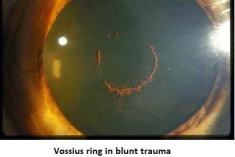
Blunt trauma is associated with _____ cataract and vossius ring
#2
_____ is seen initially in blow-out fractures due to orbital edema and hemorrhage.
#3
Blowout fractures refer to isolated fractures of the _____
#4
Blunt trauma is associated with _____ cataract and _____ ring
#5
Sympathetic ophthalmitis is an example of _____ilateral non-suppurative uveitis, seen usually following intraocular surgery or penetrating trauma
#6
The _____nasal limbus is the most common site of globe rupture.
Hint: i/s
#7
_____ is seen after 10 days in blow-out fractures as the edema decreases, the eyeball sinks backward and somewhat inferiorly
#8
Restricted ocular movements, due to entrapment of _____ muscle may occur with zygoma # and may cause diplopia
#9
Traumatic scleral rupture usually occurs at _____ on the opposite side of the impact
Sports-Related Eye Injuries Indian Medical PG Flashcards - Medical Study Cards
Master Sports-Related Eye Injuries with OnCourse flashcards. These spaced repetition flashcards are designed for medical students preparing for NEET PG, USMLE Step 1, USMLE Step 2, MBBS exams, and other medical licensing examinations.
Flashcard 1: Blunt trauma is associated with _____ cataract and vossius ring
Answer: rosette shaped
Flashcard 2: _____ is seen initially in blow-out fractures due to orbital edema and hemorrhage.
Answer: Proptosis
Flashcard 3: Blowout fractures refer to isolated fractures of the _____
Answer: orbital floor
Flashcard 4: Blunt trauma is associated with _____ cataract and _____ ring
Answer: rosette shaped
Flashcard 5: Sympathetic ophthalmitis is an example of _____ilateral non-suppurative uveitis, seen usually following intraocular surgery or penetrating trauma
Answer: b
Flashcard 6: The _____nasal limbus is the most common site of globe rupture.
Answer: supero
Flashcard 7: _____ is seen after 10 days in blow-out fractures as the edema decreases, the eyeball sinks backward and somewhat inferiorly
Answer: Enophthalmos
Flashcard 8: Restricted ocular movements, due to entrapment of _____ muscle may occur with zygoma # and may cause diplopia
Answer: inferior rectus
Flashcard 9: Traumatic scleral rupture usually occurs at _____ on the opposite side of the impact