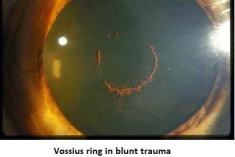
Blunt trauma is associated with _____ cataract and vossius ring
#2
Localization of intraocular mass is determined using _____-scan
#3
_____ is an intense purulent inflammation of the whole eyeball, including Tenon s capsule.
#4
What is the earliest sign of sympathetic ophthalmitis?_____ in sympathising eye
#5
_____ is seen initially in blow-out fractures due to orbital edema and hemorrhage.
#6
A ruptured dermoid of the eye will present as a pain_____, rapidly-growing proptosis
#7
Blunt trauma is associated with _____ cataract and _____ ring
#8
Sympathetic ophthalmitis is an example of _____ilateral non-suppurative uveitis, seen usually following intraocular surgery or penetrating trauma
#9
The _____nasal limbus is the most common site of globe rupture.
Hint: i/s
Intraocular Foreign Bodies Indian Medical PG Flashcards - Medical Study Cards
Master Intraocular Foreign Bodies with OnCourse flashcards. These spaced repetition flashcards are designed for medical students preparing for NEET PG, USMLE Step 1, USMLE Step 2, MBBS exams, and other medical licensing examinations.
Flashcard 1: Blunt trauma is associated with _____ cataract and vossius ring
Answer: rosette shaped
Flashcard 2: Localization of intraocular mass is determined using _____-scan
Answer: B
Flashcard 3: _____ is an intense purulent inflammation of the whole eyeball, including Tenon s capsule.
Answer: Panophthalmitis
Flashcard 4: What is the earliest sign of sympathetic ophthalmitis?_____ in sympathising eye
Answer: Retrolental flare
Flashcard 5: _____ is seen initially in blow-out fractures due to orbital edema and hemorrhage.
Answer: Proptosis
Flashcard 6: A ruptured dermoid of the eye will present as a pain_____, rapidly-growing proptosis
Answer: ful
Flashcard 7: Blunt trauma is associated with _____ cataract and _____ ring
Answer: rosette shaped
Flashcard 8: Sympathetic ophthalmitis is an example of _____ilateral non-suppurative uveitis, seen usually following intraocular surgery or penetrating trauma
Answer: b
Flashcard 9: The _____nasal limbus is the most common site of globe rupture.