The two most common places of fracture in the orbit are the _____ and the orbital floor
#2
If the posterior limit is not seen in subconjunctival hemorrage, check for the _____
#3
_____ system is used for the classification of chemical injuries to the eye.
#4
Proptosis following trauma can be seen in conditions such as: Caroticocavernous fistula, Retro-orbital hematoma, Superior _____ syndrome and Orbital apex syndrome
#5
_____ is seen after 10 days in blow-out fractures as the edema decreases, the eyeball sinks backward and somewhat inferiorly
#6
Blowout fractures refer to isolated fractures of the _____
#7
Sympathetic ophthalmitis is an example of _____ilateral non-suppurative uveitis, seen usually following intraocular surgery or penetrating trauma
#8
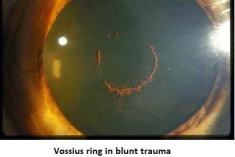
Blunt trauma is associated with _____ cataract and _____ ring
#9
Blunt trauma is associated with _____ cataract and vossius ring
Blunt Trauma Indian Medical PG Flashcards - Medical Study Cards
Master Blunt Trauma with OnCourse flashcards. These spaced repetition flashcards are designed for medical students preparing for NEET PG, USMLE Step 1, USMLE Step 2, MBBS exams, and other medical licensing examinations.
Blunt Trauma Flashcard Deck - 9 Cards
Flashcard 1: The two most common places of fracture in the orbit are the _____ and the orbital floor
Answer: medial wall
Flashcard 2: If the posterior limit is not seen in subconjunctival hemorrage, check for the _____
Answer: base of skull fracture
Flashcard 3: _____ system is used for the classification of chemical injuries to the eye.
Answer: Roper Hall
Flashcard 4: Proptosis following trauma can be seen in conditions such as: Caroticocavernous fistula, Retro-orbital hematoma, Superior _____ syndrome and Orbital apex syndrome
Answer: orbital fissure
Flashcard 5: _____ is seen after 10 days in blow-out fractures as the edema decreases, the eyeball sinks backward and somewhat inferiorly
Answer: Enophthalmos
Flashcard 6: Blowout fractures refer to isolated fractures of the _____
Answer: orbital floor
Flashcard 7: Sympathetic ophthalmitis is an example of _____ilateral non-suppurative uveitis, seen usually following intraocular surgery or penetrating trauma
Answer: b
Flashcard 8: Blunt trauma is associated with _____ cataract and _____ ring
Answer: rosette shaped
Flashcard 9: Blunt trauma is associated with _____ cataract and vossius ring
Answer: rosette shaped
Keywords: Blunt Trauma flashcards, medical flashcards, NEET PG preparation, USMLE Step 1 flashcards, Anki alternative, spaced repetition medical, OnCourse flashcards
Want unlimited flashcards?
Get full access to all flashcards, spaced repetition, and progress tracking.