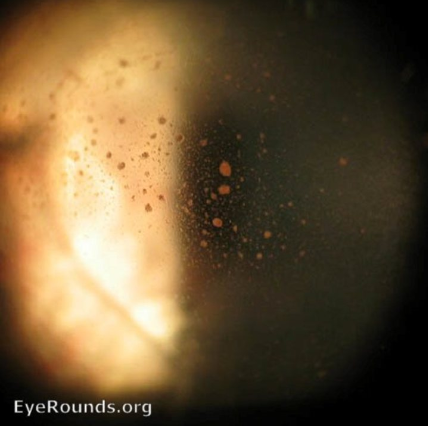
Diseases of the Retina Indian Medical PG Flashcards - Medical Study Cards
Master Diseases of the Retina with OnCourse flashcards. These spaced repetition flashcards are designed for medical students preparing for NEET PG, USMLE Step 1, USMLE Step 2, MBBS exams, and other medical licensing examinations.
Diseases of the Retina Flashcard Deck - 215 Cards
Flashcard 1: "Splashed sauce" appearance on ophthalmoscopy is seen in _____
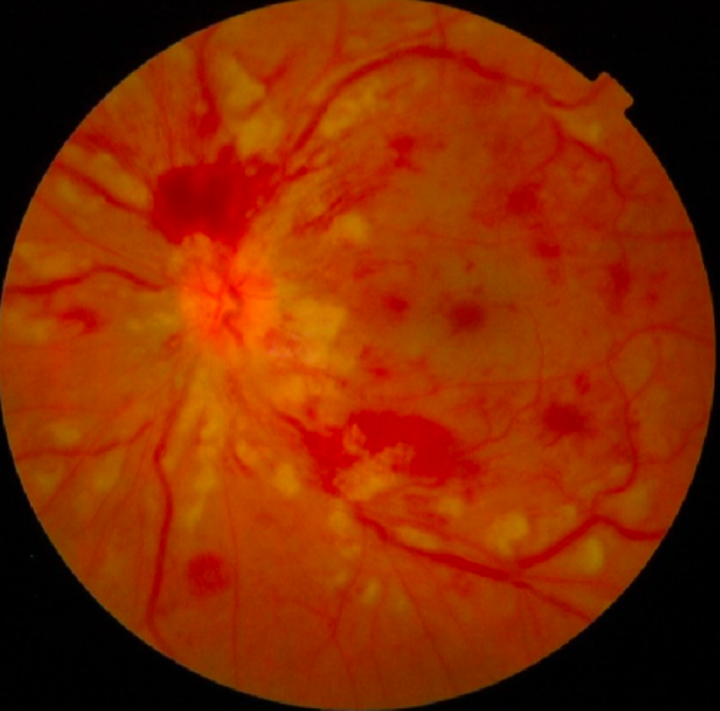
Answer: CRVO
Flashcard 2: _____ is the spontaneous serous detachment of neurosensory retina in the macular region.
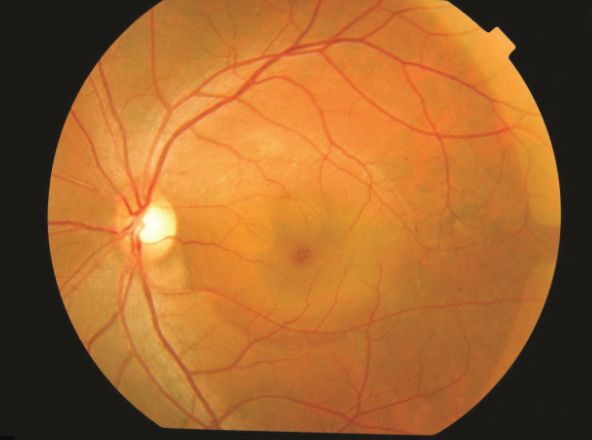
Answer: Central serous retinopathy
Flashcard 3: Increase in the size of the foveal avascular zone is seen in _____
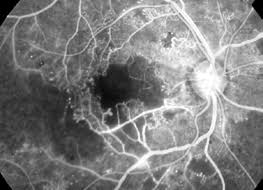
Answer: Macular ischemia
Flashcard 4: The image shows tobacco dust appearance (Shaffer's sign) suggestive of _____ retinal detatchment
Answer: rhegmatogenous
Flashcard 5: _____ appearance of arteries and veins, and _____ like arteries are seen in CRAO
(don't miss the obvious cherry red spot)
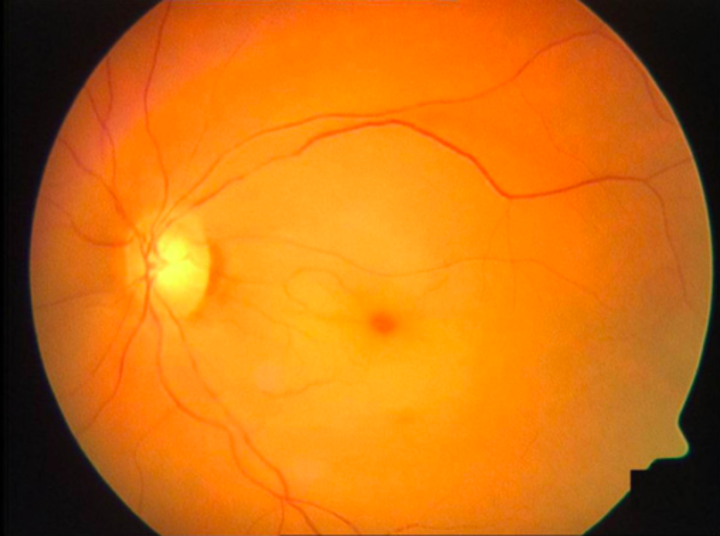
Answer: Cattle-track
Flashcard 6: What pathology is shown in the given image? _____
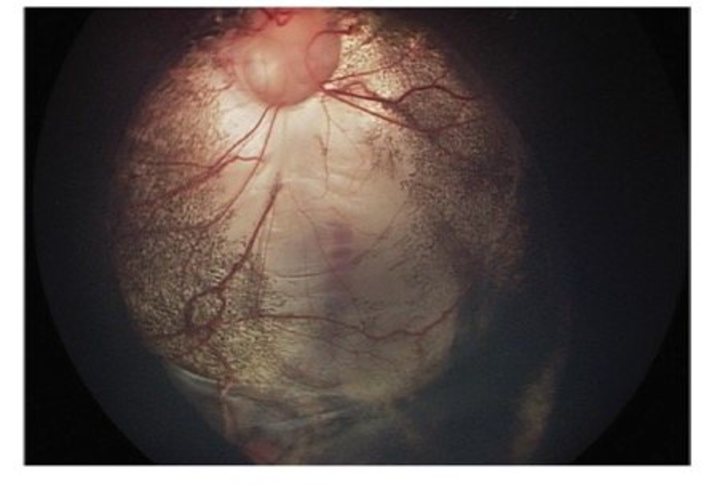
Answer: Chorioretinal coloboma
Flashcard 7: _____ are floaters, composed of calcium and lipids, seen in old age and in association with diabetes mellitus, hypertension, and high cholesterol levels.
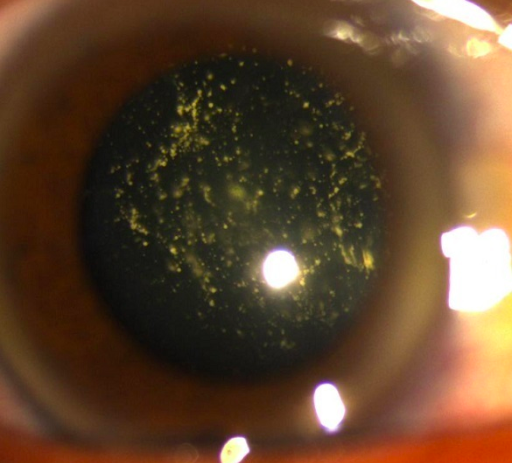
Answer: Asteroid bodies
Flashcard 8: _____ edema occurs due to a break in the inner and outer blood-retinal barrier.
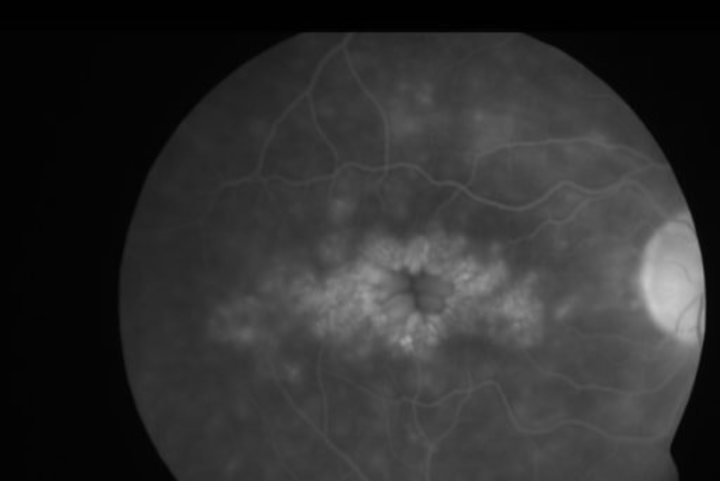
Answer: Cystoid macular
Flashcard 9: _____ has numerous yellowish-white vitreous opacities that don’t sediment when the eye is immobile
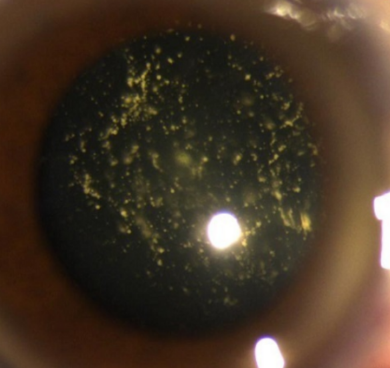
Answer: Asteroid Hyalosis
Flashcard 10: _____ are floaters that occur as a consequence of chronic vitreous haemorrhage, composed of cholesterol bodies derived from plasma cells
Answer: Synchysis scintillans
Flashcard 11: _____ can be seen on angiography in a patient of choroidal melanoma
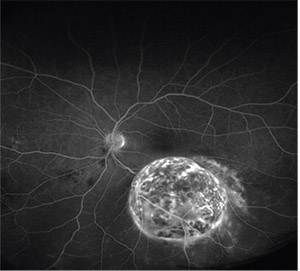
Answer: Double circulation
Flashcard 12: In sympathetic ophthalmitis and Vogt-Koyanagi-Harada (VKH) syndrome, sub-retinal pigment epithelium (RPE) infiltrates corresponding to _____ nodules are seen
Answer: Dalen–Fuchs
Flashcard 13: _____ would obscure the visualization of retinal vasculature and choroidal dye visualization on FFA.
Answer: Premacular hemorrhage/ Vitreous hemorrhage
Flashcard 14: _____ are cholesterol emboli that are seen in retinal arterioles in CRAO
Answer: Hollenhorst plaques
Flashcard 15: The following fundoscopy shows retinal _____ and white areas of retinal _____, classical presenting as "pizza pie retinopathy" (CMV)
Answer: hemorrhage
Flashcard 16: The given fundus finding is suggestive of a _____
Answer: macular hole
Flashcard 17: _____ describes marked vascular sheathing that occurs in about 6% of patients with CMV retinitis
Answer: Frosted branch angiitis (FBA)
Flashcard 18: _____ would obscure the choroidal dye visualization in the corresponding area, but the retinal vessels overlying the area would, however, be visualized, on FFA.
Answer: Submacular/subretinal hemorrhage
Flashcard 19: _____ would show the characteristic "Petaloid appearance" on FFA, due to the accumulation of dye in the outer plexiform layer at the fovea.
Answer: Cystoid macular edema
Flashcard 20: Dry macular degeneration is treated with _____ and antioxidant supplements; also smoking cessation if applicable
Answer: multivitamin
Flashcard 21: Retinal vein _____ is characterized by retinal hemorrhage and venous engorgement with edema in the affected area
Answer: occlusion
Flashcard 22: _____ macular degeneration is associated with rapid decrease in vision (speed)
Answer: Wet (exudative)
Flashcard 23: _____ occlusion is characterized by a pale retina with a "cherry red" spot at the fovea
Answer: Central retinal artery
Flashcard 24: _____ is a condition in which patients perceive distorted images of the object, seen in macular edema
Answer: Metamorphopsia
Flashcard 25: _____ phenomenon is seen in Oguchi's disease.
Answer: Mizuo
Flashcard 26: _____ appearance of arteries and veins, and thread like arteries are seen in CRAO(don't miss the obvious cherry red spot)
Answer: Cattle-track
Flashcard 27: Linear breaks in _____ membrane, called lacquer cracks, may be seen as fine lines in pathological myopia
Answer: Bruchs
Flashcard 28: _____ rule for diagnosing severe NPDR:Hemorrhages and microaneurysm in 4 quadrants orVenous beading in 2 quadrants orIntraretinal microvascular abnormality (IRMA) in 1 quadrant or more
Answer: 4:2:1
Flashcard 29: Retinal detachment is more common in patients with high _____ and/or history of head trauma
Answer: myopia
Flashcard 30: Snowball opacities, also called as _____, are exudates present near the ora serrata, usually in the inferior quadrant in intermediate uveitis.
Answer: Ant's egg
Flashcard 31: Symptoms of Eales disease include _____ or sudden visual reduction due to vitreous hemorrhage
Answer: floaters
Flashcard 32: _____, is the earliest visible signs of dry or non-exudative age-related macular degeneration (AMD) which later progress to Geographical atrophy
Answer: Drusens
Flashcard 33: _____ would show the characteristic "Petaloid appearance" on FFA, due to the accumulation of dye in the outer plexiform layer at the fovea.
Answer: Cystoid macular edema
Flashcard 34: _____ macular degeneration is associated with gradual decrease in vision (speed)
Answer: Dry (nonexudative)
Flashcard 35: Patients with a sporadic Rb mutation will typically develop a _____ Retinoblastoma
Answer: unilateral
Flashcard 36: _____ pattern or smoke-stack pattern on FFA is seen in central serous retinopathy
Answer: Ink-blot
Flashcard 37: Patients with solitary choroidal metastases are treated with _____ radiotherapy, transpupillary radiotherapy, or photodynamic therapy
Answer: plaque
Flashcard 38: _____ test is used to differentiate between the disease involving the macula and optic nerve.
Answer: Photostress
Flashcard 39: The most rapid and accurate method to diagnose cytomegalovirus (CMV) retinitis is _____ in intra-ocular fluid.
Answer: viral nucleic acid detection
Flashcard 40: Electroretinography reveals a decreased amplitude of _____ wave(s) in retinitis pigmentosa
Answer: both "a" and "b"
Flashcard 41: _____ sign is the presence of pigments in the anterior vitreous (tobacco dusting), and is a feature of fresh retinal detachment.
Answer: Shafers
Flashcard 42: Posterior uveitis includes _____ and/or retinitis
Answer: choroiditis
Flashcard 43: A single inflammatory focus of fluffy white retinitis or retinochoroiditis associated with a pigmented scar ("_____ lesion") is typical of toxoplasmosis retinitis
Answer: satellite
Flashcard 44: _____ and herpes simplex virus (HSV) are the commonest causes of acute retinal necrosis in children.
Answer: Cytomegalovirus (CMV)
Flashcard 45: _____ is defined by splitting of neurosensory retina plus vitreous degeneration
Answer: Retinoschisis
Flashcard 46: Typical ophthalmoscopic picture of Coats disease is one of retinal _____ abnormalities associated with localized lipid deposition (hard exudates) and varying degrees of subretinal exudates
Answer: vascular
Flashcard 47: _____ is characterized by drusen, which is deposition of yellowish extracellular material in between Bruch's membrane and the retinal pigment epithelium
Answer: Dry macular degeneration
Flashcard 48: Etiologies of CR_____O include high IOP, hypertension and hyperviscosity syndromes
Answer: V
Flashcard 49: Operative procedures for rhegmatous retinal detachment include scleral _____ and pneumatic retinopexy
Answer: buckling
Flashcard 50: Retinal vessels reach _____ ora at approximately 40 weeks of gestation.
Answer: temporal
Flashcard 51: _____ is a non-invasive imaging modality, which reflects the morphological changes associated with metabolism of lipofuscin
Answer: Fundus autofluorescence
Flashcard 52: In early RP, ERG shows reduced _____ and combined responses
Answer: scotopic rod
Flashcard 53: Acute retinal necrosis (ARN) occurs in immunocom_____ individuals, usually caused by herpes simplex virus and zoster viruses
Answer: petent
Flashcard 54: _____ hemorrhage is the collection of blood in the potential space between posterior vitreous and internal limiting membrane of the retina.
Answer: Subhyaloid
Flashcard 55: _____ refers to greyish white fibrovascular plaques over the pars plana, with or without peripheral retinal periphlebitis, seen as the hallmark of intermediate uveitis.
Answer: Snow banking
Flashcard 56: _____ are floaters that occur as a consequence of chronic vitreous haemorrhage, composed of cholesterol bodies derived from plasma cells
Answer: Synchysis scintillans
Flashcard 57: In _____ phase of FFA, the retinal circulation is filling, till its completely filled
Answer: arterial
Flashcard 58: Focal arteriolar narrowing and deflection of veins at AV crossings is known as _____ sign and is seen in Grade II hypertensive retinopathy
Answer: Salu's
Flashcard 59: In diabetes patients, _____ occurs as a result of osmotic damage to pericytes of retinal blood vessels, weakening the vessel wall and causing aneurysm formation
Answer: blindness
Flashcard 60: Bevacizumab can be used to treat _____ Age-related Macular Degeneration and Proliferative Diabetic Retinopathy
Answer: Wet
Flashcard 61: Best's disease presents with a _____ ERG with an abnormal electrooculogram
Answer: normal
Flashcard 62: _____ is useful in identifying cystoid macular edema and evaluating the vitreomacular interface.
Answer: OCT
Flashcard 63: Indocyanin green angiography is used to visualize the _____ vasculature, especially in occult CNVM
Answer: choroidal
Flashcard 64: Tapering of veins on either side of the crossings is known as _____ sign and is seen in Grade III hypertensive retinopathy
Answer: Gunn
Flashcard 65: _____ are cholesterol emboli that are seen in retinal arterioles in CRAO
Answer: Hollenhorst plaques
Flashcard 66: Treatment of cystoid macular edema (CME) consists of instillation of intravitreal _____ or anti-VEGF agents; or use of operative therapy like macular grid laser
Answer: steroids
Flashcard 67: c-wave on ERG originates from _____ cells and retinal glial cells
Answer: retinal pigment epithelial
Flashcard 68: Stargardt's disease shows _____ ERG and normal electrooculogram
Answer: normal
Flashcard 69: Retinal detachment presents with symptoms of _____, floaters and a black curtain/veil in front of the eye
Answer: photopsia
Flashcard 70: In _____ and Vogt-Koyanagi-Harada (VKH) syndrome, sub-retinal pigment epithelium (RPE) infiltrates corresponding to Dalen Fuchs nodules are seen
Answer: sympathetic ophthalmitis
Flashcard 71: In _____ phase of FFA, the choroidal circulation is filling
Answer: pre-arterial
Flashcard 72: _____ macular degeneration is due to bleeding, secondary to choroidal neovascularization
Answer: Wet
Flashcard 73: Any lesion anterior to the equator would be classified as group _____ on the Reese Ellsworth classification scale, predicting a possible prognosis
Answer: 3
Flashcard 74: _____ is the venous occlusion at any branch of the central retinal vein showing flame-shaped hemorrhages along a branch, with hard exudates forming a macular fan on ophthalmoscopy
Answer: BRVO
Flashcard 75: _____ can be seen on angiography in a patient of choroidal melanoma
Answer: Double circulation
Flashcard 76: _____ damage symptoms predominate in methanol poisoning
Answer: Retinal
Flashcard 77: Treatment of acute retinal necrosis due to herpes zoster is _____ given intravenously (10 mg/kg, every 8 hours) for 10 14 days, and then orally (800 mg, five times daily) for 6 12 weeks.
Answer: Acyclovir
Flashcard 78: Pathological myopia presents with _____ degeneration and cystoid degeneration
Answer: Lattice
Flashcard 79: Central serous retinopathy will present with _____ painless loss of vision
Answer: sudden
Flashcard 80: Any lesion extending anteriorly to the ora serrata would be classified as group _____ on the Reese Ellsworth classification scale, predicting a unfavourable prognosis
Answer: 4
Flashcard 81: The association between HLA-_____ and birdshot retinochoroidopathy is the most consistent of any medical disorder.
Answer: A29
Flashcard 82: On ophthalmoscopy in central serous retinopathy, circular ring reflex is _____ and foveal reflex is absent
Answer: present
Flashcard 83: Any lesion with vitreous seeding or involving more than one half of the retina would be classified as group _____ on the Reese Ellsworth classification scale, predicting a highly unfavourable prognosis
Answer: 5
Flashcard 84: Retinal vascular peripheral nonperfusion in sickle cell retinopathy may lead to retinal neovascularization in a _____ configuration in the superotemporal quadrant which is the hallmark of early proliferative sickle cell retinopathy
Answer: seafan
Flashcard 85: Anti_____ treatment and steroids are the main line of rx for Eales disease.
Answer: tubercular
Flashcard 86: _____is the most common complication of myopia, followed by rhegmatogenous retinal detachment.
Answer: Macular degeneration
Flashcard 87: Spontaneous serous detachment of _____ in the macular region is also known as Central serous retinopathy
Answer: neurosensory retina
Flashcard 88: Retinitis pigmentosa initially predominantly affects the _____ photoreceptors, with later degeneration of cones
Answer: rod
Flashcard 89: _____ describes marked vascular sheathing that occurs in about 6% of patients with CMV retinitis
Answer: Frosted branch angiitis (FBA)
Flashcard 90: Intermediate uveitis is also called as _____
Answer: pars palnitis
Flashcard 91: _____ is the earliest sign of active inflammation in uveitis.
Answer: Aqueous cell
Flashcard 92: In _____ phase of FFA, arterioles are emptying and veins are filling
Answer: venous
Flashcard 93: The fundus in Eales disease may show peripheral periphlebitis and _____ occlusion
Answer: branch retinal vein
Flashcard 94: _____ tend to be the earliest sign of NP diabetic retinopathy
Answer: Microaneurysms
Flashcard 95: _____ may occur as a complication of retinal hypoxia in sickle cell retinopathy
Answer: CRVO
Flashcard 96: A young male with recurrent viterous hemorrhages points to the diagnosis of _____
Answer: Eales disease
Flashcard 97: Retinal hemorrhages: "salmon patches," "iridescent spots," and "black sunbursts" are hallmarks of _____proliferative sickle cell retinopathy.
Answer: non
Flashcard 98: Steroids are _____indicated in central serous retinopathy
Answer: contra
Flashcard 99: _____ is the most common macular dystrophy.
Answer: Stargardt disease
Flashcard 100: _____ is the most common primary intraocular malignancy in adults.
Answer: Malignant melanoma
Flashcard 101: Hemeralopia is seen due to the deficiency of _____ in the retina
Answer: cones
Flashcard 102: The presence of shifting fluid is a hallmark feature of _____ retinal detachment.
Answer: serous or exudative
Flashcard 103: Antioxidants like the _____ supplement have proven effective for treatment of AMD
Answer: AREDS2
Flashcard 104: _____ may be seen in sickle cell retinopathy due to rupture of Bruch membrane
Answer: Angioid streaks
Flashcard 105: Glare during day time is seen in _____
Answer: dry age-related macular disease (ARMD).
Flashcard 106: Retinoblastoma is said to be exophytic when it grows into the _____
Answer: subretinal space
Flashcard 107: Subhyaloid hemorrhage is _____ shaped
Answer: boat/ dome
Flashcard 108: Thickness of intraocular mass is determined using _____-scan
Answer: A
Flashcard 109: Typical retinoschisis occurs when there is split at the level of the _____ layer
Answer: outer plexiform
Flashcard 110: _____ would obscure the choroidal dye visualization in the corresponding area, but the retinal vessels overlying the area would, however, be visualized, on FFA.
Answer: Submacular/subretinal hemorrhage
Flashcard 111: _____ is useful in the measurement of retinal thickening, thus allowing the assessment of the therapeutic response in cystoid macular edema
Answer: OCT
Flashcard 112: _____ is the most common disorder of color vision.
Answer: Deuteranomaly
Flashcard 113: Pain_____ decrease in vision and metamorphopsia can be seen in choroidal melanoma
Answer: less
Flashcard 114: _____ is a condition of abnormal myelination of the nerve fibers of the retina, where myelination continues beyond lamina cribrosa and spreads into the retina beyond the optic disc.
Answer: Medullated nerve fibers (optic disc medullation)
Flashcard 115: _____ is the spontaneous serous detachment of neurosensory retina in the macular region.
Answer: Central serous retinopathy
Flashcard 116: "Splashed sauce" appearance on ophthalmoscopy is seen in _____
Answer: CRVO
Flashcard 117: Where does the fluid accumulate in central serous retinopathy?_____
Answer: Subretinal space
Flashcard 118: _____ ring is suggestive of complete Posterior vitreous detachment
Answer: Weiss
Flashcard 119: Mild generalized retinal arteriolar narrowing is seen in Grade _____ hypertensive retinopathy
Answer: I
Flashcard 120: Normal Arden ratio is _____ and above
Answer: 1.85
Flashcard 121: a-wave on ERG originates from _____
Answer: photoreceptors (rods and cones)
Flashcard 122: An _____ measures the standing potential of the eye.
Answer: EOG
Flashcard 123: In _____ phase of FFA, there is complete filling of retinal arterioles and capillaries followed by laminar filling of veins
Answer: arteriovenous
Flashcard 124: As the liquefied vitreous in the subretinal space is absorbed through the RPE in rhegmatous detachment, the eye may be _____tonic
Answer: hypo
Flashcard 125: The most dangerous type of retinal break is _____.
Answer: horseshoe tear
Flashcard 126: _____ is the ratio between the light peak and the dark trough in an EOG.
Answer: Arden ratio
Flashcard 127: Vascular permeability in hypertensive retinopathy is _____
Answer: increased
Flashcard 128: _____ disease is a type of congenital stationary night blindness with abnormal fundus.
Answer: Oguchi's
Flashcard 129: Decreased vision not improving with a pinhole in the presence of clear media is attributable to _____ pathology
Answer: macular
Flashcard 130: Deuteranomaly means _____ color perception is defective
Answer: green
Flashcard 131: Increase in the size of the foveal avascular zone is seen in _____
Answer: Macular ischemia
Flashcard 132: The most dangerous location of retinal break is _____.
Answer: superotemporal retina
Flashcard 133: Patients with Best s disease usually have _____ visual acuity when the "yolk" remains intact.
Answer: good
Flashcard 134: Photostress test in patients with macular disease, the recovery time is _____
Answer: prolonged
Flashcard 135: _____ retinal detachment presents with tobacco dust in anterior vitreous with substantial vitreous blood or inflammatory cells.
Answer: Rhegmatogenous
Flashcard 136: The _____ appearance is seen in toxoplasmosis due to focal superficial necrotizing retinochoroiditis along with vitreitis
Answer: "headlight in fog"
Flashcard 137: Vogt Koyanagi Harada syndrome is associated with _____udative retinal detachment
Answer: ex
Flashcard 138: _____ disease of retina has discrete zones of alteration in the retinal vascular structure with aneurysmal dilatation and leakage.
Answer: Coats'
Flashcard 139: What inheritence of retinitis pigmentosa is the commonest?_____
Answer: non-hereditary/sporadic
Flashcard 140: Microaneurysms of diabetic retinopathy are seen mostly in the _____ of the retina
Answer: inner nuclear layer (layer)
Flashcard 141: In gyrate atrophy, retinal pigment epithelial (RPE) degeneration begins in the _____ and is characterized by scalloped areas of RPE loss, with eventual loss of medium-sized choroidal vessels.
Answer: periphery
Flashcard 142: What is the most common cause of posterior staphyloma?_____
Answer: Degenerative high axial myopia
Flashcard 143: Fluid accumulation in central serous retinopathy (CSR) is in the _____ due to abnormal permeability of the choriocapillaris.
Answer: subretinal space
Flashcard 144: The presenting feature for retinitis pigmentosa is _____.
Answer: night blindness
Flashcard 145: _____ retinal detachment has a concave configuration and breaks are absent.
Answer: Traction
Flashcard 146: Rhegmatous retinal detachment is commonly seen with which refractive error?_____
Answer: High myopia
Flashcard 147: Posterior pole is involved in the _____ stages of progressive outer retinal necrosis
Answer: early
Flashcard 148: _____ classification is to predict which eye would survive the local therapy and retain useful vision.
Answer: Reese Ellsworth
Flashcard 149: _____ are shunt vessels and appear as abnormal branching or dilation of the existing blood vessels (capillaries) that supply areas of non-perfusion in diabetic retinopathy.
Answer: IRMAs
Flashcard 150: Posterior pole is involved only in the _____ stages of acute retinal necrosis
Answer: later
Flashcard 151: _____ is a complication of chronic anterior uveitis and posterior uveitis.
Answer: Retinal detachment
Flashcard 152: Which CRVO has RAPD, markedly reduced visual acuity and many cotton wool spots?_____
Answer: Ischemic
Flashcard 153: A _____ is when the the retina may be diffusely infiltrated with retinoblasts
Answer: retinocytoma
Flashcard 154: _____ retinopathy is classically associated with severe head injury, pancreatitis and chest trauma (due to fat/air embolism)
Answer: Purtschers'
Flashcard 155: Foveal reflex will be _____ in cystoid macular edema
Answer: absent
Flashcard 156: _____ camera is used to take photographs in FFA
Answer: Fundus
Flashcard 157: _____ is used for posterior lesions of retinoblastoma.
Answer: Photocoagulation
Flashcard 158: What is the treatment of exudative retinal detachment?_____
Answer: Systemic steroids
Flashcard 159: Pathological myopia presents with _____ spots
Answer: Foster-Fuch
Flashcard 160: There may be mild anterior _____ in Eales disease
Answer: uveitis
Flashcard 161: Pingueculae are associated with a 2- to 3-fold increased incidence of _____.
Answer: age-related macular degeneration
Flashcard 162: Fundus in sarcoidosis shows thick venous sheathing of periphlebitis, also called as _____
Answer: Candle-wax dripping
Flashcard 163: A patient of cystoid macular edema will have a _____ foveal reflex
Answer: dull
Flashcard 164: _____ is used for anterior lesions of retinoblastoma.
Answer: Cryotherapy
Flashcard 165: _____ ERGs are used to evaluate responses starting from cone photoreceptors exposed to flashlight under constant light exposure.
Answer: Photopic
Flashcard 166: All causes of posterior _____ (inflammatory cause) can lead to the development of CME.
Answer: uveitis
Flashcard 167: Visual prognosis is _____ in the majority of cases of Eales disease
Answer: good
Flashcard 168: Optical coherence tomography (OCT) in Best's disease reveals that the vitelliform material appears as a _____-shaped, hyperreflective, and homogenous lesion
Answer: dome
Flashcard 169: Following resolution of Uveal effusion syndrome, RPE frequently shows a characteristic residual _____ mottling
Answer: "leopard spot"
Flashcard 170: Zone _____ in ROP, is bounded by an imaginary circle, the radius of which is twice the distance from the disc to the center of the macula.
Answer: I
Flashcard 171: _____ is the most common cause of acute retinal necrosis in adults.
Answer: Herpes zoster ophthalmicus
Flashcard 172: _____ is an idiopathic occlusive peripheral periphlebitis.
Answer: Eales disease
Flashcard 173: _____ is the second most common retinal vascular disorder after diabetic retinopathy.
Answer: Retinal vein occlusion (RVO)
Flashcard 174: Which type of AMD is more common?_____
Answer: Dry/Non-exudative
Flashcard 175: What is the treatment of tractional retinal detachment?_____
Answer: Pars plana vitrectomy with endo photocoagulation
Flashcard 176: Stargardt's disease is characterized by macular "pisciform" flecks that accumulate at the level of the _____
Answer: retinal pigment epithelium (RPE)
Flashcard 177: Retinoblastoma arises from which layer of the retina?_____
Answer: Neurosensory retina
Flashcard 178: _____ grid is used in detecting maculopathy.
Answer: Amsler
Flashcard 179: Atypical retinoschisis occurs when there is split at the level of the _____ layer
Answer: nerve fibre
Flashcard 180: A flat EOG occurs when the Arden ratio is less than _____.
Answer: 1.25
Flashcard 181: Which dystrophy is autosomal recessive?_____
Answer: Macular dystrophy
Flashcard 182: The _____ is the centre of the foveola, which corresponds to the foveolar light reflex.
Answer: umbo
Flashcard 183: Which CRVO has normal pupillary reaction, mildly reduced visual acuity and few cotton wool spots?_____
Answer: Nonischemic
Flashcard 184: The investigation of choice for vitreous hemorrhage is _____.
Answer: ultrasonography (USG) B-scan
Flashcard 185: Is central serous retinopathy progressive or self limiting?_____
Answer: Self-limiting
Flashcard 186: ETDRS stands for _____ Treatment for Diabetic Retinopathy Study.
Answer: Early
Flashcard 187: The macula in Stargardt's disease is said to have a _____ appearance, due to the atrophic changes in RPE
Answer: "beaten-bronze"
Flashcard 188: Retinoblastoma is said to be endophytic when it grows into the _____
Answer: vitreous
Flashcard 189: Best's disease is characterized by bilateral yellow, yolk-like (_____) macular lesions
Answer: vitelliform
Flashcard 190: Choroidal mets are usually radio_____
Answer: sensitive
Flashcard 191: Peripheral CMV Infection spreads along the vascular arcades in a _____-like fashion.
Answer: brush fire
Flashcard 192: _____ edema occurs due to a break in the inner and outer blood-retinal barrier.
Answer: Cystoid macular
Flashcard 193: In progressive/late RP, ERG shows reduced _____ responses, and eventually ERG becomes extinguished
Answer: photopic
Flashcard 194: _____ can present with neovascular glaucoma, also known as "100 day glaucoma"
Answer: CRVO
Flashcard 195: _____ stage of AMD is characterised by Neovascular AMD and geographic atrophy
Answer: Late
Flashcard 196: In Best disease, Arden ratio is less than _____
Answer: 1.50
Flashcard 197: _____ ERGs are used to evaluate responses starting from rod photoreceptors exposed to flash-light in darkness
Answer: Scotopic
Flashcard 198: What is the demographic affected by Coats' disease?_____
Answer: Boys, aged 8-16
Flashcard 199: _____ is considered the most effective immediate method for treatment of acute CRAO
Answer: Ocular massage
Flashcard 200: If the RPE is damaged, this is seen as loss of _____
Answer: autofluorescence
Flashcard 201: Progressive outer retinal necrosis is a manifestation of HSV or VZV that occurs in immunocomp_____ individual
Answer: romised
Flashcard 202: Is photopsia seen in exudative retinal detachment?_____
Answer: No
Flashcard 203: Intravitreal injection of anti-vascular endothelial growth factor (VEGF) is used as the treatment of _____ age-related macular degeneration (ARMD).
Answer: wet (dry/wet)
Flashcard 204: The most common cause of central retinal artery occlusion (CRAO) is _____.
Answer: embolism
Flashcard 205: _____ characteristically causes punched-out lesions in the retina.
Answer: Toxoplasmosis
Flashcard 206: _____ would obscure the visualization of retinal vasculature and choroidal dye visualization on FFA.
Answer: Premacular hemorrhage/ Vitreous hemorrhage
Flashcard 207: _____ is the most common hereditary fundus dystrophy
Answer: Retinitis pigmentosa
Flashcard 208: Silver wiring of blood vessels and papilledema is seen in Grade _____ hypertensive retinopathy
Answer: IV
Flashcard 209: _____ flare and vitreous cells are seen in intermediate uveitis
Answer: Retrolental
Flashcard 210: Best's disease is a form of macular dystrophy in which _____ accumulates in the central macula causing progressive central vision loss.
Answer: lipofuscin
Flashcard 211: Chromophore regeneration occurs in the _____ cells.
Answer: retinal pigment epithelial
Flashcard 212: Electroretinogram (ERG) is used to detect the functional abnormality of the outer retina up to the _____.
Answer: bipolar cells
Flashcard 213: _____ has numerous yellowish-white vitreous opacities that don t sediment when the eye is immobile
Answer: Asteroid Hyalosis
Flashcard 214: _____ are breaks in a brittle, thinned-out, and calcified Bruch's membrane
Answer: Angioid streaks
Flashcard 215: The given fundus finding is suggestive of a _____
Answer: macular hole
Keywords: Diseases of the Retina flashcards, medical flashcards, NEET PG preparation, USMLE Step 1 flashcards, Anki alternative, spaced repetition medical, OnCourse flashcards