Diseases of the Cornea Indian Medical PG Flashcards - Medical Study Cards
Master Diseases of the Cornea with OnCourse flashcards. These spaced repetition flashcards are designed for medical students preparing for NEET PG, USMLE Step 1, USMLE Step 2, MBBS exams, and other medical licensing examinations.
Diseases of the Cornea Flashcard Deck - 172 Cards
Flashcard 1: Which stain is used to identify granular dystrophy of the cornea?
_____
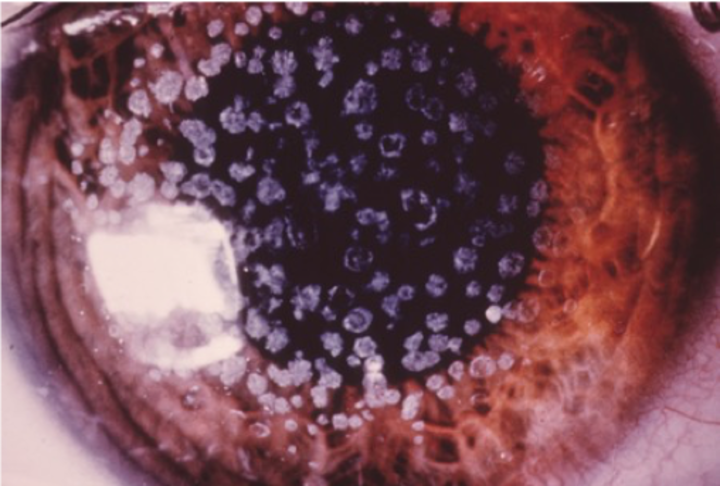
Answer: Masson's trichrome
Flashcard 2: The following result on Placido disk test will be seen in _____
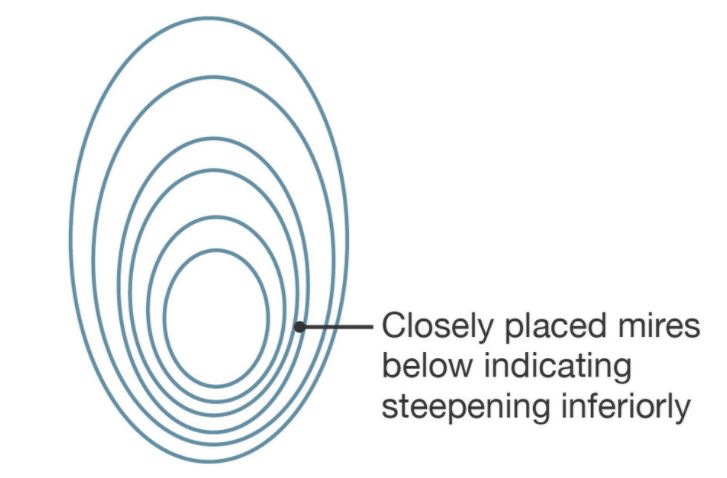
Answer: keratoconus
Flashcard 3: The following result on Placido disk test will be seen in _____
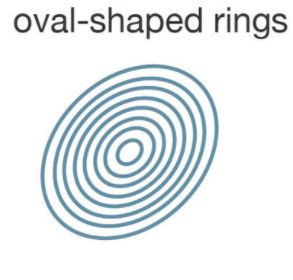
Answer: corneal astigmatism
Flashcard 4: Causes of interstitial keratitis: (Think granulomatous diseases, protozoal, mycobacterial)
_____
Answer:
Flashcard 5: Corneal thickness is best measured by a _____

Answer: pachymeter
Flashcard 6: The following result on Placido disk test will be seen in _____
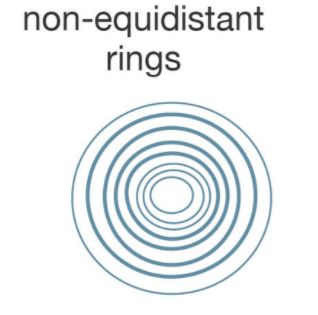
Answer: aspherical cornea
Flashcard 7: major cause of blindness in 0-49 years age is _____
Answer: corneal opacity
Extra:
Flashcard 8: Iridocyclitis in Fuchs heterochromic iridocyclitis is usually insidious, _____terior, non-granulomatous and unilateral.
Answer: an
Flashcard 9: _____ in acute anterior uveitis due to leakage of protein particles into the aqueous humor from damaged blood vessels
Answer: Aqueous flare
Flashcard 10: _____ prevelance of >0.05% in population at risk(6 months to 6 years) signifies population risk for Vitamin A deficiency
Answer: Corneal scar
Flashcard 11: _____ or DMEK have a high success rate in treating Fuch's dystrophy
Answer: DSAEK
Flashcard 12: Microcornea is characterised by horizontal corneal diameter of _____ mm or less over 2 years of age or less than 9 mm in the newborn
Answer: 10
Flashcard 13: Non-healing bacterial ulcers can be treated with debridement, chemical _____ with TCA or carbolic acid, or conjunctival flapping
Answer: cauterization
Flashcard 14: _____ is the most common stromal dystrophy and is associated with amyloidosis
Answer: Lattice dystrophy
Flashcard 15: Megalocornea is characterised by horizontal corneal diameter of _____ mm or more over 2 years of age or more than 12 mm in the newborn
Answer: 13
Flashcard 16: _____ ulcer forms a characteristic overhanging edge and rarely perforates
Answer: Mooren's
Flashcard 17: Staphyloma involves _____ tissue with cornea
Answer: uveal
Flashcard 18: In _____ corneal rejection, linear pattern of KPs called Khodadoust lines are noted
Answer: endothelial
Flashcard 19: _____ or Dendritic corneal ulcers are seen in Fluorescein slit lamp exam of Keratoconjunctivitis from HSV-1
Answer: Serpiginous
Flashcard 20: The average central corneal thickness is around _____ mm, which gradually increases toward the periphery to around 0.7 mm.
Answer: 0.5
Flashcard 21: Ghost vessels are seen in stage of _____ of interstitial keratitis in congenital syphilis
Answer: regression
Flashcard 22: _____ syndrome is nodules and nevi on the iris seen in iridocorneal endothelial syndrome
Answer: Cogan-Reese
Flashcard 23: Abnormal tear osmolarity is defined as an elevated reading, _____ mOsm/L, indicating loss of homeostasis, or when the inter-eye difference is >8 mOsm/L, indicating instability of the tear film.
Answer: >300
Flashcard 24: Posterior _____ opacity and corneal edema can be seen in anterior uveitis
Answer: corneal
Flashcard 25: Pain is disproportionate to degree of keratitis in _____ due to perineural involvement
Answer: acanthamoeba
Flashcard 26: _____ KPs are composed of epithelioid cells and macrophages seen in Granulomatous uveitis
Answer: Mutton-fat
Flashcard 27: _____ are the break in the Descemet s membrane seen in keratoconus.
Answer: Vogt s striae
Flashcard 28: Moorens s ulcer is a _____ ulcer, which occurs due to autoimmune phenomenon
Answer: superficial
Flashcard 29: In _____ corneal rejection, infiltrative opacities called Krachmer spots are noted
Answer: sub-epithelial
Flashcard 30: Causes of congenital opacities of the cornea (STUMPED):S - _____T - Tears in the Descemet membrane secondary to birth trauma or congenital glaucomaU - UlcerM - MucopolysaccharidosisP - Peters anomalyE - Congenital hereditary endothelial dystrophyD - Dermoid
Answer: Sclerocornea
Flashcard 31: _____ keratopathy occurs due to exposure to UV rays.
Answer: Labrador
Flashcard 32: In arcus senilis, the lipid is deposited between the _____ layer and the anterior stroma of the cornea
Answer: bowman's
Flashcard 33: _____ is the least common corneal dystrophy and is associated with mucopolysaccharidosis
Answer: Macular dystrophy
Flashcard 34: _____ of the cornea is a complication of HSV-1
Answer: Keratoconjunctivitis
Flashcard 35: _____ disease presents with Kayser-Fleisher rings due to copper deposits in Descemet's membrane of the cornea
Answer: Wilson
Flashcard 36: The vessels in trachomatous pannus are superficial and lie between _____ and epithelium.
Answer: Bowman s membrane
Flashcard 37: _____ KP form endothelial dusting seen in Fuchs heterochromic iridocyclitis
Answer: Fine/Stellate
Flashcard 38: The characteristic hypopyon corneal ulcer caused by _____ is called ulcus serpens
Answer: Pneumococcus
Flashcard 39: Corneal _____ is best measured by a pachymeter
Answer: thickness
Flashcard 40: Corneal dystrophies are primarily a _____lateral, inherited, non-inflammatory condition specific to the cornea.
Answer: bi
Flashcard 41: Arcus senilis starts at the _____ and inferior perilimbal cornea
Answer: superior
Flashcard 42: _____ syndrome is corneal edema seen in iridocorneal endothelial syndrome
Answer: Chandler s
Flashcard 43: _____ cross-linking with riboflavin (CXL or C3R) and UV-A rays are the treatment of choice for keratoconus
Answer: Corneal collagen
Flashcard 44: _____ is the deposition of gold in the cornea, after repeated parenteral administration of Gold salts
Answer: Ocular chrysiasis
Flashcard 45: _____ ring, maybe seen in keratoconus due to iron deposition on the epithelium
Answer: Fleischer's
Flashcard 46: Pathognomonic sign of acute anterior uveitis is _____.
Answer: keratic precipitates (KP)
Flashcard 47: Pseudo-dendritic or micro-dendritic ulcers are seen in _____ keratitis
Answer: herpes zoster
Flashcard 48: Does the pupil in anterior uveitis react to light?_____
Answer: Yes (but sluggishly)
Flashcard 49: Mackie's Stage _____ is characterized by frank epithelial defect
Answer: II
Flashcard 50: Stage _____ of WHO grading of Vitamin A deficiency corresponds to Corneal ulceration/ Keratomalacia affecting >1/3rd of the corneal surface
Answer: X3B
Flashcard 51: The pathognomic feature of viral keratitis is decreased _____.
Answer: corneal sensation
Flashcard 52: What is the most common cause of anterior staphyloma?_____
Answer: Sloughing corneal ulcer
Flashcard 53: The corneal layer involved in Gelatinous drop-like dystrophy is _____
Answer: epithelium
Flashcard 54: _____ layer prevents evaporation of tears
Answer: Lipid
Flashcard 55: _____ is a localized thinning of the peripheral cornea at the limbus.
Answer: Dellen
Flashcard 56: What findings on specular microscopy are indicators of endothelial dysfunction?_____
Answer: Pleomorphism and Polymegathism
Flashcard 57: Most common corneal dystrophy overall is _____ dystrophy
Answer: Microcystic/fingerprint/map-dot
Flashcard 58: KPs are arranged in triangular fashion in the _____ triangle due to the convection currents of the aqueous humor
Answer: Arlt's
Flashcard 59: Age related, iron deposition line in the corneal epithelium, which is commonly seen in the junction between middle and lower third cornea is known as _____ line
Answer: Hudson-Stahli
Flashcard 60: Stromal/Disciform keratitis is a feature of _____ herpes simplex
Answer: secondary (primary/secondary)
Flashcard 61: The corneal layer involved in Thiel-Behnke dystrophy is _____ membrane.
Answer: Bowman s
Flashcard 62: _____ is a characteristic feature of viral cornal ulcers
Answer: Recurrences
Flashcard 63: What is the normal value of tear film breakup test?_____ seconds
Answer: 15-35
Flashcard 64: What is the most common subtype of corneal graft rejection leading to failure?_____
Answer: Endothelial rejection
Flashcard 65: In Labrador keratopathy, irregular proteinaceous deposits in the anterior stroma replace the _____ layer
Answer: bowman's
Flashcard 66: Are steroids useful in fungal keratitis?_____
Answer: No
Flashcard 67: _____ is a form of corneal opacity that involves the bowman's membrane and more than half the stromal thickness
Answer: Leukoma
Flashcard 68: Central guttata are found in _____ endothelial dystrophy.
Answer: Fuch's
Flashcard 69: _____ is the commonest cause of infectious keratitis after corneal transplantation in developed countries.
Answer: Pneumococcus/ Staph. aureus
Flashcard 70: Which instrument is used to measure the curvature of the anterior surface of cornea?_____
Answer: Keratometer (ophthalmometer)
Flashcard 71: _____ is the method for the long-term preservation of cornea, up to 1 year.
Answer: Cryopreservation
Flashcard 72: Mackie's Stage _____ is characterized by stromal melting and occasionally perforation
Answer: III
Flashcard 73: _____ keratopathy is seen in sarcoidosis
Answer: Band-shaped
Flashcard 74: The hydration level of the cornea is maintained mainly by the _____ of the cornea.
Answer: endothelial cells
Flashcard 75: "Beaten-metal" appearance of endothelium is seen in _____ dystrophy
Answer: Fuch's
Flashcard 76: _____ is a form of corneal opacity that involves the bowman's membrane and half the stromal thickness
Answer: Macula
Flashcard 77: What type of IOL is associated with an increased incidence of bullous keratopathy?_____
Answer: ACIOL
Flashcard 78: Abnormalities of the curvature of the _____ constitute the most common causes of astigmatism.
Answer: cornea
Flashcard 79: Follicles in the _____ area is a corneal sign of trachoma
Answer: limbal
Flashcard 80: Which layer is the toughest in the cornea?_____
Answer: Dua's layer (toughest layer)
Flashcard 81: The corneal layer involved in Posterior polymorphous corneal dystrophy is _____
Answer: endothelium
Flashcard 82: Specular microscopy is to assess the corneal _____
Answer: endothelium
Flashcard 83: Fine/Coarse epithelial punctate keratitis is a feature of _____ herpes simplex
Answer: primary and secondary active (primary/secondary)
Flashcard 84: The corneal layer involved in Fuch's dystrophy is _____
Answer: endothelium
Flashcard 85: Hypopyon in a _____ corneal ulcer is sterile
Answer: bacterial
Flashcard 86: _____ is mainly used as a corneal patch to seal acute corneal perforations
Answer: Cyanoacrylate glue
Flashcard 87: _____ characterized three stages of neurotrophic keratitis.
Answer: Mackie
Flashcard 88: Mackie's Stage _____ is characterized by an irregular corneal surface (punctate keratitis)
Answer: I
Flashcard 89: Bullous keratopathy will present with more symptoms in the _____ time
Answer: morning
Flashcard 90: Pannus on the superior limbus is a _____ sign of trachoma
Answer: corneal
Flashcard 91: Shield ulcers, Vernal plaques and Pseudo-gerontoxon is seen in _____ VKC
Answer: corneal
Flashcard 92: Bilateral congenital cloudy cornea associated with normal diameters and thick cornea is most likely suggestive of _____
Answer: congenital hereditary endothelial dystrophy (CHED)
Flashcard 93: Hypopyon is thick and immobile in _____ corneal ulcer
Answer: fungal
Flashcard 94: _____ ulcer, seen in Phlyctenular conjunctivitis, has a prominent parallel leash of blood vessels, and heals leaving a band-shaped opacity
Answer: Fascicular
Flashcard 95: _____ is the treatment of choice for acanthamoeba keratitis.
Answer: Polyhexamethyl biguanide (PHMB)
Flashcard 96: _____ spp. can cause corneal perforation in 48 hours.
Answer: Pseudomonas
Flashcard 97: Ring lesions (stromal infiltrate) is seen in _____ keratitis.
Answer: acanthamoeba
Flashcard 98: Most common cause of neurotrophic keratopathy is _____
Answer: varicella zoster
Flashcard 99: Band-shaped keratopathy is _____ deposition on the cornea in the form of a band.
Answer: calcium
Flashcard 100: Most common stromal dystrophy is _____ dystrophy
Answer: Lattice
Flashcard 101: Medical rx of bullous keratopathy includes the use of _____
Answer: hypertonic saline
Flashcard 102: Which stain is used to identify avellino dystrophy of the cornea?_____
Answer: Congo-red and Masson's trichrome
Flashcard 103: Keratoconjunctivitis sicca is due to the deficiency of the _____ layer of the tear film.
Answer: aqueous
Flashcard 104: Dendritic ulcer is a feature of _____ herpes simplex
Answer: primary and secondary active (primary/secondary)
Flashcard 105: _____ Sign, is a V-shaped deformity of the lower lid on downward gaze, seen in keratoconus
Answer: Munson s
Flashcard 106: The corneal layer involved in Grayson-Wilbrandt dystrophy is _____ membrane.
Answer: Bowman s
Flashcard 107: Opacity is a _____ sign of trachoma
Answer: corneal
Flashcard 108: Violent _____ is common with ulcus serpens
Answer: iridocyclitis
Flashcard 109: Hypopyon is fluid and mobile in _____ corneal ulcer
Answer: bacterial
Flashcard 110: _____ KPs are seen in Acute hemorrhagic uveitis
Answer: Red
Flashcard 111: Pannus in _____ is progressive infiltration occurs ahead of vascularization.
Answer: trachoma
Flashcard 112: _____ dystrophy is the least common corneal dystrophy
Answer: Macular
Flashcard 113: Causes of interstitial keratitis: (Think granulomatous diseases, protozoal, mycobacterial)_____
Answer:
Flashcard 114: Bilateral whorl-like corneal pattern of cream coloured lines on cornea is seen in _____
Answer: Vortex Keratopathy
Flashcard 115: What is the most common corneal degeneration?_____
Answer: Arcus senilis
Flashcard 116: Corneas tend to be slightly _____ just after a person awakes in the morning
Answer: thicker
Flashcard 117: _____ is used for the intermediate-term preservation of cornea, up to 30 days
Answer: Modified Eagle's medium
Flashcard 118: _____ is used for the intermediate-term preservation of cornea, up to 7-14 days
Answer: Chondroitin sulfate or Organ culture medium
Flashcard 119: _____ eyedrops is the drug of choice for uncomplicated filamentous fungal keratitis, without intraocular or anterior chamber extension
Answer: Natamycin
Flashcard 120: Which layer of the cornea is most metabolically active?_____
Answer: Endothelium
Flashcard 121: Progressive atrophy of _____ is a clinical entity of iridocorneal endothelial syndrome (ICE).
Answer: iris stroma
Flashcard 122: Corneal rejection is said to be _____ when an elevated level of epithelium is noticed
Answer: epithelial
Flashcard 123: The corneal layer involved in Meesman's dystrophy is _____
Answer: epithelium
Flashcard 124: Deep stromal corneal _____ is a frequent finding associated with X-linked recessive Ichthyosis
Answer: opacity
Flashcard 125: Herbert's pits are a _____ sign of trachoma
Answer: corneal
Flashcard 126: The following result on Placido disk test will be seen in _____
Answer: keratoconus
Flashcard 127: _____ is a form of corneal opacity that involves only the bowman's membrane
Answer: Nebula
Flashcard 128: _____ is a pathological condition in which small vesicles, or bullae, are formed in the epithelial layer of cornea
Answer: Bullous keratopathy
Flashcard 129: The young adult endothelial cell density is about _____ cells/mm2
Answer: 3000
Flashcard 130: _____ in Rose bengal staining indicates severe KCS
Answer: Confluent pattern (A)
Flashcard 131: What is the definitive treatment of keratoconus?_____
Answer: Penetrating keratoplasty
Flashcard 132: _____ layer is the middle layer of the tear film
Answer: Aqueous
Flashcard 133: In hererochromia _____, one sector of the iris differs from the other, i.e different color of sectors of the same iris
Answer: iridis
Flashcard 134: _____ is the most common cause of peripheral ulcerative keratitis
Answer: Rheumatoid arthritis
Flashcard 135: Which stain is used to identify Schnyder's crystalline dystrophy of the cornea?_____
Answer: Oil red-O
Flashcard 136: An inter eye difference of tear osmolarity _____ mOsm/L indicates tear film instability.
Answer: >8
Flashcard 137: Treatment of band-shaped keratopathy is chelation with _____
Answer: ethylene diamine tetra-acetic acid (EDTA).
Flashcard 138: Neurotrophic keratitis is a feature of _____ herpes simplex
Answer: secondary (primary/secondary)
Flashcard 139: The corneal layer involved in Lisch's epithelial dystrophy is _____
Answer: epithelium
Flashcard 140: _____ is the clear cornea between limbus and arcus senilis (gerontoxon)
Answer: Lucid interval of Vogt
Flashcard 141: _____ test is used to detect abnormal corneal surface
Answer: Placido s disc
Flashcard 142: _____ corneal ulcer is caused by trauma with vegetative or organic matter.
Answer: Fungal
Flashcard 143: In a normal eye, schirmer test gets wet >_____ mm.
Answer: 15
Flashcard 144: Anterior segment _____ is used to assess different corneal layers
Answer: ocular coherence tomography
Flashcard 145: Which corneal dystrophy is considered as a localized form of amyloidosis?_____
Answer: Lattice dystrophy and Gelatinous drop-like dystrophy
Flashcard 146: _____ is a method of imaging the cornea by projecting a series of concentric rings of light on the anterior surface.
Answer: Corneal topography
Flashcard 147: _____ keratitis can cause non-sterile hypopyon.
Answer: Fungal
Flashcard 148: Which stain is used to identify lattice dystrophy of the cornea?_____
Answer: Congo-red
Flashcard 149: Which layers of cornea have regenerative potential?_____
Answer: Epithelium and descemet's membrane
Flashcard 150: Corneal _____ is used to measure corneal curvature, shape, and thickness
Answer: topography
Flashcard 151: Which stain is used to identify gelatinous drop like dystrophy of the cornea?_____
Answer: Congo red
Flashcard 152: Stage _____ of WHO grading of Vitamin A deficiency corresponds to Corneal scar
Answer: XS
Flashcard 153: Peripheral _____ can be combined with excision for rx of pterygium if the lesion is deep
Answer: lamellar keratoplasty
Flashcard 154: Stage _____ of WHO grading of Vitamin A deficiency corresponds to Corneal ulceration/ Keratomalacia affecting rd of the corneal surface
Answer: X3A
Flashcard 155: Which stain is used to identify granular dystrophy of the cornea?_____
Answer: Masson's trichrome
Flashcard 156: _____ reflex in retinoscopy is seen in keratoconus
Answer: Scissoring
Flashcard 157: Which corneal dystrophy presents with corectopia?_____
Answer: Posterior polymorphous dystrophy
Flashcard 158: _____ is used for the short-term preservation of cornea, up to 48-72 hours
Answer: MK medium
Flashcard 159: Complete turnover of corneal epithelial cells occurs in about _____ days.
Answer: 7 10
Flashcard 160: _____ in Rose bengal staining indicates mild KCS
Answer: Fine punctate pattern (C)
Flashcard 161: Peripheral guttata are seen in old age, also called as _____ bodies.
Answer: Hassall Henle
Flashcard 162: What is the refractive error seen with keratoconus?_____
Answer: Myopia with irregular astigmatism
Flashcard 163: Critical density of endothelium is _____ cells/mm2
Answer: 500
Flashcard 164: _____ test measures the tear production according to the length of colour change in the thread
Answer: Phenol red
Flashcard 165: _____ layer helps in spreading the tear film over the ocular surface
Answer: Mucin
Flashcard 166: The corneal layer involved in Reis Buckler dystrophy is _____ membrane.
Answer: Bowman s
Flashcard 167: Corneal ulcer when stained with fluorescein and examined with cobalt blue light, appears _____.
Answer: opaque green
Flashcard 168: Topical _____ is a treatment option for Mooren's ulcer
Answer: cyclosporine 1%
Flashcard 169: Arcus senilis/_____ is an age related _____ degeneration of cornea.
Answer: gerontoxon; lipid
Flashcard 170: Arcus senilis/_____ is an age related _____ degeneration of cornea.
Answer: gerontoxon; lipid
Flashcard 171: _____ -> _____ -> _____ is the best order of staining for ocular surface examination
Answer: Fluorescein; Rose Bengal; Lisssamine green
Flashcard 172: _______ eyedrops is the drug of choice for uncomplicated filamentous fungal keratitis, without intraocular or anterior chamber extension
Answer: Natamycin
Keywords: Diseases of the Cornea flashcards, medical flashcards, NEET PG preparation, USMLE Step 1 flashcards, Anki alternative, spaced repetition medical, OnCourse flashcards