_____ disease often presents with neuropsychiatric manifestations, due to copper deposition and resultant cystic degeneration in the putamen and other adjacent structures
#2
_____ movements include Ocular flutter, Ocular bobbing, Opsoclonus and Superior oblique myokymia
#3
The tremor associated with Wilson's disease is called a _____ tremor in which the arms beat in a wide violent arc
#4
What is the most common neurological manifestation of Wilson's disease?_____
#5
_____ tremors are tremors which disappear on movement and are due to involvement of the substantia nigra and red nucleus
#6
Neuropsychiatric symptoms (cognitive decline, restlessness, agitation, visual hallucinations) along with weight gain despite of loss of appetite points to the diagnosis of _____
#7
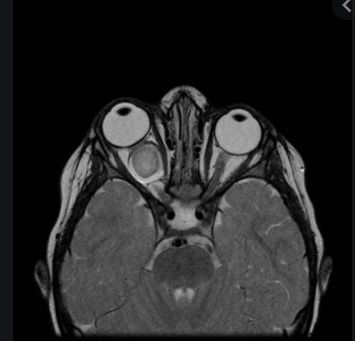
Optic nerve glioma (15–40%), a pilocytic astrocytoma, is commonly seen in _____
Hint: inherited condition
#8
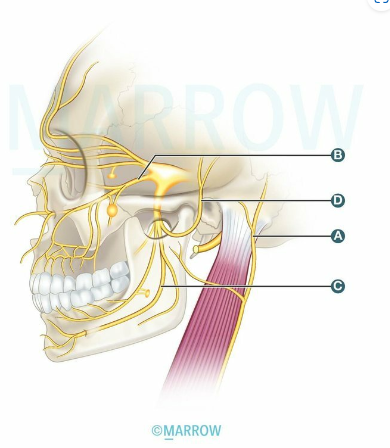
_____ nerve marked as "D" is involved in Frey's syndrome
#9
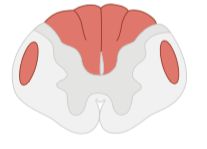
What disease is associated with this spinal cord lesion?
_____
#10
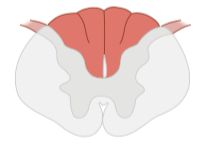
What disease is associated with this spinal cord lesion?
_____
Movement Disorders Indian Medical PG Flashcards - Medical Study Cards
Master Movement Disorders with OnCourse flashcards. These spaced repetition flashcards are designed for medical students preparing for NEET PG, USMLE Step 1, USMLE Step 2, MBBS exams, and other medical licensing examinations.
Movement Disorders Flashcard Deck - 10 Cards
Flashcard 1: _____ disease often presents with neuropsychiatric manifestations, due to copper deposition and resultant cystic degeneration in the putamen and other adjacent structures
Answer: Wilson
Flashcard 2: _____ movements include Ocular flutter, Ocular bobbing, Opsoclonus and Superior oblique myokymia
Answer: Nystagmoid
Flashcard 3: The tremor associated with Wilson's disease is called a _____ tremor in which the arms beat in a wide violent arc
Answer: wing beating
Flashcard 4: What is the most common neurological manifestation of Wilson's disease?_____
Answer: Dystonic form
Flashcard 5: _____ tremors are tremors which disappear on movement and are due to involvement of the substantia nigra and red nucleus
Answer: Resting
Flashcard 6: Neuropsychiatric symptoms (cognitive decline, restlessness, agitation, visual hallucinations) along with weight gain despite of loss of appetite points to the diagnosis of _____
Answer: hashimoto's encephalopathy
Flashcard 7: Optic nerve glioma (15–40%), a pilocytic astrocytoma, is commonly seen in _____
Answer: neurofibromatosis type 1
Flashcard 8: _____ nerve marked as "D" is involved in Frey's syndrome
Answer: Auriculotemporal
Flashcard 9: What disease is associated with this spinal cord lesion?
_____