Otology Indian Medical PG Flashcards - Medical Study Cards
Master Otology with OnCourse flashcards. These spaced repetition flashcards are designed for medical students preparing for NEET PG, USMLE Step 1, USMLE Step 2, MBBS exams, and other medical licensing examinations.
Otology Flashcard Deck - 105 Cards
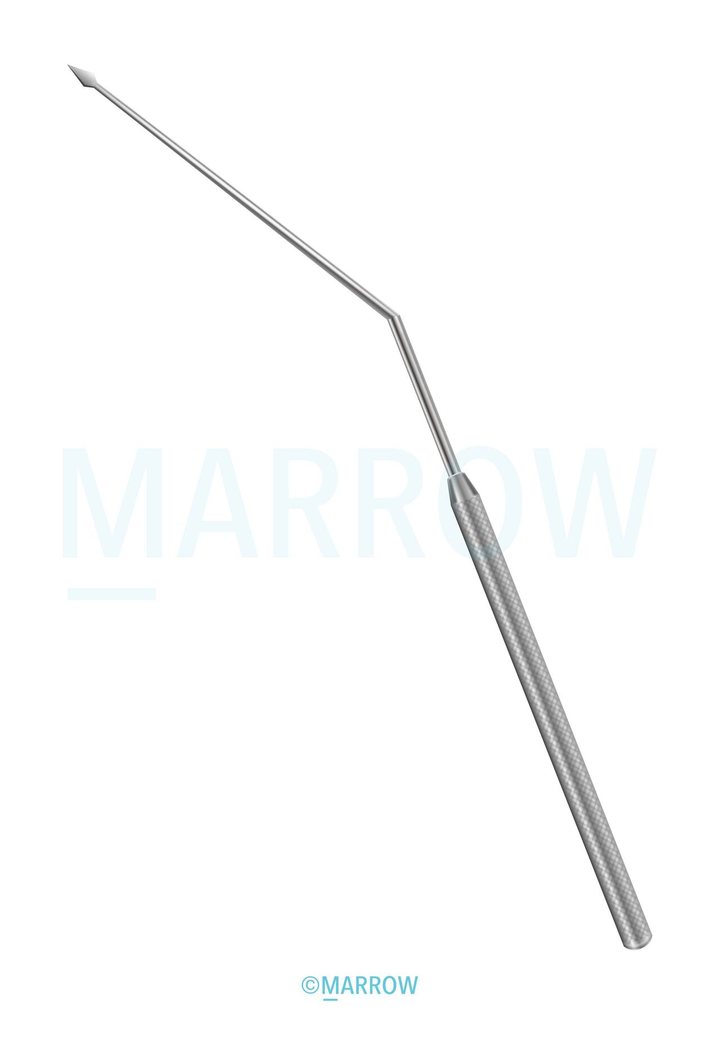
Flashcard 1: The following instrument is: _____
Answer: Myringotome
Flashcard 2: _____ retractor is used for endaural approach for ear surgery
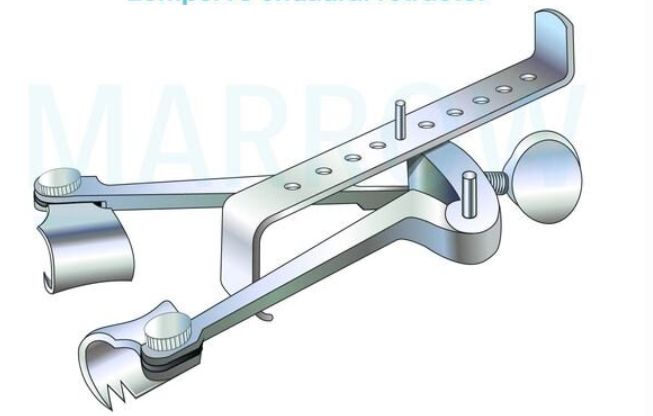
Answer: Lempert's endaural
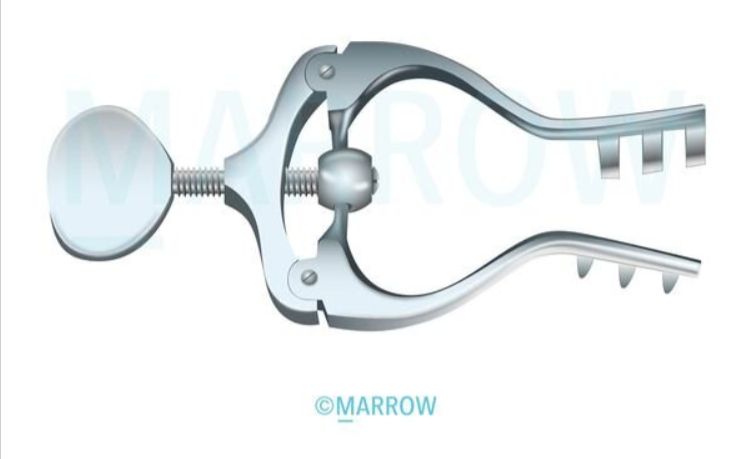
Flashcard 3: The following instrument is: _____
Answer: Jansen's self retaining mastoid retractor
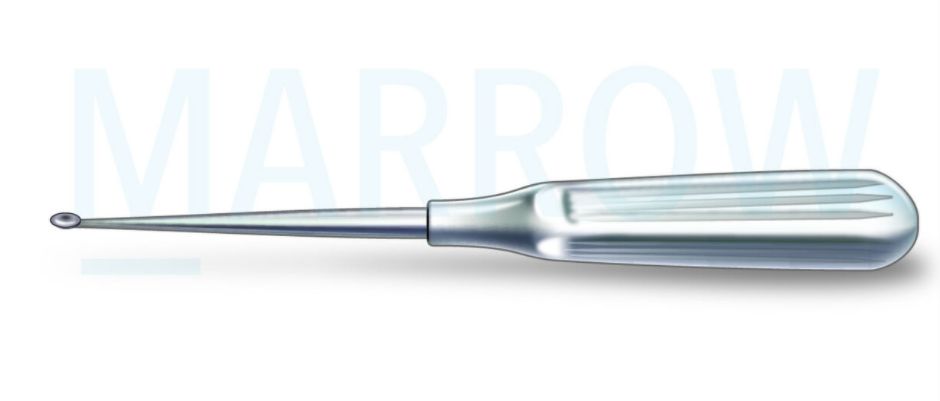
Flashcard 4: _____ is used for removal of bony septa and granulations in mastoid surgery.
Answer: Lempert’s curette (scoop)
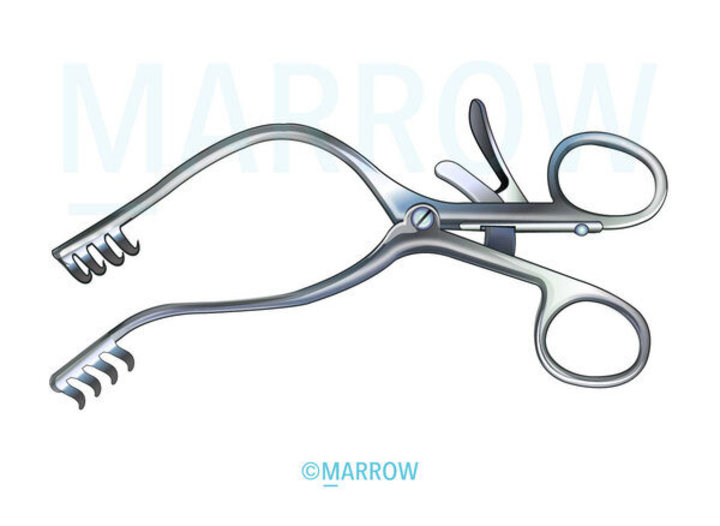
Flashcard 5: The following instrument is: _____
Answer: Mollison's mastoid retractor
Flashcard 6: Levenson criteria (for congenital cholesteatoma):A white mass behind the normal tympanic membraneNormal pars tensa and pars flaccidaNo prior history of _____No prior history of otological procedure
Answer: otorrhoea
Flashcard 7: Persistent middle ear effusion beyond _____ weeks is managed using a myringotomy
Answer: 12
Flashcard 8: _____ classification is used for retraction of Pars Flaccida
Answer: Tos's
Flashcard 9: Stapedial reflex is _____ in Meniere's disease but absent in acoustic neuroma
Answer: present
Flashcard 10: _____ disease is a triad of recurrent vertigo, ear fullness / pain and unilateral hearing loss & tinnitus
Answer: Meniere
Flashcard 11: Weber's test is lateralized to the worse ear in _____ deafness and to the better ear in sensorineural deafness.
Answer: conductive
Flashcard 12: _____ and microcatheter devices are used to deliver gentamycin in chemical labirynthectomy
Answer: Microwick
Flashcard 13: In serous otitis media, a _____ incision is made in the anteroinferior or posteroinferior quadrant of tympanic membrane.
Answer: radial
Flashcard 14: Removal of disease from the middle ear and reconstruction of hearing with or without _____ is referred to as Tympanoplasty
Answer: Myringoplasty
Flashcard 15: Boundaries of cortical mastoidectomy, also called as triangle of _____ are:Dural/Tegmen plate superiorlySigmoid sinus plate posteriorlyPosterior bony external auditory canal wall anteriorly
Answer: attack
Flashcard 16: _____ classification is used to classify tympanoplasty.
Answer: Zollner and Wullsteins
Flashcard 17: _____ test is a tuning fork test done to confirm otosclerosis in the old days.
Answer: Gelles
Flashcard 18: _____lateral conductive type of hearing loss is seen in otosclerosis
Answer: Bi
Flashcard 19: _____ test : Assesses the changes in middle ear. (Test for life/respiration)
Answer: Wredins
Flashcard 20: _____ classification of anatomical defects in the ossicular chain is based on the presence or absence of handle of malleus and stapes suprastructure.
Answer: Austin's
Flashcard 21: _____ test combined with electrocochleography (ratio of SP: AP> 45%) is diagnostic of Menieres disease.
Answer: Glycerol
Flashcard 22: Surgical management of otosclerosis includes _____ and stapedotomy.
Answer: stapedectomy
Flashcard 23: _____ is the surgical landmark for endolymphatic sac.
Answer: Donaldsons line
Flashcard 24: The _____ appearance is seen when the glomus jugulare tumour arises from the floor of the middle ear.
Answer: rising sun
Flashcard 25: Curved membrane effect: tympanic membrane is more mobile at the _____ than at the centre (periphery/centre)
Answer: periphery
Flashcard 26: The primary aim of surgery for cholesteatoma is _____
Answer: clearing the disease
Flashcard 27: According to Austin's classification: for M+ and S-, _____ is done
Answer: TORP
Flashcard 28: _____ frequencies affected first in conditions such as early stages of Meniere's disease
Answer: Lower
Flashcard 29: _____ criteria are used for the diagnosis of congenital cholesteatoma.
Answer: Levenson
Flashcard 30: The most accepted theory for secondary cholesteatoma is _____ theory.
Answer: Habermann's
Flashcard 31: Is a CT temporal bone required for pre-op preperation for tympanoplasty?_____
Answer: No
Flashcard 32: According to Austin's classification: for M+ and S+, _____ is done
Answer: PORP
Flashcard 33: In intact canal wall surgeries, the middle ear is approached through the _____ recess.
Answer: suprapyramidal
Flashcard 34: _____ is the term given for closure of perforation of tympanic membrane done to check repeated infections from external ear.
Answer: Myringoplasty
Flashcard 35: Natural resonance of ossicular chain is _____ Hz.
Answer: 500-2000
Flashcard 36: Type _____ tympanoplasty is done when the footplate is fixed
Answer: V
Flashcard 37: _____ System is a new system used to deliver local anesthesia directly towards the ear drum and place an ear tube without any pain.
Answer: Tula
Flashcard 38: ET catheterization is used to check eustachean tube _____
Answer: patency
Flashcard 39: In Lemperts fenestration, operation window is created in _____ semicircular canal
Answer: Lateral
Flashcard 40: _____ retractor is used for endaural approach for ear surgery
Answer: Lempert's endaural
Flashcard 41: Type _____ tympanoplasty is done when malleus and incus are absent
Answer: III
Flashcard 42: _____ hearing in Patch test is seen in intact ossicular chain
Answer: Improved
Flashcard 43: Pneumatic otoscopy is used to check eustachean tube _____
Answer: patency
Flashcard 44: Brown sign (Pulsation sign) is seen in _____
Answer: glomus tumors
Flashcard 45: What is the most common primary neoplasm of the middle ear?_____
Answer: Glomus tympanicum
Flashcard 46: _____ type of otosclerosis involves the entire footplate and the annular ligament
Answer: Obliterative
Flashcard 47: Hearing loss is of _____ type and slowly progressive in glomus tumor
Answer: conductive
Flashcard 48: The definitive treatment for otosclerosis is _____.
Answer: surgery
Flashcard 49: During syringing, stream of water from the ear syringe is directed along the _____ wall of the meatus
Answer: posterosuperior
Flashcard 50: Normally, epithelium from surface of tympanic membrane migrates onto the _____ meatal wall.
Answer: posterior
Flashcard 51: _____ is used for removal of bony septa and granulations in mastoid surgery.
Answer: Lempert s curette (scoop) (Instrument)
Flashcard 52: _____ phenomenon is a feature of cochlear pathologies like an Meniere's disease.
Answer: Recruitment
Flashcard 53: What is the definitive treatment of a permanent TM perforation?_____
Answer: Surgery
Flashcard 54: Type _____ tympanoplasty is also called as columella or myringostepediopexy
Answer: III
Flashcard 55: Postaural (or _____) incision starts at the highest attachment of the pinna, follows the curve of retroauricular groove, lying 1 cm behind it, and ends at the mastoid tip.
Answer: Wildes
Flashcard 56: The most common ossicle to get eroded in TT type of CSOM is _____
Answer: incus.
Flashcard 57: Otoacoustic emissions are absent in _____cochlear lesions
Answer:
Flashcard 58: The critical level of atmospheric pressure after which barotraumatic otitis media occurs is _____mm Hg
Answer: 90
Flashcard 59: Name the following forceps: _____
Answer: Citelli's forceps
Flashcard 60: Parietal blow often leads to _____ fractures of the temporal bone
Answer: longitudinal
Flashcard 61: _____ Schwartze sign is a contraindication to stapedotomy
Answer: Positive (Negative/Positive)
Flashcard 62: The size of burr used is _____ proportional to the chance of facial nerve injury during mastoid exploration
Answer: inversely
Flashcard 63: What surgical approach is used for inserting a cochlear implant?_____
Answer: Facial recess (posterior tympanotomy) approach
Flashcard 64: Type _____ tympanoplasty is done when all the ossicles are intact
Answer: I
Flashcard 65: _____ is the ideal approach for installing a cochlear implant.
Answer: Posterior tympanotomy
Flashcard 66: Can BAHA be given to patients with discharging ear?_____
Answer: Yes
Flashcard 67: What type of mastoid is characterised by multiple air spaces?_____
Answer: Well-pneumatized
Flashcard 68: Natural resonance of tympanic membrane is _____ Hz.
Answer: 800 1600
Flashcard 69: Valsalva maneuver produces a _____ pressure within the nasopharynx (patency test)
Answer: positive (negative/positive)
Flashcard 70: _____ is the treatment of choice for atticoantral CSOM.
Answer: Modified radical mastoidectomy
Flashcard 71: The surgery done to widen the cartilaginous part of the external auditory canal is _____.
Answer: meatoplasty
Flashcard 72: Intratympanic _____ therapy is used for chemical labyrinthectomy
Answer: gentamicin
Flashcard 73: In Overlay technique the graft is placed _____ to annulus
Answer: lateral
Flashcard 74: The presence of _____ within the middle ear cleft/ temporal bone, leads to the development of congenital cholesteatoma
Answer: congenital epithelial cell rests
Flashcard 75: Laser used for stapedotomy is _____
Answer: CO2
Flashcard 76: According to Austin's classification: for M- and S+, _____ is done
Answer: PORP
Flashcard 77: _____ otosclerosis is the most common type of otosclerosis.
Answer: Stapedial
Flashcard 78: Early Meniere's disease affects _____ frequencies first
Answer: lower
Flashcard 79: Surgical treatment is done for TT type of CSOM once the ear is dry for _____ weeks without antibiotics.
Answer: 6
Flashcard 80: _____ is the treatment of choice for otosclerosis
Answer: Stapedotomy
Flashcard 81: The most common surgery done in Tubotympanic type of CSOM is _____
Answer: Tympanoplasty
Flashcard 82: _____ type of otosclerosis involves only the annular ligament/margin of the footplate
Answer: Circumferential
Flashcard 83: Is myringotomy recommended for a bulging pus filled tympanic membrane with a impending rupture?_____
Answer: Yes
Flashcard 84: Type _____ tympanoplasty is done when the round window is left exposed and receives sound and the oval window is covered (also called sono-inversion)
Answer: VI
Flashcard 85: Nasopharyngoscopy is used to check eustachean tube _____
Answer: patency
Flashcard 86: Valsalva manoeuvre is used to check eustachean tube _____
Answer: patency
Flashcard 87: Will stapedial reflex be present in late stages of otosclerosis?_____
Answer: No
Flashcard 88: Most common site for residual cholesteatoma after surgery is _____
Answer: infrapyramidal recess
Flashcard 89: Type _____ tympanoplasty is done when all ossicle are eroded
Answer: IV
Flashcard 90: Facial palsy is seen more often in _____ fractures of the temporal bone
Answer: transverse
Flashcard 91: Fistula test is used to check the functioning of the _____
Answer: labyrinth
Flashcard 92: According to Austin's classification: for M- and S-, _____ is done
Answer: TORP
Flashcard 93: The contraindication to myringotomy is an intratympanic _____
Answer: glomus tumor
Flashcard 94: Laser used for middle ear adhesion lysis is _____
Answer: Argon
Flashcard 95: Type _____ tympanoplasty is done when the malleus is eroded
Answer: II
Flashcard 96: What is the presenting symptom of otosclerosis?_____
Answer: Hearing loss
Flashcard 97: _____ test is a tuning fork test that compares bone conduction with air conduction.
Answer: Rinnes
Flashcard 98: Constant _____ irrigation during mastoid exploration prevents thermal injury to the facial nerve
Answer: saline
Flashcard 99: Canal wall procedures are done in _____ type of CSOM
Answer: atticoantral
Flashcard 100: _____ is seen in tubotympanic disease, where the ear discharge shields the round window from sound waves, and the hearing improves
Answer: Round window-shielding effect
Flashcard 101: _____ space is present in the epitympanum, between the tympanic membrane and the lateral malleal ligament
Answer: Prussack
Flashcard 102: Otosclerosis is a primary disease of the _____
Answer: otic capsule.
Flashcard 103: _____ hearing in Patch test is seen in ossicular fixity or discontinuity
Answer: Decreased
Flashcard 104: Myringoplasty are done in _____ type of CSOM
Answer: tubotympanic
Flashcard 105: The most common graft material used for tympanoplasty is the _____
Answer: temporalis fascia
Keywords: Otology flashcards, medical flashcards, NEET PG preparation, USMLE Step 1 flashcards, Anki alternative, spaced repetition medical, OnCourse flashcards