Diseases of the Ear Indian Medical PG Flashcards - Medical Study Cards
Master Diseases of the Ear with OnCourse flashcards. These spaced repetition flashcards are designed for medical students preparing for NEET PG, USMLE Step 1, USMLE Step 2, MBBS exams, and other medical licensing examinations.
Diseases of the Ear Flashcard Deck - 139 Cards
Flashcard 1: In _____, the fluid is clear hence one can see the structures of the middle ear quite clearly.
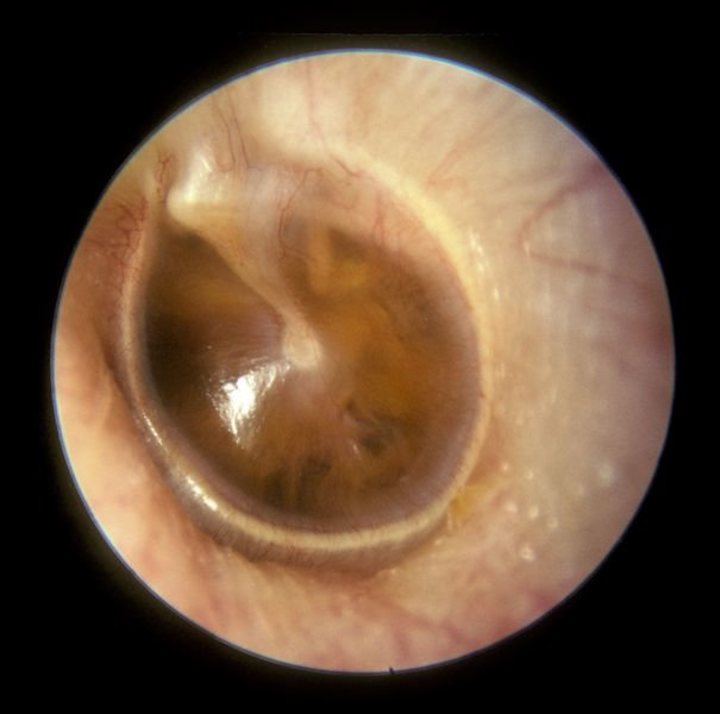
Answer: SOM
Flashcard 2: _____ used in mastoid surgery to explore the air cells with one end and to curette the intervening septa and granulations with the other.
Answer: MacEwen’s curette and cell seeker
Flashcard 3: Menieres Disease presents with a _____lateral sensorineural type of hearing loss
Answer: uni
Flashcard 4: SOM/OME presents as _____lateral, painless, fluctuating, and conductive hearing loss not more than 40 dB.
Answer: bi
Flashcard 5: Presence of hyalinization and calcification involving only the _____ is known as myringosclerosis
Answer: tympanic membrane
Flashcard 6: Gradenigos syndrome is a triad that consists of:-_____-Deep ear/facial pain (V Nerve involvement)-Persistent ear discharge (otitis media)
Answer: Ipsilateral abducens nerve palsy (VI nerve palsy)
Flashcard 7: Keratosis obturans is sometimes associated with _____ and chronic sinusitis
Answer: bronchiectasis
Flashcard 8: _____ is bilateral multiple smooth sessile bony swellings in the deeper canal of the ear
Answer: Exostosis
Flashcard 9: Recurrent OM is pyogenic inflammation of middle ear cleft if e_____ episodes within 6 months or e4 episodes within 12 months are seen.
Answer: 3
Flashcard 10: Characteristic features of Tuberculous otitis media include:_____ in pars tensa of the tympanic membrane and pale granulations in middle ear cleft
Answer: Multiple perforations
Flashcard 11: _____ classification is used for retraction of Pars Tensa
Answer: Sades
Flashcard 12: In retracted tympanic membrane, _____ of malleus appears foreshortened and lateral process becomes more prominent
Answer: handle
Flashcard 13: A thin paper like cigarette foil is soaked in Vaseline is used to close perforation, also called as _____ test done for tubotympanic type of CSOM.
Answer: Patch
Flashcard 14: _____ is a tympanostomy or ventilation tube placed in the middle ear to aerate and drain the middle ear into the external ear as a substitute to the blocked Eustachian tube.
Answer: Grommet
Flashcard 15: Where is the perforation seen in tubotympanic type of CSOM?_____ (AI quadrant)
Answer: Central
Flashcard 16: In ASOM otitis media, a _____ incision is made in the posteroinferior quadrant of tympanic membrane.
Answer: curvilinear
Flashcard 17: A permanent perforation is seen in _____ and is lined by squamous epithelium
Answer: chronic suppurative otitis media (CSOM)
Flashcard 18: Type _____ tympanogram with a dome shaped graph indicates reduced compliance as seen in serous otitis media.
Answer: B
Flashcard 19: _____ sign is mastoid tenderness and edema, which is secondary to thrombophlebitis of the mastoid emissary vein.
Answer: Griesingers
Flashcard 20: In some cases of otosclerosis, there is a dip in the _____ conduction curve, called as Carhart's notch, maximally at 2000 Hz
Answer: bone
Flashcard 21: A normal person or one with sensorineural hearing loss hears _____ when the ear canal is occluded and softer when the canal is open (Bing positive)
Answer: louder
Flashcard 22: The site of predilection for the stapedial type of otosclerosis is the _____ lying in front of the oval window.
Answer: fissula ante fenestram
Flashcard 23: _____ is a fungal infection of the ear canal that often occurs due to Aspergillus niger (most common), A. fumigatus or Candida albicans.
Answer: Otomycosis
Flashcard 24: Otitis externa hemorrhagica can also be caused by both _____ and mycoplasma, in addition to S. pneumo
Answer: influenza
Flashcard 25: _____ is pyogenic inflammation of middle ear cleft lasting for >6 weeks
Answer: CSOM
Flashcard 26: _____ acquired cholesteatoma is associated with a defect in pars flaccida.
Answer: Primary
Flashcard 27: _____ is unilateral single hard pedunculated bony swellings in the outer canal of the ear
Answer: Osteoma
Flashcard 28: _____ acquired cholesteatoma occurs when there is already a pre-existing perforation in pars tensa
Answer: Secondary
Flashcard 29: Defective functioning of ET is seen in conditions such as _____ or down's syndrome, leading to ET blockage
Answer: cleft palate/submucous cleft palate
Flashcard 30: Type _____ tympanogram indicates reduced compliance and normal pressure, seen in otosclerosis and tympanosclerosis
Answer: As
Flashcard 31: _____ hearing loss maybe seen in cochlear type of otosclerosis.
Answer: Sensorineural
Flashcard 32: Type _____ tympanogram indicates normal compliance but negative pressure due to eustachian tube obstruction
Answer: C
Flashcard 33: Where is the perforation seen in atticoantral type of CSOM?Attic (Pars _____) OR Marginal (PS quadrant)
Answer: flaccida
Flashcard 34: Tympanic membrane perforates in the _____ quadrant of pars tensa in the resolution phase of ASOM
Answer: antero-inferior
Flashcard 35: In otosclerosis, the _____ conduction is impaired but the bone conduction is normal
Answer: air
Flashcard 36: _____ is pyogenic inflammation of middle ear cleft lasting for <=6 weeks
Answer: ASOM
Flashcard 37: _____ is a common cause of malignant otitis externa, whereupon the causative organism can spread into deeper tissues and presents with exquisite ear pain and drainage
Answer: Pseudomonas aeruginosa
Flashcard 38: Painting the drum with 1 in 20% solution of _____; perforation stands out as a black spot against white background seen in Bonsin's test done for tubotympanic type of CSOM.
Answer: silver nitrate
Flashcard 39: Retracted tympanic membrane usually appears dull and _____.
Answer: lustreless
Flashcard 40: Pain is the most predominant symptoms in _____ otomycosis.
Answer: Aspergillus flavus (organism)
Flashcard 41: _____ is excision of the entire stapes (superstructutre + footplate) and placing a piston in its place, done for otosclerosis
Answer: Stapedectomy
Flashcard 42: "Basal cell layer of the germinal layer of skin proliferates in response to infection & other stimuli." : _____ theory of basal cell hyperplasia for Primary acquired cholesteatoma
Answer: Ruedi's
Flashcard 43: Cholesteatoma causes bone destruction by _____
Answer: release of enzymes
Flashcard 44: Excruciating earache is seen in the stage of _____ of ASOM
Answer: suppuration
Flashcard 45: Red, hot, painful and stiff pinna is seen in _____
Answer: perichondritis
Flashcard 46: Acute otitis externa, also called as swimmer's ear occurs due to disruption of _____ barrier
Answer: skin-cerumen
Flashcard 47: Paracusis willisii is seen in _____
Answer: otosclerosis
Flashcard 48: Aural hematoma is the collection of blood in the _____ space*treat by?
Answer: perichondrial
Flashcard 49: _____ acquired cholesteatoma is defined as that which occurs behind a normal-appearing tympanic membrane as the result of implantation or an antecedent middle ear inflammation.
Answer: Tertiary
Flashcard 50: Saccharine/dye tests is used to check eustachean tube _____
Answer: function
Flashcard 51: Pressure effect of the epithelial mass in keratosis obturans may lead to paralysis of _____ nerve due to absorption of bone and widening of the meatus
Answer: facial
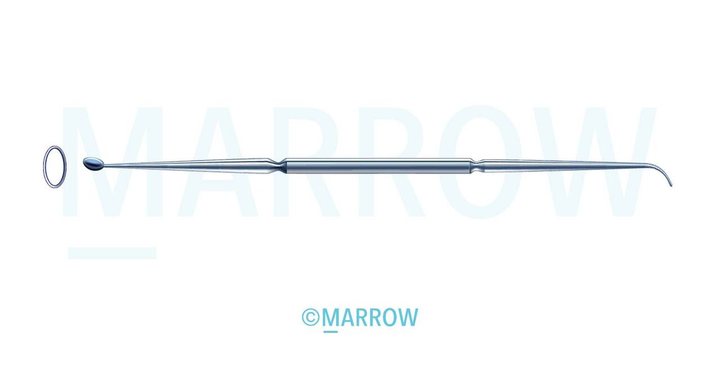
Flashcard 52: The following instrument is: _____
Answer: Myringotome
Flashcard 53: Pulsatile mucopurulent or purulent discharge, coming through a central pin-hole perforation of pars tensa, is called as _____ sign
Answer: Lighthouse
Flashcard 54: The flat curve is a type of B type tympanometry curve seen with a _____
Answer: perforated tympanic membrane
Flashcard 55: Does the hematoma of the auricle resolve spontaneously?_____
Answer: No
Flashcard 56: Which viral RNA may be found in otosclerosis foci?_____
Answer: Measles
Flashcard 57: Most common route of spread of infection in ASOM is the _____
Answer: eustachean tube
Flashcard 58: What is the treatment of pre-suppuration phase of ASOM?_____
Answer: Add antibiotics
Flashcard 59: Politzer test is used to check eustachean tube _____
Answer: patency
Flashcard 60: Mucosal variant of CSOM is also called the _____ type
Answer: tubotympanic
Flashcard 61: Collection of a pearly white mass of desquamated epithelial cells in the deep meatus is called _____.
Answer: keratosis obturans
Flashcard 62: Symptoms are _____ severe compared to signs in furunculosis of ear
Answer: more (less/more)
Flashcard 63: Otomycosis can occur secondarily to a bacterial otitis externa treated with _____
Answer: antibiotics
Flashcard 64: Squamosal variant of CSOM is also called the _____ type
Answer: attico-antral
Flashcard 65: CHL improvement is seen in the stage of _____ of ASOM
Answer: resolution
Flashcard 66: Tubotympanic type of CSOM is mostly in the _____-tympanum
Answer: pro
Flashcard 67: What is the most common complication of tuberculous otitis media?_____
Answer: Facial Nerve Palsy
Flashcard 68: What are the contraindications of Valsalva?_____
Answer: URTI and atrophic TM
Flashcard 69: _____ is indicated only when there is an impending rupture of tympanic membrane.
Answer: Myringotomy
Flashcard 70: What type of CSOM is considered the safe type?_____*why
Answer: Tubotympanic type
Flashcard 71: Once the TM is breached, glomus tumor may present as _____ in the external ear
Answer: bleeding polyp
Flashcard 72: Treatment is always surgical for _____ type of CSOM
Answer: attico-antral
Flashcard 73: _____ is a patient with a discontinuous ossicular chain but the sound is conducted through the cholesteatoma to the footplate
Answer: Cholesteatoma hearer
Flashcard 74: The narrowest part of the EAC is also called as the _____
Answer: isthumus
Flashcard 75: In an abnormally patent and patulous eustachean tube, patients primary complaints are hearing his own voice & breathing sounds, a condition also known as _____
Answer: Autophony
Flashcard 76: The lighthouse sign is seen is _____
Answer: mastoiditis
Flashcard 77: Mixed aerobic and anaerobic infection is seen in _____ type of CSOM
Answer: tubotympanic
Flashcard 78: _____ abscess, can occur as a complication of mastoiditis, which forms when infection spreads from the middle ear into the subperiosteal temporal region
Answer: Luc's
Flashcard 79: The name glue ear tympanic membrane is often dull and opaque with loss of light reflex, seen in _____
Answer: SOM
Flashcard 80: Red reflex through the intact tympanic membrane on otoscopy is seen in intratympanic _____
Answer: glomus tumor
Flashcard 81: _____ used in mastoid surgery to explore the air cells with one end and to curette the intervening septa and granulations with the other.
Answer: MacEwen s curette and cell seeker (Instrument)
Flashcard 82: Toynbee's test is used to check eustachean tube _____
Answer: function
Flashcard 83: Aging causes changes in the external ear resonance, -----reasing its amplitude.
Answer: dec
Flashcard 84: _____ is a non-suppurative condition resulting from the failure of the eustachian tube to maintain middle ear pressure at ambient atmospheric level.
Answer: Otitic barotrauma
Flashcard 85: _____ abscess, can occur as a complication of mastoiditis, which forms posterior to the mastoid, occupying a position more towards the occipital bone
Answer: Citelli's
Flashcard 86: Hearing loss is usually _____ type in otitic barotrauma
Answer: conductive
Flashcard 87: Most commonly affected organ in blast injury is the _____
Answer: tympanic membrane
Flashcard 88: Pulsation sign/Brown sign is seen in intratympanic _____
Answer: glomus tumor
Flashcard 89: Cartwheel TM is seen in the stage of _____ of ASOM
Answer: pre suppuration
Flashcard 90: In _____, the fluid is clear hence one can see the structures of the middle ear quite clearly.
Answer: SOM
Flashcard 91: _____ is an important landmark to locate the mastoid antrum in mastoid surgery
Answer: MacEwens (suprameatal) triangle
Flashcard 92: Keratosis obturans is associated with _____ of the meatus
Answer: widening
Flashcard 93: Glomus jugulare tumor invades the _____tympanum.
Answer: hypo
Flashcard 94: Impedance audiometry shows a flat curve (reduced compliance, shift to the negative side) in _____
Answer: ASOM/COM/SOM
Flashcard 95: What is the treatment of tubal occlusion phase of ASOM?_____
Answer: Decongestants
Flashcard 96: What is the site of tenderness in acute mastoiditis?_____
Answer: McEwen's triangle
Flashcard 97: Fluid is _____ is SOM
Answer: sterile (infected/sterile)
Flashcard 98: ET block and retraction of TM is seen in the stage of _____ of ASOM
Answer: tubal occlusion
Flashcard 99: Obliteration of _____ is seen in furuncle of ear
Answer: retroauricular groove
Flashcard 100: Schwartze sign is seen in _____
Answer: active otosclerosis
Flashcard 101: Audible Bruit over the _____ maybe heard in glomus tumor
Answer: mastoid
Flashcard 102: Tympanometry is used to check eustachean tube _____
Answer: function
Flashcard 103: _____ abscess, can occur as a complication of mastoiditis, which forms when pus breaks through the medial tip of mastoid and into the sheath of SCM
Answer: Bezold
Flashcard 104: Extrinsic causes of ET obstruction include _____, Nasopharyngeal tumors or nasal pack
Answer: Adenoids
Flashcard 105: _____ has been tried to hasten the maturity of active focus of otosclerosis and arrest further cochlear loss.
Answer: Sodium fluoride
Flashcard 106: Presence of hyaline deposits within the middle ear, which calcify leading to impaired mobility of ossicles is known as _____
Answer: Tympanosclerosis
Flashcard 107: Polyps are common in _____ type of CSOM
Answer: atticoantral
Flashcard 108: Sonotubometry is used to check eustachean tube _____
Answer: function
Flashcard 109: _____ is the most common cause of hearing loss in children
Answer: SOM/OME
Flashcard 110: _____ remains the most effective single treatment for treatment of diffuse otitis externa following a trauma
Answer: Aural toilet
Flashcard 111: "Negative middle ear pressure leads to the formation of retraction pockets which accumulates keratin debris" : _____ theory of retraction pockets for Primary acquired cholesteatoma
Answer: Wittmaacks
Flashcard 112: The most common site for ear carcinoma is _____ (85%)
Answer: pinna
Flashcard 113: The most common age group affected in otosclerosis is _____ years
Answer: 20-30
Flashcard 114: _____ is the presence of stratified squamous epithelium in middle ear where it is not usually present
Answer: Cholesteatoma
Flashcard 115: _____ type of otosclerosis involves only the entire footplate except the annular ligament
Answer: Biscuit
Flashcard 116: What is the treatment of resolution phase of ASOM?_____
Answer: Mopping + Antibiotics
Flashcard 117: Healing of ANOM is followed by fibrosis or ingrowth of squamous epithelium from the meatus leading to secondary acquired _____
Answer: cholesteatoma
Flashcard 118: Retraction pockets in TM seen in glue ear can predispose to the development of _____ in the long term
Answer: cholesteatoma
Flashcard 119: Exostosis is also known as _____
Answer: surfers ear.
Flashcard 120: Atticoantral type of CSOM is mostly in the _____-tympanum
Answer: epi
Flashcard 121: _____ is the most common organism causing acute necrotizing otitis media
Answer: Beta-hemolytic Streptococcus
Flashcard 122: What is the treatment of suppuration phase of ASOM?_____
Answer: Myringotomy + Antibiotics
Flashcard 123: _____ focus of otosclerosis involves only the fissula ante fenestrum
Answer: Anterior
Flashcard 124: _____ is the most common benign neoplasm of the middle ear
Answer: Glomus tumor
Flashcard 125: Movements of the tympanic membrane are more at the _____
Answer: periphery (centre/periphery)
Flashcard 126: Acute _____ otitis media is seen in children suffering from measles, scarlet fever, influenza
Answer: necrotizing
Flashcard 127: Hyperacusis can occur due to paralysis of which 2 muscles?_____
Answer: Tensor tympani and stapedius
Flashcard 128: How do you differentiate between a flat tympanogram suggesting an intact eardrum with middle ear effusion versus a perforated eardrum or ear with a patent ventilating tube?_____
Answer: By doing volume measurement simultaneously with tympanometry
Flashcard 129: _____ sign is positive in furuncle of the ear
Answer: Tragal
Flashcard 130: The normal pH of the external auditory canal is _____
Answer: acidic
Flashcard 131: Which gender is more commonly affected by otosclerosis?_____
Answer: Females>males
Flashcard 132: Furunculosis of ear is treated by I&D or 10% _____ wicks and antibiotics
Answer: ichthamol glycerine
Flashcard 133: _____ is the most common site of primary cholesteatoma.
Answer: Prussaks space
Flashcard 134: Absent pinna and stenosis of outer EAC is referred to as _____
Answer: Anotia
Flashcard 135: Ear defects involving Treacher-Collins syndrome lead to bilateral _____ hearing loss
Answer: conductive
Flashcard 136: Irritation and itching are the most predominant symptoms in _____ otomycosis.
Answer: Aspergillus niger (organism)
Flashcard 137: Tubercular otitis media is a _____ condition
Answer: painless (painful/painless)
Flashcard 138: Paracusis willisii is seen in patients with _____ otosclerosis.
Answer: stapedial
Flashcard 139: The preferred site of administration of intra articular methylpredinosolone for SSHL treatment is through the _____
Answer: round window
Keywords: Diseases of the Ear flashcards, medical flashcards, NEET PG preparation, USMLE Step 1 flashcards, Anki alternative, spaced repetition medical, OnCourse flashcards