What is the most common association of irregular nail pitting and onycholysis?_____
#2
Loss of hair _____ months after an event of physiological stress points towards a diagnosis of telogen effluvium
#3
Mnemonic for causes of scarring alopecia: SF2L3P_____Favus and Kerion (Inflammatory Type of Tinea capitis)Folliculitis decalvansLichen planopilarisLupus vulgarisLupus erythematosis - discoid (DLE)pseudopelade of Brocq
#4
Causes for non-scarring alopecia: THATS STDT_____ (Non Inflammatory Type - grey patch and black dot types)Hormonal - Hypothyroidism, Androgenetic alopeciaAnagen effluvium, Alopecia areataTrichotillomaniaSecondary syphilis (moth eaten alopecia)SLE(predominantly causes non-scarring alopecia but also can cause scarring alopecia)Telogen effluviumDeficiency of Zinc, Iron
#5
_____ or 20 nail dystrophy, is seen in lichen planus
#6
Contact/topical immunotherapy with agents such as _____, diphenylcyclopropenone (DPCP), is used for extensive alopecia areata
#7
_____ is characterised by discrete, smooth, and circular areas of hair loss developing over weeks to months
#8
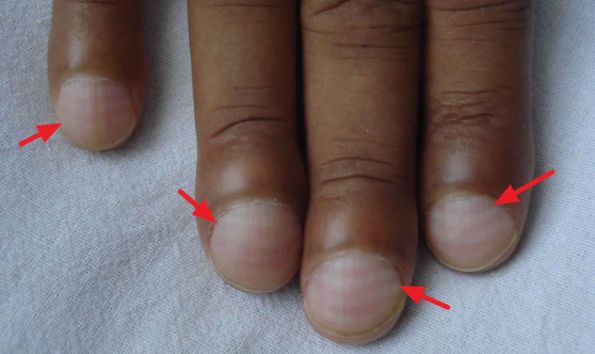
Muehrcke's lines on nails are specific for _____ and is due to pathology in the nail bed
#9
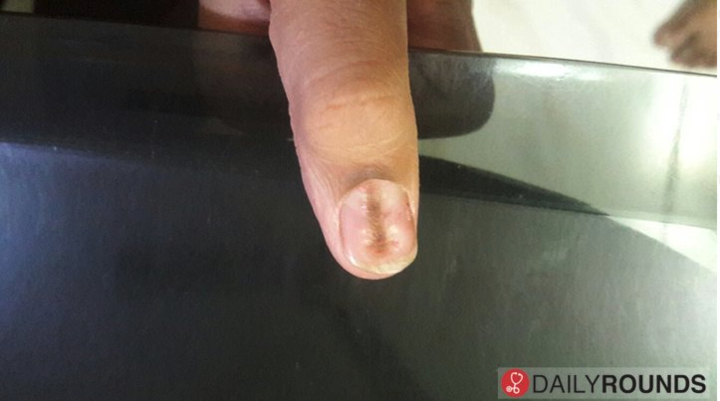
_____ sign is melanonychia with the pigmentation of proximal nail fold seen in subungual melanoma
#10
_____ is a neurocutaneous disorder associated with ungual fibromas, which are flesh-colored lumps emerging from nail folds
Management of Hair and Nail Disorders Indian Medical PG Flashcards - Medical Study Cards
Master Management of Hair and Nail Disorders with OnCourse flashcards. These spaced repetition flashcards are designed for medical students preparing for NEET PG, USMLE Step 1, USMLE Step 2, MBBS exams, and other medical licensing examinations.
Management of Hair and Nail Disorders Flashcard Deck - 10 Cards
Flashcard 1: What is the most common association of irregular nail pitting and onycholysis?_____
Answer: Psoriasis
Flashcard 2: Loss of hair _____ months after an event of physiological stress points towards a diagnosis of telogen effluvium
Answer: 3
Flashcard 3: Mnemonic for causes of scarring alopecia: SF2L3P_____Favus and Kerion (Inflammatory Type of Tinea capitis)Folliculitis decalvansLichen planopilarisLupus vulgarisLupus erythematosis - discoid (DLE)pseudopelade of Brocq
Answer: Scleroderma - Linear scalp morphea (en coup de sabre)
Flashcard 4: Causes for non-scarring alopecia: THATS STDT_____ (Non Inflammatory Type - grey patch and black dot types)Hormonal - Hypothyroidism, Androgenetic alopeciaAnagen effluvium, Alopecia areataTrichotillomaniaSecondary syphilis (moth eaten alopecia)SLE(predominantly causes non-scarring alopecia but also can cause scarring alopecia)Telogen effluviumDeficiency of Zinc, Iron
Answer: inea capitis
Flashcard 5: _____ or 20 nail dystrophy, is seen in lichen planus
Answer: Trachonychia
Flashcard 6: Contact/topical immunotherapy with agents such as _____, diphenylcyclopropenone (DPCP), is used for extensive alopecia areata
Answer: dinitrochlorobenzene (DNCB)
Flashcard 7: _____ is characterised by discrete, smooth, and circular areas of hair loss developing over weeks to months
Answer: Alopecia areata
Flashcard 8: Muehrcke's lines on nails are specific for _____ and is due to pathology in the nail bed
Answer: hypoalbuminemia
Flashcard 9: _____ sign is melanonychia with the pigmentation of proximal nail fold seen in subungual melanoma
Answer: Hutchinson's
Flashcard 10: _____ is a neurocutaneous disorder associated with ungual fibromas, which are flesh-colored lumps emerging from nail folds
Answer: Tuberous sclerosis
Keywords: Management of Hair and Nail Disorders flashcards, medical flashcards, NEET PG preparation, USMLE Step 1 flashcards, Anki alternative, spaced repetition medical, OnCourse flashcards
Want unlimited flashcards?
Get full access to all flashcards, spaced repetition, and progress tracking.