Which teeth are most commonly injured during laryngoscopy?_____
#2
Percentage of glottic opening (POGO score) and Cormack Lehane (CL) classification is broadly used to describe _____ view during direct laryngoscopy
#3
_____ position is for direct laryngoscopy or bronchoscopy
#4
The following capnography waveform represents:_____
#5
_____ with direct visualization is the first choice for definitive airway management in caustic ingestion
#6
_____ is a technique of external laryngeal manipulation of the airway during intubation for better visualization of the larynx.
#7
_____ delivers oxygen at 40-60 L/min and increases PEEP
#8
The following capnography waveform represents:
_____
#9
The following capnography waveform represents:
_____
#10
The following capnography waveform represents:
_____
Video Laryngoscopy Indian Medical PG Flashcards - Medical Study Cards
Master Video Laryngoscopy with OnCourse flashcards. These spaced repetition flashcards are designed for medical students preparing for NEET PG, USMLE Step 1, USMLE Step 2, MBBS exams, and other medical licensing examinations.
Video Laryngoscopy Flashcard Deck - 10 Cards
Flashcard 1: Which teeth are most commonly injured during laryngoscopy?_____
Answer: Upper central incisors
Flashcard 2: Percentage of glottic opening (POGO score) and Cormack Lehane (CL) classification is broadly used to describe _____ view during direct laryngoscopy
Answer: laryngeal
Flashcard 3: _____ position is for direct laryngoscopy or bronchoscopy
Answer: Barking-dog
Flashcard 4: The following capnography waveform represents:_____
Answer: bronchospasm
Flashcard 5: _____ with direct visualization is the first choice for definitive airway management in caustic ingestion
Answer: Oral intubation
Flashcard 6: _____ is a technique of external laryngeal manipulation of the airway during intubation for better visualization of the larynx.
Answer: BURP
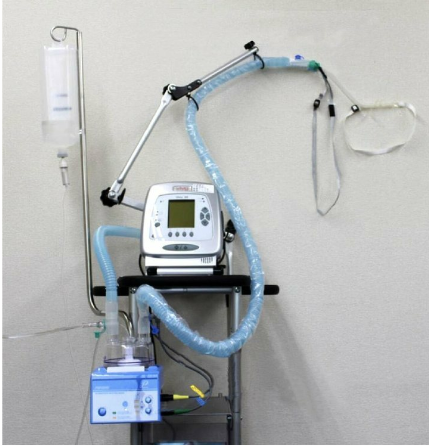
Flashcard 7: _____ delivers oxygen at 40-60 L/min and increases PEEP
Answer: High-flow nasal cannula
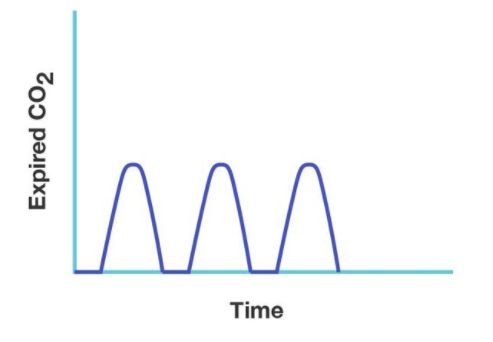
Flashcard 8: The following capnography waveform represents:
_____
Answer: spontaneous breathing
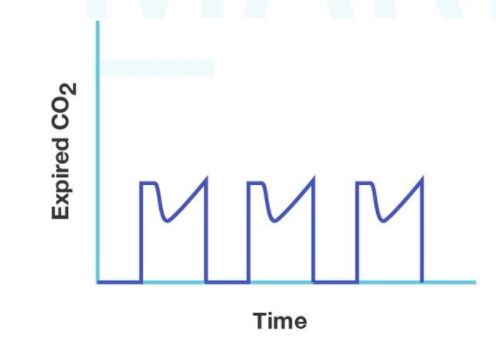
Flashcard 9: The following capnography waveform represents:
_____
Answer: single lung transplant
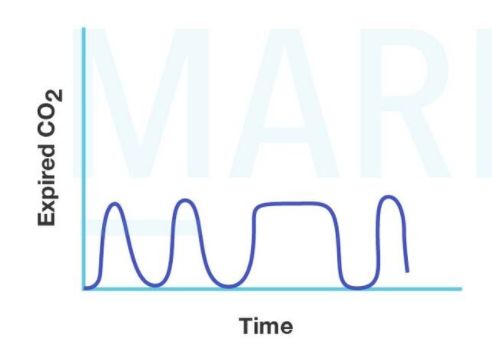
Flashcard 10: The following capnography waveform represents:
_____
Answer: IMV in midst of spontaneous breathing
Keywords: Video Laryngoscopy flashcards, medical flashcards, NEET PG preparation, USMLE Step 1 flashcards, Anki alternative, spaced repetition medical, OnCourse flashcards
Want unlimited flashcards?
Get full access to all flashcards, spaced repetition, and progress tracking.