Neck Indian Medical PG Flashcards - Medical Study Cards
Master Neck with OnCourse flashcards. These spaced repetition flashcards are designed for medical students preparing for NEET PG, USMLE Step 1, USMLE Step 2, MBBS exams, and other medical licensing examinations.
Neck Flashcard Deck - 127 Cards
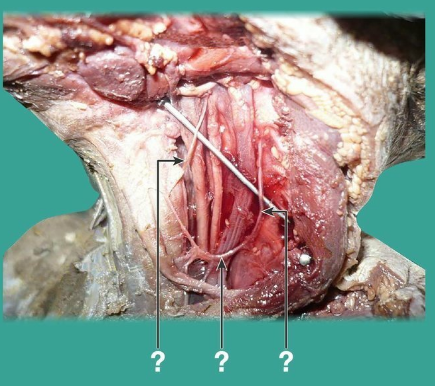
Flashcard 1: The structure marked is the _____.
Answer: ansa cervicalis
Flashcard 2: What are the contents of the subclavian/occipital triangle? (6)
_____
Answer:
Flashcard 3: The image shows a _____typical cervical vertebra, which could be seen at the _____ levels
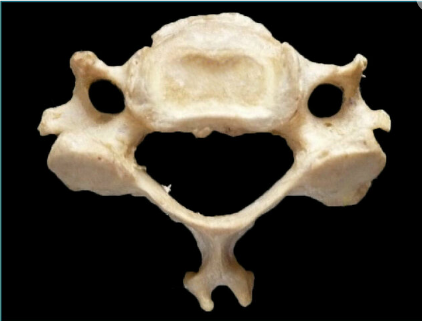
Answer:
Flashcard 4: What are the components of the cruciform ligamant of the atlas:_____Inferior longitudinal and Transverse ligament
Answer: Superior longitudinal
Flashcard 5: Boundaries of the carotid triangle:_____ border is formed by the sternocleidomastoid muscle.
Answer: Posterior
Flashcard 6: Closers of laryngeal inlet are _____ and interarytenoids
Answer: aryepiglotticus
Flashcard 7: Modifications of deep cervical fascia:The _____ fascia surrounds the vertebral column and its associated muscles
Answer: prevertebral
Flashcard 8: Boundaries of the carotid triangle:_____ is formed by thyrohyoid, hyoglossus muscle, middle constrictor, and inferior constrictor.
Answer: Floor
Flashcard 9: Boundaries of the carotid triangle:_____ border is formed by the superior belly of omohyoid.
Answer: Anteroinferior
Flashcard 10: Modifications of deep cervical fascia:The capsule of the thyroid formed from the _____ fascia is thickened posteriorly and forms the Suspensory ligament of Berry on either side
Answer: visceral pretracheal
Flashcard 11: _____ cartilage is also known as the cartilage of Santorini.
Answer: Corniculate
Flashcard 12: The transverse cervical nerve is formed by fibres from _____ and C3 roots of the cervical plexus
Answer: C2
Flashcard 13: What are the 5 branches of ECA given off in the carotid triangle?_____ (Anterior branches).Ascending pharyngeal (medial branch)Occipital artery (posterior branch)
Answer: Superior thyroid, lingual, and facial artery
Flashcard 14: The bifurcation of common carotid artery is at the level of the _____ border of thyroid cartilage (C3-C4 junction).
Answer: upper
Flashcard 15: Infraglottic larynx is drained by lymphatics, which pierce the _____ membrane and go to lower deep cervical nodes and mediastinal nodes
Answer: cricothyroid
Flashcard 16: Structures passing between middle and inferior constrictors:_____ nerveSuperior laryngeal vessels
Answer: Internal laryngeal
Flashcard 17: The trachea starts at the level of the inferior border of the _____ cartilage at the level of the C6 vertebra.
Answer: cricoid
Flashcard 18: Boundaries of the carotid triangle:_____ border is formed by the posterior belly of digastric and stylohyoid muscle.
Answer: Superior
Flashcard 19: The inlet of the larynx is formed anteriorly by free margin of _____; on the sides, by Aryepiglottic foldsand posteriorly by interarytenoid fold.
Answer: epiglottis
Flashcard 20: Modifications of deep cervical fascia:The _____ fascia forms the axillary sheath by surrounding the brachial plexus
Answer: prevertebral
Flashcard 21: True vocal sulci include sulcus _____ and sulcus vergetuere
Answer: vocalis
Flashcard 22: Anteroposteriorly, glottis is about _____ mm in men and 16 mm in women.
Answer: 24
Flashcard 23: Nerve supply of larynx _____ the level of vocal cords is by recurrent laryngeal nerve which is a branch of the Vagus nerve.
Answer: below
Flashcard 24: The intrinsic ligaments and membranes of the larynx are:_____ membrane (present between the epiglottis and the arytenoid cartilage), Cricothyroid membrane and Thyroepiglottic ligament
Answer: Quadrangular
Flashcard 25: _____ vocal cords are formed by the lower free margin of the quadrangular membrane
Answer: False
Flashcard 26: Contents of the _____ triangle are 3rd part of the vertebral artery, suboccipital nerve (dorsal ramus of C1) and suboccipital venous plexus.
Answer: suboccipital
Flashcard 27: At rest, the larynx extends from _____-C6 vertebrae
Answer: C3
Flashcard 28: The upward extension of the thyroid swelling is prevented by the attachment of _____ to the thyroid cartilage.
Answer: sternothyroid and sternohyoid
Flashcard 29: The _____ nerve supplies all the muscles of the larynx except cricothyroid
Answer: recurrent laryngeal
Flashcard 30: Contents of the suprasternal space of _____include:1. Jugular venous arch formed by anterior jugular veins2. Sternal head of right and left Sternocleidomastoid3. Lymph nodes and interclavicular ligament
Answer: Burns
Flashcard 31: Bed of the tonsil is formed by the _____ and styloglossus muscles
Answer: superior constrictor
Flashcard 32: Supraglottic larynx is drained by lymphatics, which pierce the _____ membrane and go to upper deep cervical nodes.
Answer: thyrohyoid
Flashcard 33: Sensory supply of larynx _____ the level of vocal cords is by internal laryngeal nerve which is a branch of the superior laryngeal nerve.
Answer: above
Flashcard 34: _____ triangle is present between the cricopharyngeus and the circular muscle of the oesophagus.
Answer: Laimer's
Flashcard 35: Scalenus _____ attach(es) to the first rib.
Answer: anterior and medius
Flashcard 36: Beahrs' triangle or recurrent laryngeal nerve triangle is formed by the _____ artery, inferior thyroid arteries, and the RLN
Answer: common carotid
Flashcard 37: Modifications of deep cervical fascia:_____ space is located between the buccopharyngeal fascia and the prevertebral fascia.
Answer: Retropharyngeal
Flashcard 38: The supraclavicular nerve is formed by fibres from _____ and C4 roots of the cervical plexus
Answer: C3
Flashcard 39: Modifications of deep cervical fascia:The _____ portion of the prevertebral fascia forms the floor of the posterior triangle
Answer: anterolateral
Flashcard 40: Modifications of deep cervical fascia:_____ aspect of the visceral pretracheal fascia is also known as the buccopharyngeal fascia
Answer: Posterior
Flashcard 41: _____ and vocalis (internal part of thyroarytenoid) are tensors of the vocal cord.
Answer: Cricothyroid
Flashcard 42: Modifications of deep cervical fascia:The posterior aspect of the _____ fascia is formed by contributions from the buccopharyngeal fascia
Answer: visceral pretracheal
Flashcard 43: Saccule is an extension of _____ and is present in the paraglottic space.
Answer: ventricle
Flashcard 44: The anterior tubercle of the _____ cervical vertebra is the longest and is known as the Carotid tubercle of chassaignac
Answer: 6th
Flashcard 45: The paraglottic space of tucker is is bounded laterally by _____, inferomedially by conus elasticus, medially by ventricle and quadrangular membrane and posteriorly by pyriform sinus.
Answer: thyroid
Flashcard 46: All the muscles of the pharynx are supplied by the _____ except stylopharyngeus which is supplied by the glossopharyngeal nerve.
Answer: pharyngeal plexus
Flashcard 47: Lobes of the _____ gland are divided by the mylohyoid muscle.
Answer: submandibular
Flashcard 48: Isthmus of thyroid gland lies opposite _____ and 3rd tracheal rings
Answer: 2nd
Flashcard 49: The extrinsic ligaments and membranes of the larynx are: _____ membrane, Hyoepiglottic ligament, Cricotracheal ligament
Answer: Thyrohyoid
Flashcard 50: Modifications of deep cervical fascia:The _____ part of the pretracheal fascia encloses the thyroid, trachea and esophagus
Answer: visceral
Flashcard 51: Pharynx ends at the _____ border of cricoid cartilage
Answer: lower
Flashcard 52: Anterior two-third part of _____, the narrowest part of laryngeal cavity, is formed by membranous cords while posterior one-third by vocal processes of arytenoids.
Answer: Rima Glottidis
Flashcard 53: From lateral to medial the three major structures within carotid sheath includes the _____ vein, vagus nerve, and the common carotid arteryBonus: what is in the fascia?
Answer: internal jugular
Flashcard 54: Boundaries of the carotid triangle:_____ is formed by skin, superficial fascia, platysma, and deep fascia containing branches of facial and cutaneous cervical nerves.
Answer: Roof
Flashcard 55: _____ cartilage is also known as the cartilage of Wrisberg.
Answer: Cuneiform
Flashcard 56: _____ vocal cords are also known as vocal ligaments
Answer: True
Flashcard 57: Contents of the muscular triangle are : _____, sternohyoid, sternothyroid, and thyrohyoid muscles
Answer: omohyoid
Flashcard 58: Nodes of Rouvier are present in the _____ space and usually disappear by 3-4 years
Answer: retropharyngeal
Flashcard 59: Modifications of deep cervical fascia:The _____ part of the pretracheal fascia encloses the infrahyoid muscles
Answer: muscular
Flashcard 60: Modifications of deep cervical fascia:The _____ is formed anteriorly by pre tracheal fascia and posteriorly by the prevertebral fascia.
Answer: carotid sheath
Flashcard 61: The dome-shaped layer of parietal pleura lining the _____ extension of pleural cavity is called pleural cupola
Answer: cervical
Flashcard 62: Structures passing between superior and middle constrictors:_____ nerveStylopharyngeus muscle
Answer: Glossopharyngeal
Flashcard 63: _____ fascia is attached to the inner border of the 1st rib and posteriorly to the anterior border of the transverse process of the C7 vertebra.
Answer: Sibson's
Flashcard 64: Parathyroid glands are supplied by the _____ branch of the inferior thyroid artery.
Answer: superior
Flashcard 65: Structures passing below the inferior constrictors:_____ nerveInferior laryngeal vessels
Answer: Recurrent laryngeal
Flashcard 66: _____ vocal cords are formed by the upper free margin of the cricovocal ligament/conus elasticus/cricothyroid membrane
Answer: True
Flashcard 67: _____ laryngocele occurs when distended saccule herniates through the thyroid membrane and presents in neck
Answer: External
Flashcard 68: _____, interarytenoid and thyroarytenoid (external part) are adductors of vocal cord.
Answer: Lateral cricoarytenoid
Flashcard 69: _____ vocal cords are also known as vestibular ligaments
Answer: False
Flashcard 70: Modifications of deep cervical fascia:The _____ encloses the parotid and submandibular gland
Answer: investing layer
Flashcard 71: A persistent _____ is a branchial cleft cyst within the lateral neck (anterior to SCM muscle)
Answer: cervical sinus
Flashcard 72: Pyriform fossae are present between the _____ medially and thyroid cartilage, thyrohyoid membrane laterally.
Answer: aryepiglottic folds
Flashcard 73: Modifications of deep cervical fascia:The _____ layer forms the roof of the posterior triangle
Answer: investing
Flashcard 74: Venous drainage of the face and scalp:The formative tributaries of _____ jugular vein include posterior auricular vein and retromandibular vein (posterior division)
Answer: external
Flashcard 75: Modifications of deep cervical fascia:The _____ fascia spans between the hyoid bone superiorly and the thorax inferiorly
Answer: pretracheal
Flashcard 76: The lobes of the thyroid can extend upto the level of _____ vertebra.
Answer: T1
Flashcard 77: _____ cartilage resembles signet ring.
Answer: Cricoid
Flashcard 78: An example of quadrilateral parellel muscle is _____
Answer: thyrohyoid
Flashcard 79: The angle between the 2 thyroid lamina in the midline is _____ degrees in women
Answer: 120
Flashcard 80: Digastric tendon is located _____ to hyoglossus muscle
Answer: superficial (deep/superficial)
Flashcard 81: Pyriform fossa lymphatics drain into the _____ lymph nodes
Answer: upper deep cervical
Flashcard 82: The laryngeal nerve is present in the _____epiglottic space
Answer: para-
Flashcard 83: Danger/alar space lies just posterior to the _____ space
Answer: retropharyngeal
Flashcard 84: In an injury of the spinal accessory nerve in the posterior triangle, is the SCM affected?_____
Answer: NO
Flashcard 85: The _____pharynx is made of Pyriform sinus, Post-cricoid region, PPW
Answer: hypo
Flashcard 86: Jugulodigastric node comes under level _____ cervical lymph node
Answer: 2
Flashcard 87: What are the contents of the subclavian/occipital triangle? (6)_____
Answer:
Flashcard 88: The strongest sphincter in the larynx is _____.
Answer: vocal folds
Flashcard 89: The external jugular vein drains into the _____ vein
Answer: subclavian
Flashcard 90: Sensory supply to the larynx below the level of vocal cords is by _____ nerve
Answer: sensory branch of recurrent laryngeal
Flashcard 91: Lymph from the medial conjunctiva drains directly into the _____ nodes.
Answer: submandibular
Flashcard 92: Which nerves form both the content and the roof of the posterior triangle?_____
Answer: Lesser occipital nerve, supraclavicular nerve and great auricular nerve (3)
Flashcard 93: In combined (SLN + RLN) unilateral palsy of the larynx, _____ muscle retains power because it receives supply from the opposite side as well.
Answer: inter-arytenoid
Flashcard 94: Suppuration of _____ is the most common cause of retropharyngeal space abscess in children.
Answer: nodes of rouvier
Flashcard 95: The internal laryngeal nerve pierces the thyrohyoid membrane at a _____ level than the superior thyroid artery.
Answer: higher
Flashcard 96: Tensor of the vocal cords is _____
Answer: cricothyroid
Flashcard 97: Vocal process of the arytenoid is attached to the _____ ligament
Answer: vocal
Flashcard 98: Which nerves are part of the contents of carotid triangle?_____
Answer: Vagus, Hypoglossal, Spinal accessory, Sympathetic chain and ansa cervicalis (5)
Flashcard 99: The corniculate, cuneiform, tritiate, epiglottis, and apices of arytenoid are made up of _____ cartilages and do not calcify with age.
Answer: elastic
Flashcard 100: _____ is an abductor of the vocal cord.
Answer: Posterior cricoarytenoid (Muscle)
Flashcard 101: Which nerve is placed superficially in the middle of posterior triangle?_____
Answer: Spinal part of accessory nerve
Flashcard 102: Retrosternal goitres recieve their blood supply from the _____ arteries
Answer: inferior thyroid
Flashcard 103: _____ space is also known as Gillette's space
Answer: Retropharyngeal
Flashcard 104: The angle between the 2 thyroid lamina in the midline is _____ degrees in men
Answer: 90
Flashcard 105: The only branch of the external carotid artery which is given from its medial side is _____ artery.
Answer: ascending pharyngeal
Flashcard 106: Cystic Lymphangioma/Hygroma is a congenital multiloculated lymphatic lesion that is classically found in the _____ triangle of the neck.
Answer: left posterior
Flashcard 107: Base of the arytenoid is attached to the _____ cartilage
Answer: cricoid
Flashcard 108: Openers of laryngeal inlet is _____ (part of thyroarytenoid)
Answer: Thyroepiglotticus
Flashcard 109: Muscular process of the arytenoid is attached to the _____ of larynx
Answer: intrinsic muscles
Flashcard 110: Which muscle is the modulator of the larynx?_____
Answer: Vocalis
Flashcard 111: The lower border of pharynx is at the level of _____ cervical vertebrae.
Answer: 6th or 7th
Flashcard 112: Modifications of deep cervical fascia:The _____ is the most superficial of the deep cervical fascia.
Answer: investing layer
Flashcard 113: The movement of the thyroid gland with deglution is due to its attachment by Berry's ligament to the _____.
Answer: cricoid cartilage
Flashcard 114: Which muscle is attached to the scalene tubercle of the first rib?_____
Answer: Scalenus anterior
Flashcard 115: False capsule which covers the parotid gland is derived from the _____ of deep cervical fascia
Answer: investing layer
Flashcard 116: Superior and Middle thyroid veins are tributaries of _____ vein
Answer: internal jugular
Flashcard 117: Sensory supply to the larynx above the level of vocal cords is by _____ nerve
Answer: internal laryngeal
Flashcard 118: Lymphatics of the tongue:Posterior 1/3rd of tongue drains into _____ lymph nodes
Answer: B/L jugulodigastric and jugulo-omohyoid
Flashcard 119: Apex of the arytenoid is attached to the _____ cartilage
Answer: corniculate
Flashcard 120: The muscle of whispering is the _____
Answer: Lateral cricoarytenoid
Flashcard 121: Lymphatics of the tongue:Tip of the tongue drains into _____ lymph nodes
Answer: Submental
Flashcard 122: Lymphatics of vocal cord drains into _____
Answer: nowhere
Flashcard 123: _____ muscle forms the central portion of floor of subclavian triangle.
Answer: Scalenus medius
Flashcard 124: The contents of the carotid sheath from lateral to medial are _____.
Answer: Internal jugular vein, Common carotid artery, Vagus nerve
Flashcard 125: The structure marked is the _____.
Answer: ansa cervicalis
Flashcard 126: Posterior surface of the anterior arch of Atlas gives attachment to the _____ from the axis vertebra
Answer: apex of dens
Flashcard 127: Contents of the suprasternal space of _____ include:Jugular venous arch formed by _____ jugular veins_____ head of right and left Sternocleidomastoid_____ and interclavicular ligament
Answer: Burns; anterior; Sternal; Lymph nodes
Keywords: Neck flashcards, medical flashcards, NEET PG preparation, USMLE Step 1 flashcards, Anki alternative, spaced repetition medical, OnCourse flashcards