
Variations in Musculoskeletal System — Flashcards

Tortuosity of the _____ artery is an anomaly present in front of the origin of the cystic duct known as caterpillar turn or Moynihans hump.
_____ is a deformity in which there is an indention of the skull floor by the upper cervical spine.
An occipital bone defect in a newborn with retroflexion of the neck and trunk is typical of _____.
The most common anomaly of the hepatic artery is replaced right hepatic artery arising from the _____ artery
_____ long bones have a modified shaft or ends, and no medullary cavity
_____ occurs due to persistent omovertebral bar
The most common site of a congenital branchial _____ is at the junction of the middle third and lower third of the sternomastoid muscle
The most common type of craniosynostosis involves the premature fusion of the midline _____ suture
The most common site of a branchial _____ is at the junction of the upper third and middle third of the sternomastoid muscle at its anterior border
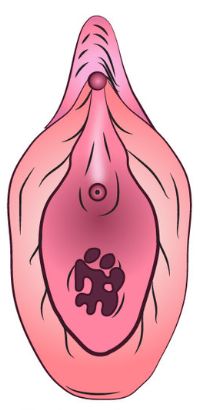
Identify the type of hymen: _____
Variations in Musculoskeletal System Flashcards for NEET-PG
Study 10 flashcards on Variations in Musculoskeletal System for NEET-PG Anatomy. These active recall cards cover the key concepts, clinical associations, and high-yield facts from this chapter of Anatomical Variations and Anomalies. Each card is designed to test your understanding rather than just recognition, building stronger and more durable memories for exam day.
For personalised spaced repetition scheduling and unlimited flashcards, download the Oncourse app.
Frequently Asked Questions
Are Variations in Musculoskeletal System flashcards free?
How many flashcards does this chapter have?
How should I use these flashcards for NEET-PG?
Are there more flashcards for Anatomical Variations and Anomalies?
Want unlimited flashcards?
Get full access to all flashcards, spaced repetition, and progress tracking.
Start For Free