Back
USMLE Step 1 Is Pass/Fail Now — Here's What IMGs Actually Need to Do to Match in 2026
Complete guide for IMGs navigating USMLE Step 1 pass/fail format. Learn the new match strategies, Step 2 CK score requirements, research needs, and USCE planning for successful 2026 residency applications.
USMLE Step 1 Is Pass/Fail Now — Here's What IMGs Actually Need to Do to Match in 2026
You probably heard it already — USMLE Step 1 is now pass/fail. No more 3-digit score. No more ranking IMGs by that single number. The game changed completely in January 2022, and residency match 2026 will be the fifth cycle under this new reality.
Here's what most IMGs dont realize: this isnt just about losing a number. The entire strategy for matching into US residency has shifted. Step 2 CK is now the primary academic metric, research matters more than ever, and clinical experience requirements have become stricter.
You're competing against 14,000+ other IMGs for roughly 8,000 residency spots. With Step 1 scores gone, program directors are scrutinizing every other part of your application under a microscope. The margin for error has gotten smaller, not larger.
This guide breaks down exactly what you need to do differently to match in 2026. No fluff — just the strategies that actually work in today's pass/fail landscape.
Why Step 1 Pass/Fail Changed Everything for IMGs
Before 2022, Step 1 was the great equalizer. An IMG with a 265 could compete directly with US medical students. That single score opened doors, secured interviews, and often determined match outcomes.
Now? Program directors cant use Step 1 to quickly filter thousands of applications. They're relying on:
Step 2 CK scores (now the primary academic metric)
Research output and publications
US clinical experience quality
Letters of recommendation from US physicians
Board eligibility and visa status
The result: IMGs need higher Step 2 CK scores, more robust research portfolios, and stronger US connections than ever before. A "pass" on Step 1 simply gets you to the starting line.
Step 2 CK Is Now Your Primary Academic Weapon
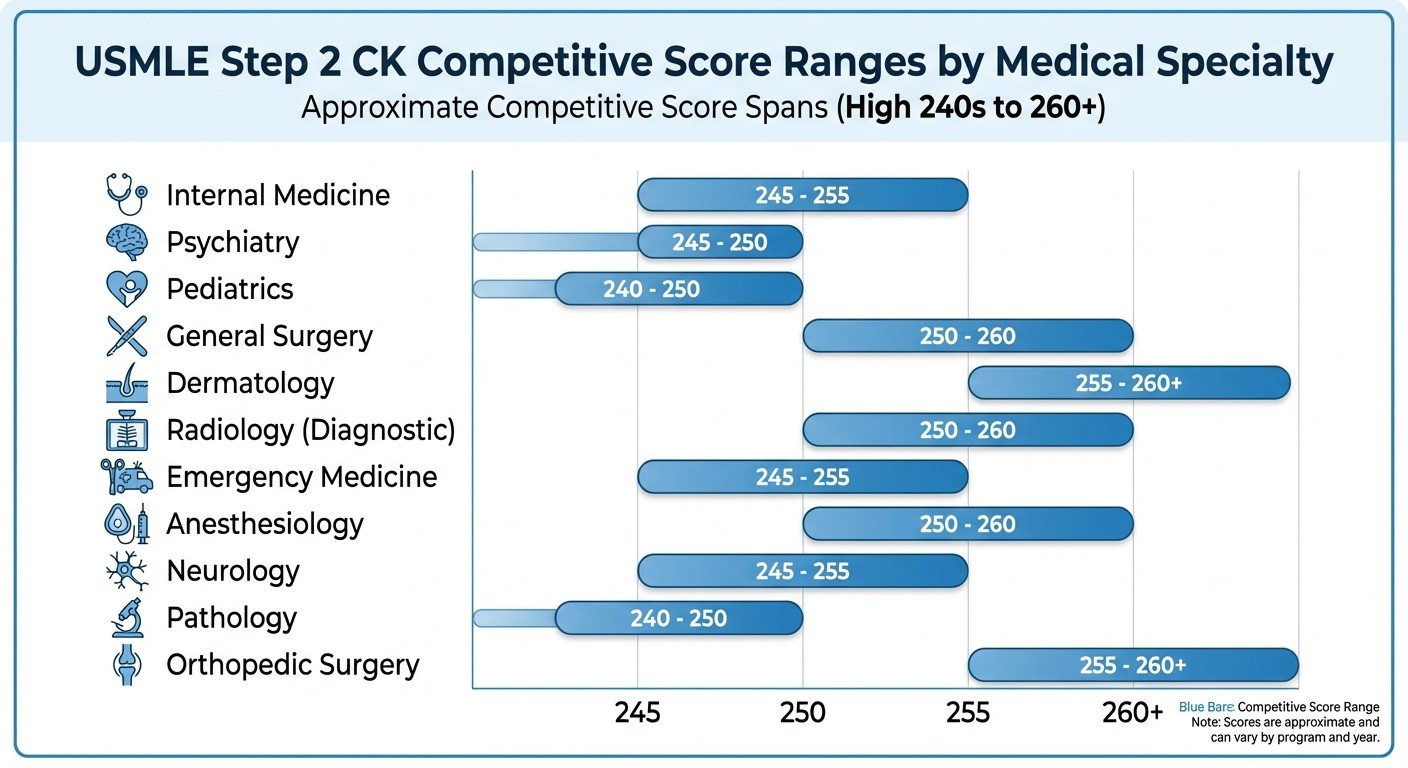
With Step 1 numerical scores gone, Step 2 CK carries all the weight. Here's what the numbers show:
Competitive Step 2 CK Scores for IMGs in 2026:
Internal Medicine: 250+ (preferred 255+)
Family Medicine: 245+ (preferred 250+)
Psychiatry: 245+ (preferred 250+)
Pediatrics: 250+ (preferred 255+)
Surgery: 255+ (preferred 260+)
Dermatology/Radiology: 260+ (almost required)
These thresholds are roughly 10-15 points higher than pre-2022 levels. Why? Because Step 2 CK is now doing the heavy lifting that Step 1 used to do.
Step 2 CK Strategy Changes
Timing matters more now. Take Step 2 CK as soon as you're ready to score competitively. Many IMGs are taking it during their final year or immediately after graduation, rather than waiting until after Step 3. One shot, best shot. You cant afford a mediocre first attempt and a retake. Program directors see all scores, and retakes raise red flags about clinical knowledge. Clinical correlation is key. Step 2 CK isnt just about memorizing facts — it tests clinical decision-making that directly predicts residency performance. Focus on understanding why treatments work, not just what treatments to use.
Practice with high-quality question banks that mirror the actual exam format. Oncourse's Step 2 CK question bank provides over 5,000 clinical vignettes with AI-powered explanations that help you think through each case systematically.
Research Requirements Have Skyrocketed
With Step 1 scores gone, research has become the primary differentiator between competitive and average applications. Here's what "competitive research" looks like in 2026:
Minimum research portfolio:
3-5 first-author publications (peer-reviewed journals)
2-3 case reports or case series
1-2 review articles (preferably invited)
Conference presentations (national meetings preferred)
Research timeline for IMGs:
Start research activities 18-24 months before your intended match year. Most competitive research takes 12-18 months from conception to publication.
How to Build Research as an IMG
Option 1: Remote research collaborations
Many US institutions now accept remote research collaborators. Focus on retrospective chart reviews, systematic reviews, or meta-analyses that dont require on-site data collection.
Option 2: Home country institutional affiliations
Partner with US physicians conducting international studies. Many global health initiatives need local collaborators with medical training.
Option 3: Clinical observerships with research components
Choose observerships at institutions with active research programs. Many programs allow observers to contribute to ongoing projects.
The key: start early, be consistent, and aim for first authorship whenever possible. Program directors value sustained research effort over one-time publications.
US Clinical Experience Is No Longer Optional
Pre-2022, strong Step scores could sometimes compensate for limited US clinical exposure. Not anymore. US clinical experience is now effectively required for competitive applications.
What counts as US clinical experience:
Experience Type | Value for Residency Apps | Typical Duration |
|---|---|---|
USCE Externships | High (with LORs) | 4-8 weeks |
Clinical Observerships | Medium | 2-4 weeks |
Research Fellowships | High (if clinical) | 3-12 months |
Volunteer Clinical Work | Low-Medium | Ongoing |
USCE Strategy for 2026
Quality over quantity. Two high-quality externships with strong letters of recommendation beat five observerships with generic feedback. Timing matters. Complete USCE during your final year of medical school or within 2 years of graduation. Older experiences carry less weight. Geographic strategy. Do rotations in states where you plan to apply. Regional preferences matter more for IMGs than US graduates. Letter of recommendation focus. The primary goal of USCE is obtaining strong LORs from US physicians who can speak to your clinical abilities.
Start planning USCE 12-18 months in advance. Popular programs fill up quickly, and visa processing can take months.
Letters of Recommendation Strategy
With numerical Step 1 scores gone, letters of recommendation carry more weight in conveying clinical competence. Here's what program directors want to see:
LOR composition for competitive IMG applications:
2 letters from US clinical rotations (preferably in your target specialty)
1 letter from research mentor (ideally US-based)
1 letter from home country clinical supervisor
What Makes a Strong LOR
Specific clinical examples. Generic praise means nothing. Strong letters describe specific patients you managed, procedures you performed, or clinical decisions you made. Comparison to US medical students. The best letters explicitly state how you compare to US students the attending has worked with. Direct patient care emphasis. Letters should highlight your direct patient interaction, not just observation or research contributions. Professional behavior documentation. Letters need to address communication skills, teamwork, and professionalism — areas where program directors worry about IMG preparation.
Work with your rotation supervisors to provide them with a detailed CV, personal statement, and specific examples of your contributions during the rotation.
Application Strategy for Pass/Fail Era
The pass/fail change has fundamentally altered how IMGs should approach residency applications. Here are the key strategic shifts:
Apply Broader and Earlier
Application numbers: Most competitive IMGs now apply to 80-120 programs (up from 60-80 pre-2022). With less score-based filtering, you need more attempts to secure interviews. Geographic distribution: Apply nationally, not just to IMG-friendly states. Some traditionally competitive programs are now more open to IMGs with strong non-Step 1 credentials. Specialty backup plans: Have a clear backup specialty strategy. Many IMGs are applying to both their target specialty and a more IMG-friendly alternative.
Personal Statement Evolution
Your personal statement now needs to directly address the elephant in the room: why should programs choose you without a Step 1 score?
Key elements for 2026 personal statements:
Specific clinical experiences that demonstrate readiness
Research contributions with measurable impact
Cultural competency and diverse patient experience
Career goals tied to specific program strengths
Avoid generic statements about "passion for medicine." Focus on concrete examples of clinical excellence and professional growth.
Specialty-Specific Considerations
Different specialties have adapted differently to the pass/fail change. Here's what matters most for popular IMG specialties:
Internal Medicine
Step 2 CK threshold: 250+ competitive, 255+ very competitive
Research focus: Case reports, quality improvement, global health
USCE priority: Inpatient medicine rotations with procedure exposure
Geographic strategy: Apply broadly; many IM programs actively recruit qualified IMGs
Family Medicine
Step 2 CK threshold: 245+ competitive, 250+ very competitive
Research focus: Community health, preventive care, health disparities
USCE priority: Outpatient primary care with continuity experience
Geographic strategy: Rural and community programs often IMG-friendly
Psychiatry
Step 2 CK threshold: 245+ competitive, but holistic review important
Research focus: Mental health access, cultural psychiatry, addiction medicine
USCE priority: Inpatient psychiatry and emergency psychiatry exposure
Geographic strategy: State-run and academic programs more open to IMGs
Pediatrics
Step 2 CK threshold: 250+ competitive, 255+ very competitive
Research focus: Global child health, vaccination studies, developmental pediatrics
USCE priority: General pediatrics and pediatric subspecialty exposure
Geographic strategy: Children's hospitals often have IMG-friendly programs
Timeline for IMG Match Success in 2026
Here's a realistic timeline for IMGs targeting the 2026 match:
18 months before match (July 2024):
Start Step 1 preparation if not already passed
Begin research collaborations
Plan USCE timeline and applications
12 months before match (January 2025):
Complete Step 1 (pass/fail)
Begin intensive Step 2 CK preparation
Submit USCE applications for summer/fall rotations
9 months before match (April 2025):
Take Step 2 CK when ready to score competitively
Complete first round of USCE
Submit research papers for publication
6 months before match (July 2025):
Complete additional USCE if needed
Finalize research projects and publications
Begin personal statement and application preparation
4 months before match (September 2025):
Submit ERAS application
Request transcripts and LORs
Complete Step 2 CS if required
Match day (March 2026):
Participate in Match Week
Have backup plans ready (SOAP, future match cycles)
Common Mistakes IMGs Make in Pass/Fail Era
Avoid these critical errors that torpedo IMG applications:
Mistake 1: Treating Step 1 as Less Important
Just because Step 1 is pass/fail doesnt mean it doesnt matter. You still need to pass on first attempt and demonstrate solid foundational knowledge.
Mistake 2: Delaying Step 2 CK Preparation
Many IMGs underestimate how much longer Step 2 CK preparation takes. Start early and give yourself time for a potential retake if needed.
Mistake 3: Quantity Over Quality Research
Publishing 10 low-quality case reports wont impress anyone. Focus on meaningful research contributions with good methodology and clear clinical relevance.
Mistake 4: Generic USCE Approaches
Treating rotations as tourism rather than intensive learning experiences. Program directors can tell the difference between engaged learners and passive observers.
Mistake 5: Underestimating Application Costs
Budget $8,000-12,000 for the entire application process (exams, USCE, applications, interviews). Financial constraints shouldnt force compromises on application quality.
How Technology Can Give You an Edge
The pass/fail era demands more efficient preparation across multiple domains. Here's where AI-powered study tools make a difference:
Adaptive learning for Step 2 CK: Traditional question banks treat all students the same. AI-powered platforms like Oncourse adjust to your specific knowledge gaps, focusing study time where you need it most. Spaced repetition for long-term retention: With research and clinical work competing for your time, efficient review systems are essential. Oncourse's flashcard system uses spaced repetition algorithms to maximize retention with minimal time investment. AI explanations for clinical reasoning: Understanding why answers are correct matters more than memorizing facts. AI tutors can break down complex clinical scenarios and help you develop the thinking patterns that Step 2 CK actually tests.
The key is choosing tools that save time while improving understanding — exactly what you need when preparing for multiple high-stakes exams while building research portfolios.
Financial Planning for IMG Applications
The pass/fail era has increased both the cost and complexity of IMG applications. Here's a realistic budget breakdown:
Essential costs:
USMLE exams: $1,500-2,000 (Steps 1, 2CK, 2CS)
USCE and housing: $3,000-6,000 (varies by location and duration)
ERAS application: $800-1,200 (80-120 programs)
Interview travel: $2,000-4,000 (depends on geography)
Visa and immigration: $500-1,000
Total: $7,800-14,200
Optional but helpful:
Question banks and study materials: $500-800
Research course or mentorship: $1,000-2,000
Professional application review: $500-1,500
Start saving early and consider the application process a 2-year investment, not a single-year expense.
Frequently Asked Questions
How much does a Step 1 pass vs high pass matter now?
NBME eliminated the "high pass" designation in 2022. There's only "pass" or "fail" now. A pass is a pass — program directors cant see any performance distinction within the pass category.
Can I still match with a Step 2 CK retake?
Yes, but it's much harder. Retakes raise questions about clinical knowledge and test-taking ability. If you must retake, aim for a significant score improvement (15+ points) and have a compelling explanation ready.
Is Step 2 CS still required for IMGs?
As of 2026, Step 2 CS requirements vary by state. Most states require it for licensure, but some residency programs accept applications without it. Check specific program requirements carefully.
How important is the timing of Step 2 CK?
Take Step 2 CK when you're ready to score competitively, ideally 6-12 months before ERAS submission. Early scores give you time to retake if necessary and help guide your application strategy.
Should I apply to my home country specialty or switch for better US odds?
This depends on your long-term career goals. Some specialties (family medicine, internal medicine, pathology) are more IMG-friendly than others (dermatology, ophthalmology, radiation oncology). Consider both your interests and realistic match probabilities.
How many research publications do I actually need?
Quality matters more than quantity, but competitive IMG applications typically have 3-5 first-author publications. Focus on peer-reviewed journals over conference abstracts, and aim for papers relevant to your target specialty.
The Bottom Line: Adapt or Fall Behind
The USMLE Step 1 pass/fail change wasnt just a scoring adjustment — it fundamentally altered the IMG pathway to US residency. Success now requires higher Step 2 CK scores, stronger research portfolios, more US clinical experience, and better strategic planning.
The IMGs who match successfully in 2026 will be those who adapted their entire approach to this new reality. They started earlier, prepared more broadly, and invested in building comprehensive applications rather than banking on a single test score.
The competition hasnt gotten easier. But with the right strategy, timeline, and preparation tools, matching into US residency as an IMG in 2026 is absolutely achievable.
Prepare smarter with Oncourse AI — adaptive MCQs, spaced repetition, and AI explanations built for USMLE success. Download free on Android and iOS.