USMLE Step 1 Is Pass/Fail Now — Here's What IMGs Actually Need to Do to Match in 2026
Complete guide for IMGs on matching US residency after Step 1 became pass/fail. Step 2 CK strategy, research requirements, clinical experience, and application timeline for 2026.
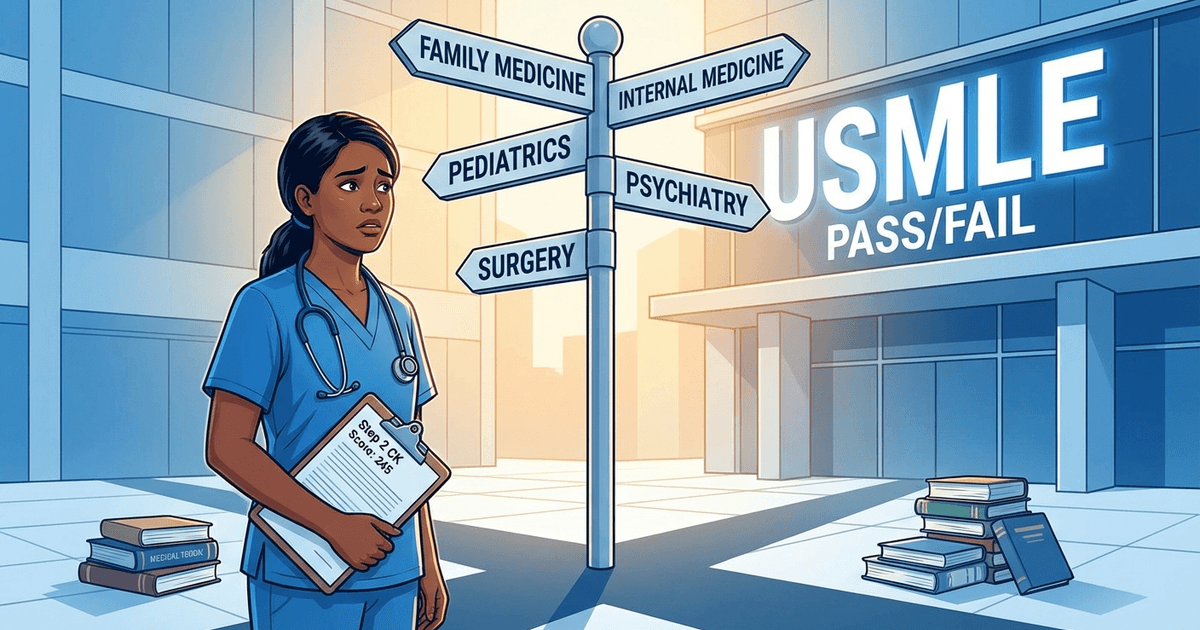
USMLE Step 1 Is Pass/Fail Now — Here's What IMGs Actually Need to Do to Match in 2026
You are probably staring at your Step 1 prep wondering if it still matters. The answer is yes — just not in the way you think.
Since January 2022, USMLE Step 1 became pass/fail. No more 260s to brag about. No more using a killer Step 1 score to offset mediocre Step 2 CK performance. The entire game changed, and IMGs who dont adapt are the ones not matching.
Here's what actually matters now: Step 2 CK carries the full weight of your numerical USMLE performance. Research becomes mandatory, not optional. Clinical experience needs documentation. And timing? It matters more than ever because competitive applicants are banking higher Step 2 CK scores earlier.
This isnt doom and gloom — its clarity. IMGs who understand the new rules are matching at competitive rates. Those who dont are still preparing like its 2021.
Why Step 1 Pass/Fail Actually Helps IMGs (If You Play It Right)
The pass/fail change leveled one specific playing field: US medical students cant coast on Step 1 scores anymore either. Everyone faces the same pressure to perform on Step 2 CK.
What this means for you:
Step 1 is now purely a hurdle, not a ranking tool
Your energy should shift heavily toward Step 2 CK preparation
More time for research, clinical experience, and networking
Level playing field with US students on the scoring exam that matters
The catch: You need to pass Step 1 convincingly. A barely-passing performance signals weak fundamentals that will hurt you on Step 2 CK. The goal isnt just to pass — its to pass with knowledge that transfers.
When preparing basic sciences, tools like Oncourse's Rezzy AI tutor help reinforce fundamental concepts through personalized questioning that adapts to your weak areas, making sure your Step 1 knowledge actually sticks for clinical applications.
Step 2 CK Is Now Your Make-or-Break Score
Step 2 CK scores now determine your competitiveness for every specialty. The numbers are stark: competitive specialties expect 250+ for IMGs, and even family medicine programs prefer 240+.
Target Scores by Specialty (2026 Reality Check)
Specialty | IMG Target Score | Match Rate with Target |
|---|---|---|
Internal Medicine | 240+ | 65% |
Family Medicine | 235+ | 70% |
Pediatrics | 245+ | 55% |
Surgery | 250+ | 25% |
Psychiatry | 240+ | 60% |
Emergency Medicine | 250+ | 30% |
Radiology/Anesthesia | 255+ | 20% |
These arent the minimum scores — these are what competitive applications look like in 2026.
How to Nail Step 2 CK
Start clinical preparation early. Step 2 CK tests clinical decision-making, not just knowledge recall. You need exposure to real patient scenarios and diagnostic reasoning. Focus on high-yield clinical patterns. The exam tests common presentations of common diseases. Master the bread-and-butter cases before diving into rare zebras. Practice adaptive questioning. Step 2 CK adapts to your performance in real-time. Traditional static question banks dont prepare you for this. Interactive AI systems that adjust difficulty based on your responses mirror the actual exam format better.
For clinical reasoning practice, the Probe diagnostic game trains pattern recognition through case-based scenarios, helping you think through differential diagnoses the way the exam expects.
Research Is No Longer Optional for IMGs
US medical students have built-in research opportunities through their medical schools. IMGs need to create these opportunities deliberately.
Research Strategy That Actually Works
Aim for 3-5 publications minimum. Mix of case reports (easier to publish), review articles, and ideally one original research paper. Target journals in your preferred specialty. Even small specialty journals matter more than high-impact general journals for matching purposes. Quality over quantity on abstracts. One well-done poster presentation at a major conference beats five local presentations. Start reaching out 12 months before applying. Cold emails to faculty work, but you need persistence and a clear proposal of what you can contribute.
Publication Timeline for 2026 Match
March 2025: Begin reaching out to research mentors
June 2025: Have at least one project underway
October 2025: Submit first case report or review
January 2026: Abstract deadline for major conferences
July 2026: Applications open (need publications to list)
US Clinical Experience: What Counts and What Doesnt
Observerships are table stakes now — every IMG has them. You need meaningful clinical exposure that demonstrates US healthcare system familiarity.
Clinical Experience Hierarchy
Tier 1 (Most Valuable):
Sub-internships with evaluation letters
Research rotations with clinical component
Volunteer positions with patient contact
Tier 2 (Standard):
Clinical observerships with strong letters
Shadowing with procedure exposure
Free clinic volunteer work
Tier 3 (Weak):
Generic observerships without meaningful interaction
Virtual clinical experiences
Short-term shadowing without evaluation
Getting meaningful clinical exposure: Start with volunteer work at free clinics. Build relationships with attendings who can then offer observership opportunities. Always ask about evaluation letters upfront.
Letters of Recommendation: The New Ranking System
With Step 1 scores gone, letters of recommendation carry more weight in distinguishing candidates. You need strategic planning here.
Letter Strategy for IMGs
Get at least 2 US clinical letters. These prove you can function in the US healthcare system. One research letter from your mentor. Should highlight your research contributions and potential. One letter from your medical school. Preferably from someone who knows you well, not just the dean. Backup letters ready. Programs may request additional letters, so have 1-2 extra options prepared. Quality markers in strong letters:
Specific examples of your clinical reasoning
Comparisons to US medical students or residents
Details about your communication skills with patients
Evidence of improvement or learning during rotation
Timing Strategy: When to Take What in 2026
The sequence and timing of your exams matters more now because Step 2 CK scores drive everything.
Optimal Timeline for 2026 Match
Step 1 by March 2025: Gives you time to retake if needed and pivot to Step 2 CK prep Step 2 CK by June 2025: Early score for application strategy decisions Step 2 CS (if required) by August 2025: Some programs still prefer it completed ECFMG Certification by September 2025: Must be certified before applications
If You Haven't Started Yet
Taking Step 1 in late 2025: You can still make the 2026 match, but your timeline becomes aggressive Step 2 CK preparation: Start this parallel to Step 1 prep, dont wait until after Research gap year: Consider applying for 2027 match if you cant get competitive scores and research done in time
For accelerated preparation, using spaced repetition flashcards helps retain clinical mnemonics and high-yield facts across both Step 1 and Step 2 CK prep simultaneously.
Application Strategy: Standing Out When Scores Matter More
With fewer differentiators, every part of your application needs optimization.
Personal Statement Evolution
Dont just explain why medicine. Explain why US medicine and why this specialty specifically. Address the IMG path directly. Acknowledge challenges and show how theyve prepared you uniquely. Connect your experiences. Research, clinical work, and personal background should tell one coherent story. End with specific goals. What will you contribute to this program and specialty?
ERAS Application Optimization
List experiences strategically. Put research first, then clinical experiences, then other activities. Quantify everything. Hours, patients seen, procedures observed, papers published. Use keywords. Programs filter applications using software. Include specialty-specific terms naturally. Update continuously. Add new experiences and publications as they become available.
Backup Plans: When Your Primary Strategy Isnt Working
Even with perfect preparation, matching remains competitive for IMGs. Smart candidates have multiple paths planned.
Geographic Flexibility
Apply broadly by region. Dont limit yourself to popular states or cities. Consider rural programs. Often have IMG-friendly policies and less competition. Research state licensing requirements. Some states have additional hurdles for IMGs.
Specialty Flexibility
Have a backup specialty. Usually a less competitive option you could genuinely pursue. Consider prelim/transitional years. Can lead to advanced positions later. Look at unfilled positions. SOAP (Supplemental Offer and Acceptance Program) has opportunities, but prepare early.
Alternative Pathways
Research fellowships. Can lead to clinical positions and strengthen your application. Masters degree programs. MPH or research-focused programs with clinical exposure. Industry positions. Pharmaceutical, consulting, or health tech roles while reapplying.
Common Mistakes That Tank IMG Applications
Even strong candidates make predictable errors that hurt their chances.
Score-Related Mistakes
Retaking Step 2 CK unnecessarily. A 240 is better than a second attempt at 245 Taking Step 1 too late. Delays everything else in your timeline Ignoring Step 3. Some programs prefer it completed, especially for preliminary positions
Application Mistakes
Generic personal statements. Templates are obvious and hurt more than help Too many applications. Focus on 150-200 well-researched programs instead of 300 random ones Ignoring program websites. Many explicitly state IMG requirements or preferences
Communication Mistakes
Poor interview preparation. Practice explaining your path and motivation clearly Weak follow-up. Thank you notes and interest letters matter Social media presence. Clean up your online profiles before applying
Regional Program Preferences: Where IMGs Actually Match
Not all states and programs treat IMG applications equally. Focus your efforts strategically.
IMG-Friendly States
New York: High IMG population, many programs familiar with international training
Michigan: Strong state programs with IMG residents
Illinois: Mix of academic and community programs
Pennsylvania: Large number of positions available
Texas: Growing programs with diverse resident populations
Program Types That Welcome IMGs
Community hospitals: Often need residents and value diverse backgrounds
County hospitals: Serve diverse patient populations
New programs: Building resident classes and more open to strong IMGs
Programs with current IMG residents: Check resident lists on program websites
Interview Preparation: Converting Applications to Matches
Getting interviews is just the first step. Converting them to match requires specific preparation.
Common IMG Interview Questions
"Why did you choose to practice medicine in the US?" Have a compelling, specific answer beyond better opportunities. "How will your international background help our patients?" Focus on cultural competency and diverse perspectives. "What challenges do you expect as an IMG resident?" Show awareness but emphasize your preparation strategies. "Where do you see yourself in 5 years?" Connect your answer to the program's mission and location.
Virtual Interview Optimization
Test your technology setup. Poor audio/video quality creates negative impressions. Prepare your environment. Professional background, good lighting, no interruptions. Practice with mock interviews. Record yourself to catch distracting habits. Follow up appropriately. Send thank you emails within 24 hours, but dont overdo it.
Financial Planning: The Hidden Costs of Matching
Applying for residency as an IMG involves significant expenses. Budget carefully to avoid last-minute stress.
Application Costs Breakdown
ERAS application: $99 + $40 per program beyond 30
Step exams: $1,000+ total for Steps 1, 2 CK, and 2 CS
ECFMG certification: $140
Interview travel: $3,000-5,000 (even with virtual interviews)
Living expenses during application year: Plan for 6-12 months
Cost-Saving Strategies
Early registration discounts: Available for some exam fees Travel optimization: Book flights early, consider driving distance for interviews Shared accommodation: Many IMG applicants coordinate housing during interview season Free resources: Use free question banks and study materials where possible
Building Your Medical Network in the US
Networking isnt optional for IMGs — its essential for finding opportunities and getting insider information.
Professional Organizations to Join
American Medical Association (AMA): National networking and advocacy
Specialty-specific organizations: Join early to show commitment
Local medical societies: Often have mentorship programs
IMG-specific groups: Connect with physicians who understand your path
Networking Strategies That Work
Attend medical conferences: Even virtual attendance helps with name recognition LinkedIn optimization: Professional profile with medical focus and regular posting Research collaborations: Working relationships often lead to clinical opportunities Volunteer at medical events: Face-to-face interaction with practicing physicians
For reinforcing medical knowledge while networking, tools like interactive medical mnemonics help you contribute meaningfully to clinical discussions by having rapid recall of key facts.
Frequently Asked Questions
Is it worth retaking Step 1 if I barely passed?
No. Step 1 is pass/fail now — spending time retaking it wont help your application. Focus that energy on crushing Step 2 CK instead.
How important is Step 2 CS for IMGs in 2026?
Step 2 CS was suspended during COVID and hasnt returned. Currently, only Step 1 and Step 2 CK are required for ECFMG certification. Monitor ECFMG announcements for any changes.
Should I apply to both preliminary and categorical positions?
Yes, if youre interested in competitive specialties. Preliminary positions can provide US clinical experience and networking opportunities for future applications.
How many research publications do I really need as an IMG?
Aim for 3-5 total publications. Quality matters more than quantity — one well-done original research paper beats five weak case reports.
Can I take Step 3 before starting residency?
Yes, and some programs prefer this. Step 3 can demonstrate your commitment and clinical knowledge, especially for family medicine and internal medicine positions.
What if I dont match in my first attempt?
Take a gap year to strengthen your application — more research, higher Step 2 CK score if needed, additional clinical experience, and apply more broadly. Many successful residents matched on their second attempt.
Step 1 being pass/fail changed everything, but it didnt make matching impossible. IMGs who adapt their strategy, focus on Step 2 CK excellence, build meaningful research portfolios, and apply strategically are still matching successfully.
The key is understanding that every other part of your application now carries more weight. Your research, clinical experiences, letters of recommendation, and Step 2 CK score must all be stronger because you cant rely on a high Step 1 to carry weaker areas.
Prepare smarter with Oncourse AI — adaptive MCQs, spaced repetition, and AI explanations built for USMLE success. Download free on Android and iOS.