Back
Radiology Residency Match 2026: What Step 2 Score You Need & How to Stand Out
Complete guide to radiology residency competitiveness in 2026. Step 2 CK score targets (250+), research requirements, away rotation strategy, and IMG tips for matching into radiology programs.
Radiology Residency Match 2026: What Step 2 Score You Need & How to Stand Out
You are probably wondering if your Step 2 score is competitive enough for radiology. The answer might surprise you — radiology residency has become significantly more competitive in 2026, with programs expecting Step 2 CK scores of 250+ and extensive research portfolios. Gone are the days when radiology was considered a "lifestyle specialty" with lower barriers to entry.
The 2026 NRMP data reveals that radiology now matches closer to dermatology and anesthesiology in terms of competitiveness. US medical students have an 85% match rate, while IMGs face a 42% match rate — numbers that reflect the specialty's rising prestige and limited positions.
If you are targeting radiology residency in 2026, you need more than just solid board scores. Programs want candidates who understand imaging interpretation, demonstrate research productivity, and show genuine commitment through away rotations and radiology-specific experiences.
What Makes Radiology Residency Competitive in 2026
Radiology competitiveness has surged due to several converging factors. The specialty offers excellent work-life balance, high compensation potential, and increasing demand for imaging expertise across all medical fields. Teleradiology opportunities and AI integration have made the field more appealing to tech-savvy medical students.
Key competitiveness drivers:
Limited positions: Only 1,123 categorical radiology positions available in 2026
High applicant interest: 2,847 applications for those positions
Strong lifestyle appeal: Predictable hours, minimal call burden
Technology integration: AI and machine learning applications
Compensation: Median radiologist salary ranges from $350,000-$500,000
The specialty has evolved from being seen as a "backup plan" to becoming a primary choice for high-achieving students interested in technology, pattern recognition, and diagnostic excellence.
Step 2 CK Score Requirements for Radiology Match 2026
Based on 2026 NRMP data, successful radiology applicants need significantly higher Step 2 CK scores than previous years. The median score for matched US seniors is 252, with the 25th percentile at 245 and 75th percentile at 260.
Score breakdown by applicant type:
Applicant Category | Median Step 2 CK | 25th Percentile | 75th Percentile |
|---|---|---|---|
US Medical Students | 252 | 245 | 260 |
US-IMGs | 248 | 240 | 255 |
Non-US IMGs | 245 | 238 | 252 |
Minimum Competitive Scores
US Medical Students: 245+ (competitive), 250+ (very competitive)
IMGs: 240+ (minimum), 248+ (competitive)
Top-tier programs: 255+ regardless of background
Your Step 2 score carries more weight than Step 1 for radiology programs because it demonstrates clinical reasoning skills essential for image interpretation and patient management. Many programs use 245 as an initial screening cutoff, so scores below this threshold face significant hurdles.
When preparing for Step 2, focus heavily on imaging-based questions and clinical vignettes that require radiological workup decisions. Oncourse's radiology-adjacent question bank includes imaging interpretation vignettes that mirror real radiology decision-making — exactly what Step 2 tests and what residency programs want to see.
Research Requirements and Publications
Research productivity has become crucial for radiology residency applications. Successful candidates average 8-12 research experiences, with at least 3-4 being radiology-specific publications or presentations.
Research portfolio essentials:
Minimum publications: 2-3 peer-reviewed papers (first author preferred)
Radiology research: At least 1-2 radiology-specific projects
Presentations: 3-5 conference abstracts or poster presentations
Research duration: 6-12 months dedicated research time ideal
High-yield radiology research areas:
AI and machine learning applications
Image quality improvement studies
Workflow optimization projects
Subspecialty imaging technique development
Healthcare economics and cost-effectiveness
Many successful applicants complete dedicated research years or summers working with radiology departments. The key is demonstrating genuine interest in advancing the field, not just padding your CV.
Start research early in medical school, ideally during your first or second year. Radiology research often involves data analysis and retrospective chart reviews, making it more accessible than bench research requiring extensive lab work.
Away Rotations Strategy
Away rotations have become essential for matching into competitive radiology programs. Most successful applicants complete 2-4 away rotations at target institutions, with at least one at a top-tier academic center.
Strategic away rotation planning:
Timing: Complete rotations during 4th year, ideally before November
Target selection: Mix of reach programs, realistic programs, and safety programs
Geographic diversity: Consider different regions if open to relocation
Program type: Balance academic medical centers with community programs
What programs evaluate during aways:
Clinical knowledge and reasoning abilities
Professionalism and teamwork skills
Genuine interest in radiology subspecialties
Ability to handle volume and pace
Research discussion and intellectual curiosity
Use away rotations to demonstrate your commitment to radiology beyond just wanting good lifestyle. Show interest in specific subspecialties, ask thoughtful questions about cases, and engage with residents and faculty about their research.
USMLE Step Scores Beyond Step 2
While Step 2 CK is most important, your complete USMLE profile matters for radiology applications. With Step 1 being pass/fail, Step 2 CK carries increased weight, but Step 3 scores (if taken) also factor into IMG applications.
Complete USMLE expectations:
Step 1: Pass (essential baseline)
Step 2 CK: 245+ competitive, 250+ very competitive
Step 2 CS: Pass (if required for your graduation year)
Step 3: 220+ if taken (IMGs often take before residency)
Some radiology programs still consider Step 1 numeric scores from students who took the exam before the pass/fail transition. If you have a high Step 1 score (240+), include it prominently in your application materials.
Focus your Step 2 preparation on areas heavily tested in radiology: internal medicine, emergency medicine, surgery, and pediatrics. These rotations provide the clinical context for most imaging orders and interpretations. Oncourse's domain score breakdown helps identify your performance specifically in radiology and imaging-tagged questions, letting you target weak areas efficiently.
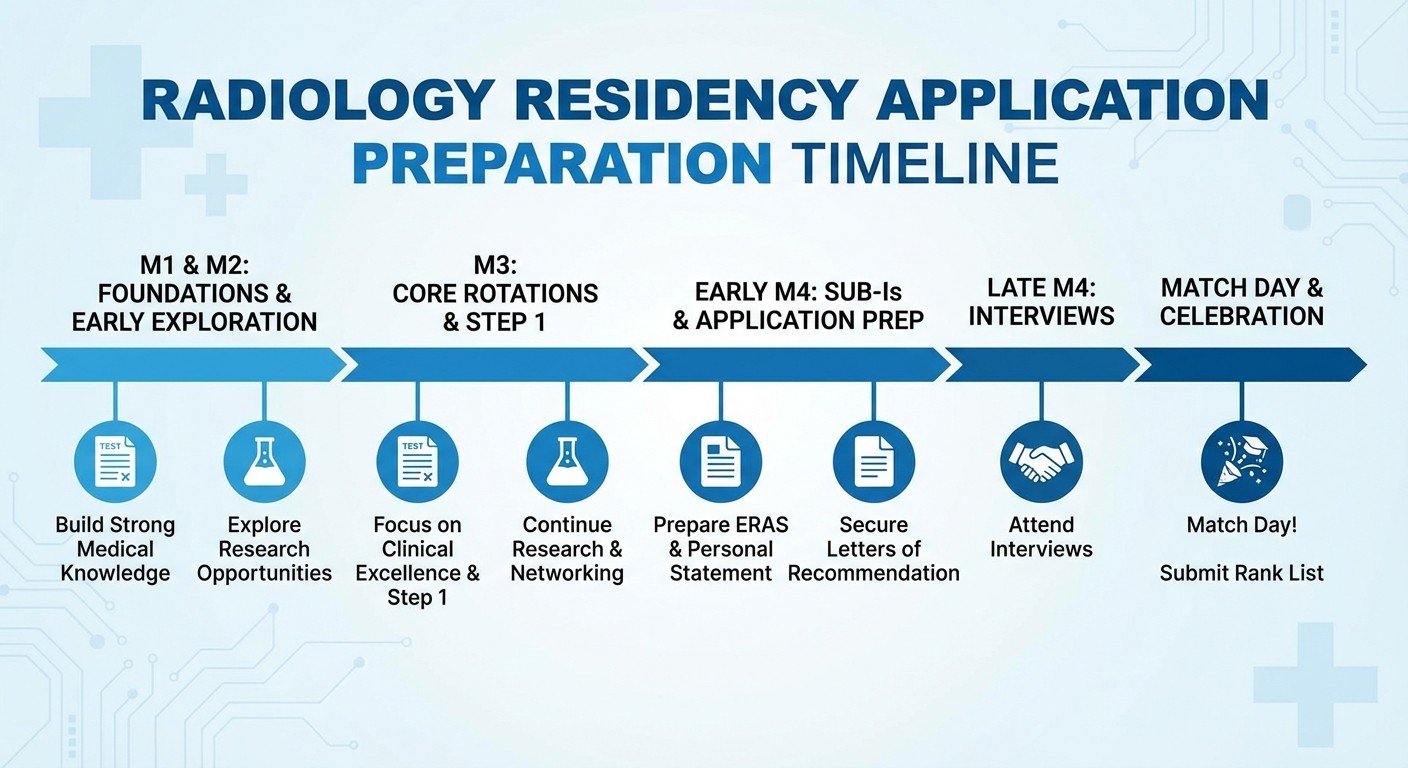
Application Timeline and Deadlines
The radiology residency application follows a specific timeline that requires early preparation and strategic planning. Missing key deadlines can derail an otherwise competitive application.
Critical 2026 application dates:
June 2025: ERAS application opens for document upload
July 2025: Complete away rotation scheduling
September 15, 2025: ERAS application submission deadline
October-January 2026: Interview season
February 2026: Rank order list deadline
March 2026: Match Day
Pre-application preparation (M1-M3):
Build radiology research portfolio
Complete relevant electives (radiology, pathology, anatomy)
Establish relationships with radiology faculty
Plan Step 2 CK timing for optimal scores
Start preparing your application materials during M3 year. Personal statements, research descriptions, and letter of recommendation requests take months to complete properly.
Letters of Recommendation Strategy
Strong letters of recommendation can differentiate your application in the competitive radiology match. Programs want letters that speak to your potential as a future radiologist, not just generic clinical performance.
Optimal letter combination:
Radiology faculty letter (essential): From attending you worked with during rotation
Department chair letter (preferred): Often required by top programs
Clinical rotation supervisor: Internal medicine, surgery, or emergency medicine
Research mentor letter: If you completed significant radiology research
What strong radiology letters should highlight:
Image interpretation aptitude and learning curve
Attention to detail and pattern recognition skills
Ability to communicate findings clearly
Professional growth during radiology exposure
Research contributions and intellectual curiosity
Cultivate relationships with radiology faculty early in your clinical years. Volunteer for research projects, attend radiology grand rounds, and seek mentorship opportunities beyond required rotations.
Request letters at least 3 months before application deadlines. Provide letter writers with your CV, personal statement draft, and specific examples of your interactions to help them write detailed, personalized recommendations.
Radiology Subspecialty Considerations
Understanding radiology subspecialties helps you articulate your interests during interviews and demonstrates depth of knowledge about the field. Most radiology residencies require a one-year fellowship for subspecialty training.
Major radiology subspecialties:
Interventional Radiology: Minimally invasive procedures, high acuity
Neuroradiology: Brain and spine imaging, stroke protocols
Musculoskeletal Radiology: Orthopedic imaging, sports medicine
Chest Radiology: Thoracic imaging, lung cancer screening
Abdominal Radiology: GI and GU imaging, oncology staging
Breast Imaging: Mammography, breast MRI, biopsies
Pediatric Radiology: Child-specific imaging considerations
Nuclear Medicine: Molecular imaging, theranostics
During your radiology rotation and away rotations, explore different subspecialties to identify your interests. Programs want residents who understand the breadth of radiology and can articulate why they are drawn to specific areas.
Some subspecialties like interventional radiology and neuroradiology are highly competitive and require additional research and networking within those specific areas.
Interview Preparation
Radiology residency interviews focus heavily on your understanding of the field, research experiences, and genuine interest in imaging. Preparation should go beyond generic residency interview advice.
Common radiology-specific interview questions:
"What draws you to radiology over other specialties?"
"How do you see AI impacting radiology practice?"
"Describe a challenging imaging case you encountered"
"What radiology subspecialty interests you and why?"
"How would you handle disagreeing with a clinician's imaging interpretation?"
Technical knowledge expectations:
Basic imaging modalities and their clinical applications
Understanding of radiation safety principles
Awareness of contrast agents and contraindications
Knowledge of emergency imaging protocols
Prepare specific examples from your radiology experiences that demonstrate your problem-solving abilities, attention to detail, and communication skills. Practice explaining complex imaging concepts in simple terms, as this reflects real-world radiology practice.
Mock interviews with radiology faculty or residents provide valuable feedback on your presentation and knowledge gaps. Oncourse's mock exam feature can be weighted toward radiology content to simulate the pressure of knowledge-based questions during interviews.
How Oncourse Helps Your Radiology Match
Preparing for radiology residency requires more than general medical knowledge — you need specific exposure to imaging interpretation and clinical decision-making that mirrors what radiologists do daily.
Oncourse's platform offers targeted preparation tools designed for students pursuing imaging-heavy specialties. The radiology-adjacent question bank includes imaging interpretation vignettes that test your ability to correlate clinical presentations with appropriate imaging choices — exactly what Step 2 evaluates and what radiology programs want to see.
The domain score breakdown feature tracks your performance specifically on radiology and imaging-tagged questions, helping you identify weak areas in chest imaging, abdominal studies, or musculoskeletal interpretation. This targeted feedback lets you focus your study time on areas that directly impact your radiology readiness.
When preparing for Step 2, use Oncourse's mock exams with radiology weighting to simulate the imaging-heavy questions you'll encounter. This additional exposure to radiology content builds pattern recognition skills essential for both board exams and residency success.
International Medical Graduate (IMG) Strategies
IMGs face additional challenges when applying to radiology residency, with only 42% successfully matching in 2026. However, strategic preparation can improve your competitiveness significantly.
IMG-specific requirements:
Higher Step scores: Aim for Step 2 CK ≥248 to be competitive
US clinical experience: At least 6-12 months of hands-on experience
ECFMG certification: Complete before application submission
Visa considerations: J-1 visa requirements and restrictions
Strategies for IMG success:
Complete radiology research at US institutions
Pursue multiple away rotations at IMG-friendly programs
Network extensively through professional organizations
Consider preliminary year applications as backup plans
Research which radiology programs have historically matched IMGs. Some programs explicitly welcome international applicants, while others rarely interview non-US graduates.
Building relationships with radiology faculty during research experiences or clinical rotations provides crucial mentorship and potential letter writers who understand your background and potential.
Program Selection and Rank List Strategy
Creating your rank list requires balancing program competitiveness with your application strength. Most successful radiology applicants apply to 50-80 programs and rank 15-20 programs where they interviewed.
Program tiers for rank list strategy: Reach programs (Top 25%):
Academic medical centers with prestigious names
Programs requiring 255+ Step 2 scores
Institutions with extensive research requirements
Realistic programs (Middle 50%):
Strong community academic programs
Programs where your stats match their median
Institutions with good subspecialty training
Safety programs (Bottom 25%):
Programs historically friendly to your background
Institutions with lower stat requirements
Geographic areas with fewer applicants
Apply broadly but thoughtfully. Research each program's culture, subspecialty strengths, and graduate outcomes to ensure good fit beyond just prestige.
Consider factors like location preferences, family considerations, and career goals when ranking programs. A program that matches your subspecialty interests may be more valuable than a prestigious name alone.
Frequently Asked Questions
What Step 2 CK score do I need for radiology residency in 2026?
For US medical students, aim for 245+ to be competitive and 250+ to be very competitive. IMGs should target 248+ for reasonable competitiveness, with scores below 240 facing significant challenges in the 2026 match cycle.
How many research publications do I need for radiology residency?
Successful applicants average 8-12 research experiences with 2-3 peer-reviewed publications. At least 1-2 should be radiology-specific research projects demonstrating genuine interest in the field beyond just clinical exposure.
Are away rotations required for radiology residency?
While not technically required, away rotations have become essential for competitive radiology applications. Complete 2-4 away rotations at target institutions, mixing reach programs with realistic options based on your application strength.
How competitive is radiology residency compared to other specialties?
Radiology competitiveness has increased significantly, with US seniors having an 85% match rate and IMGs facing a 42% match rate. It now ranks among moderately competitive specialties, similar to anesthesiology and emergency medicine.
What radiology subspecialty should I mention in my application?
Research different subspecialties during your rotation and mention specific areas that genuinely interest you. Popular choices include interventional radiology, neuroradiology, and musculoskeletal imaging, but demonstrate knowledge of why that subspecialty appeals to you.
When should I take Step 2 CK for radiology applications?
Take Step 2 CK early enough to receive scores before application submission in September. Many students take it in spring of M4 year, allowing time for retakes if needed while ensuring scores are available for applications.
Prepare smarter with Oncourse AI — adaptive MCQs, spaced repetition, and AI explanations built for USMLE. Download free on Android and iOS.