Back
Plastic Surgery & Neurosurgery: The Most Competitive Specialties & Their Step 2 Benchmarks (2026)
Side-by-side comparison of plastic surgery vs neurosurgery residency competitiveness. Step 2 CK score benchmarks, match rates, research requirements, and application strategies for 2026.
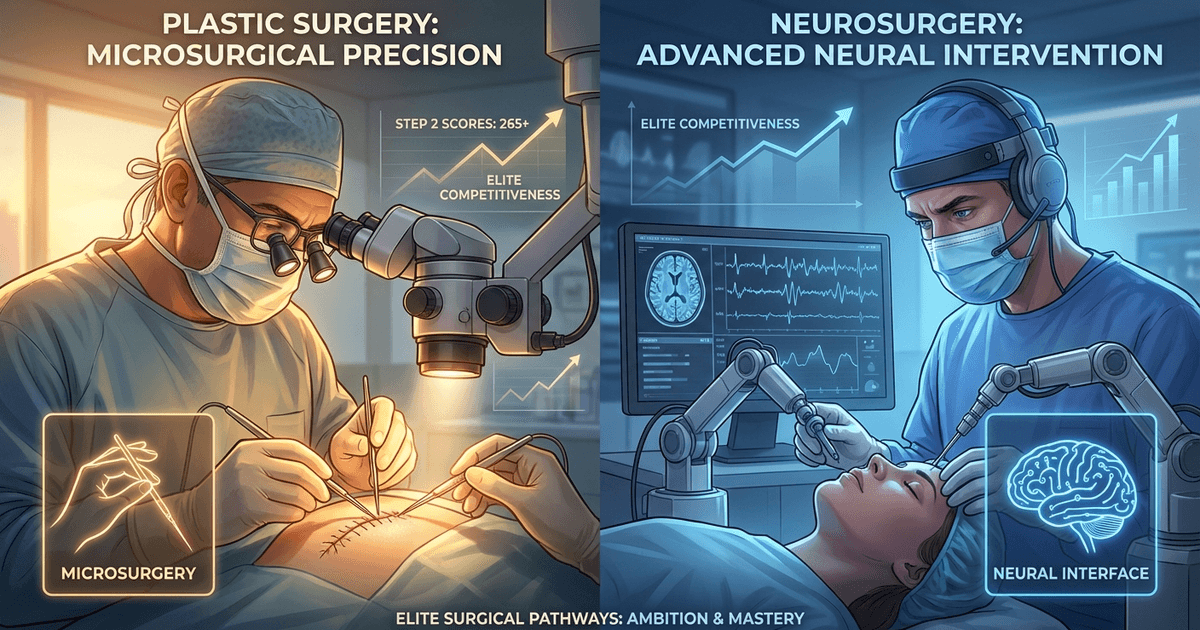
Plastic Surgery vs Neurosurgery: The Most Competitive Specialties & Their Step 2 Benchmarks (2026)
You probably already know which two specialties sit at the absolute peak of residency competitiveness. Plastic surgery and neurosurgery arent just competitive — they are gladiatorial arenas where only the most exceptional candidates survive the match process.
Both require Step 2 CK scores that would make internists weep. Both demand research portfolios that rival PhD dissertations. Both have match rates that hover around 60-70%, meaning 3-4 out of 10 qualified applicants get rejected every year.
But which one is actually harder to match into? And more importantly — if you are targeting either, what specific benchmarks do you need to hit to stand a chance?
This isnt a generic overview. This is the side-by-side breakdown of exactly what separates plastics from neurosurgery, what each specialty prioritizes, and the concrete Step 2 score ranges that actually get interviews at top programs.
Quick Comparison: Plastics vs Neurosurgery at a Glance
Metric | Plastic Surgery | Neurosurgery |
|---|---|---|
Match Rate (2026) | 63.2% | 66.8% |
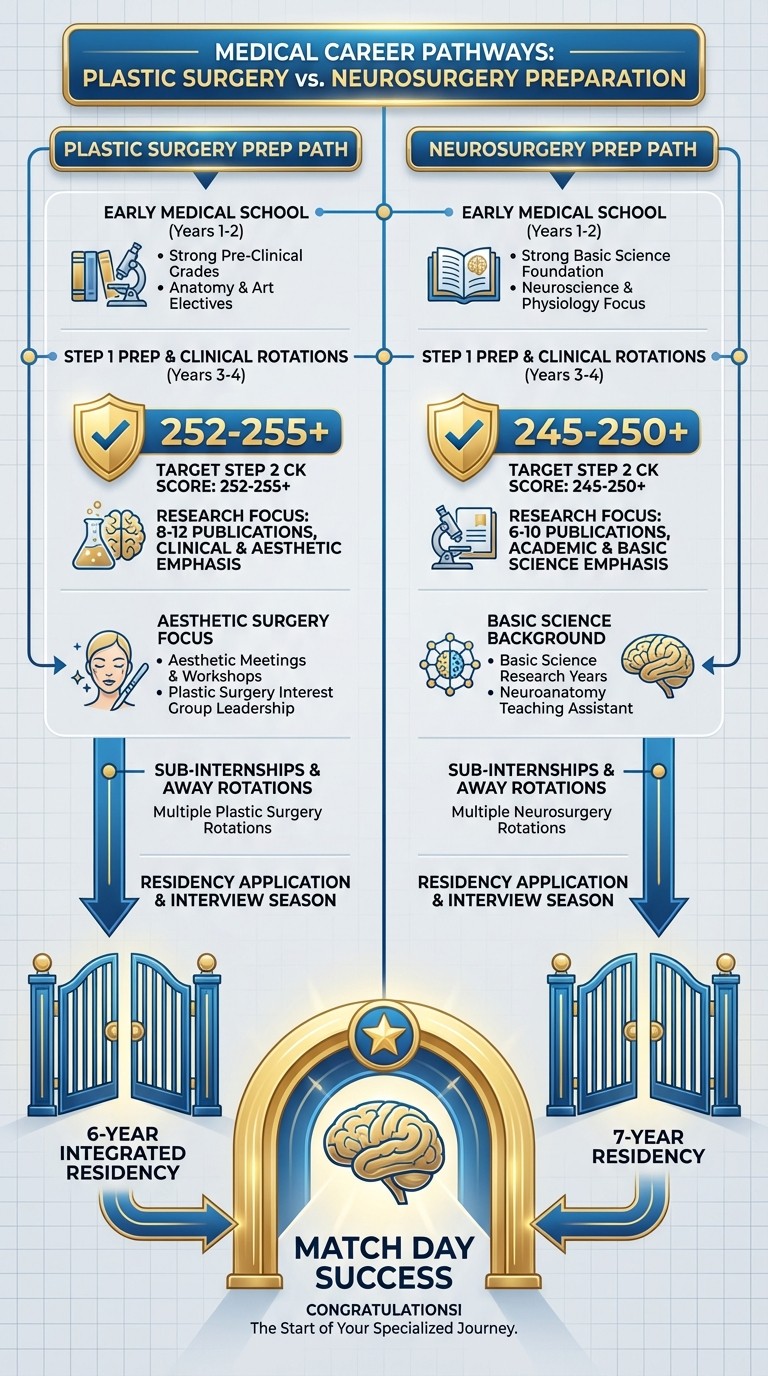
Step 2 CK Mean | 252-255 | 248-252 |
Step 2 CK 75th %ile | 258+ | 255+ |
Research Papers | 8-12 publications | 6-10 publications |
Program Spots | ~150 total | ~220 total |
Residency Length | 6 years | 7 years |
Board Certification | 97.3% | 95.8% |
Fellowship Rate | 85%+ | 60% |
The numbers tell one story. The reality tells another.
Plastic Surgery Residency: The Ultimate Aesthetic & Reconstructive Challenge
Plastic surgery has earned its reputation as the most selective specialty in medicine, and 2026 data confirms it. With fewer than 160 spots available nationally and over 1,100 applications submitted each year, the math is brutal.
Step 2 Score Benchmarks for Plastic Surgery
The Step 2 CK score distribution for matched plastic surgery applicants clusters tightly at the top:
Minimum competitive score: 245
Average matched applicant: 252-255
Top-tier programs (Harvard, NYU, Stanford): 258-265
75th percentile: 258+
90th percentile: 262+
What makes plastics unique is the score ceiling effect. Unlike internal medicine where a 250 guarantees multiple interviews, plastic surgery programs routinely see applicants with 260+ scores. The Elite Track difficulty setting mimics this reality — questions calibrated at the 90th percentile level because thats where plastics applicants live.
Research Requirements: Quality Over Quantity
Plastic surgery values research depth and clinical relevance:
Average publications: 8-12 peer-reviewed papers
First-author requirement: Minimum 3-4 papers
Research focus: Aesthetic outcomes, microsurgery techniques, reconstructive innovations
Presentation requirement: 6+ national conference presentations
Clinical research preference: Patient outcome studies outweigh basic science
Program Volume & Geographic Distribution
With only 156 categorical plastic surgery spots in 2026, geographic flexibility becomes mandatory:
Most competitive regions: Northeast (45 spots), California (28 spots)
Hidden gems: Texas (22 spots), Midwest programs with lower application volume
Combined programs: Integrated plastics programs (6 years) vs independent (post-general surgery)
Match strategy: Apply broadly — successful candidates average 40+ applications
Neurosurgery Residency: The Brain Surgery Elite
Neurosurgery operates differently. With 220 spots nationally, theres slightly more breathing room, but the intellectual bar may be even higher. Neurosurgery programs dont just want great test scores — they want future department chairs.
Step 2 Score Benchmarks for Neurosurgery
Neurosurgery score expectations reflect both the intellectual demands and the smaller applicant pool:
Minimum competitive score: 240
Average matched applicant: 248-252
Top-tier programs (Johns Hopkins, UCSF, Mayo): 255-260
75th percentile: 255+
90th percentile: 260+
The score range is slightly lower than plastics, but neurosurgery compensates with research intensity. Programs care more about your ability to think through complex problems than perfect test performance. Still, anything below 245 puts you at a significant disadvantage.
Research Requirements: Academic Medicine Focus
Neurosurgery research expectations lean heavily academic:
Average publications: 6-10 peer-reviewed papers
Research focus: Basic neuroscience, clinical outcomes, surgical innovation
PhD advantage: 15% of matched applicants hold research PhDs
Mentorship critical: Strong letters from neurosurgery faculty carry enormous weight
Research years: Many successful applicants take 1-2 dedicated research years
Program Characteristics & Culture
Neurosurgery programs prioritize long-term academic potential:
Residency length: 7 years (longest in medicine)
Call burden: Q2-Q3 call remains standard
Academic focus: 70% of programs are university-based
Fellowship rates: 60% pursue subspecialty training (spine, vascular, pediatric)
Geographic distribution: More evenly spread than plastics
Head-to-Head: Which Specialty is Harder to Match?
The raw numbers suggest plastic surgery edges out neurosurgery in pure competitiveness, but the comparison isnt straightforward.
Plastic Surgery Advantages
Slightly more spots (156 vs 220 doesnt matter when application volume is proportionally higher)
Higher Step 2 score cushion for top programs
Research portfolio can focus on clinical outcomes vs basic science
Neurosurgery Advantages
Less emphasis on perfect standardized test scores
Research depth valued over publication quantity
Strong mentorship relationships can overcome score deficits
Bottom line: Plastic surgery has a higher floor for Step 2 scores, but neurosurgery has a higher ceiling for research expectations. Both require exceptional performance across multiple domains.
Strategy Differences: How to Target Each Specialty
For Plastic Surgery Applicants
Step 2 Strategy: Aim for 255+ minimum. Use the Score Projection feature to model how long youll need to reach this benchmark — most successful applicants need 6-8 months of dedicated Step 2 prep. Research Strategy:
Start early (MS2 latest)
Focus on clinical outcomes and aesthetic results
Prioritize first-author papers in plastic surgery journals
Attend aesthetic surgery conferences for networking
Application Strategy:
Apply to 50+ programs
Geographic flexibility mandatory
Consider both categorical and preliminary/research track pathways
Strong away rotations at target programs
For Neurosurgery Applicants
Step 2 Strategy: Target 250+ with emphasis on consistent performance across all subjects. The Specialty Split View helps here — simultaneously studying neurology and surgery content since neurosurgery draws from both. Research Strategy:
Deep over broad — fewer papers with significant contributions
Neuroscience research years highly valued
Strong mentorship from neurosurgery faculty essential
Basic science background helpful but not required
Application Strategy:
Apply to 30-35 programs (lower than plastics due to better match rates)
Research track applications for backup
Away rotations critical for demonstrating commitment
Strong performance on neurosurgery shelf exam
Timeline to Competitive Scores: What the Data Shows
Based on starting Step 2 practice scores, here are realistic timelines to reach competitive benchmarks:
Starting Score: 220-230
To reach 245: 4-5 months intensive study
To reach 250: 6-7 months intensive study
To reach 255+: 8+ months, may need gap year
Starting Score: 230-240
To reach 245: 3-4 months focused study
To reach 250: 4-6 months intensive study
To reach 255+: 6-7 months intensive study
Starting Score: 240+
To reach 250: 2-3 months targeted improvement
To reach 255+: 4-5 months intensive study
The Score Projection tool models these timelines based on your current mock scores and weekly study hours, giving you a realistic timeline rather than generic advice.
Red Flags That Kill Applications (Both Specialties)
Certain mistakes doom applications to both plastic surgery and neurosurgery, regardless of Step scores:
Academic Red Flags
Step 1 failure (even with remediation)
Step 2 attempts >1 (automatic screening at many programs)
Clinical grades below Honors (particularly surgery rotations)
MSPE flags for professionalism issues
Research Red Flags
No first-author publications by application submission
Research in unrelated fields (sociology research wont help neurosurgery applications)
Weak letters from department faculty (generic letters from non-specialty attendings)
No conference presentations (shows lack of research engagement)
Application Red Flags
Geographic restrictions (both specialties require flexibility)
Weak personal statements (generic motivation stories)
Poor away rotation performance (burning bridges at target programs)
Late ERAS submission (competitive programs fill interview spots early)
Alternative Pathways: When Direct Match Doesnt Happen
Both specialties offer backup pathways for strong candidates who dont match initially:
Research Track Programs
Timeline: 1-2 year research position with guaranteed residency spot
Benefits: Protected research time, faculty mentorship, inside track to competitive programs
Requirements: Strong Step scores + research background
Programs offering: Hopkins, Mayo, MGH, Stanford
Preliminary Surgery + Research
Timeline: 1 year preliminary surgery + research years
Benefits: Clinical experience + research productivity
Risks: No guarantee of future match
Best for: Candidates with strong research backgrounds but borderline scores
Related Specialties
For plastic surgery: Dermatology, ENT, ophthalmology
For neurosurgery: Neurology, anesthesiology (neurosurgical focus), radiology
Considerations: Different application timelines and requirements
Financial Reality: Cost-Benefit Analysis
Both specialties command high earning potential but require significant upfront investment:
Plastic Surgery Economics
Residency debt accumulation: ~$350k average (6 years)
Fellowship rates: 85% (additional 1-2 years)
Starting salary: $400k-500k (aesthetic focus)
Peak earning potential: $800k+ (private practice)
Break-even timeline: 8-10 years post-residency
Neurosurgery Economics
Residency debt accumulation: ~$400k average (7 years)
Fellowship rates: 60% (additional 1 year)
Starting salary: $450k-550k
Peak earning potential: $700k-900k
Break-even timeline: 6-8 years post-residency
The longer training periods mean significant opportunity cost, but both specialties offer financial returns that justify the investment for most practitioners.
Program-Specific Insights: Where to Apply
Top Plastic Surgery Programs (Step 2 Score Ranges)
Harvard/BWH Plastic Surgery: 260-265 average
Research focus: Microsurgery, facial reconstruction
Application volume: 800+ for 2 spots
NYU Plastic Surgery: 258-263 average
Research focus: Aesthetic outcomes, business of plastic surgery
Application volume: 700+ for 3 spots
Stanford Plastic Surgery: 257-262 average
Research focus: Innovation in surgical techniques
Application volume: 650+ for 2 spots
Top Neurosurgery Programs (Step 2 Score Ranges)
Johns Hopkins Neurosurgery: 255-260 average
Research focus: Basic neuroscience, clinical outcomes
PhD preference: 25% of residents hold research PhDs
UCSF Neurosurgery: 252-258 average
Research focus: Cerebrovascular, functional neurosurgery
Geographic advantage: West Coast applicants
Mayo Clinic Neurosurgery: 254-259 average
Research focus: Surgical innovation, outcomes research
Clinical emphasis: Strong clinical performance valued
Frequently Asked Questions
What Step 2 CK score do I need for plastic surgery residency in 2026?
For plastic surgery, you need a minimum of 245 to be competitive, with most matched applicants scoring 252-255. Top-tier programs like Harvard and Stanford typically see averages of 258-265. Anything below 245 puts you at a significant disadvantage.
Is neurosurgery harder to match than plastic surgery?
Plastic surgery has slightly lower match rates (63.2% vs 66.8%) and requires higher Step 2 scores on average. However, neurosurgery demands more intensive research commitments and longer training. Both are extremely competitive, but plastic surgery edges out slightly in pure selectivity.
How many research publications do I need for neurosurgery?
Successful neurosurgery applicants average 6-10 peer-reviewed publications, with at least 3-4 as first author. Unlike plastic surgery, neurosurgery values research depth over quantity, and many programs prefer candidates with dedicated research years and basic science backgrounds.
Can I match plastic surgery with a 250 Step 2 CK?
A 250 Step 2 CK puts you below the average for matched plastic surgery applicants but isnt automatically disqualifying. You would need exceptional research productivity (10+ publications), strong clinical grades (Honors in surgery), and geographic flexibility to compensate for the lower score.
Which specialty has better work-life balance: plastic surgery or neurosurgery?
Neither specialty is known for work-life balance during training. Plastic surgery residency is 6 years with significant call burden, while neurosurgery is 7 years with traditionally heavier call schedules. In practice, plastic surgeons often have more control over their schedules, especially those in aesthetic practice.
Should I take a gap year to improve my Step 2 score for these specialties?
If your practice scores suggest youll score below 245, a gap year focused on Step 2 improvement is often worthwhile for both specialties. Use the Score Projection feature to model realistic timelines — most students need 6-8 months to improve from 235 to 250+.
Both plastic surgery and neurosurgery represent the pinnacle of medical training competitiveness. Success requires exceptional performance across Step scores, research productivity, and clinical excellence. The key is realistic self-assessment, strategic preparation, and backup planning.
Prepare smarter with Oncourse AI — adaptive MCQs, spaced repetition, and AI explanations built for USMLE Step 2. Download free on Android and iOS.