Back
How to Study Pediatrics for NEET PG 2026: High-Yield Topics, Growth Milestones, Development and Exam Strategy
Master pediatrics for NEET PG 2026 with this complete study guide covering high-yield topics, developmental milestones, vaccination schedules, and proven exam strategies for top scores.
How to Study Pediatrics for NEET PG 2026: High-Yield Topics, Growth Milestones, Development and Exam Strategy
You are staring at your pediatrics textbook at 2 AM, drowning in growth charts, vaccination schedules, and developmental milestones. Congenital anomalies blur into genetic disorders, and every syndrome seems to have 15 different features you need to memorize. Sound familiar?
Pediatrics makes up 8-10% of your NEET PG paper — that's 16-20 questions out of 200. But here's what most students get wrong: they try to memorize everything equally. The high scorers know better. They focus ruthlessly on what actually gets tested and build a systematic approach to tackle the breadth without losing their mind.
I scored in the 90th percentile, and pediatrics was initially my weakest subject. The turning point came when I stopped trying to learn everything and started learning what matters. This guide breaks down exactly how to approach pediatrics for NEET PG 2026 — what to memorize cold, what to understand conceptually, and how to organize your revision for maximum retention.
Understanding Pediatrics in NEET PG Pattern
NEET PG doesnt test your ability to manage real patients — it tests pattern recognition and factual recall. Pediatrics questions fall into predictable categories:
Growth and development milestones (3-4 questions): Age-specific abilities, reflexes, fontanelle closure
Vaccination schedules (2-3 questions): National Immunization Schedule, contraindications, adverse events
Neonatal conditions (4-5 questions): Jaundice, respiratory distress, birth asphyxia, APGAR scoring
Congenital anomalies (2-3 questions): Heart defects, gastrointestinal malformations
Genetic disorders (1-2 questions): Chromosomal abnormalities, inheritance patterns
Pediatric nutrition (1-2 questions): Malnutrition types, breastfeeding guidelines
Common infections (2-3 questions): Meningitis, respiratory tract infections
The key insight: 70% of pediatrics questions come from just 5 high-yield areas. Master these first, then fill in the gaps.
High-Yield Topics That Win You Marks
Growth and Development Milestones
This is where most students waste time creating elaborate charts they never actually memorize. Instead, focus on the age-specific milestones that repeatedly appear in NEET PG:
Critical Ages to Memorize:
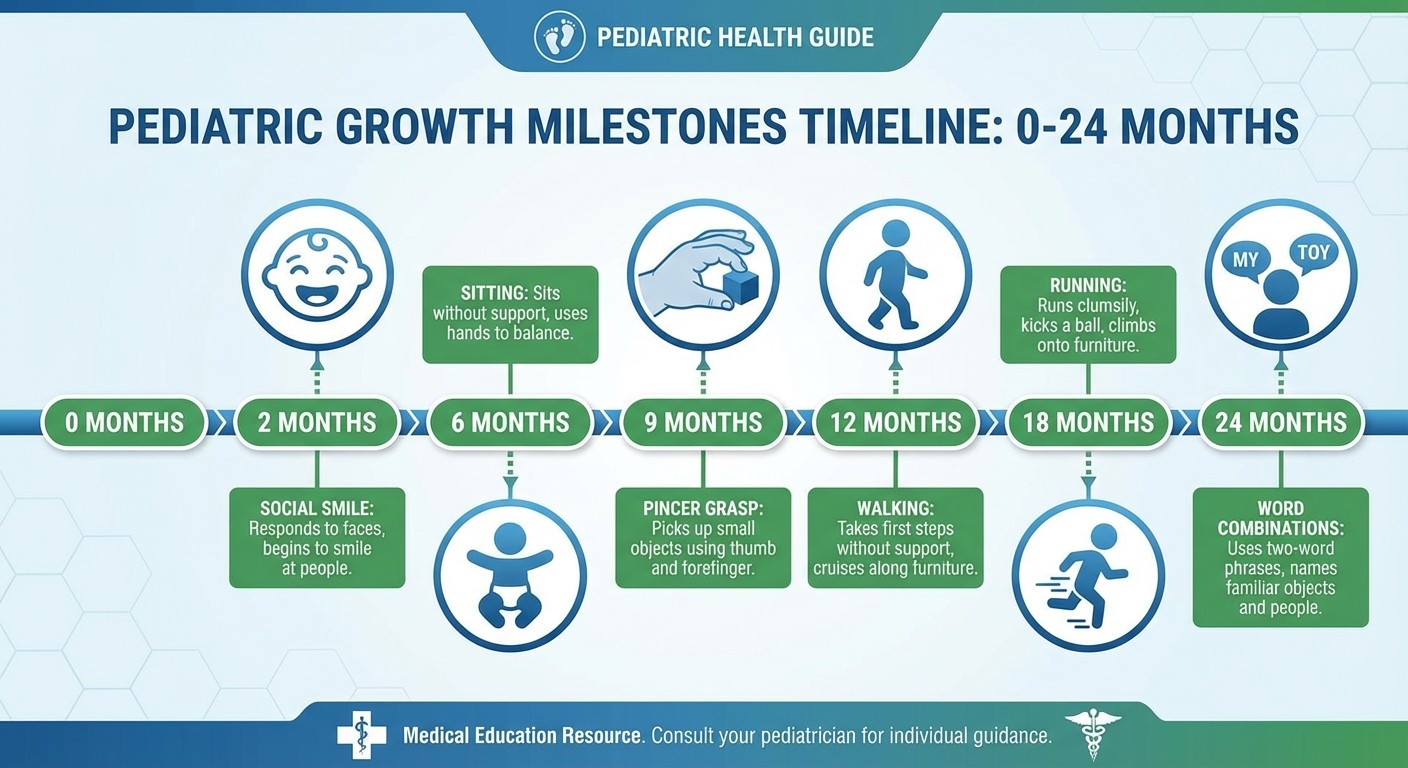
2 months: Social smile, holds head steady
6 months: Sits without support, transfers objects
9 months: Pincer grasp, says "mama/dada"
12 months: Walks independently, follows single commands
18 months: Runs, builds tower of 3 blocks
24 months: Kicks ball, combines 2 words
The trick is grouping milestones by domain (gross motor, fine motor, language, social) rather than memorizing random lists. Practice with developmental milestone MCQs to see how examiners frame these questions. Primitive Reflexes with Timelines:
Moro reflex: Present at birth, disappears by 4-6 months
Rooting reflex: Present at birth, disappears by 4 months
Palmar grasp: Present at birth, disappears by 6 months
Babinski: Normal until 12-18 months
Vaccination and Immunization Schedule
The National Immunization Schedule changes periodically, so focus on the current 2026 schedule. Questions typically test:
1. Age-specific vaccines: Which vaccines at 6 weeks, 10 weeks, 14 weeks
2. Contraindications: Absolute vs relative contraindications for specific vaccines
3. Cold chain maintenance: Storage temperatures, vaccine viability
4. Adverse events: Expected vs serious adverse events following immunization
High-Yield Vaccination Facts:
BCG: Given at birth, contraindicated in immunodeficiency
Pentavalent: Contains DPT + HepB + Hib, given at 6, 10, 14 weeks
IPV: 2 doses (6 and 14 weeks), followed by OPV
Measles: First dose at 9 months, second dose at 16-24 months
JE vaccine: Endemic areas, 9-12 months
The Daily Plan feature helps you systematically cover vaccination schedules alongside other pediatrics topics — it sequences your immunization flashcards with related MCQ practice to reinforce retention patterns.
Neonatal Conditions
Neonatology questions are often clinical vignettes describing a newborn with specific symptoms. Focus on pattern recognition for these high-yield conditions:
Neonatal Jaundice:
Physiological vs pathological jaundice timing
Kernicterus risk factors and prevention
Exchange transfusion criteria
Phototherapy indications
Respiratory Distress Syndrome:
Preterm infants, surfactant deficiency
Ground glass appearance on X-ray
Treatment with CPAP, surfactant replacement
Birth Asphyxia and APGAR:
APGAR components: Appearance, Pulse, Grimace, Activity, Respiration
Scores interpretation: <4 severe, 4-6 moderate, >7 normal
Management of asphyxiated newborn
Work through neonatal case scenarios using Clinical Rounds — the 4-tab case flow (History, Tests, Diagnosis, Treatment) mirrors how NEET PG presents clinical vignettes.
Congenital Heart Disease
Focus on the most commonly tested congenital anomalies rather than memorizing every rare syndrome:
Ventricular Septal Defect (VSD):
Most common congenital heart defect
Small VSDs: Asymptomatic, may close spontaneously
Large VSDs: CHF in infancy, Eisenmenger syndrome risk
Atrial Septal Defect (ASD):
Wide fixed splitting of S2
Ostium secundum most common type
Paradoxical embolism risk
Tetralogy of Fallot:
Four components: VSD, pulmonary stenosis, overriding aorta, RVH
Cyanotic spells, squatting position
Surgical repair required
Patent Ductus Arteriosus:
Continuous machinery murmur
Associated with maternal rubella
Indomethacin for closure
Genetic and Chromosomal Disorders
NEET PG loves testing classic phenotypic features and inheritance patterns:
Down Syndrome (Trisomy 21):
Flat facial profile, upslanting palpebral fissures
Single palmar crease, atlantoaxial instability
Increased risk of CHD, duodenal atresia
Turner Syndrome (45,X):
Short stature, webbed neck
Primary amenorrhea, streak gonads
Coarctation of aorta, horseshoe kidney
Klinefelter Syndrome (47,XXY):
Tall stature, gynecomastia
Small testes, azoospermia
Normal intelligence (unlike other sex chromosome abnormalities)
Use Synapses puzzles to practice grouping genetic syndrome features — the 16-word grouping format is perfect for organizing chromosomal abnormality characteristics by phenotype clusters.
Memory Techniques for Pediatrics
The Age-Anchor Method
Instead of creating massive timeline charts, use age anchors — specific ages where multiple milestones cluster:
6 months cluster: Sits without support, transfers objects, starts solids, 6-month vaccines
12 months cluster: Walks, first words, measles vaccine, weans from bottle
24 months cluster: Runs, 2-word sentences, toilet training readiness
Mnemonic Systems That Actually Work
For APGAR scoring — use "How Ready Is This Child":
Heart rate (pulse)
Respiratory effort
Irritability (grimace)
Tone (activity)
Color (appearance)
For Tetralogy of Fallot — "PROVe it":
Pulmonary stenosis
Right ventricular hypertrophy
Overriding aorta
Ventricular septal defect
Clinical Correlation Strategy
Connect pediatric facts to clinical presentations youve seen. When studying failure to thrive, link it to the actual growth charts and percentile calculations. When reviewing vaccination schedules, think about the actual timing and parental counseling scenarios.
Creating Your Pediatrics Study Timeline
Phase 1: Foundation Building (Weeks 1-2)
Start with growth and development milestones — this forms the foundation for understanding normal vs abnormal in all other pediatrics topics:
1. Study growth and development lessons systematically
2. Practice milestone MCQs daily
3. Create age-anchor charts using the clustering method
Phase 2: High-Yield Topics (Weeks 3-4)
Focus on the big-ticket items that guarantee marks:
1. Neonatology: Work through neonatal condition lessons and practice case-based questions
2. Vaccination schedules: Memorize current NIS, practice contraindication scenarios
3. Congenital heart disease: Focus on the big 4 (VSD, ASD, PDA, TOF)
Phase 3: Integration and Practice (Weeks 5-6)
This is where most students fall apart — they know isolated facts but cant connect them in clinical scenarios:
1. Practice mixed pediatrics MCQs to test integration
2. Use Clinical Rounds for pediatric case scenarios — practice the differential diagnosis approach
3. Focus on weak areas identified through practice tests
Phase 4: Rapid Revision (Final Week)
Create condensed review materials:
1. One-page milestone summary with age anchors
2. Vaccination schedule quick reference
3. Syndrome feature clusters
4. High-yield fact lists for rapid review
Smart Practice Strategies
Question Analysis Method
When practicing pediatrics MCQs, dont just check if you got it right. Analyze the question pattern:
What clinical clue led to the correct answer?
Which distractors were designed to confuse you?
What background knowledge was assumed?
For example, a question about a 6-month-old not sitting might test milestone knowledge, but the distractors might include cerebral palsy, developmental delay, or nutritional deficiency. Understanding the differential helps you tackle similar questions.
Spaced Repetition for Milestones
Use pediatric flashcards for milestone review, but space them strategically:
Daily: Current week's new milestones
Every 3 days: Previous week's milestones
Weekly: Month-old milestones
Bi-weekly: Well-established milestones
Clinical Scenario Building
For every major pediatrics topic, create a mental clinical scenario:
Growth delay: 2-year-old not walking, weight <3rd percentile
Vaccination question: 6-month-old missed 10-week vaccines
Neonatal jaundice: Day 3 newborn with rising bilirubin
This approach makes abstract facts memorable and clinically relevant.
Common Mistakes to Avoid
The Everything-Is-Important Trap
Pediatrics textbooks contain thousands of facts, but NEET PG tests maybe 200 of them repeatedly. Students who try to memorize every syndrome, every percentile chart, and every rare condition end up knowing a little about everything and a lot about nothing.
Solution: Stick to the high-yield topic list. If it hasnt appeared in NEET PG papers in the last 5 years, its probably not worth detailed study.
The Isolation Study Method
Studying pediatrics topics in complete isolation leads to poor retention and weak clinical correlation. Growth milestones connect to nutrition, vaccination schedules link to infectious diseases, and neonatal conditions overlap with genetics.
Solution: Study in integrated blocks. When covering failure to thrive, also review normal growth patterns, nutritional requirements, and feeding guidelines.
The Passive Reading Approach
Reading pediatrics textbooks passively wont help you recognize clinical patterns or recall specific facts under exam pressure. Active engagement is essential.
Solution: Turn every study session into a quiz. After reading about developmental milestones, immediately test yourself. After studying vaccination schedules, practice scenario-based questions.
Revision Strategies That Work
The 24-48-7 Rule
For pediatrics facts that you absolutely must remember:
Review within 24 hours of first learning
Review again within 48 hours
Review again within 7 days
This spacing pattern works particularly well for vaccination schedules, APGAR scoring, and milestone timelines.
Topic Integration Days
Once weekly, dedicate a day to connecting pediatrics topics:
How do growth milestones relate to nutritional assessment?
Which genetic syndromes have associated heart defects?
What infections affect vaccination timing?
Mock Test Analysis
After every pediatrics mock test:
1. Identify pattern gaps: Which types of questions consistently trip you up?
2. Review incorrectly answered topics: Dont just check the right answer — understand why you got it wrong
3. Time management assessment: Are you spending too long on complex case scenarios?
Frequently Asked Questions
How many hours per day should I dedicate to pediatrics?
For NEET PG preparation, allocate 45-60 minutes daily to pediatrics during your dedicated study phase. This allows sufficient time for lesson review, MCQ practice, and milestone memorization without overwhelming other subjects.
Which pediatrics topics yield the most marks in NEET PG?
Growth and development milestones, neonatal conditions, and vaccination schedules consistently contribute 50-60% of pediatrics questions. Focus your energy on mastering these three areas before moving to genetic disorders and congenital anomalies.
How do I memorize all the developmental milestones without getting confused?
Use the age-anchor clustering method instead of linear timelines. Group milestones by key ages (2, 6, 9, 12, 18, 24 months) and organize within each cluster by domain (motor, language, social). Practice with flashcards using spaced repetition intervals.
Should I memorize exact percentile values for growth charts?
No. NEET PG questions focus on recognizing patterns (normal vs abnormal growth) rather than precise percentile calculations. Understand the concept of growth curves, know when to be concerned (<3rd percentile), and focus on failure to thrive criteria.
How important are rare genetic syndromes for NEET PG?
Stick to the common ones: Down syndrome, Turner syndrome, and Klinefelter syndrome. These three account for 80% of genetic disorder questions. Rare syndromes occasionally appear but arent worth extensive study time given their low yield.
What's the best way to practice pediatric clinical scenarios?
Use case-based MCQs and clinical simulation tools. Focus on developing a systematic approach: presenting complaint → age considerations → differential diagnosis → investigation priorities. Practice recognizing classic presentations rather than memorizing every possible variation.
Prepare smarter with Oncourse AI — adaptive MCQs, spaced repetition, and AI explanations built for NEET PG. Download free on Android and iOS.