Back
FMGE Pathology High-Yield Topics 2026: Complete Guide for Foreign Medical Graduates
Master FMGE pathology with this comprehensive guide covering high-yield topics, exam patterns, and study strategies. Essential preparation for foreign medical graduates targeting June 2026.
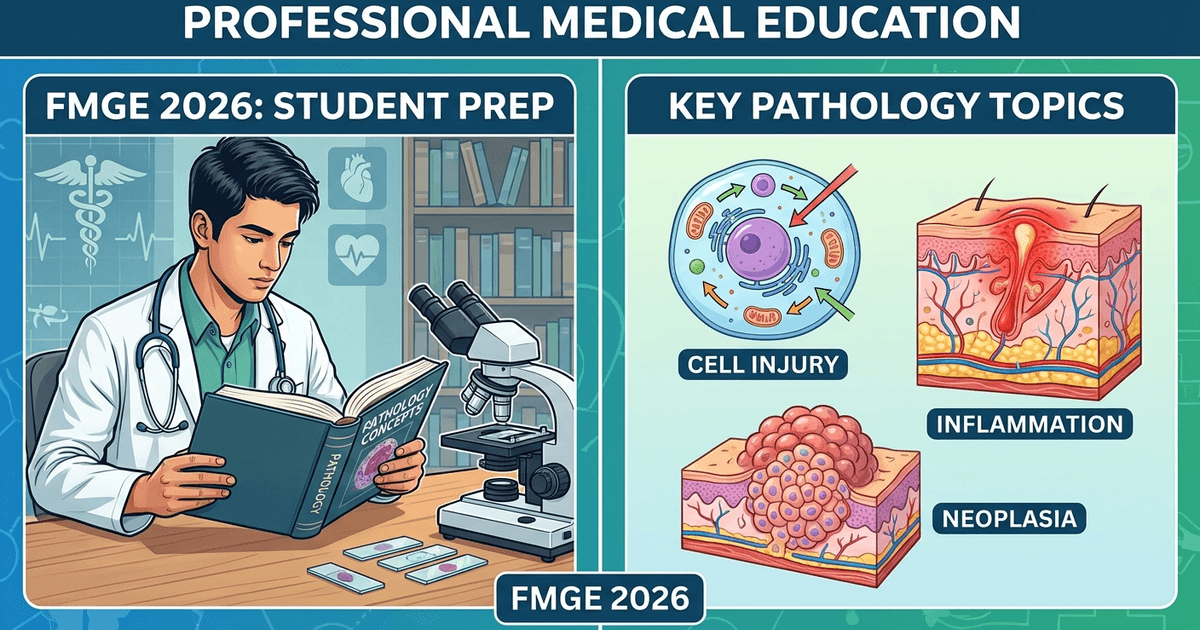
FMGE Pathology High-Yield Topics 2026: Complete Guide for Foreign Medical Graduates
You are probably staring at your FMGE exam date wondering how to tackle pathology in just a few months. Here's the reality: FMGE pathology carries 25-30 questions out of 300 total questions. That's 8-10% of your entire score riding on how well you understand cell injury, inflammation, neoplasia, and systemic pathology patterns.
Foreign medical graduates consistently struggle with pathology because it demands both conceptual clarity and pattern recognition. Unlike anatomy or pharmacology where you can memorize lists, pathology questions test your ability to connect mechanisms to clinical presentations. The good news? FMGE pathology follows predictable patterns, and certain topics appear repeatedly across exam cycles.
After analyzing recent FMGE question trends, we've identified the exact high-yield areas that give you maximum return on study time. This guide breaks down general pathology fundamentals, systemic pathology priorities, and the question patterns that trip up most FMGs.
FMGE Pathology Exam Pattern Analysis
FMGE pathology questions follow a structured distribution across two main domains:
Domain | Questions | Weight | Focus Areas |
|---|---|---|---|
General Pathology | 12-15 | 45-50% | Cell injury, inflammation, neoplasia, immunopathology |
Systemic Pathology | 10-13 | 35-40% | CVS, respiratory, GI, renal, endocrine pathology |
Laboratory/Techniques | 2-4 | 10-15% | Staining, tumor markers, molecular techniques |
The exam emphasizes mechanism-based questions over pure fact recall. Expect clinical vignettes that describe symptoms, lab findings, or imaging results where you need to identify the underlying pathological process.
FMGE pathology questions typically present in three formats:
Direct concept questions (40%): "What is the most common cause of..."
Clinical correlation questions (45%): Case-based scenarios requiring pathophysiology application
Image-based questions (15%): Gross or microscopic pathology identification
General Pathology High-Yield Topics
Cell Injury and Death
Cell injury mechanisms appear in 3-4 FMGE questions annually. Focus on these patterns:
Hypoxic Cell Injury
Causes: Ischemia, anemia, carbon monoxide poisoning
Morphological changes: Cell swelling, loss of microvilli, mitochondrial swelling
Reversible vs irreversible injury markers
Chemical Cell Injury
Free radical damage mechanisms
Antioxidant systems: SOD, catalase, glutathione peroxidase
Specific toxins: Paracetamol (hepatotoxicity), Carbon tetrachloride (liver)
Cellular Adaptations
Hypertrophy vs hyperplasia (classic differentiation questions)
Atrophy types: Physiologic, pathologic, neurogenic
Metaplasia examples: Barrett's esophagus, respiratory epithelium
When studying cell injury, Oncourse's adaptive question bank surfaces your weak spots between hypoxic injury and chemical toxicity, helping you drill the exact mechanisms that FMGE tests most frequently.
Inflammation and Repair
Inflammation carries the highest question weightage in general pathology. Master these concepts:
Acute Inflammation
Cardinal signs and underlying mechanisms
Vascular changes: Vasodilation, increased permeability, blood flow changes
Cellular events: Neutrophil recruitment, chemotaxis, phagocytosis
Inflammatory Mediators
Mediator | Source | Function | FMGE Focus |
|---|---|---|---|
Histamine | Mast cells, basophils | Vasodilation, permeability | Most tested mediator |
Prostaglandins | Arachidonic acid | Pain, fever, vasodilation | PGE2 effects |
Leukotrienes | Arachidonic acid | Bronchoconstriction, chemotaxis | LTB4 vs LTC4/D4/E4 |
Complement | Liver, macrophages | Opsonization, lysis, inflammation | C3a, C5a anaphylatoxins |
Chronic Inflammation
Granulomatous inflammation: TB, sarcoidosis, Crohn's disease
Giant cell types: Langhans, foreign body, Touton
Tissue repair and wound healing phases
Practice identifying inflammation patterns through pathology MCQs that mirror FMGE question complexity.
Neoplasia
Neoplasia questions consistently appear in every FMGE cycle. Focus on these high-yield areas:
Benign vs Malignant Characteristics
Growth patterns: Expansile vs infiltrative
Differentiation levels: Well, moderate, poor
Metastatic potential and routes
Carcinogenesis
Oncogenes: RAS, MYC, HER2
Tumor suppressor genes: p53, RB, APC
DNA repair genes: BRCA1, BRCA2, MLH1
Common Neoplasms by System
System | Benign | Malignant | FMGE Frequency |
|---|---|---|---|
Breast | Fibroadenoma | Ductal carcinoma | Very High |
Lung | Hamartoma | Bronchogenic carcinoma | High |
Colon | Adenomatous polyp | Adenocarcinoma | High |
Prostate | BPH | Adenocarcinoma | Moderate |
Thyroid | Follicular adenoma | Papillary carcinoma | Moderate |
Tumor Markers
PSA: Prostate cancer screening and monitoring
CEA: Colorectal, pancreatic cancer
AFP: Hepatocellular carcinoma, testicular cancer
CA 125: Ovarian cancer
CA 19-9: Pancreatic cancer
Review comprehensive neoplasia concepts through our pathology lessons designed for Indian medical exam patterns.
Immunopathology
Immunopathology bridges pathology with microbiology and medicine, making it FMGE-relevant.
Hypersensitivity Reactions
Type I (IgE-mediated): Anaphylaxis, asthma, atopic diseases
Type II (Cytotoxic): Hemolytic anemia, Goodpasture syndrome
Type III (Immune complex): SLE, post-streptococcal GN
Type IV (Cell-mediated): Contact dermatitis, TB, transplant rejection
Autoimmune Diseases
Focus on pathogenesis and associations:
SLE: Anti-nuclear antibodies, multi-system involvement
Rheumatoid arthritis: Anti-CCP antibodies, joint destruction
Hashimoto thyroiditis: Anti-TPO antibodies, hypothyroidism
Each pathology question comes with detailed explanations that map to FMGE patterns — this helps you understand why answers are correct rather than just memorizing facts, which is critical for interpreting clinical vignettes.
Systemic Pathology High-Yield Topics
Cardiovascular Pathology
Cardiovascular pathology typically contributes 4-5 questions to FMGE. Prioritize these conditions:
Ischemic Heart Disease
Atherosclerosis pathogenesis and risk factors
Myocardial infarction: STEMI vs NSTEMI patterns
Complications: Arrhythmias, heart failure, rupture
Heart Failure
Systolic vs diastolic dysfunction
Compensatory mechanisms: Frank-Starling, RAAS activation
Morphological changes: Cardiac hypertrophy, dilation
Valvular Diseases
Rheumatic heart disease: Acute vs chronic changes
Infective endocarditis: Acute vs subacute, complications
Degenerative valve disease: Calcific aortic stenosis
Respiratory Pathology
Respiratory pathology questions focus on common diseases and their complications:
Obstructive Lung Diseases
COPD: Emphysema vs chronic bronchitis distinction
Asthma: Allergic vs non-allergic, pathophysiology
Bronchiectasis: Causes, morphology, complications
Restrictive Lung Diseases
Pneumoconioses: Silicosis, asbestosis, coal worker's lung
Idiopathic pulmonary fibrosis: Usual interstitial pneumonia pattern
Hypersensitivity pneumonitis: Acute vs chronic forms
Lung Infections
Pneumonia: Community-acquired vs hospital-acquired patterns
Tuberculosis: Primary vs secondary TB, complications
Fungal infections: Aspergillosis, histoplasmosis in immunocompromised
Gastrointestinal Pathology
GI pathology contributes 3-4 questions focusing on inflammatory and neoplastic conditions:
Inflammatory Bowel Disease
Crohn's disease: Skip lesions, transmural inflammation, complications
Ulcerative colitis: Continuous involvement, mucosal inflammation
Extraintestinal manifestations and malignancy risk
Liver Pathology
Viral hepatitis: HAV, HBV, HCV patterns and chronicity
Cirrhosis: Causes, morphological patterns, complications
Hepatocellular carcinoma: Risk factors, associations with cirrhosis
Peptic Ulcer Disease
H. pylori association and pathogenesis
NSAID-induced ulcers
Complications: Bleeding, perforation, obstruction
Use pathology flashcards for spaced repetition of these high-frequency systemic pathology concepts.
Renal Pathology
Renal pathology questions emphasize glomerular diseases and their presentations:
Glomerular Diseases
Disease | Pattern | Clinical Presentation | FMGE Frequency |
|---|---|---|---|
Minimal change disease | Podocyte fusion | Nephrotic syndrome, children | High |
FSGS | Segmental sclerosis | Nephrotic syndrome, adults | High |
Membranous nephropathy | Subepithelial deposits | Nephrotic syndrome | Moderate |
IgA nephropathy | Mesangial IgA deposits | Nephritic syndrome | Moderate |
RPGN | Crescents | Rapidly progressive GN | High |
Nephrotic vs Nephritic Syndrome
Master the clinical distinctions and underlying pathology for each syndrome pattern.
Endocrine Pathology
Focus on thyroid and diabetes-related pathology:
Thyroid Disorders
Graves disease: Hyperthyroidism, thyroid-stimulating antibodies
Hashimoto thyroiditis: Hypothyroidism, lymphocytic infiltration
Thyroid neoplasms: Papillary vs follicular carcinoma features
Diabetes Mellitus
Type 1 vs Type 2 pathogenesis
Diabetic complications: Nephropathy, retinopathy, neuropathy
Pancreatic islet pathology in diabetes
Laboratory Techniques and Tumor Markers
FMGE includes 2-3 questions on laboratory methods and diagnostic techniques:
Histopathological Stains
H&E: Basic morphology, most common stain
PAS: Glycogen, basement membranes, fungi
Reticulin: Connective tissue framework
Congo red: Amyloid deposits, apple-green birefringence
Immunohistochemistry Markers
Cytokeratins: Epithelial origin tumors
Vimentin: Mesenchymal tumors
LCA: Lymphoid malignancies
S-100: Neural tumors, melanomas
Molecular Techniques
PCR: DNA amplification, infectious disease diagnosis
FISH: Chromosomal abnormalities, gene amplification
Flow cytometry: Hematologic malignancies
FMGE Pathology Question Patterns
Understanding question patterns helps you identify what FMGE examiners are testing:
Pattern 1: Mechanism-Based Questions
"A 45-year-old man develops chest pain. ECG shows ST elevation. Cardiac enzymes are elevated. What is the most likely cellular change occurring in the myocardium?"
This pattern tests your understanding of myocardial infarction pathophysiology and the progression from ischemia to necrosis.
Pattern 2: Clinical Correlation Questions
"A 25-year-old woman presents with butterfly rash, joint pain, and proteinuria. ANA is positive. What is the most likely underlying pathological mechanism?"
This tests autoimmune disease pathogenesis and the ability to connect clinical presentation with pathological processes.
Pattern 3: Diagnostic Questions
"A lung biopsy shows non-caseating granulomas with multinucleated giant cells. What is the most likely diagnosis?"
This pattern focuses on morphological pattern recognition and differential diagnosis skills.
Oncourse's performance analytics tracks your accuracy across these question patterns, helping you identify whether you struggle more with mechanism-based questions or clinical correlations.
Study Strategy for FMGE Pathology
Month-wise Preparation Plan
Months 3-4 Before FMGE:
Complete general pathology fundamentals
Focus on cell injury, inflammation, and neoplasia
Build strong conceptual foundation through general pathology lessons
Months 2-3 Before FMGE:
Cover systemic pathology by organ systems
Emphasize high-yield conditions and their complications
Practice MCQs to identify knowledge gaps
Month 1 Before FMGE:
Revision through flashcards and quick review notes
Focus on tumor markers, stains, and laboratory techniques
Solve previous year questions and mock tests
Active Learning Techniques
Concept Mapping
Create visual connections between pathological processes. For example, map atherosclerosis → MI → heart failure → complications.
Clinical Case Analysis
Practice interpreting clinical vignettes by identifying:
1. Key clinical features
2. Most likely pathological process
3. Expected laboratory/imaging findings
4. Complications and prognosis
Memory Aids for Complex Topics
Inflammation mediators: "His Prostaglandin Loves Complement" (Histamine, Prostaglandins, Leukotrienes, Complement)
Hypersensitivity types: "ACID" (Anaphylactic, Cytotoxic, Immune complex, Delayed)
Common FMGE Pathology Mistakes to Avoid
Conceptual Pitfalls
Mixing up inflammation types: Distinguish acute (neutrophils, vasodilation) from chronic (lymphocytes, fibrosis) inflammation patterns. Confusing neoplasm behaviors: Remember that benign tumors can cause problems through mass effect or hormone secretion, while malignant tumors spread and invade. Overlooking clinical context: FMGE questions often provide clinical details that guide diagnosis. Don't ignore patient age, symptoms, or risk factors.
Question-Answering Errors
Reading too quickly: Pathology questions often include subtle details that change the answer. Read carefully. Overthinking simple concepts: If a question asks about basic inflammation, don't assume it's testing rare conditions. Ignoring negative findings: "Absence of fever" or "normal WBC count" can be important diagnostic clues.
Performance analytics help you track these error patterns across different pathology topics, showing exactly where you need to focus your revision efforts.
Frequently Asked Questions
How many pathology questions appear in FMGE?
FMGE typically includes 25-30 pathology questions out of 300 total questions, representing about 8-10% of the exam. General pathology contributes more questions than systemic pathology.
Which pathology topics have the highest weightage in FMGE?
Inflammation and repair, neoplasia, and cardiovascular pathology consistently carry the highest question weightage. Cell injury and immunopathology are also frequently tested.
How should I balance general pathology vs systemic pathology study time?
Spend 60% of your pathology study time on general pathology (cell injury, inflammation, neoplasia, immunopathology) and 40% on systemic pathology. General pathology forms the foundation for understanding systemic diseases.
Are there any low-yield pathology topics I can skip for FMGE?
Avoid spending extensive time on rare genetic disorders, exotic infections, and highly specialized techniques. Focus on common diseases and basic laboratory methods instead.
How important are tumor markers for FMGE pathology?
Tumor markers appear in 2-3 questions per FMGE cycle. Learn the major markers (PSA, CEA, AFP, CA 125, CA 19-9) and their associated cancers, but don't memorize every obscure marker.
Should I memorize all histopathological stains for FMGE?
Focus on the most commonly used stains: H&E, PAS, Congo red, and reticulin. Understanding their applications is more important than memorizing every staining protocol.
Prepare smarter with Oncourse AI — adaptive MCQs, spaced repetition, and AI explanations built for FMGE. Download free on Android and iOS.