Back
First Aid for USMLE Step 2 CK: Is It Still Worth Using in 2026? Honest IMG Review
Honest review of First Aid for USMLE Step 2 CK in 2026. Find out if this traditional resource still works for IMG preparation or if modern alternatives are better.
First Aid for USMLE Step 2 CK: Is It Still Worth Using in 2026? Honest IMG Review
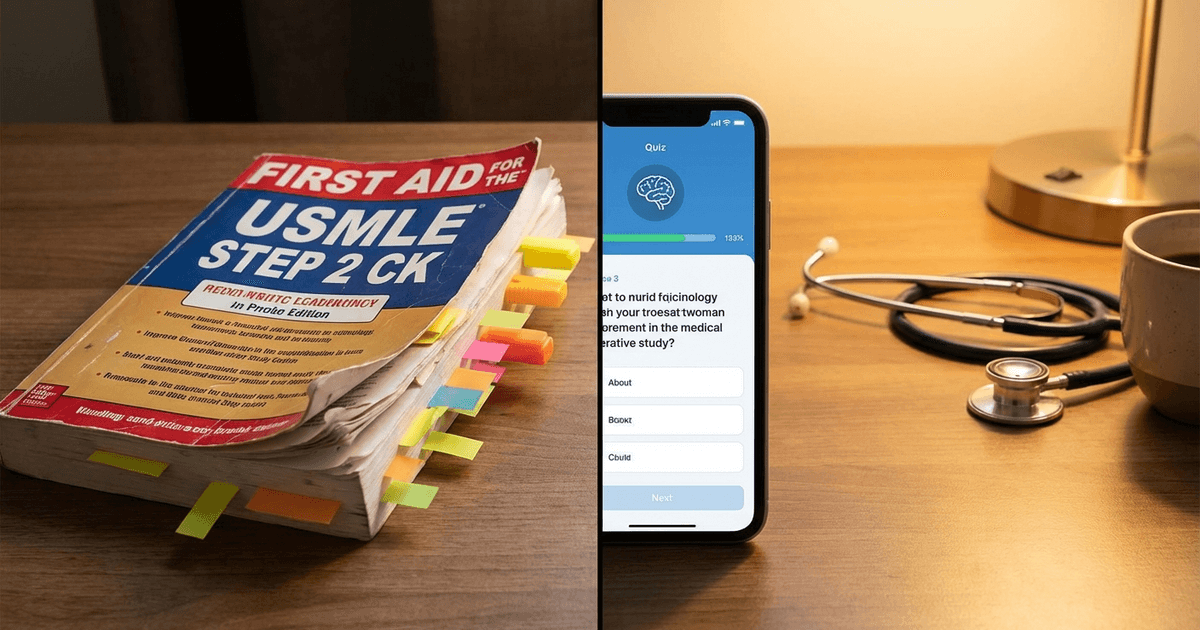
You are probably staring at the First Aid for Step 2 CK sitting on your shelf, wondering if this thick book thats been around forever still has a place in your 2026 study plan. The short answer? Its complicated.
First Aid Step 2 CK was the go-to resource for thousands of IMGs who passed Step 2 CK over the past decade. But the exam has evolved. The question format has shifted toward longer clinical vignettes. Medical knowledge gets updated faster than textbook printing cycles. And honestly, the way we learn medicine in 2026 looks nothing like it did in 2016.
Here's what no one tells you upfront: First Aid Step 2 CK works best as a review tool, not a primary learning resource. If you are an IMG who has been away from clinical medicine or studied a different curriculum, jumping straight into First Aid might leave you with surface-level knowledge that crumbles under exam pressure.
This review comes from the perspective of someone who has seen what actually works for IMGs in 2026. We will cover what First Aid does well, where it falls short, and whether you should invest your limited study time (and money) in this resource.
What Is First Aid for USMLE Step 2 CK?
First Aid for USMLE Step 2 CK is a comprehensive review book published annually by McGraw-Hill. The 2026 edition runs approximately 500 pages and covers all major clinical topics tested on Step 2 CK, organized by body systems and clinical disciplines.
The book follows a structured format with high-yield facts, clinical pearls, and diagnostic criteria presented in bullet points and tables. Each section includes commonly tested concepts, treatment algorithms, and mnemonics designed to help students recall information quickly during the exam.
Key features include:
Systems-based organization (cardiology, pulmonology, gastroenterology, etc.)
High-yield tables and algorithms
Clinical decision trees
Diagnostic criteria for common conditions
Treatment protocols and drug information
Black and white illustrations and charts
The authors update content annually based on exam feedback and changes in medical guidelines, though the core structure remains consistent across editions.
The Case for First Aid Step 2 CK in 2026
Comprehensive Coverage in One Place
First Aid covers virtually every topic that appears on Step 2 CK. For IMGs who want a single reference that touches on everything from acute coronary syndrome management to pediatric developmental milestones, this breadth is valuable. You wont find gaps in coverage that leave you scrambling during dedicated study time.
The book organizes information logically by specialty, making it easy to review cardiology one day and switch to infectious diseases the next. This systematic approach helps IMGs who need to review multiple specialties they may not have encountered recently.
Time-Tested Format That Works
The bullet-point format and high-yield tables make information digestible during intense study sessions. When you have 12 weeks to cover everything for Step 2 CK, you need resources that dont waste time with unnecessary detail.
Many successful IMGs have used First Aid as their primary review text, and the format has been refined through years of student feedback. The clinical algorithms particularly shine for conditions like chest pain workup or syncope evaluation.
Updated Clinical Guidelines
The 2026 edition incorporates recent changes in clinical practice guidelines, including updated hypertension management protocols and revised cancer screening recommendations. This matters because Step 2 CK frequently tests current standard of care, not outdated approaches.
For IMGs whose medical education may have emphasized different treatment protocols, First Aid provides US-focused clinical decision making that aligns with exam expectations.
Where First Aid Falls Short for IMGs
Surface-Level Explanations
First Aid excels at presenting facts but struggles with the "why" behind clinical decisions. Step 2 CK increasingly tests clinical reasoning rather than pure memorization. If you dont understand why you choose one antibiotic over another, memorizing the treatment table wont help when the exam presents an atypical case.
IMGs often need deeper conceptual understanding to bridge gaps between their medical education and US clinical practice. First Aid assumes baseline knowledge that international graduates may not have.
Limited Question Practice Integration
The book provides facts but doesnt teach you how those facts translate to answering Step 2 CK questions. Modern exam prep requires practicing with questions that mirror the actual test format - long clinical vignettes with subtle differentiating factors.
When you are racing through 40-question blocks in 63 seconds per question, knowing facts isnt enough. You need pattern recognition and question-answering strategies that First Aid simply doesnt provide. This is where platforms like Oncourse become essential, offering adaptive practice questions with AI explanations that help you understand not just what the answer is, but why other options are wrong.
Static Learning Experience
Medical knowledge evolves rapidly, but textbooks update annually at best. By the time the 2026 edition reaches your hands, some information may already be outdated. More importantly, First Aid cant adapt to your individual learning gaps the way modern AI-powered platforms can.
Overwhelming for Weak Foundation
If you struggle with basic pathophysiology or have been away from clinical medicine, jumping into First Aid can feel like drinking from a fire hose. The book assumes youll supplement with other resources for deeper understanding.
How First Aid Compares to Modern Study Methods
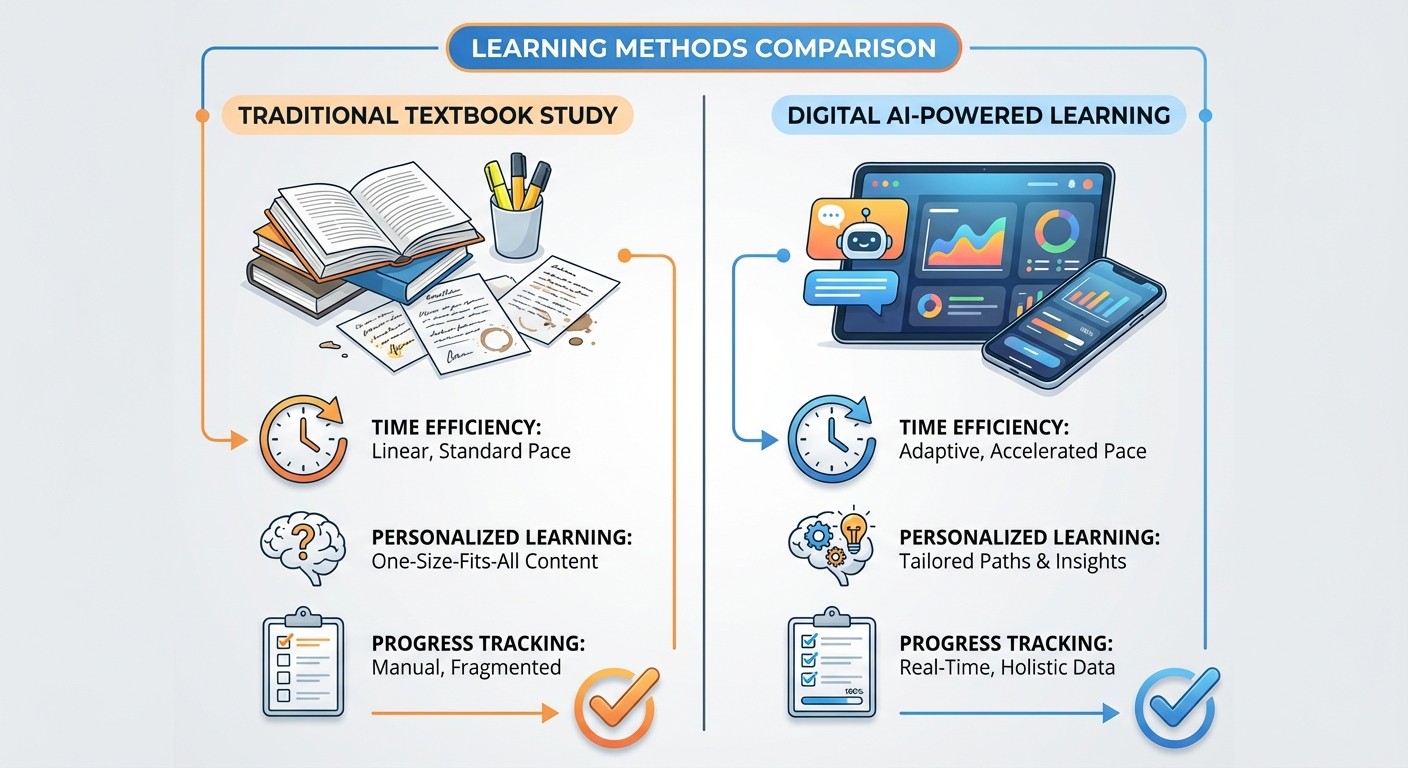
Aspect | First Aid Step 2 CK | Modern AI Platforms | Winner |
|---|---|---|---|
Content Coverage | Comprehensive, all topics | Comprehensive + adaptive | Tie |
Learning Style | Passive reading | Active recall + spaced repetition | Modern AI |
Question Integration | None | Integrated practice with explanations | Modern AI |
Personalization | One-size-fits-all | Adapts to your weak areas | Modern AI |
Updates | Annual editions | Real-time updates | Modern AI |
Cost | $65-80 one-time | Subscription model | Depends on usage |
Offline Access | Complete | Limited | First Aid |
Proven Track Record | 15+ years | 3-5 years | First Aid |
The data shows a clear shift toward interactive learning. Modern platforms like Oncourse use spaced repetition algorithms to ensure you retain information long-term, something passive reading cant achieve. When you answer a question incorrectly, the AI explanation helps you understand the underlying concept, not just memorize the correct answer.
Should IMGs Buy First Aid Step 2 CK in 2026?
Buy It If:
You learn well from textbooks and prefer physical books
You want a comprehensive reference for all Step 2 CK topics
You already have strong clinical foundations and need only review
You plan to supplement with extensive question practice elsewhere
You have successfully used First Aid for Step 1
Skip It If:
You have limited study time (under 8 weeks)
You prefer interactive, adaptive learning
You struggle with basic clinical concepts
You learn better through questions than reading
Your budget is tight and you prefer subscription-based resources
The Hybrid Approach
Many successful IMGs in 2026 use First Aid selectively rather than reading it cover to cover. They reference specific chapters when reviewing weak areas identified through question practice. This approach gets you the benefit of comprehensive coverage without the time investment of passive reading.
For example, if you consistently miss cardiology questions, you might review the First Aid cardiology chapter, then immediately practice related questions to reinforce the material. This active approach proves more effective than reading the entire book front to back.
Alternative Resources IMGs Should Consider
AI-Powered Question Banks
Modern platforms focus on adaptive learning that identifies your weak areas and adjusts accordingly. Oncourse offers over 40,000 practice questions with AI explanations, helping you understand not just what to choose, but how to think through similar problems.
The key advantage: these platforms teach you question-answering strategies while building knowledge, something traditional textbooks cant do. When preparing for an exam that requires answering questions under time pressure, practicing with questions becomes essential.
Video-Based Learning
For complex topics like ECG interpretation or radiographic analysis, video explanations often work better than static text. Many IMGs find that watching expert clinicians work through cases helps bridge the gap between theoretical knowledge and practical application.
Spaced Repetition Systems
Instead of hoping youll remember everything from First Aid, spaced repetition ensures long-term retention by scheduling reviews based on your memory curve. Oncourse flashcards use this approach to help you retain thousands of clinical facts without the forgetting curve that plagues traditional study methods.
Making First Aid Work for You (If You Choose It)
Dont Read It Linearly
Instead of starting on page 1, identify your weak areas through practice questions first. If you struggle with endocrinology, go straight to that chapter. Use First Aid as a reference tool, not a primary learning resource.
Combine with Active Recall
After reading a section, close the book and try to recall the key points. Better yet, find practice questions on that topic immediately. This active approach improves retention compared to passive highlighting.
Use It for Final Review
First Aid works best in the final 2-3 weeks before your exam when you need to review everything quickly. The high-yield format makes it ideal for rapid review, assuming you already understand the underlying concepts.
Create Your Own Mnemonics
The book provides some mnemonics, but creating your own often works better. When you encounter a difficult concept, develop a memory device that makes sense to you. For instance, many IMGs create mnemonics for drug classifications that connect to their native language or cultural references.
Cost-Benefit Analysis for IMGs
First Aid Cost: $65-80 for the 2026 edition Time Investment: 40-60 hours for complete review Shelf Life: One exam cycle (book becomes outdated) Modern Platform Cost: $30-50/month (varies by platform) Time Investment: Integrated with question practice Shelf Life: Continuous updates, useful beyond one exam
For IMGs taking Step 2 CK once, the costs are comparable. But if you need to retake the exam or want continued access to updated content, subscription platforms offer better value.
The real question isnt cost - its effectiveness. If First Aid helps you pass on your first attempt, the $80 investment pays for itself. If it leads to inadequate preparation and a retake, the true cost includes exam fees, visa extensions, and delayed residency applications.
What Successful IMGs Actually Use
Based on feedback from IMGs who scored 250+ on Step 2 CK in 2025-2026, most successful candidates use a hybrid approach:
1. Primary resource: Question bank with detailed explanations (UWorld, Oncourse, or similar)
2. Secondary resource: Video lectures for weak topics
3. Review resource: First Aid or similar review book for final weeks
4. Retention tool: Spaced repetition flashcards
Notice that First Aid appears as a review resource, not the primary learning tool. This aligns with how the most successful test-takers actually study, despite what many forums recommend.
IMG-Specific Considerations
Clinical Experience Gaps
Many IMGs have limited experience with US-style clinical decision making. First Aid presents the facts but doesnt explain the reasoning behind clinical choices. When the book says "give metformin first-line for diabetes," it doesnt explain why you wouldnt choose insulin or sulfonylureas.
For IMGs, understanding the "why" matters more than memorizing the "what" because Step 2 CK questions often test clinical reasoning. This is where interactive platforms that provide detailed explanations become valuable.
Time Constraints
Most IMGs have limited time for Step 2 CK preparation while managing visa applications, clinical rotations, or work obligations. First Aid requires significant time investment for passive reading, which may not be the most efficient use of your study hours.
Consider this: reading First Aid takes 40-60 hours. In that same time, you could complete 1,000+ practice questions with detailed explanations, building both knowledge and test-taking skills simultaneously.
Different Medical Education Background
If your medical education emphasized different treatment protocols or diagnostic approaches, First Aid helps standardize your knowledge to US practices. However, the book assumes baseline understanding that you might need to build elsewhere first.
For example, if your training emphasized different antibiotic choices or diagnostic criteria, First Aid will show you US standards but wont explain why they differ from what you learned previously.
The Bottom Line: Is First Aid Worth It in 2026?
First Aid for USMLE Step 2 CK remains a solid review resource, but its no longer the comprehensive solution it once was. The exam has evolved toward testing clinical reasoning and application rather than pure fact recall, making question-based preparation more important than ever.
Use First Aid if:
You have strong clinical foundations and need only review
You prefer book-based learning
You plan to supplement heavily with question practice
You want a quick reference for final review
Consider alternatives if:
You have limited study time
You need to build understanding, not just review facts
You prefer interactive, adaptive learning
You want integrated question practice
The most successful approach in 2026 combines multiple resources based on your individual needs and learning style. First Aid can be part of that strategy, but it probably shouldnt be your entire strategy.
Remember: the goal isnt to read every page of First Aid. The goal is to pass Step 2 CK efficiently and move forward with residency applications. Choose resources that align with that objective, whether that includes First Aid or not.
Frequently Asked Questions
Is the 2026 edition of First Aid significantly different from 2025?
The 2026 edition includes updated clinical guidelines, particularly in cardiology and infectious diseases management. However, the core content remains similar to the 2025 edition. If you own the 2025 edition, buying the 2026 version may not be necessary unless you want the latest guideline updates.
Can I rely solely on First Aid for Step 2 CK preparation as an IMG?
No, using only First Aid is insufficient for most IMGs. The book provides facts but doesnt teach clinical reasoning or question-answering strategies essential for Step 2 CK success. Combine it with extensive question practice and other learning resources.
How long should I spend reading First Aid during my Step 2 CK prep?
Plan for 40-60 hours to review First Aid completely, or use it selectively based on your weak areas identified through question practice. Dont spend more than 25% of your total study time on passive reading.
Should international medical graduates buy First Aid if they have limited English proficiency?
IMGs with limited English proficiency might benefit more from video-based resources or platforms with visual learning aids. First Aid's dense text format can be challenging for non-native English speakers. Consider starting with more accessible resources first.
Is First Aid outdated compared to modern digital study platforms?
First Aid provides comprehensive content but lacks the interactive features and adaptive learning of modern platforms. It works best as a supplement to, not replacement for, question-based preparation with detailed explanations.
Can I use an older edition of First Aid to save money?
While older editions contain most core information, medical guidelines change annually. Using an edition older than 2024 may include outdated treatment protocols that could hurt your exam performance. The cost savings arent worth the risk.
Prepare smarter with Oncourse AI — adaptive MCQs, spaced repetition, and AI explanations built for USMLE Step 2 CK. Download free on Android and iOS.