Central Nervous System Infections

Central Nervous System Infections

Central Nervous System Infections

On this page

Meningitis - Braincoat Baddies

Meningeal inflammation. Triad: fever, headache, nuchal rigidity.

  • Bacterial: S. pneumo, N. menin, H. flu (↓vaccine), Listeria (age extremes, immunocomp).
  • Viral: Enteroviruses, HSV, VZV.
  • TB: M. tb.
  • Fungal: C. neoformans (immunocomp).

CSF Analysis - The Decider!

FeatureBacterialViral (Aseptic)TBFungal (Crypto)
Pressure↑↑↑ (>250)N/Slight ↑↑↑ (>200)↑↑ (>200)
WBC (cells/µL)↑↑↑ (>1000, PMN)↑ (<500, Lymph)↑ (100-500, Lymph)↑ (<500, Lymph)
Protein (mg/dL)↑↑ (>100)N/Slight ↑ (<100)↑↑ (>100)↑ (>50)
Glucose (mg/dL)↓↓ (<40)Normal↓ (<45)↓ (<45)
AppearanceTurbidClearXantho/WebViscous/Clear
SpecialGram +vePCRAFB/ADA/PCRIndia Ink/Ag
%%{init: {'flowchart': {'htmlLabels': true}}}%%
flowchart TD
Start["<b>🩺 Suspected Meningitis</b><br><span style='display:block; text-align:left; color:#555'>• Clinical concern</span><span style='display:block; text-align:left; color:#555'>• CNS symptoms</span>"]

LP["<b>🔬 LP and CSF Analysis</b><br><span style='display:block; text-align:left; color:#555'>• Lumbar puncture</span><span style='display:block; text-align:left; color:#555'>• Cell count, labs</span>"]

Bact["<b>💊 Empirical IV Abx</b><br><span style='display:block; text-align:left; color:#555'>• Rocephin plus Vanco</span><span style='display:block; text-align:left; color:#555'>• +/- Ampicillin</span>"]

Viral["<b>👁️ Viral Management</b><br><span style='display:block; text-align:left; color:#555'>• Supportive care</span><span style='display:block; text-align:left; color:#555'>• Acyclovir if HSV</span>"]

TB["<b>💊 TB Treatment</b><br><span style='display:block; text-align:left; color:#555'>• ATT regimen</span><span style='display:block; text-align:left; color:#555'>• Steroid therapy</span>"]

Fungal["<b>💊 Antifungals</b><br><span style='display:block; text-align:left; color:#555'>• AmphoB plus Flucy</span><span style='display:block; text-align:left; color:#555'>• Fungal pattern</span>"]

Start --> LP
LP -->|Bacterial| Bact
LP -->|Viral| Viral
LP -->|TB Pattern| TB
LP -->|Fungal| Fungal

style Start fill:#F7F5FD, stroke:#F0EDFA, stroke-width:1.5px, rx:12, ry:12, color:#6B21A8
style LP fill:#FFF7ED, stroke:#FFEED5, stroke-width:1.5px, rx:12, ry:12, color:#C2410C
style Bact fill:#F1FCF5, stroke:#BEF4D8, stroke-width:1.5px, rx:12, ry:12, color:#166534
style Viral fill:#EEFAFF, stroke:#DAF3FF, stroke-width:1.5px, rx:12, ry:12, color:#0369A1
style TB fill:#F1FCF5, stroke:#BEF4D8, stroke-width:1.5px, rx:12, ry:12, color:#166534
style Fungal fill:#F1FCF5, stroke:#BEF4D8, stroke-width:1.5px, rx:12, ry:12, color:#166534

> ⭐ In bacterial meningitis, CSF glucose is typically **<40** mg/dL or <2/3rd of blood glucose.

📌 **B**acterial = **B**ad CSF (↓Glucose, ↑Protein, ↑PMNs).

## Encephalitis & Myelitis - Brain & Cord Chaos

*   **Encephalitis**: Brain inflammation; fever, headache, altered sensorium, seizures, focal deficits.
*   **Myelitis**: Spinal cord inflammation; weakness, sensory loss, bladder/bowel dysfunction.

**Common Viral Causes & Features:**
*   **Herpes Simplex Virus (HSV-1)**:
    -   Most common cause of sporadic fatal encephalitis.
    -   Affects **temporal lobes** (anosmia, gustatory hallucinations, personality changes).
    -   CSF: Lymphocytic pleocytosis, ↑RBCs.
    -   Rx: Acyclovir **10 mg/kg IV q8h** for **14-21 days**.
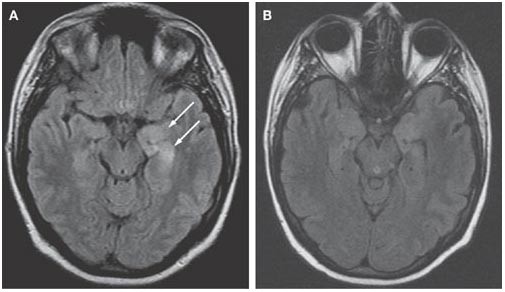
    ![MRI T2 FLAIR HSV encephalitis temporal lobe](https://ylbwdadhbcjolwylidja.supabase.co/storage/v1/object/public/notes/L1/Microbiology_Infectious_Diseases_Central_Nervous_System_Infections/d97f1fd0-2523-47ce-ac8e-0cd34930998c.jpg)
*   **Japanese Encephalitis (JE)**:
    -   Arbovirus (Flavivirus); mosquito vector (Culex).
    -   Affects thalamus, basal ganglia, brainstem, cerebellum, spinal cord.
    -   Features: Parkinsonism, acute flaccid paralysis, movement disorders.
    -   📌 Mnemonic: **J**uvenile **E**xtrapyramidal **S**ymptoms (for JE).
*   **Arboviruses (e.g., West Nile Virus)**:
    -   Often cause meningoencephalitis or encephalomyelitis.
    -   Features: Rash, lymphadenopathy, flaccid paralysis (WNV).

> ⭐ CSF PCR is the gold standard for diagnosing HSV encephalitis due to its high sensitivity and specificity, allowing for early and targeted antiviral therapy initiation.

*   **Transverse Myelitis**: Segmental spinal cord inflammation; often post-infectious or autoimmune (e.g., NMO, MS).

## Brain Abscess & Other Focal Infections - Pus Pockets & Peril
*   **Etiology**: Contiguous (sinusitis, otitis, dental); Hematogenous (lung, endocarditis); Trauma/surgery.
*   **Organisms**: *Streptococci* (esp. *S. milleri*), *Staph. aureus*, anaerobes. Polymicrobial common.
*   **Stages (Cerebritis → Abscess)**:
    -   Early (1-2 wks): Inflammation, edema.
    -   Late (2-3 wks): Central necrosis, early capsule.
        > ⭐ Rupture into ventricles: high mortality (>**80%**).
    -   Capsule (>3 wks): Thick, vascular wall.
*   **Imaging (CT/MRI)**: Ring-enhancing lesion, central necrosis (pus), surrounding edema. DWI: Restricted diffusion (key).
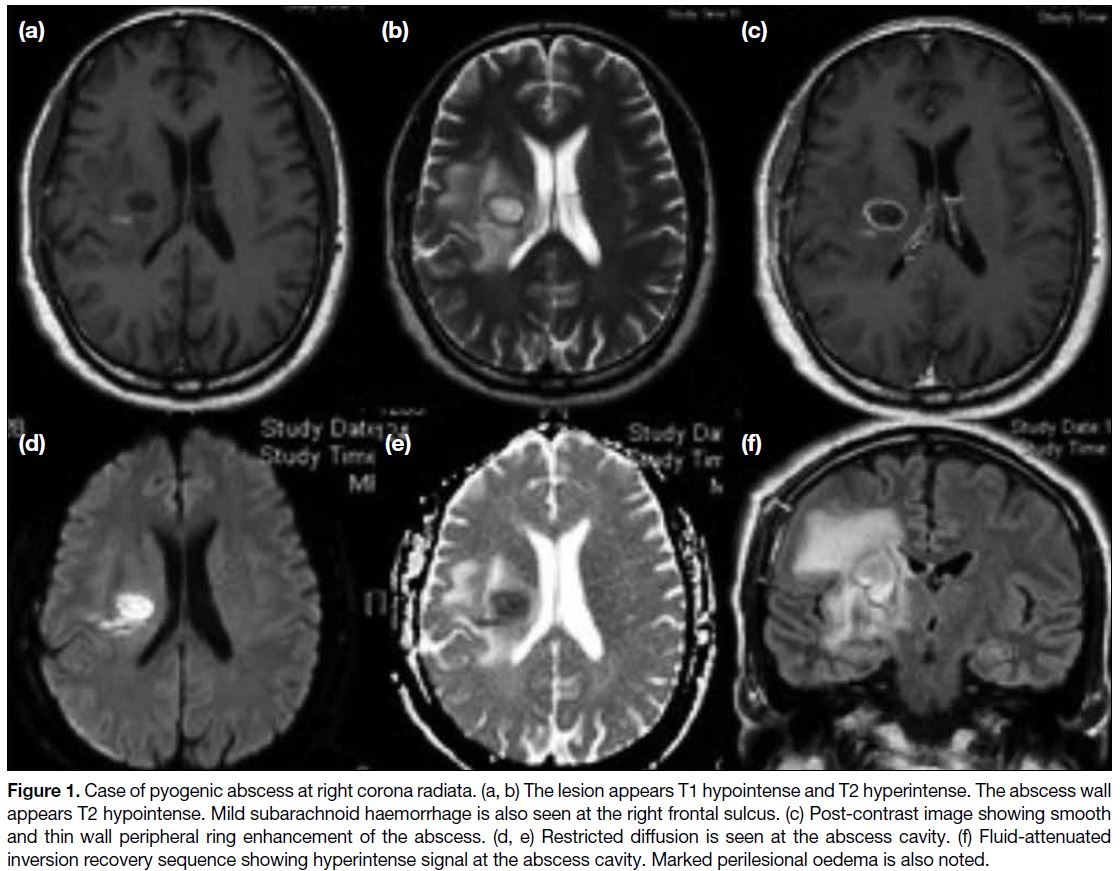
![Brain Abscess MRI: Ring Enhancement & Restricted Diffusion](https://ylbwdadhbcjolwylidja.supabase.co/storage/v1/object/public/notes/L1/Microbiology_Infectious_Diseases_Central_Nervous_System_Infections/888c61cc-91f2-4eb0-8322-75dfb928fc81.jpg)


## Specific CNS Infections - Unique Invaders & Ills
*   **Neurocysticercosis** (*Taenia solium* larvae):
    -   Stages: Vesicular (scolex visible, pathognomonic), colloidal vesicular, granular nodular, calcified nodular.
    -   Imaging: CT/MRI shows cysts; "hole-with-dot" sign.
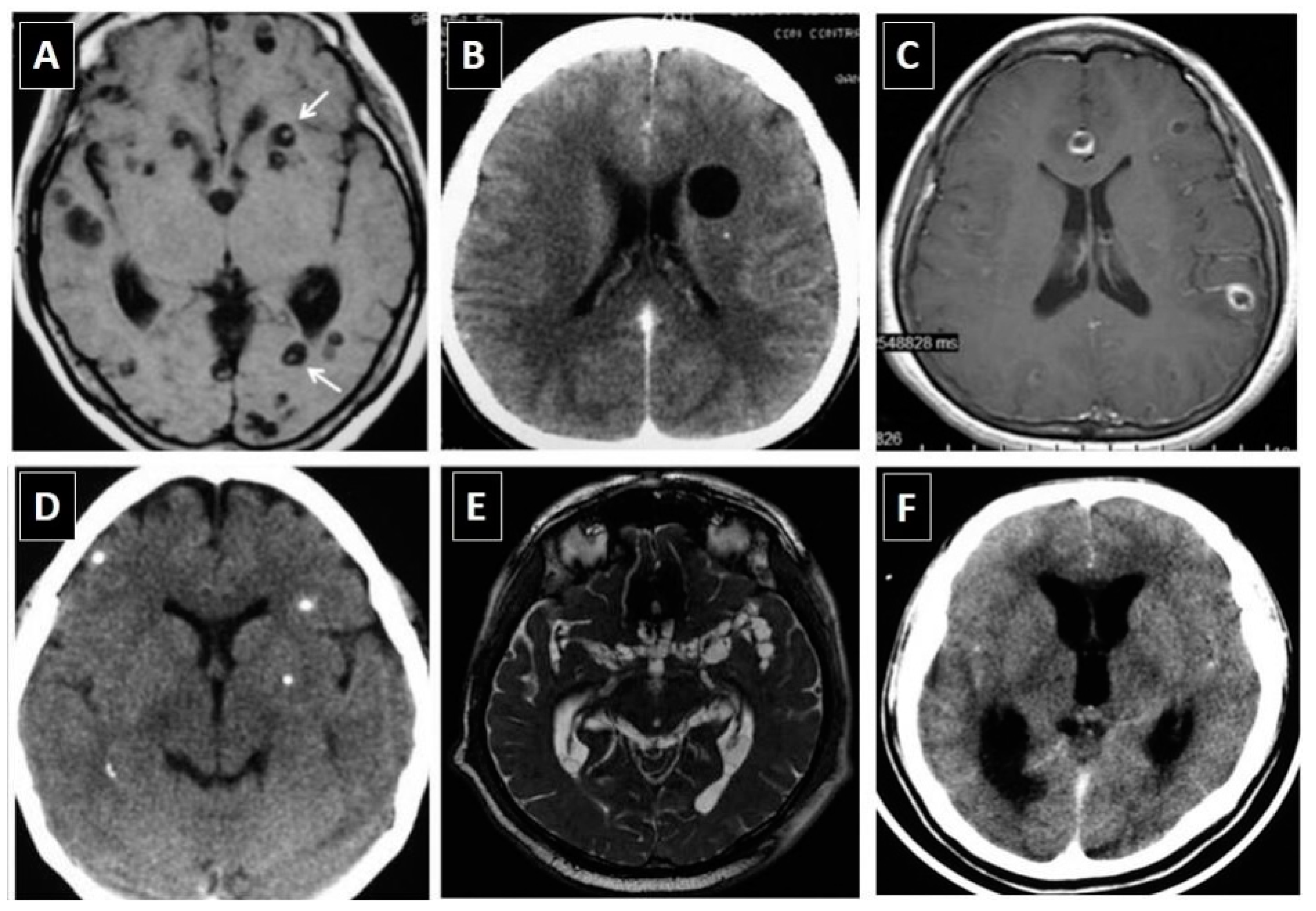
        ![Neurocysticercosis on CT and MRI](https://ylbwdadhbcjolwylidja.supabase.co/storage/v1/object/public/notes/L1/Microbiology_Infectious_Diseases_Central_Nervous_System_Infections/8c327dbc-397f-4eec-9e4b-b1350a33aacc.png)
*   **Rabies** (Lyssavirus):
    -   Phases: Prodromal → acute neurologic (furious/paralytic with hydrophobia, aerophobia) → coma.
    -   Pathognomonic: Negri bodies (intracytoplasmic inclusions in hippocampal neurons).
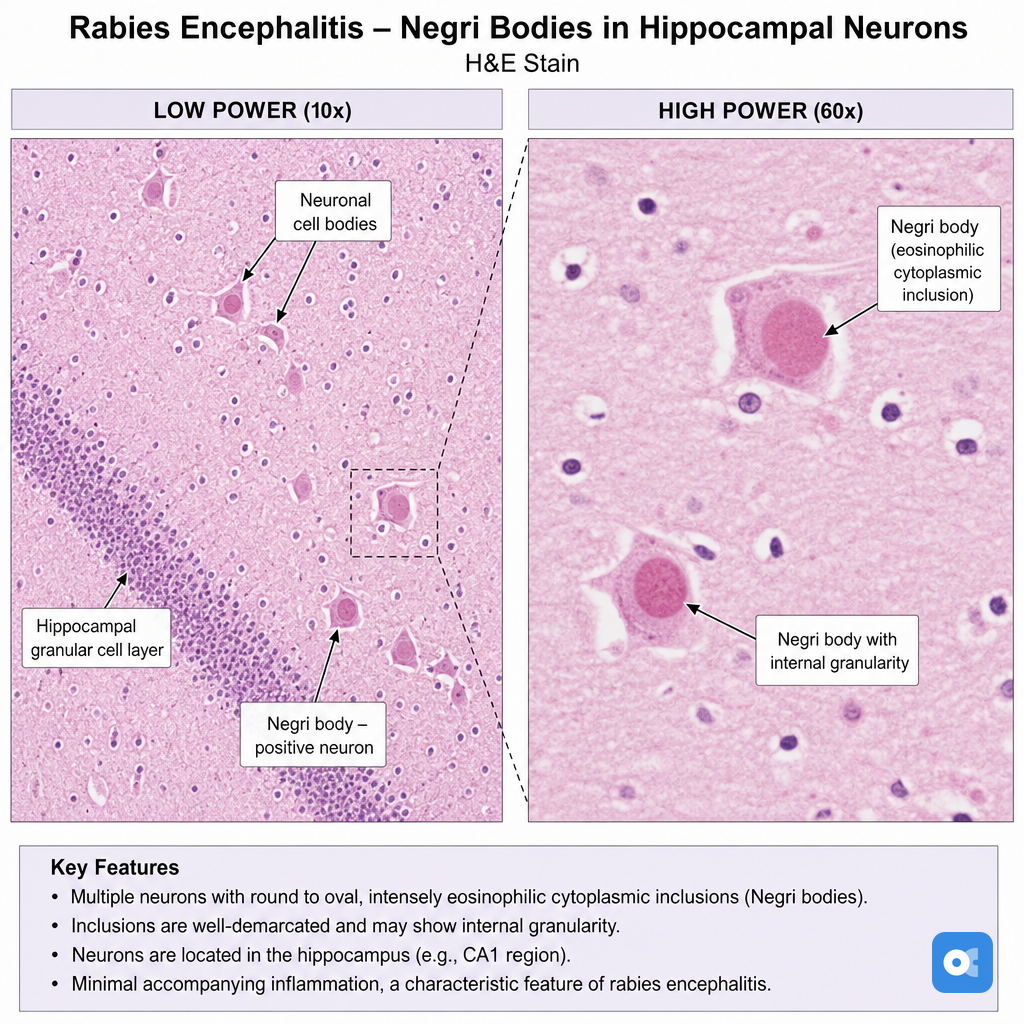
        ![Rabies: Negri bodies in hippocampus neurons](https://ylbwdadhbcjolwylidja.supabase.co/storage/v1/object/public/notes/clean-room-regen/prod/indian/infectious-diseases/bfd2c1fd-6b4c-4944-8db1-62444abd75cb-clean-26a653c6.png)
*   **Prion Diseases** (e.g., Creutzfeldt-Jakob Disease - CJD):
    -   Agent: PrP<sup>Sc</sup> (misfolded prion protein) causing spongiform encephalopathy.
    -   Types: Sporadic (sCJD **~85%**), variant (vCJD - younger, psychiatric symptoms), familial, iatrogenic.
    -   Key: Rapidly progressive dementia, myoclonus.
*   **Progressive Multifocal Leukoencephalopathy (PML)**:
    -   Agent: JC virus (polyomavirus).
    -   Population: Severely immunocompromised (e.g., AIDS with CD4 < **200** cells/μL).
    -   Pathology: Multiple, non-enhancing demyelinating lesions in white matter.
> ⭐ **vCJD**: Pulvinar sign (hyperintensity in posterior thalamus) on MRI is characteristic of variant CJD.


## High‑Yield Points - ⚡ Biggest Takeaways

> * **Bacterial meningitis CSF**: ↑Protein, ↓Glucose, ↑Neutrophils. **Viral meningitis CSF**: Normal glucose, ↑Lymphocytes.
> * **TB meningitis CSF**: Markedly ↓Glucose & ↑Protein, ↑Lymphocytes, **cobweb coagulum**.
> * *S. pneumoniae*: **MCC adult bacterial meningitis**. Neonates: *GBS*, *E. coli*, *Listeria*.
> * **India Ink** for *Cryptococcus neoformans* in **HIV+ meningitis**.
> * **Neurocysticercosis** (*T. solium*): **Ring-enhancing lesions with scolex**.
> * **Herpes Simplex Encephalitis**: **Temporal lobe** involvement; CSF PCR diagnostic.
> * **Brain abscess**: **Ring-enhancing lesions**; *Streptococci*, *Staphylococci*.

Unlock the full lesson and continue reading

Signup to continue reading this lesson and unlimited access questions, flashcards, AI notes, and more

Scan to download app

Scan to download
UNLOCK FREE ACCESS

Practice Questions: Central Nervous System Infections

  1. 1. All of the following are potentially reversible causes of cognitive impairment EXCEPT:

    • A. Normal pressure hydrocephalus
    • B. Alzheimer's disease
    • C. Hypothyroidism
    • D. Meningoencephalitis
    Show answer

    Answer: B. Alzheimer's disease

    Alzheimer's disease - Alzheimer's disease is a progressive neurodegenerative disorder associated with amyloid plaques and neurofibrillary tangles, causing irreversible dementia. - Because treatment is primarily symptomatic and does not reverse the neurodegeneration, Alzheimer's disease is the exception among these options. Normal pressure hydrocephalus - Normal pressure hydrocephalus can produce potentially reversible cognitive impairment as part of the classic triad of gait disturbance, urinary incontinence, and dementia. - Cerebrospinal fluid shunting can improve symptoms by relieving the underlying pressure-related dysfunction, making hydrocephalus a reversible cause in appropriate patients. Hypothyroidism - Severe hypothyroidism can cause dementia-like cognitive impairment, including memory loss, slowed thinking, and confusion. - Cognitive function often improves after thyroid hormone replacement restores the patient to a euthyroid state, making this a reversible cause. Meningoencephalitis - Meningoencephalitis can impair cognition through infection and inflammation involving the brain and its surrounding membranes. - Prompt treatment with appropriate antimicrobial or antiviral therapy may reverse cognitive dysfunction and limit permanent neurological injury.

  2. 2. Which of the following is NOT typically seen in cerebrospinal fluid (CSF) in tubercular meningitis?

    • A. Lymphocytic CSF pleocytosis
    • B. High protein
    • C. Low sugar
    • D. Low opening pressure
    Show answer

    Answer: D. Low opening pressure

    Low opening pressure - Low opening pressure is not typical of tubercular meningitis; inflammation and impaired CSF absorption usually produce elevated opening pressure. - Low pressure is more associated with CSF leak or post-lumbar-puncture headache, making it the finding that does not fit. Lymphocytic CSF pleocytosis - Lymphocytic CSF pleocytosis is a hallmark of tubercular meningitis, reflecting the chronic inflammatory response in the CSF. - Although early disease may show a mixed cellular response, lymphocytes typically predominate, often with approximately 100–500 cells/µL. High protein - High CSF protein is typical in tubercular meningitis because inflammation increases vascular permeability and disrupts the blood–brain barrier. - Protein levels may commonly reach 100–500 mg/dL or higher, so this finding supports rather than excludes tubercular meningitis. Low sugar - Low CSF glucose is characteristic of tubercular meningitis because of impaired glucose transport, inflammatory-cell utilization, and pathogen consumption. - The CSF-to-blood glucose ratio is typically below 0.4, making low sugar an expected rather than atypical finding.

  3. 3. Classical biovars distinguished by glycerol fermentation and nitrate reduction occur in a species belonging to which genus?

    • A. Neisseria
    • B. Streptococcus
    • C. Yersinia
    • D. Salmonella
    Show answer

    Answer: C. Yersinia

    Yersinia Yersinia is the keyed genus because classical Yersinia pestis biovars are distinguished using glycerol fermentation and nitrate reduction. Antiqua is positive for both reactions, Medievalis is glycerol-positive and nitrate-negative, and Orientalis is glycerol-negative and nitrate-positive. Streptococcus - Streptococci are primarily classified using hemolysis on blood agar, including alpha, beta, and gamma patterns. - Although streptococci ferment carbohydrates, glycerol fermentation is not a standard distinguishing basis; Lancefield serogrouping is also important. Neisseria - Neisseria species are differentiated mainly by sugar fermentation patterns, such as glucose and maltose utilization. - Their identification also relies on features such as Gram-negative diplococci morphology and oxidase positivity, rather than glycerol fermentation. Salmonella Salmonella is conventionally classified into serovars using O and H antigens, not by glycerol fermentation.

  4. 4. A patient with chronic ear infection presents with headache and vomiting. Axial CT brain images before and after contrast are shown. What is the most likely diagnosis?

    • A. Suppurative Meningitis
    • B. Intracranial Extradural Abscess
    • C. Temporal lobe Abscess
    • D. Subdural Empyema
    Show answer

    Answer: C. Temporal lobe Abscess

    Temporal lobe Abscess is the most likely diagnosis because the CT shows a right temporal intraparenchymal ring-enhancing lesion with central low attenuation and surrounding edema in a patient with chronic ear infection. Intracranial Extradural Abscess would be an extra-axial collection between the skull and dura rather than a lesion within the temporal parenchyma. Suppurative Meningitis primarily affects the meninges and does not explain this focal encapsulated intraparenchymal collection. Subdural Empyema would produce an extra-axial, usually crescentic collection between the dura and arachnoid.

  5. 5. Antiretroviral drugs are started for HIV/AIDS patients if the CD4 count is:

    • A. <350 cells/mm³
    • B. <200 cells/mm³
    • C. Any CD4 count
    • D. <500 cells/mm³
    Show answer

    Answer: C. Any CD4 count

    Any CD4 count - The Test and Treat approach recommends initiating ART in every person diagnosed with HIV, regardless of CD4 count or clinical stage. - Early ART promotes viral suppression, reduces AIDS-defining and other complications, and substantially lowers sexual transmission risk, supporting treatment at any CD4 count. <350 cells/mm³ - A CD4 threshold of <350 cells/mm³ was used in earlier treatment guidelines, but it is no longer the standard for initiating ART. - Current Test and Treat policy recommends ART for all people with HIV, so waiting until CD4 falls below 350 delays effective viral suppression and transmission prevention. <200 cells/mm³ - A CD4 count of <200 cells/mm³ historically indicated severe immunosuppression and increased risk of opportunistic infections, but it is not the threshold for starting ART now. - This value remains clinically important for assessing opportunistic-infection prophylaxis, such as co-trimoxazole, rather than determining ART eligibility. <500 cells/mm³ - A CD4 threshold of <500 cells/mm³ was previously used to guide ART initiation, but it has been superseded by universal treatment recommendations. - Starting ART only below 500 would postpone the benefits of early viral suppression for patients with higher CD4 counts and is therefore outdated.

  6. 6. An ART-naive adult with HIV is starting ATT for pulmonary tuberculosis without meningitis. When should ART be initiated after starting ATT?

    • A. At 4 weeks
    • B. At 8 weeks
    • C. After completing ATT
    • D. Within 2 weeks
    Show answer

    Answer: D. Within 2 weeks

    Within 2 weeks is correct: NACO recommends initiating ART as soon as possible within two weeks of starting ATT for non-meningeal TB, irrespective of CD4 count. TB meningitis requires delayed ART initiation. At 4 weeks delays ART beyond this recommended interval. At 8 weeks also delays ART unnecessarily in this pulmonary-TB setting. After completing ATT exposes the patient to a prolonged, avoidable period without HIV treatment.

  7. 7. Anisocoria in Horner's syndrome is due to

    • A. Oculoparasympathetic pathway
    • B. Optic afferent pathway
    • C. Oculosympathetic pathway
    • D. Abducens motor pathway
    Show answer

    Answer: C. Oculosympathetic pathway

    Oculosympathetic pathway interruption causes Horner’s syndrome by reducing sympathetic stimulation of the dilator pupillae, producing miosis. Oculoparasympathetic pathway interruption instead impairs sphincter pupillae function and produces mydriasis. Optic afferent pathway injury can produce a relative afferent pupillary defect but does not cause the sympathetic miosis of Horner’s syndrome. Abducens motor pathway injury impairs ocular abduction without directly altering pupil size.

  8. 8. Porencephaly is etiologically classified as which of the following?

    • A. Cranial or spinal neural tube defects
    • B. Cerebellar or posterior fossa malformations
    • C. Alcohol-related or drug-induced malformations
    • D. Vascular or traumatic cerebral lesions
    Show answer

    Answer: D. Vascular or traumatic cerebral lesions

    Vascular or traumatic cerebral lesions are the etiologic category that includes porencephaly. Porencephaly is a cavity left by cerebral tissue loss, which may follow prenatal or postnatal vascular injury or trauma; it may communicate with the ventricles or subarachnoid space. Cranial or spinal neural tube defects result from failed neural tube closure rather than destruction of cerebral tissue. Cerebellar or posterior fossa malformations are developmental abnormalities, such as Dandy–Walker malformation, rather than destructive cerebral cavities. Alcohol-related or drug-induced malformations are teratogenic developmental abnormalities rather than the vascular or traumatic lesion classification.

  9. 9. Which of the following clinical presentations is shared by typhus, spotted fever, and scrub typhus?

    • A. Fever with ascending paralysis
    • B. Fever with maculopapular rash
    • C. Fever with inoculation eschar
    • D. Fever with migratory polyarthritis
    Show answer

    Answer: B. Fever with maculopapular rash

    Fever with maculopapular rash is a recognised shared presentation of typhus, spotted fever and scrub typhus, although rash may be absent in individual patients. Fever with inoculation eschar occurs in scrub typhus and some spotted-fever infections but is not a shared feature of typhus. Fever with migratory polyarthritis is not a characteristic shared presentation of these infections. Fever with ascending paralysis is not their characteristic shared presentation.

  10. 10. What is the mechanism behind the increased risk of HIV acquisition in individuals with genital herpes?

    • A. Local innate immune inhibition
    • B. Glycoprotein-mediated enhancement of HIV binding
    • C. HIV transactivation and increased replication
    • D. Epithelial disruption and CD4+ recruitment
    Show answer

    Answer: D. Epithelial disruption and CD4+ recruitment

    Epithelial disruption and CD4+ recruitment - Genital HSV produces lesions and ulcerations that disrupt the epithelial barrier, creating portals of entry for HIV across genital mucosa. - HSV-associated inflammation recruits CD4+ T cells and other HIV target cells to the genital tract, increasing the number of susceptible cells at the entry site. Glycoprotein-mediated enhancement of HIV binding - HSV glycoproteins are not established as directly enhancing HIV binding to CD4 and its chemokine co-receptors on target cells. - The increased acquisition risk is better explained by mucosal ulceration and recruitment of susceptible immune cells, rather than altered viral attachment. Local innate immune inhibition - Although HSV can evade host defenses, generalized innate immune inhibition is not the principal mechanism increasing HIV acquisition risk. - The more important effects are epithelial disruption and local recruitment of CD4+ target cells, which directly facilitate HIV entry and infection. HIV transactivation and increased replication - HSV-related transactivation may enhance HIV replication during established coinfection, but it does not primarily explain initial HIV acquisition. - Increased acquisition occurs mainly because ulcers permit viral entry and inflammation concentrates susceptible CD4+ cells at the genital mucosa.

Flashcards: Central Nervous System Infections

  1. 1. Pathogens associated with Guillain-Barre Syndrome (Mnemonic: ICE MyCZ): I: _____ C: _____ E: _____ My: _____ C: _____ Z: _____

    Show answer

    Influenza virus · CMV · EBV · Mycoplasma pneumoniae · Campylobacter jejuni · Zika virus

  2. 2. Chronic carriers of Salmonella _____ carry the infection in their _____ (organ)

    Show answer

    typhi · gallbladder

  3. 3. _____ makes _____ which bind to fibrin-platelet aggregates on damaged _____.

    Show answer

    Streptococcus sanguinis (viridans family) · dextrans · heart valves

  4. 4. _____ to _____ contact and _____ can transmit Chlamydia trachomatis serotypes _____

    Show answer

    Hand · eye · fomites · A, B, C (trachoma)

  5. 5. _____ leprosy is associated with a strong _____-cell response, allowing for _____ immunity

    Show answer

    Lepromatous · Th2 · humoral

  6. 6. Louse-borne diseases include:

    Show answer

    1. Epidemic typhus (Rickettsia prowazekii) 2. Relapsing fever (Borrelia recurrentis) 3. Trench fever (Bartonella quintana) Mnemonic: ERT (Epidemic typhus, Relapsing fever, Trench fever)

  7. 7. _____ is the mc type of Hep E virus present in india

    Show answer

    genotype 1 — Waterborne (Fecal-oral route)

  8. 8. Besides ingestion of contaminated food, how is Listeria monocytogenes transmitted (2)?_____; _____

    Show answer

    Transplacentally · vaginally during childbirth

Everything you need for Indian Medical PG prep

Get full Oncourse access with lessons, practice questions, flashcards and AI study tools.

GET STARTED FOR FREE
75% OFFLimited time offer
GET 75% OFF