

Program Overview - Sweet Stats Scope
- NPCDCS (National Programme for Prevention and Control of Cancer, Diabetes, Cardiovascular Diseases and Stroke): Launched 2010.
- Scope: Integrates NCD prevention & control across primary, secondary, tertiary healthcare.
- Key Aims (Diabetes):
- Prevent & control through lifestyle modification & awareness.
- Early diagnosis via opportunistic screening (age >30 years or high-risk).
- Ensure access to affordable treatment & follow-up.
- Reduce complications & premature mortality.
- India's Burden: Estimated 77 million adults with diabetes (IDF 2021); significant undiagnosed cases.
⭐ India is often referred to as the "diabetes capital of the world".

Objectives & Targets - Aiming for Glycemic Goals
- Overall Goal: Halt rise of diabetes & obesity; reduce premature NCD mortality.
- Core Objectives & Targets:
- Early Detection: ↑ Screen adults >30 years for diabetes & hypertension.
- Glycemic Management:
- Target HbA1c <7% for most.
- Individualize (e.g., <6.5% young, <8% elderly/comorbid).
- Co-morbidity Control:
- BP: <140/90 mmHg (or <130/80 mmHg high-risk).
- Lipids: LDL-C targets based on risk.
- Complication Reduction: ↓ incidence of retinopathy, nephropathy, foot ulcers.
⭐ Key target: Reduce premature mortality from NCDs by 25% by 2025.
Strategies & Interventions - The Action Arsenal
- Screening (NPCDCS):
- Opportunistic: Age >30 yrs or high-risk (family hx, GDM, obesity, HTN).
- IDRS: Score >60 = high risk.
- Diagnosis: FPG ≥126 mg/dL; 2-hr PG (75g OGTT) ≥200 mg/dL; HbA1c ≥6.5%.
- Interventions:
- Lifestyle Modification: Diet, physical activity, weight management.
- IEC: Awareness on prevention, self-care.
- Medical management & regular follow-up.
- Referral Pathway:
Loading diagram…
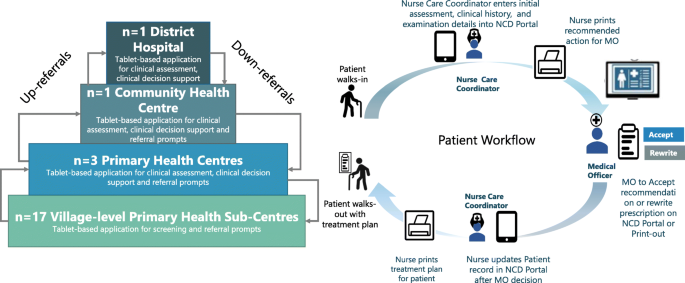
⭐ Opportunistic screening for diabetes (individuals >30 years) is key under NPCDCS at PHC/CHC.
Levels of Prevention - Stop Sweet Trouble
| Prevention Level | NPCDCS Activities for Diabetes Control |
|---|---|
| Primordial | Addresses underlying determinants; population-wide policies & health education for healthy diet & physical activity. |
| Primary | Preventing onset in susceptible individuals; IEC for lifestyle modification, risk assessment, tobacco cessation. |
| Secondary | Early detection & intervention; opportunistic screening (e.g., at 30+ years), early diagnosis, prompt treatment, patient self-care. |
| Tertiary | Reduce complications & disability; management of complications (retinopathy, nephropathy, foot care), rehabilitation, patient support. |
Monitoring & Challenges - Tracking & Tackling
- Key Indicators: HbA1c, FBG/PPBG, complication rates (retinopathy, nephropathy), screening coverage.
- Reporting: HMIS, NCD portal, national surveys (e.g., NFHS).
- Common Challenges:
- Funding gaps & resource constraints.
- Manpower shortage (trained personnel).
- Poor patient adherence (treatment, lifestyle).
- Low awareness & limited access to care.
- Future Directions: Strengthen PHCs, mHealth, task-sharing, community engagement.
⭐ Integration with Ayushman Bharat - Health and Wellness Centres (AB-HWCs) is a key recent development for strengthening NCD care.
High‑Yield Points - ⚡ Biggest Takeaways
- NPCDCS (National Programme for Prevention and Control of Cancer, Diabetes, Cardiovascular Diseases & Stroke) is the pivotal Indian program addressing diabetes control.
- Key strategy: opportunistic screening for individuals aged >30 years at health facilities.
- Prioritizes early diagnosis, appropriate management, and timely referral of complications.
- Strongly emphasizes health promotion for healthy diets and lifestyle modification to prevent and manage diabetes.
- Includes capacity building of healthcare providers at all levels for comprehensive diabetes care.
- Aims for integration with primary healthcare services, notably through Health and Wellness Centers (HWCs) for wider reach.
- Focus on reducing morbidity and mortality due to diabetes and its complications through these interventions.
Unlock the full lesson and continue reading
Signup to continue reading this lesson and unlimited access questions, flashcards, AI notes, and more
