Lipoprotein Metabolism and Transport Indian Medical PG Practice Questions and MCQs
Practice Indian Medical PG questions for Lipoprotein Metabolism and Transport. These multiple choice questions (MCQs) cover important concepts and help you prepare for your exams.
Lipoprotein Metabolism and Transport Indian Medical PG Question 1: Type-I hyperlipoproteinemia is caused by deficiency of:-
- A. Lipoprotein lipase (Correct Answer)
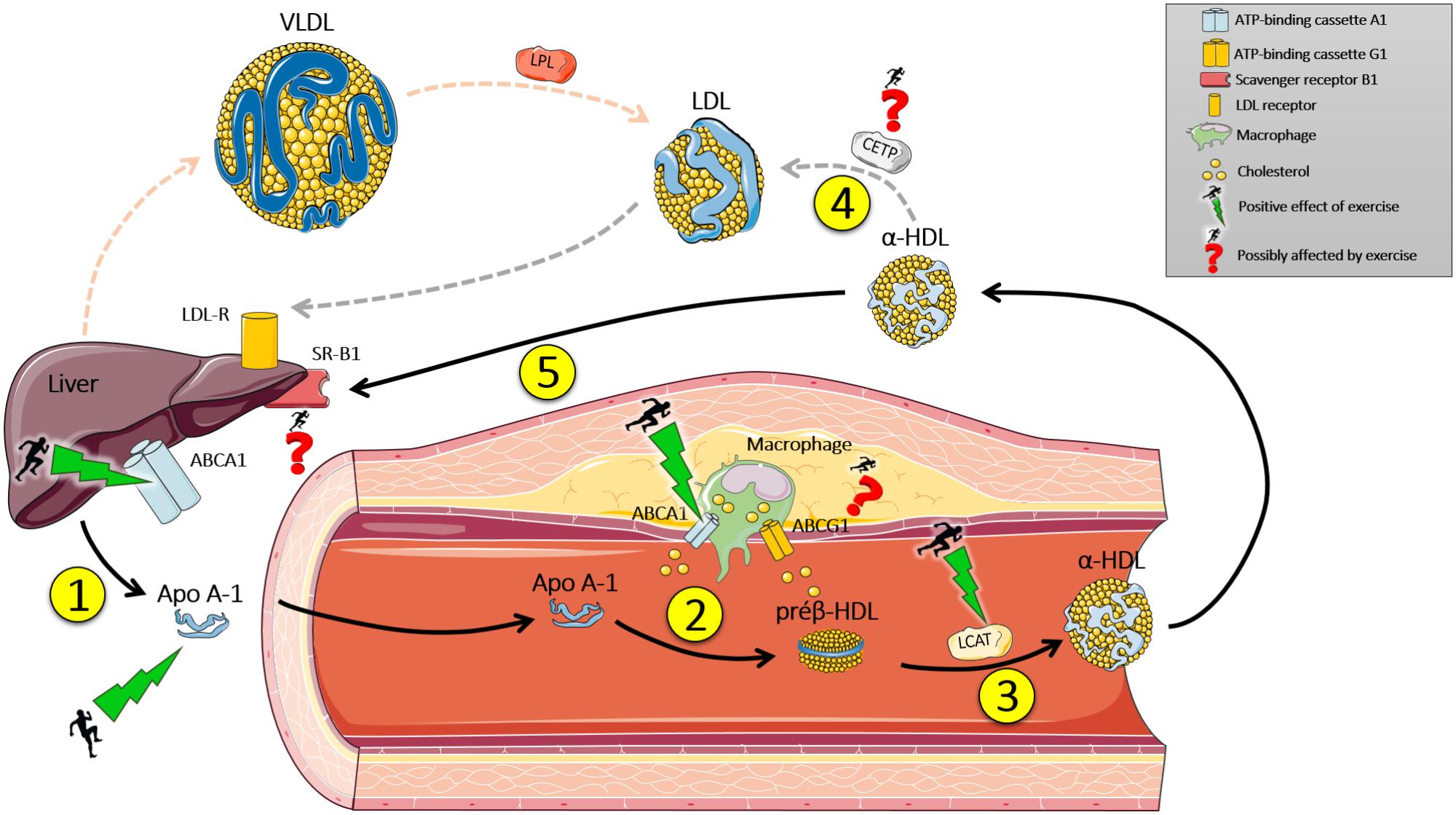
- B. Elevated triglycerides in plasma
- C. Elevated LDL
- D. Elevated cholesterol
Lipoprotein Metabolism and Transport Explanation: ***Lipoprotein lipase***
- **Type I hyperlipoproteinemia**, also known as **familial lipoprotein lipase deficiency**, is caused by a genetic defect leading to **deficiency or defect in lipoprotein lipase (LPL)** or its cofactor **apolipoprotein C-II**.
- LPL is crucial for the **hydrolysis of triglycerides** in chylomicrons and VLDL at the capillary endothelium.
- This enzymatic deficiency leads to **massive accumulation of chylomicrons** and severe hypertriglyceridemia (often >1000 mg/dL).
- Clinical features include **eruptive xanthomas, lipemia retinalis, hepatosplenomegaly**, and **recurrent pancreatitis**.
*Elevated triglycerides in plasma*
- This is indeed the **most prominent laboratory finding** in Type I hyperlipoproteinemia, with triglyceride levels often exceeding 1000-2000 mg/dL.
- However, this is the **consequence/manifestation** of the LPL deficiency, not the underlying cause.
- The question asks what causes Type I hyperlipoproteinemia, which is the enzyme deficiency itself.
*Elevated LDL*
- Type I hyperlipoproteinemia typically has **normal or even reduced LDL levels**.
- **Elevated LDL** is characteristic of **Type IIa hyperlipoproteinemia (familial hypercholesterolemia)**, which involves defects in LDL receptor or ApoB-100.
- Type I primarily affects **chylomicron metabolism**, not LDL.
*Elevated cholesterol*
- Cholesterol levels are typically **normal or only mildly elevated** in Type I hyperlipoproteinemia.
- The triglyceride elevation is disproportionately massive compared to any cholesterol elevation.
- Significant isolated cholesterol elevation points to Type IIa or IIb dyslipidemias.
Lipoprotein Metabolism and Transport Indian Medical PG Question 2: Apolipoprotein B-48 is made by which process?
- A. DNA editing
- B. RNA editing (Correct Answer)
- C. RNA alternate splicing
- D. RNA interference
Lipoprotein Metabolism and Transport Explanation: ***RNA editing***
- Apolipoprotein B-48 is synthesized from ApoB-100 mRNA through a process called **RNA editing** (specifically ApoB mRNA editing)
- This involves a **cytidine deaminase enzyme (APOBEC-1)** that converts cytidine to uridine at position 6666, changing a glutamine codon (CAA) to a premature stop codon (UAA) in the small intestine
- This results in a truncated protein that is 48% the length of ApoB-100
- ApoB-48 is produced in the **intestine**, while ApoB-100 (unedited) is produced in the **liver**
*DNA editing*
- DNA editing refers to permanent modifications in the DNA sequence itself
- The ApoB gene remains unchanged; only the mRNA transcript is edited in intestinal cells
- This is not the mechanism for producing ApoB-48
*RNA alternate splicing*
- Alternative splicing involves selecting different combinations of exons from pre-mRNA to produce multiple mRNA isoforms
- This process creates different protein variants through exon inclusion/exclusion
- ApoB-48 production does not involve alternative splicing but rather direct nucleotide modification (C to U) within the coding sequence
*RNA interference*
- RNA interference (RNAi) is a biological process involving small RNA molecules (siRNA, miRNA) that silence gene expression
- RNAi typically degrades mRNA or blocks translation
- This process is not involved in generating a truncated protein like ApoB-48 from the same mRNA transcript
Lipoprotein Metabolism and Transport Indian Medical PG Question 3: Apo B48 is synthesized in -
- A. Liver
- B. Kidney
- C. Intestine (Correct Answer)
- D. RBCs
Lipoprotein Metabolism and Transport Explanation: ***Intestine***
- **Apo B48** is a truncated form of apolipoprotein B-100, uniquely synthesized in the **intestine** through RNA editing.
- It is a crucial structural component of **chylomicrons**, which are lipoprotein particles responsible for transporting exogenous dietary lipids from the intestine to other tissues.
*Liver*
- The liver primarily synthesizes **Apo B100**, which is a full-length apolipoprotein B and a major component of VLDL, IDL, and LDL.
- It does not produce Apo B48.
*Kidney*
- The kidneys are involved in filtering waste products and regulating fluid balance, but they do not play a role in the synthesis of apolipoproteins like Apo B48.
- Kidney cells are not equipped with the specific machinery for Apo B mRNA editing.
*RBCs*
- Red blood cells (RBCs) are primarily responsible for oxygen transport and lack a nucleus and most organelles, including those required for protein synthesis.
- Therefore, RBCs cannot synthesize proteins such as Apo B48.
Lipoprotein Metabolism and Transport Indian Medical PG Question 4: Lipoprotein involved in reverse cholesterol transport is:
- A. LDL
- B. VLDL
- C. CETP
- D. HDL (Correct Answer)
Lipoprotein Metabolism and Transport Explanation: ***HDL***
- **High-density lipoprotein (HDL)** is responsible for **reverse cholesterol transport**, which removes excess cholesterol from peripheral cells and transports it back to the liver for excretion or recycling.
- HDL particles are formed in the liver and intestine and acquire cholesterol from peripheral tissues via the **ABCA1 transporter** and **LCAT enzyme**, which esterifies cholesterol.
*LDL*
- **Low-density lipoprotein (LDL)** is primarily responsible for transporting **cholesterol from the liver to peripheral tissues**.
- High levels of LDL are associated with an increased risk of **atherosclerosis** and cardiovascular disease.
*VLDL*
- **Very low-density lipoprotein (VLDL)** primarily transports **triglycerides** synthesized in the liver to peripheral tissues.
- VLDL is converted to **LDL** after releasing triglycerides.
*CETP*
- **Cholesteryl ester transfer protein (CETP)** is a plasma protein that facilitates the transfer of **cholesteryl esters** and triglycerides between lipoproteins, primarily from HDL to VLDL and LDL.
- While CETP plays a role in lipoprotein metabolism, it is a **protein that mediates lipid exchange**, rather than a lipoprotein directly involved in reverse cholesterol transport itself.
Lipoprotein Metabolism and Transport Indian Medical PG Question 5: Which of the following statements about LDL is false?
- A. More dense than chylomicron
- B. Transports maximum amount of lipid (Correct Answer)
- C. Contains maximum cholesterol
- D. Smaller than VLDL
Lipoprotein Metabolism and Transport Explanation: ***Transports maximum amount of lipid***
- This statement is false because **chylomicrons**, not LDL, are primarily responsible for transporting the **maximum amount of dietary lipids** (triglycerides) from the intestines to various tissues.
- While LDL does transport lipids, its primary role is to deliver **cholesterol** to cells, and it contains a lower proportion of triglyceride compared to chylomicrons and VLDL.
*More dense than chylomicron*
- This statement is true; **LDL is denser than chylomicrons** because it has a higher protein-to-lipid ratio.
- **Chylomicrons** are the least dense lipoproteins due to their very high triglyceride content.
*Smaller than VLDL*
- This statement is true; **LDL is smaller than VLDL** (Very Low-Density Lipoprotein).
- VLDL particles are larger and contain more triglycerides, which are gradually removed, leading to the formation of smaller LDL particles.
*Contains maximum cholesterol*
- This statement is true; **LDL contains the highest proportion of cholesterol** (specifically, **cholesterol esters**) among the lipoproteins.
- This characteristic makes LDL the primary carrier for delivering cholesterol to peripheral tissues.
Lipoprotein Metabolism and Transport Indian Medical PG Question 6: Which lipoprotein is involved in reverse cholesterol transport?
- A. LDL
- B. HDL (Correct Answer)
- C. VLDL
- D. Chylomicrons
Lipoprotein Metabolism and Transport Explanation: ***HDL***
- **High-density lipoprotein (HDL)** is responsible for **reverse cholesterol transport**, which involves picking up excess cholesterol from peripheral tissues.
- This cholesterol is then transported back to the liver for excretion or recycling, hence HDL is often referred to as "good cholesterol."
*LDL*
- **Low-density lipoprotein (LDL)** primarily transports **cholesterol from the liver to peripheral tissues**, contributing to plaque formation in arteries.
- It is often called "bad cholesterol" because high levels are associated with an increased risk of **atherosclerosis** and cardiovascular disease.
*VLDL*
- **Very-low-density lipoprotein (VLDL)** is synthesized in the liver and primarily transports **endogenous triglycerides** to peripheral tissues.
- As triglycerides are removed, VLDL is converted into **intermediate-density lipoprotein (IDL)** and eventually to LDL.
*Chylomicrons*
- **Chylomicrons** are formed in the small intestine and are responsible for transporting **exogenous (dietary) triglycerides** and cholesterol absorbed from the gut to various tissues.
- They are the largest and least dense lipoproteins, appearing after a fatty meal.
Lipoprotein Metabolism and Transport Indian Medical PG Question 7: A patient has multiple tendon xanthomas. Serum cholesterol ( $398 \mathrm{mg} / \mathrm{dL}$ ) and LDL ( 220 $\mathrm{mg} / \mathrm{dL}$ ) were found to be elevated. What is the most likely defect?
- A. Lipoprotein lipase deficiency
- B. LDL receptor defect (Correct Answer)
- C. Apo E defect
- D. LCAT deficiency
- E. Apo B-100 defect
Lipoprotein Metabolism and Transport Explanation: ***LDL receptor defect***
- **Tendon xanthomas** are a classic sign of **familial hypercholesterolemia**, which is most commonly caused by a genetic defect in the **LDL receptor**.
- **Elevated LDL cholesterol** levels are a hallmark of this condition, as dysfunctional LDL receptors lead to impaired clearance of LDL particles from the blood.
*Lipoprotein lipase deficiency*
- This condition primarily causes severe **hypertriglyceridemia** and can lead to **eruptive xanthomas**, but not typically tendon xanthomas.
- While cholesterol levels might be elevated, the defining feature would be very high triglyceride levels, often exceeding 1000 mg/dL.
*Apo E defect*
- A defect in **ApoE** (specifically the **ApoE2/E2 genotype**) is associated with **familial dysbetalipoproteinemia** (Type III hyperlipoproteinemia).
- This condition causes elevated remnants of chylomicrons and VLDL, leading to **palmar xanthomas**, but less commonly tendon xanthomas, and often presents with high triglyceride levels in addition to cholesterol.
*Apo B-100 defect*
- **Familial defective apoB-100** can present similarly to familial hypercholesterolemia with elevated LDL cholesterol.
- However, this is much **rarer** than LDL receptor defects (affecting ~1:700 vs 1:250-500 for LDL receptor mutations).
- The clinical presentation and lipid profile overlap significantly, but LDL receptor defects remain the most common cause of this clinical picture.
*LCAT deficiency*
- **Lecithin-cholesterol acyltransferase (LCAT)** deficiency leads to an accumulation of **unesterified cholesterol** in plasma and tissues.
- This typically presents with **corneal opacities**, **hemolytic anemia**, and proteinuria, rather than predominantly tendon xanthomas and isolated severe LDL elevation.
Lipoprotein Metabolism and Transport Indian Medical PG Question 8: In a patient with lipoprotein lipase deficiency, which of the following is increased following a fatty meal?
- A. Chylomicron (Correct Answer)
- B. LDL
- C. HDL
- D. Apo-A
Lipoprotein Metabolism and Transport Explanation: ***Chylomicron***
- Lipoprotein lipase (LPL) is essential for the breakdown of **chylomicrons** in the bloodstream. A deficiency in LPL means chylomicrons cannot be cleared effectively.
- After a **fatty meal**, the body absorbs dietary fats as chylomicrons. Without functional LPL, these chylomicrons accumulate in the plasma, leading to **marked elevation** of chylomicron levels.
- This results in **lipemic (milky) serum**, a characteristic finding in Type I hyperlipoproteinemia.
*LDL*
- **LDL (Low-Density Lipoprotein)** levels are primarily affected by the metabolism of VLDL (Very Low-Density Lipoprotein), which is a separate pathway from chylomicron metabolism.
- LPL deficiency specifically impacts chylomicron clearance, not directly causing an increase in LDL. In fact, LDL may be normal or even low in severe hypertriglyceridemia.
*HDL*
- **HDL (High-Density Lipoprotein)** is involved in reverse cholesterol transport and is typically **decreased** (not increased) in LPL deficiency.
- During normal lipolysis by LPL, surface components from chylomicrons are transferred to HDL. In LPL deficiency, this process is impaired, leading to **reduced HDL levels**.
*Apo-A*
- **Apolipoprotein A-I (Apo-AI)** is the primary apolipoprotein found on HDL particles and is crucial for HDL formation and function.
- Since HDL levels are decreased in LPL deficiency, Apo-AI levels would also be decreased (not increased) following a fatty meal.
Lipoprotein Metabolism and Transport Indian Medical PG Question 9: What is the primary receptor for High-Density Lipoprotein (HDL) in cholesterol metabolism?
- A. SR-BI (Correct Answer)
- B. LDLR
- C. HDLR
- D. SR-82
Lipoprotein Metabolism and Transport Explanation: ***SR-BI***
- **Scavenger Receptor class B type 1 (SR-BI)** is the primary receptor responsible for selective uptake of **cholesteryl esters** from HDL into cells, particularly the liver and steroidogenic tissues.
- Unlike other lipoprotein receptors, SR-BI mediates the **selective transfer** of cholesterol without internalizing the entire HDL particle.
*LDLR*
- The **Low-Density Lipoprotein Receptor (LDLR)** is the primary receptor for **LDL** and very low-density lipoprotein (VLDL) remnants, mediating their endocytosis and degradation.
- While it plays a crucial role in cholesterol metabolism, its main function is related to the uptake of **LDL cholesterol**, not HDL.
*HDLR*
- **HDLR** is not a recognized receptor in cholesterol metabolism.
- This term may be a distracter created by combining HDL with the common receptor nomenclature.
*SR-82*
- **SR-82** is not a recognized receptor involved in cholesterol metabolism.
- Similar to HDLR, this is a distracter term.
Lipoprotein Metabolism and Transport Indian Medical PG Question 10: Which gene defect causes familial hypercholesterolemia?
- A. LDL Receptor (Correct Answer)
- B. Apo E
- C. Apo CII
- D. Apo B48
Lipoprotein Metabolism and Transport Explanation: ***LDL Receptor***
- Familial hypercholesterolemia (FH) is primarily caused by mutations in the **LDL receptor (LDLR) gene**, which leads to impaired clearance of **low-density lipoprotein (LDL)** from the blood.
- This defect results in significantly elevated levels of **LDL cholesterol** and an increased risk of premature cardiovascular disease.
*Apo E*
- Mutations in the **Apo E gene** are associated with **Type III hyperlipoproteinemia (dysbetalipoproteinemia)**, characterized by elevated **chylomicron remnants** and **VLDL remnants**.
- This condition presents with xanthomas and premature atherosclerosis, but is distinct from the primary defect in FH.
*Apo CII*
- **Apo CII** is a cofactor for **lipoprotein lipase (LPL)**, an enzyme essential for the breakdown of **triglycerides** in chylomicrons and VLDL.
- Deficiency in Apo CII or LPL causes **Type I hyperlipoproteinemia (familial chylomicronemia syndrome)**, leading to marked **hypertriglyceridemia**, not hypercholesterolemia.
*Apo B48*
- **Apo B48** is a structural component of **chylomicrons**, which are responsible for transporting dietary fats from the intestines.
- It is not directly involved in the primary defect of **LDL clearing** that characterizes familial hypercholesterolemia.
More Lipoprotein Metabolism and Transport Indian Medical PG questions available in the OnCourse app. Practice MCQs, flashcards, and get detailed explanations.