Anatomical Basis of Movement Indian Medical PG Practice Questions and MCQs
Practice Indian Medical PG questions for Anatomical Basis of Movement. These multiple choice questions (MCQs) cover important concepts and help you prepare for your exams.
Anatomical Basis of Movement Indian Medical PG Question 1: Match the following:
A) Glossopharyngeal nerve
B) Spinal accessory nerve
C) Facial nerve
D) Mandibular nerve
1) Shrugging of shoulder
2) Touch sensation from the posterior one-third of the tongue
3) Chewing
4) Taste from the anterior two-thirds of the tongue
- A. A-3 , B-1 , C-4 , D-2
- B. A-2 , B-3 , C-4 , D-1
- C. A-4 , B-1 , C-2 , D-3
- D. A-2 , B-1 , C-4 , D-3 (Correct Answer)
Anatomical Basis of Movement Explanation: ***A-2 , B-1 , C-4 , D-3***
- **A) Glossopharyngeal nerve (CN IX)** is responsible for **general sensation and taste from the posterior one-third of the tongue** [1]. (2).
- **B) Spinal Accessory nerve (CN XI)** innervates the **sternocleidomastoid** and **trapezius muscles**, which are involved in shrugging the shoulders (1).
- **C) Facial nerve (CN VII)** carries **taste sensation from the anterior two-thirds of the tongue** [1] (4) via the chorda tympani.
- **D) Mandibular nerve (V3)**, a branch of the trigeminal nerve, innervates the muscles of mastication, enabling **chewing** (3).
*A-3 , B-1 , C-4 , D-2*
- This option incorrectly associates the **glossopharyngeal nerve** with chewing, which is a function of the mandibular nerve (V3).
- It also incorrectly associates the **mandibular nerve** with touch sensation from the posterior one-third of the tongue, which is a function of the glossopharyngeal nerve [1].
*A-2 , B-3 , C-4 , D-1*
- This option incorrectly links the **spinal accessory nerve** with chewing; this nerve primarily controls shoulder and neck movements.
- It also incorrectly assigns shrugging of the shoulder to the **mandibular nerve** instead of the spinal accessory nerve.
*A-4 , B-1 , C-2 , D-3*
- This choice incorrectly attributes **taste from the anterior two-thirds of the tongue** to the glossopharyngeal nerve, which supplies the posterior one-third [1].
- It also incorrectly links **touch sensation from the posterior one-third of the tongue** to the facial nerve, which is involved in taste from the anterior two-thirds [1].
Anatomical Basis of Movement Indian Medical PG Question 2: Malignant hyperthermia is caused due to which of the following mechanism?
- A. Increased serum K
- B. Decreased intracellular chlorine
- C. Increased intracellular Ca (Correct Answer)
- D. Increased intracellular Na
Anatomical Basis of Movement Explanation: ***Increased intracellular Ca***
- **Malignant hyperthermia** is characterized by an uncontrolled release of **calcium** from the sarcoplasmic reticulum in muscle cells.
- This excessive **intracellular calcium** leads to sustained muscle contraction, increased metabolism, and a rapid rise in body temperature.
*Increased serum K*
- While **hyperkalemia** can occur during **malignant hyperthermia** due to muscle breakdown, it is a consequence of the underlying pathology, not the primary mechanism.
- The initial trigger is the excessive **calcium release**, which then leads to muscle cell damage and subsequent **potassium efflux**.
*Decreased intracellular chlorine*
- Changes in **intracellular chloride** levels are not considered a primary mechanism in the pathophysiology of **malignant hyperthermia**.
- The disorder is fundamentally linked to abnormal **calcium regulation** within muscle cells.
*Increased intracellular Na*
- While altered ion gradients can occur, a primary increase in **intracellular sodium** is not the direct mechanism for the sustained muscle contraction seen in **malignant hyperthermia**.
- Increased intracellular calcium is the key event driving the hypermetabolic state.
Anatomical Basis of Movement Indian Medical PG Question 3: What is the role of tropomyosin in muscle contraction?
- A. Helps in the fusion of actin and myosin
- B. Slides over myosin
- C. Causes Ca2+ release
- D. Covers the binding sites on actin to regulate the interaction with myosin (Correct Answer)
Anatomical Basis of Movement Explanation: **Covers the binding sites on actin to regulate the interaction with myosin.**
- **Tropomyosin** is a regulatory protein that wraps around the actin helix, physically blocking the **myosin-binding sites** on actin in a relaxed muscle.
- Its role is to prevent the formation of **cross-bridges** between actin and myosin until calcium is present, thereby regulating muscle contraction.
*Helps in the fusion of actin and myosin*
- Tropomyosin does not facilitate the fusion of actin and myosin; rather, it **regulates their interaction** by blocking or unblocking binding sites.
- The actual binding (cross-bridge formation) occurs when **myosin heads** attach to actin binding sites, not a fusion process.
*Slides over myosin*
- Tropomyosin does not slide over myosin; instead, it **slides along the actin filament** in response to calcium binding to troponin.
- The sliding filament model describes how **actin and myosin filaments slide past each other**, but tropomyosin's movement is confined to the actin filament.
*Causes Ca2+ release*
- **Tropomyosin does not cause Ca2+ release**; its position is influenced by calcium.
- **Ca2+ is released from the sarcoplasmic reticulum** and binds to troponin, which then causes tropomyosin to shift.
Anatomical Basis of Movement Indian Medical PG Question 4: Which of the following receptors mediate stretch reflex?
- A. Golgi tendon organ
- B. Muscle spindle (Correct Answer)
- C. Meissner's corpuscles
- D. Merkel's disc
Anatomical Basis of Movement Explanation: ***Muscle spindle***
- Muscle spindles are **stretch-sensitive receptors** located within the muscle belly that detect changes in muscle length and the rate of change in length.
- When a muscle is stretched, the muscle spindles are activated, sending signals via **afferent neurons** to the spinal cord, which then initiates a reflex contraction of the same muscle to counteract the stretch—this is the basis of the stretch reflex.
*Golgi tendon organ*
- **Golgi tendon organs** are located in the tendons and respond to changes in **muscle tension**, not muscle length. Its primary role is to prevent excessive muscle contraction.
- When activated by high tension, Golgi tendon organs inhibit the muscle, leading to relaxation (inverse stretch reflex), which is opposite to the stretch reflex.
*Meissner's corpuscles*
- **Meissner's corpuscles** are **mechanoreceptors** located in the superficial layers of the skin, primarily responsible for detecting **light touch** and **vibrations**.
- They are not involved in the regulation of muscle length or tension and therefore do not mediate the stretch reflex.
*Merkel's disc*
- **Merkel's discs** are **mechanoreceptors** found in the basal layer of the epidermis, specialized for detecting **sustained pressure** and **texture**.
- These receptors contribute to fine tactile discrimination but are unrelated to the proprioceptive mechanisms of the stretch reflex.
Anatomical Basis of Movement Indian Medical PG Question 5: Which bone tumor involves the epiphysis?
- A. Osteosarcoma
- B. Giant cell tumor (Correct Answer)
- C. Ewing's sarcoma
- D. Multiple myeloma
Anatomical Basis of Movement Explanation: ***Giant cell tumor***
- **Giant cell tumor (GCT)**, also known as osteoclastoma, characteristically arises in the **epiphysis** [1] or **metaphysis** of long bones in adults.
- It is a benign but locally aggressive tumor that often presents with pain, swelling, and reduced range of motion in the affected joint [1].
*Osteosarcoma*
- **Osteosarcoma** typically arises in the **metaphysis** of long bones, particularly around the knee (distal femur, proximal tibia).
- It is a highly malignant primary bone tumor characterized by the production of **osteoid** by tumor cells [2].
*Ewing's sarcoma*
- **Ewing's sarcoma** most commonly affects the **diaphysis** of long bones or flat bones (e.g., pelvis, scapula, ribs).
- It is characterized by small, round, blue cells and often presents with pain, swelling, and systemic symptoms like fever.
*Multiple myeloma*
- **Multiple myeloma** is a malignancy of **plasma cells** that primarily affects the **bone marrow** and can cause widespread osteolytic lesions.
- It typically presents in older adults and affects bones with active marrow, such as the vertebrae, ribs, skull, and pelvis, rather than being localized to the epiphysis as a primary bone tumor.
**References:**
[1] Kumar V, Abbas AK, et al.. Robbins and Cotran Pathologic Basis of Disease. 9th ed. Bones, Joints, and Soft Tissue Tumors, pp. 1205-1206.
[2] Cross SS. Underwood's Pathology: A Clinical Approach. 6th ed. Common Clinical Problems From Osteoarticular And Connective Tissue Disease, pp. 673-674.
Anatomical Basis of Movement Indian Medical PG Question 6: Golgi tendon organs are innervated by which type of nerve fibre?
- A. Ia
- B. Ib (Correct Answer)
- C. II
- D. III
Anatomical Basis of Movement Explanation: ***Ib***
- **Golgi tendon organs (GTOs)** are encapsulated sensory receptors located in the musculoskeletal junction that monitor **muscle tension**.
- They are innervated by **Ib afferent nerve fibers**, which are large diameter, myelinated nerve fibers with a high conduction velocity that transmit information to the central nervous system.
*Ia*
- **Ia afferent nerve fibers** innervate **muscle spindles**, which detect changes in **muscle length** and the rate of change of muscle length.
- While both Ib and Ia fibers are involved in proprioception, their specific sensory receptors and functions differ.
*II*
- **Type II afferent nerve fibers** also innervate **muscle spindles**, primarily sensing sustained changes in **muscle length** (static stretch).
- They do not innervate Golgi tendon organs; their role is distinct in providing information about muscle position.
*III*
- **Type III afferent nerve fibers** are smaller, thinly myelinated fibers that respond mainly to **nociceptive (pain)** and **temperature stimuli** in muscles and joints.
- They are not involved in sensing muscle tension or length and do not innervate Golgi tendon organs.
Anatomical Basis of Movement Indian Medical PG Question 7: Which muscles are paralyzed if there is hyperextension of metacarpophalangeal joint and flexion of the interphalangeal joint?
- A. Extensor digitorum
- B. Adductor pollicis
- C. Pronator quadratus muscle
- D. Interossei and lumbricals (Correct Answer)
Anatomical Basis of Movement Explanation: ***Interossei and lumbricals***
- Paralysis of the **interossei** and **lumbricals** leads to an imbalance in muscle forces, causing the **extensor digitorum** to hyperextend the **metacarpophalangeal (MCP)** joints. Together with the interossei, these muscles normally bring about flexion of the MP joints and extension of the interphalangeal (IP) joints [1].
- The unopposed action of the **flexor digitorum profundus** and **superficialis** then causes flexion of the **proximal interphalangeal (PIP)** and **distal interphalangeal (DIP)** joints, resulting in a **claw hand** deformity.
*Extensor digitorum*
- Paralysis of the **extensor digitorum** would primarily result in an inability to extend the fingers, leading to a **flexed posture** rather than hyperextension of the MCP joints.
- It would not cause the characteristic flexion of the interphalangeal joints seen in this condition.
*Adductor pollicis*
- Paralysis of the **adductor pollicis** would affect the thumb's ability to adduct, impacting pinch strength and grasp, but it does not directly cause the described finger deformity.
- This muscle is primarily involved in thumb movement, not the general finger mechanics described.
*Pronator quadratus muscle*
- The **pronator quadratus muscle** is responsible for **pronation of the forearm**.
- Its paralysis would affect forearm rotation at the wrist, but it has no direct role in the movement or posture of the metacarpophalangeal or interphalangeal joints.
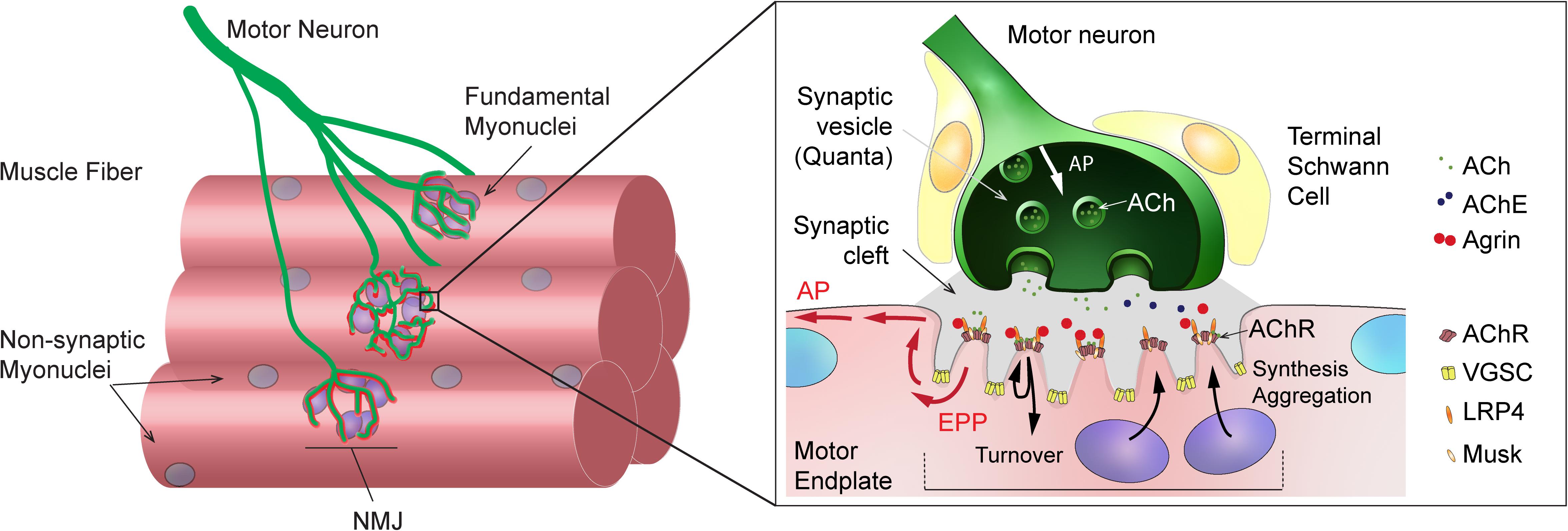
Anatomical Basis of Movement Indian Medical PG Question 8: Which receptors are blocked in Myasthenia Gravis?
- A. ACh receptors (Correct Answer)
- B. Opioid receptors
- C. Na+ receptors
- D. Ca++ receptors
Anatomical Basis of Movement Explanation: ***Ach receptors***
- Myasthenia Gravis is an **autoimmune disease** where **antibodies** block, alter, or destroy the **nicotinic acetylcholine receptors** at the **neuromuscular junction** [1], [2].
- This blockage prevents **acetylcholine** from binding to the receptors, leading to impaired muscle contraction and **muscle weakness** [1].
*Ca++ receptors*
- **Calcium channels** (not "receptors" in this context) are involved in the release of **acetylcholine** from the presynaptic terminal, but they are not the primary target in Myasthenia Gravis [1].
- While calcium influx is crucial for neurotransmitter release, the problem in Myasthenia Gravis lies postsynaptically, at the **acetylcholine receptor** [2].
*Na+ receptors*
- **Sodium channels** are essential for generating and propagating **action potentials** in muscle fibers after acetylcholine binds and opens the acetylcholine receptor.
- They are not directly targeted by autoantibodies in Myasthenia Gravis; the issue occurs upstream, preventing the initial depolarization signal [2].
*Opioid receptors*
- **Opioid receptors** are involved in pain modulation and other central nervous system functions, primarily binding endorphins and exogenous opioids.
- They have no role in the pathophysiology of Myasthenia Gravis, which is a disorder of the **neuromuscular junction** [2].
**References:**
[1] Kumar V, Abbas AK, et al.. Robbins and Cotran Pathologic Basis of Disease. 9th ed. Diseases of the Immune System, pp. 213-214.
[2] Kumar V, Abbas AK, et al.. Robbins and Cotran Pathologic Basis of Disease. 9th ed. Peripheral Nerves and Skeletal Muscles, pp. 1237-1239.
Anatomical Basis of Movement Indian Medical PG Question 9: What is the primary function of the deltoid muscle?
- A. Adduction of the shoulder
- B. Abduction of the shoulder (Correct Answer)
- C. Flexion of the elbow
- D. Extension of the wrist
Anatomical Basis of Movement Explanation: ***Abduction of the shoulder***
- The **deltoid muscle** is the major muscle responsible for **abducting the arm** at the shoulder joint, particularly after the initial 15-20 degrees.
- Its different parts (anterior, middle, posterior) also contribute to flexion, extension, and rotation, but **abduction** is its primary and most powerful action.
*Adduction of the shoulder*
- **Adduction of the shoulder** involves moving the arm towards the midline of the body, which is primarily performed by muscles such as the **latissimus dorsi** and **pectoralis major**.
- While some fibers of the deltoid can assist in adduction from certain positions, it is not its primary function.
*Flexion of the elbow*
- **Flexion of the elbow** involves bending the arm at the elbow joint and is primarily performed by muscles like the **biceps brachii**, **brachialis**, and **brachioradialis**.
- The deltoid muscle is located at the shoulder and has no direct action on the elbow joint.
*Extension of the wrist*
- **Extension of the wrist** involves bending the hand backward at the wrist joint and is primarily performed by muscles in the forearm such as the **extensor carpi radialis** and **extensor digitorum**.
- The deltoid muscle is a shoulder muscle and does not act on the wrist joint.
Anatomical Basis of Movement Indian Medical PG Question 10: In articular cartilage, most active chondrocytes are seen in ?
- A. Zone 1
- B. Zone 4
- C. Zone 2 (Correct Answer)
- D. Zone 3
Anatomical Basis of Movement Explanation: ***Zone 2***
- The **transitional zone (Zone 2)** contains chondrocytes that are more metabolically active and contribute significantly to **collagen and proteoglycan synthesis**. [1]
- These chondrocytes are typically **larger and more rounded** than those in the superficial layer and are organized in columns.
*Zone 1*
- **Zone 1 (superficial or tangential zone)** consists of **flattened chondrocytes** that are metabolically less active.
- Its primary role is to resist **shear forces** and reduce friction. [1]
*Zone 4*
- **Zone 4 (calcified zone)** is the deepest layer of articular cartilage, characterized by **chondrocytes embedded in a calcified matrix**.
- This zone anchors the cartilage to the subchondral bone and has **minimal metabolic activity**.
*Zone 3*
- **Zone 3 (deep or radial zone)** has chondrocytes arranged in **columns perpendicular to the articular surface**. [1]
- While active in matrix production, their activity is generally **less pronounced** compared to the transitional zone.
More Anatomical Basis of Movement Indian Medical PG questions available in the OnCourse app. Practice MCQs, flashcards, and get detailed explanations.